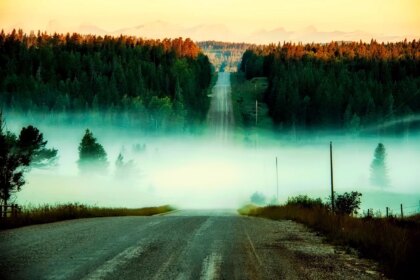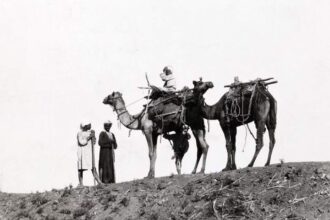


Iran is a land with unique natural, historical and cultural diversity, each corner of which has a different story to discover. From ancient cities and world-registered monuments to amazing deserts, lush forests and diverse beaches, Iran’s sightseeing places provide travelers with a wide range of tourist experiences. This variety has made Iran an attractive travel destination in all seasons of the year. In the following, we will introduce you to some of the most popular sightseeing places in Iran in different provinces, most of which have been registered in the list of national monuments of Iran and UNESCO world heritage. Amazing historical and natural monuments, visiting them will be a memorable experience for you.
Sightseeing places in Iran
- Province: Fars
- City: Marvdasht
- Best time to visit: Autumn, winter and late April
- National works of Iran
- UNESCO World Heritage
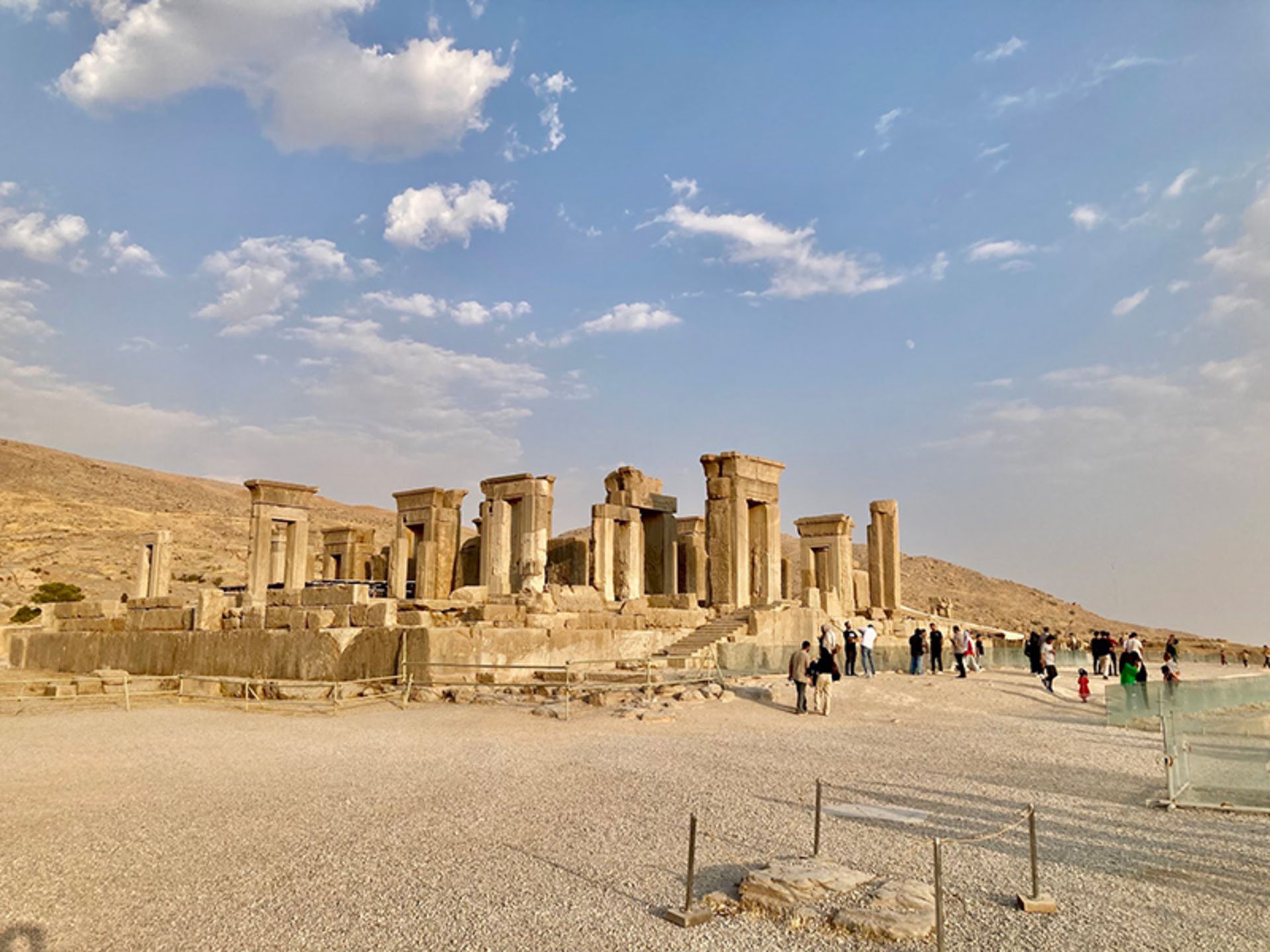
Takht Jamshed is one of the best sightseeing places in Iran, a symbol of the glory of ancient Iran, one of the most important documents of the history of civilization in the world and a relic of the Achaemenid kings from 2,500 years ago in Iran. In general, the buildings and palaces of Persepolis were built in the middle flat area and the south, southwest and east sides of this area. The entrance to the complex is a paved staircase that leads to a larger space.
Photographer: H. Gholipoor / Google Map
The Palace of the Gate of Nations with tall adobe walls and four tall columns, Persepolis Treasury, Hundred Column Palace or Takht Hall, Khashayar Shah Palace or Hadish, Palace “E” or “H”, Three Door Palace or Central Palace, Bar Palace or Apadana, Dariush’s Palace or Thatcher and royal tombs and of course the Persepolis Museum are among the most important places to visit in Persepolis. It is interesting to know that at the same time as the construction of huge palaces in Persepolis, slavery was prevalent in other great empires of the world; But in Iran and in the seat of the Achaemenid government, workers were insured and benefited from various benefits.
- Province: Khuzestan
- City: Susa
- Best time to visit: Late autumn, winter, Nowruz holidays
- National works of Iran
- UNESCO World Heritage
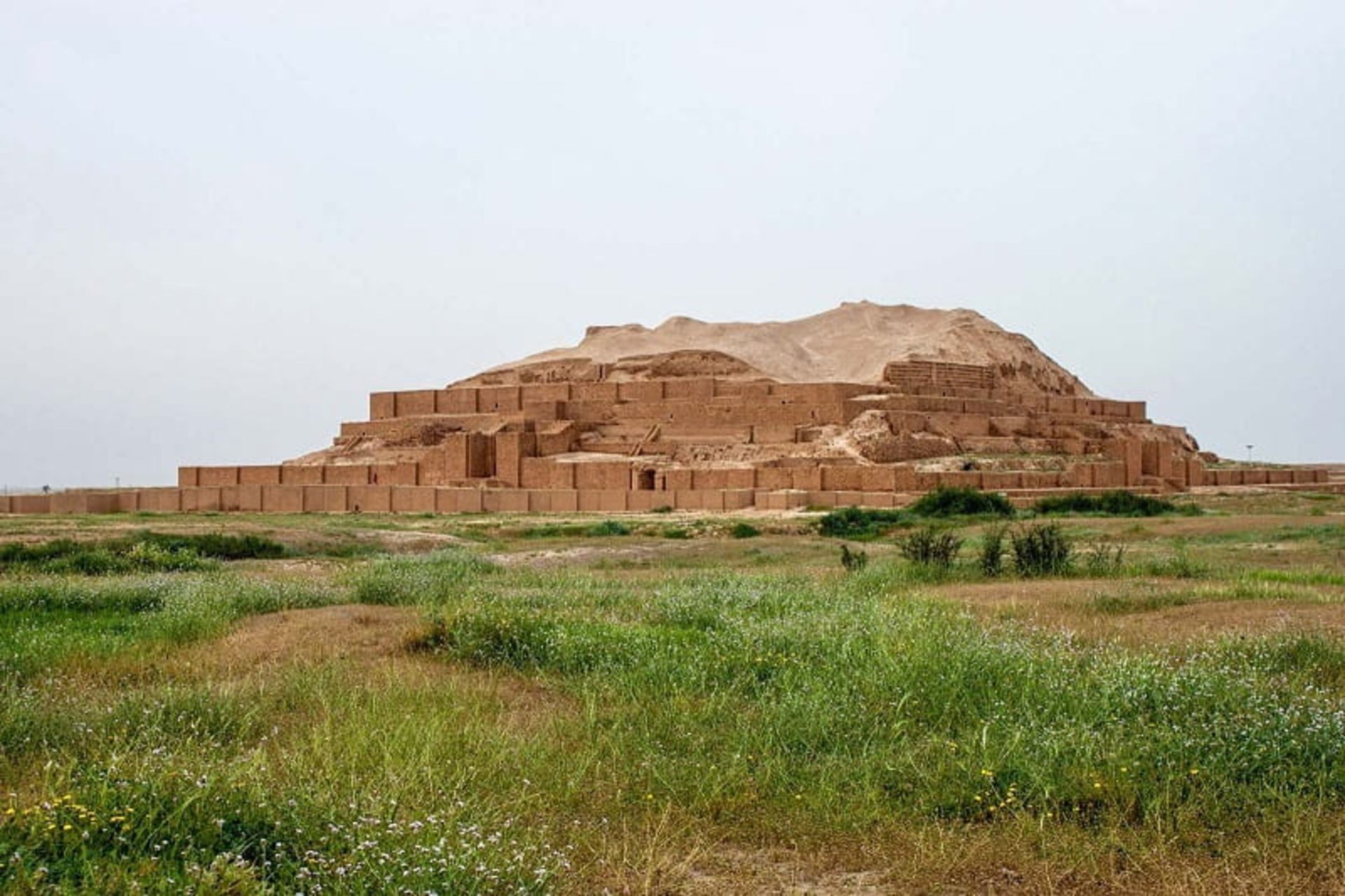
Chaghazanbil is the first historical work of Iran that has been registered in the UNESCO World Heritage List; An area that covers 100 hectares and is actually a city left over from the Elamite period (pre-Medic period). Chaghazanbil Ziggurat or Chaghazanbil Temple is an appropriate, amazing, landmark and the most important remaining building of this ancient city in five floors and measuring 105 x 105 meters, which became smaller in the form of a pyramid from the bottom to the top, and a small temple was located on top of it.
Photographer: unknown / britannica.com
The height of this temple was 52 meters, of which only 25 meters remain in two and a half floors. Chaghazenbil was built in the second half of the second millennium BC by the order of one of the most powerful Elamite kings to worship the Elamite gods and was destroyed in 640 BC by the order of Ashur Banipal, the king of the Assyrians. Today, the remains of Chaghazanbil are one of the most famous tourist attractions in Iran.
Susa water mills
- Province: Khuzestan
- City: Shushtar
- Best time to visit: Late autumn, winter, Nowruz holidays
- National works of Iran
- UNESCO World Heritage
The historical, industrial and economic complex of Shush water mills is located in the vicinity of the historical context of Shushtar; A collection that is considered one of the rarest engineering structures in the world dating back to the Sassanid era. The construction of this magnificent structure is attributed to kings such as Ardeshir I and Shapur. Shushtar’s water structure complex includes various parts such as bridges, dams, mills, waterfalls, canals, Sika (a place for rest and recreation) and huge water tunnels. Each of the structures in this collection has its own function and application. In the past, this structure delivered water equally to all the cities and prevented the eruption of the Karun River; In addition, he was responsible for irrigating agricultural lands and operating mill wheels to prepare wheat flour.
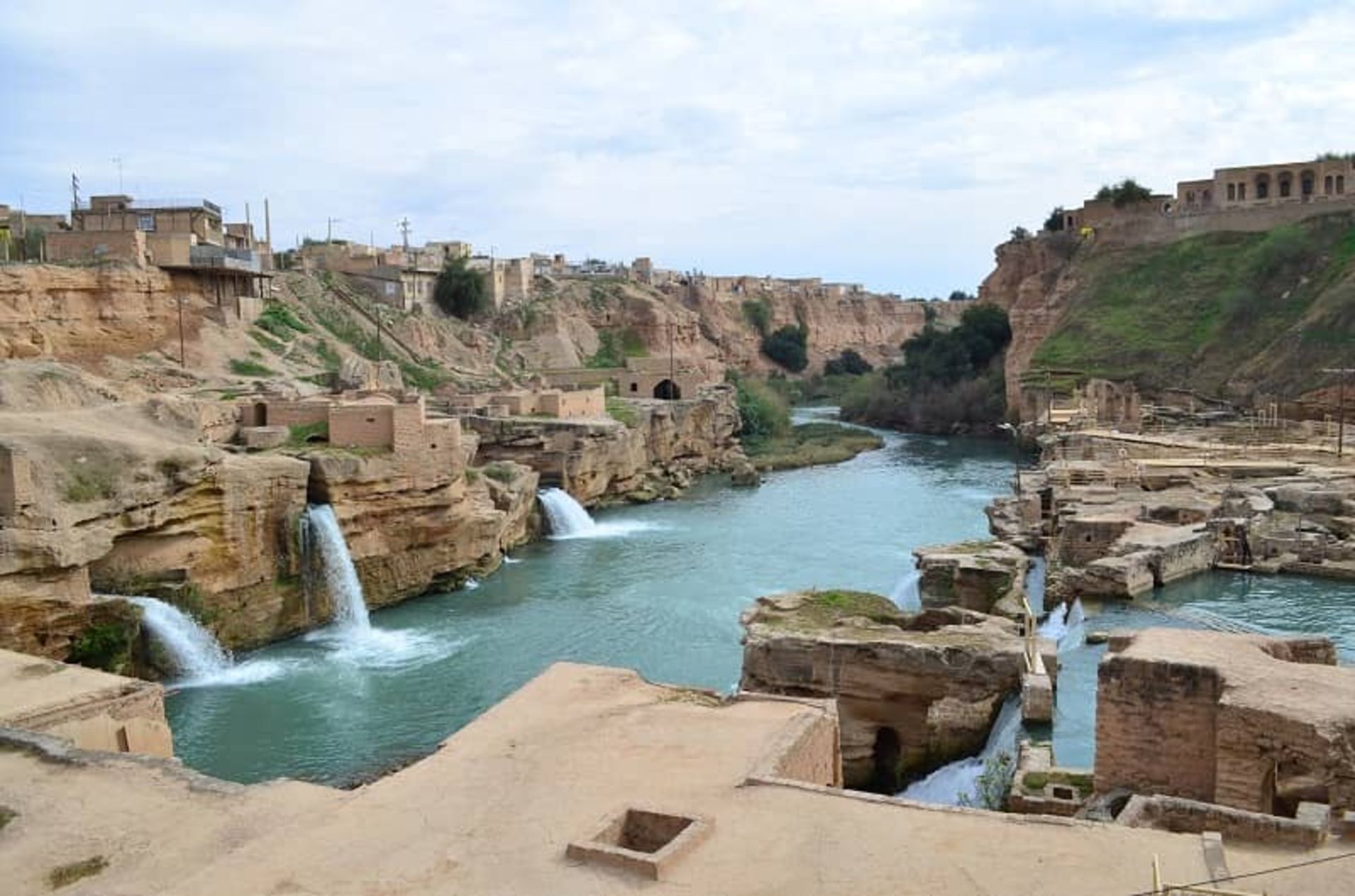
Photographer: Unknown / Wikimedia
Naqsh Jahan square
- Province: Isfahan
- City: Isfahan
- Best time to visit: From the end of March to the end of May and from the end of September to the end of October (in terms of weather)
- National works of Iran
- UNESCO World Heritage
Naqsh Jahan Square or Imam Square is one of the most beautiful sightseeing places in Iran and Isfahan, with a length of more than 500 meters and a width of 160 meters. The square is surrounded by 200 cells on two floors, and four prominent historical monuments in different parts of the square attract the eyes. Shah Abbas Safavi, with the aim of expanding the city towards its southern part on the edge of Zayandeh River, established the first building of this square with the architectural style of the Iranian square. The initial foundation of the current form of Imam Square was built in 1011 and gradually the construction of the square and its buildings was completed until 1025.
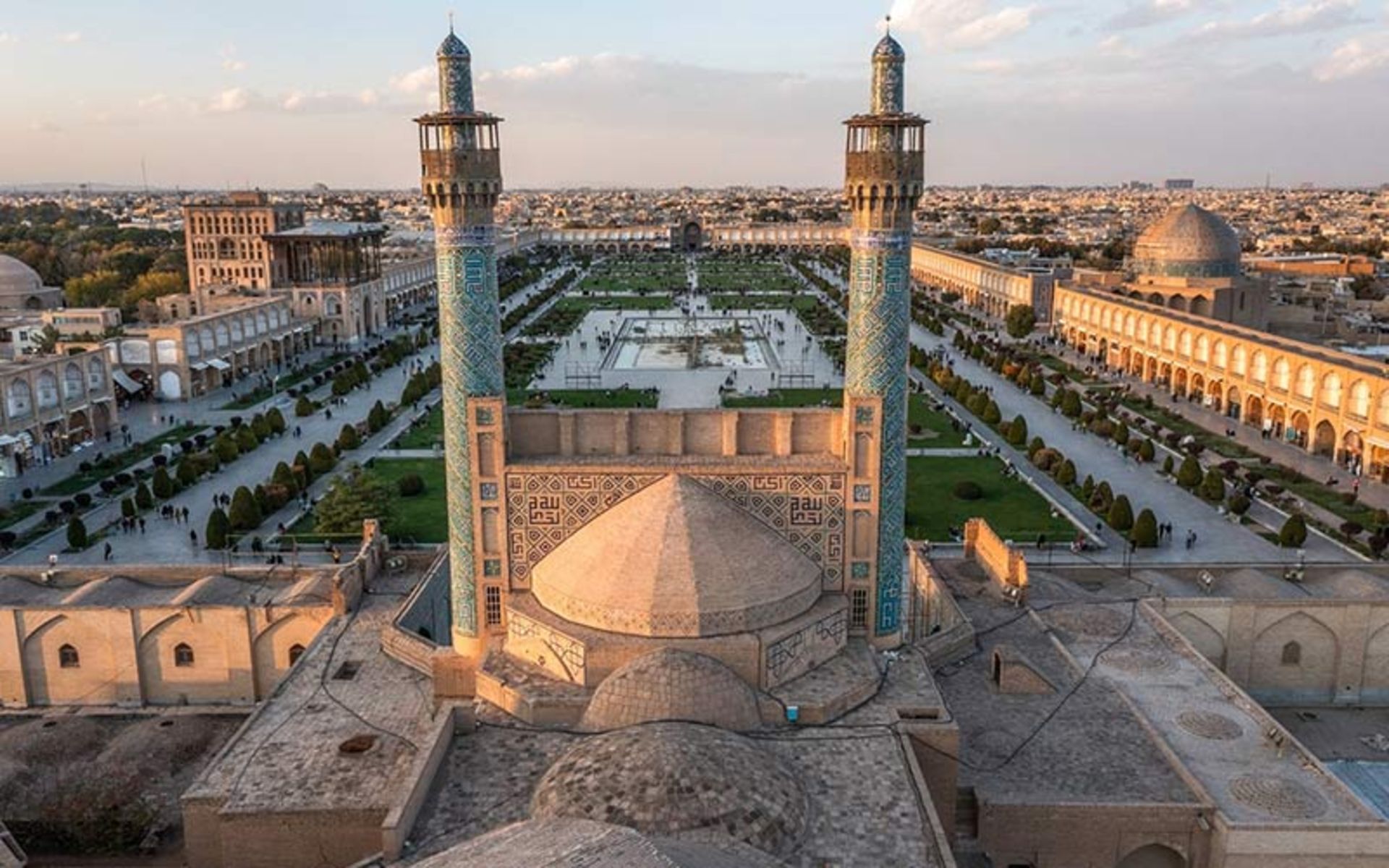
Jame Abbasi Mosque, Sheikh Lotfollah Mosque, Aali Qapu Mansion, Qaisarieh Sardar and handicrafts sales centers and two old polo gates are among the sights of Naqsh Jahan Square in Isfahan. Among the most popular tourist activities in this attraction are visiting historical sights, hiking and sled riding, photography, going to cafes and restaurants, shopping and buying souvenirs.
- Province: West Azerbaijan
- City: Tokab
- Best time to visit: Spring and early summer
- National works of Iran
- UNESCO World Heritage
Takht Suleiman or “City of Ganjak” dates back to three thousand years ago, has seen five periods of human history and civilization until today and is one of the most historical sights in Iran. This complex, which is called as the birthplace of Zoroaster, was the largest educational, religious and prayer center before Islam and was built by Bahram Gur, one of the Sassanid kings. The world heritage of Takht Suleiman includes various parts such as the fence of Takht Silman, fire temple of Azargashnesab, Ivan Khosrow, Anahita temple, corridors of Takht Suleiman, dragon stone, buildings of Ilkhani period, small fire pits, etc. In Takht Suleiman area, there is also a unique natural lake with thousands of years of age, whose water boils from a spring 120 meters deep.
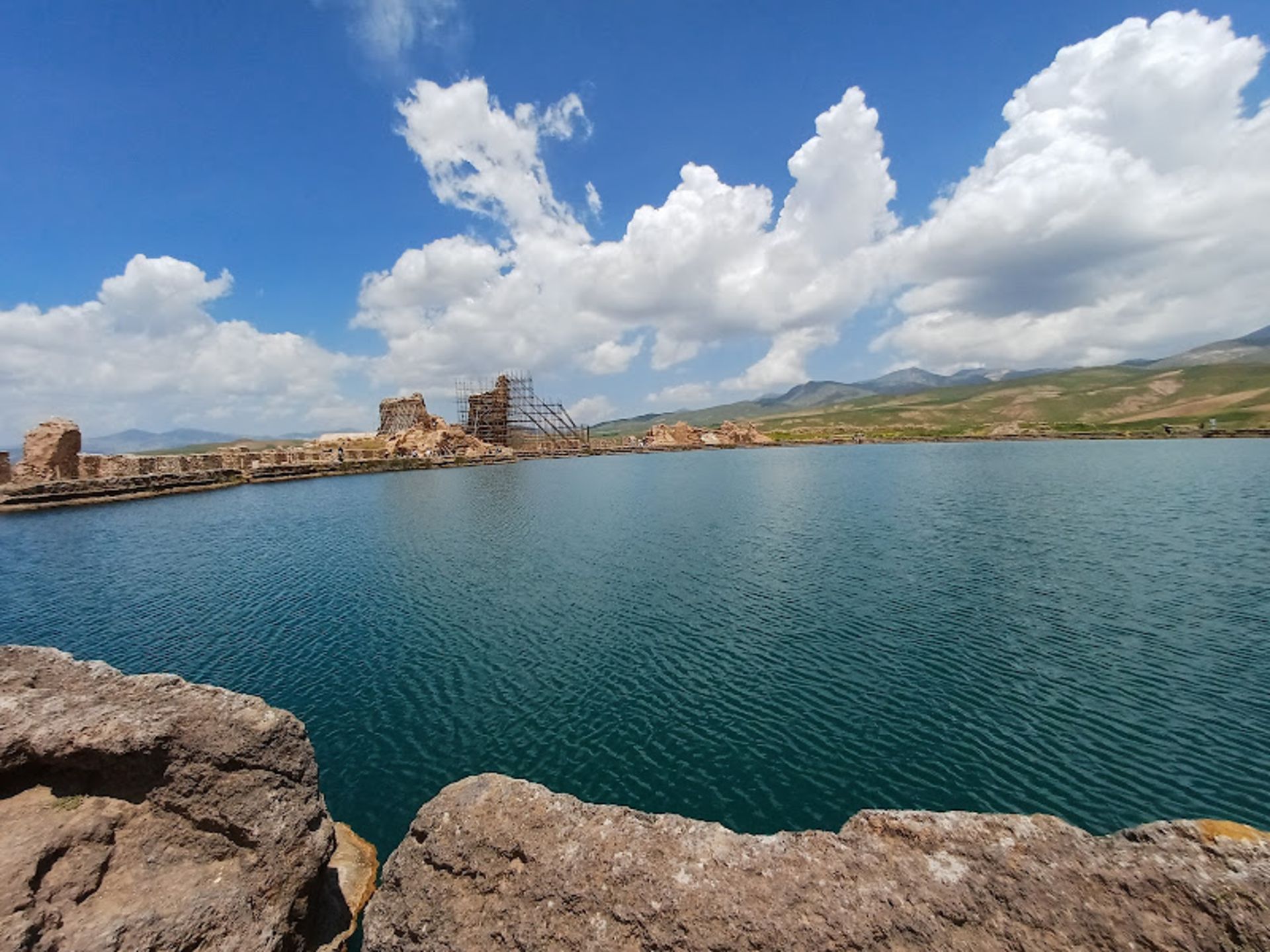
Photographer: Somayeh Alizadeh / Google Map
- Province: Kerman
- City: bam
- Best time to visit: Early to mid spring and fall
- National works of Iran
- UNESCO World Heritage
Arg Bam is one of the most famous tourist places in Iran in Kerman province, in the southeast of Lut desert. This adobe structure has a unique architecture and displays a spectacular example of a defense structure in Iran; A structure that throughout history has protected the eastern regions of Iran like a strong fence.
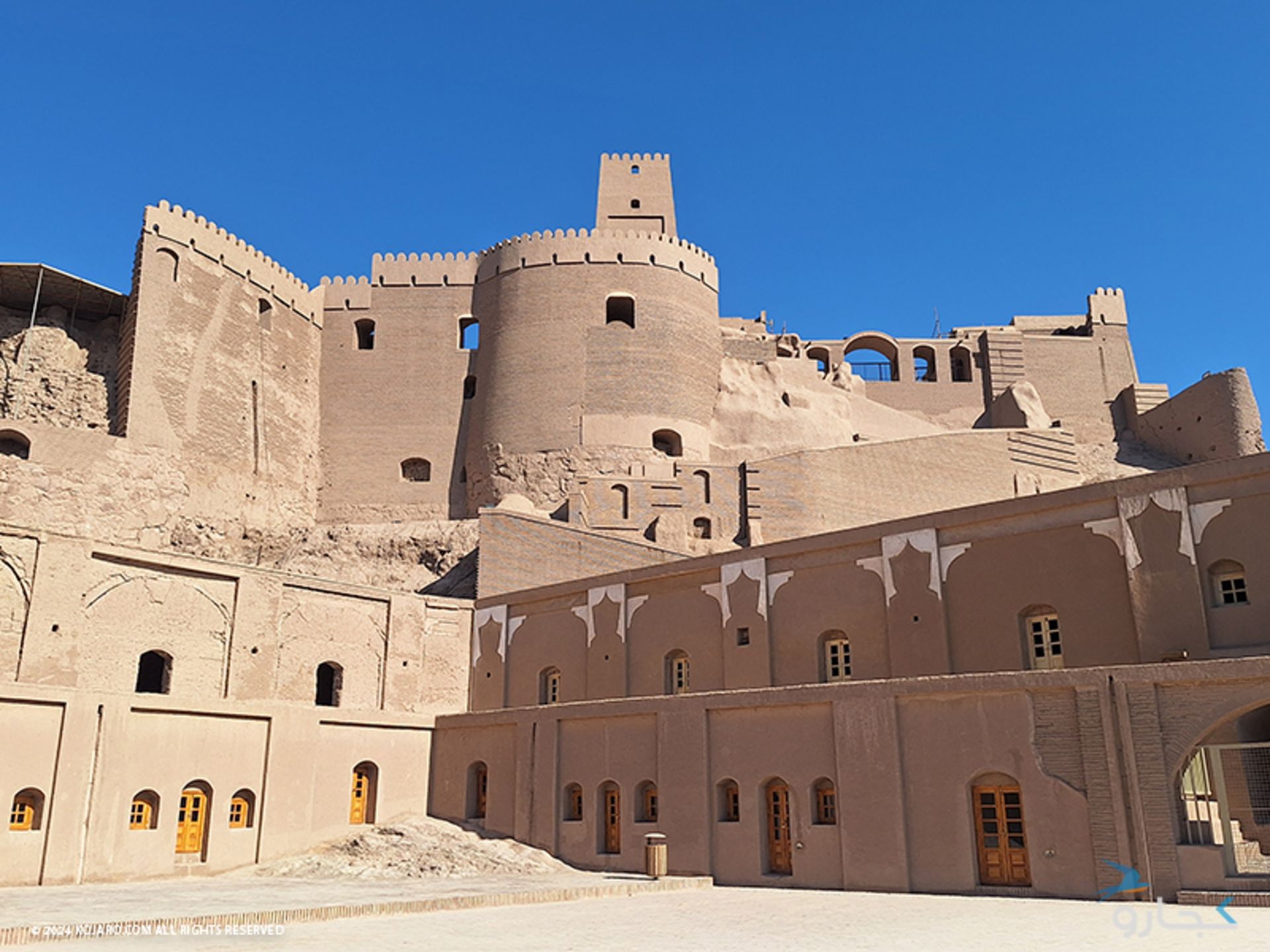
Photographer: unknown / Kajaro
Bam Citadel was considered the largest adobe structure in the world until the earthquake of 2002. Fortunately, the Bam Citadel restoration project did not allow this complex to be removed from the UNESCO list, and currently this structure is one of the most visited sights in Bam. Arg Bam is an ancient city with a collection of tall buildings dating back 2,500 years, which is divided into two parts, the serfs and the government. This citadel has an area of about 18,000 square meters and walls with a height of 6 to 7 meters surround it.
- Province: Fars
- City: Marvdasht
- Best time to visit: Autumn, winter and late April
- National works of Iran
- UNESCO World Heritage
The construction of the Pasargad ancient complex of Shiraz began during the reign of Achaemenid Cyrus and was completed during the periods of other kings of this dynasty by adding palaces and other buildings. Pasargad was the first Achaemenid capital, whose main area was 160 hectares and was surrounded by a large plain. The architecture of this complex was a combination of Iran, Egypt, Greece and Mesopotamia architecture. The ancient complex of Pasargad includes the Tomb of Cyrus, the Pasargad Mosque of Shiraz, the Pasargad Bridge, Tang Balaghi, large palaces (Baraam, Darwaza Palace, and Exclusive Palace), royal gardens, Tell Takht or Mother Sulaiman, Kambojie Tomb and Mozafari Caravanserai, and it is considered one of the most popular sightseeing places in Iran.
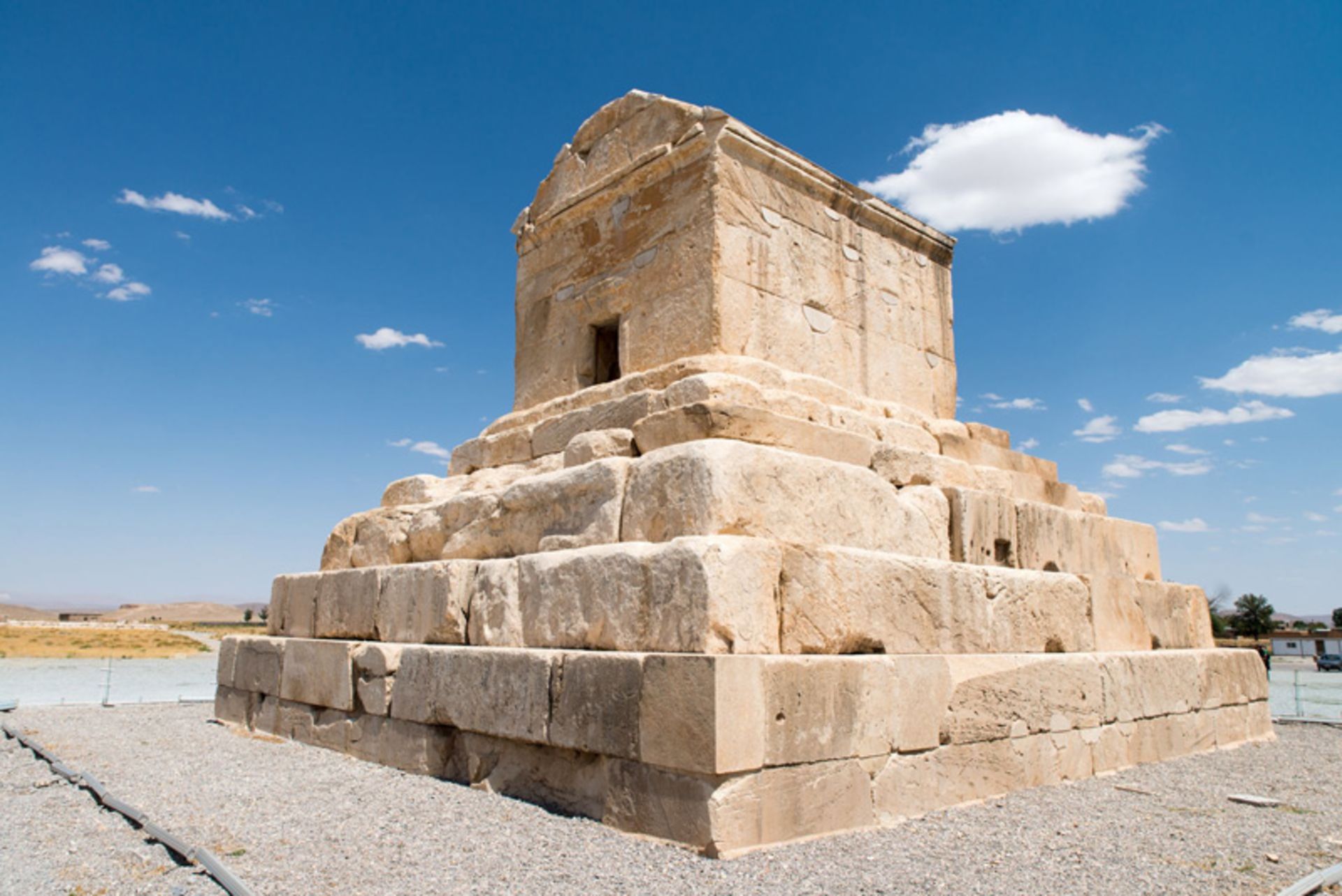
Photographer: Raffaele Nicolussi / admiddleeast.com
The role of Rajab and the role of Rostam
- Province: Fars
- City: Marvdasht
- Best time to visit: Autumn, winter and late April
- National works of Iran
Naqsh Rostam Shiraz is a historical area in Fars mountains and the oldest buildings, tombs, reliefs and inscriptions of ancient Iran are located in it. The distinction of Naqsh Rostam compared to other historical sights of Fars is the existence of works from three prominent historical periods in it; A region that the Achaemenid and Sasanian kings attached special importance to. The reason for naming Naghse Rostam region with this name is attributed to an old legend. According to this legend, this area was the place of encounter between Rostam and Esfandiar. Elamite reliefs, Bahram II, Shapur I, Narsi, Ardeshir Babakan, Hormuz II, and Aramaic inscriptions on the tomb of Darius I and Kartir inscriptions are among the reliefs of the Rostam collection. Among other sights of Naqsh Rostam collection, we can mention Zoroaster’s Kaaba in front of the tomb of Darius II, which is said to have been the center of worship in ancient Iran.
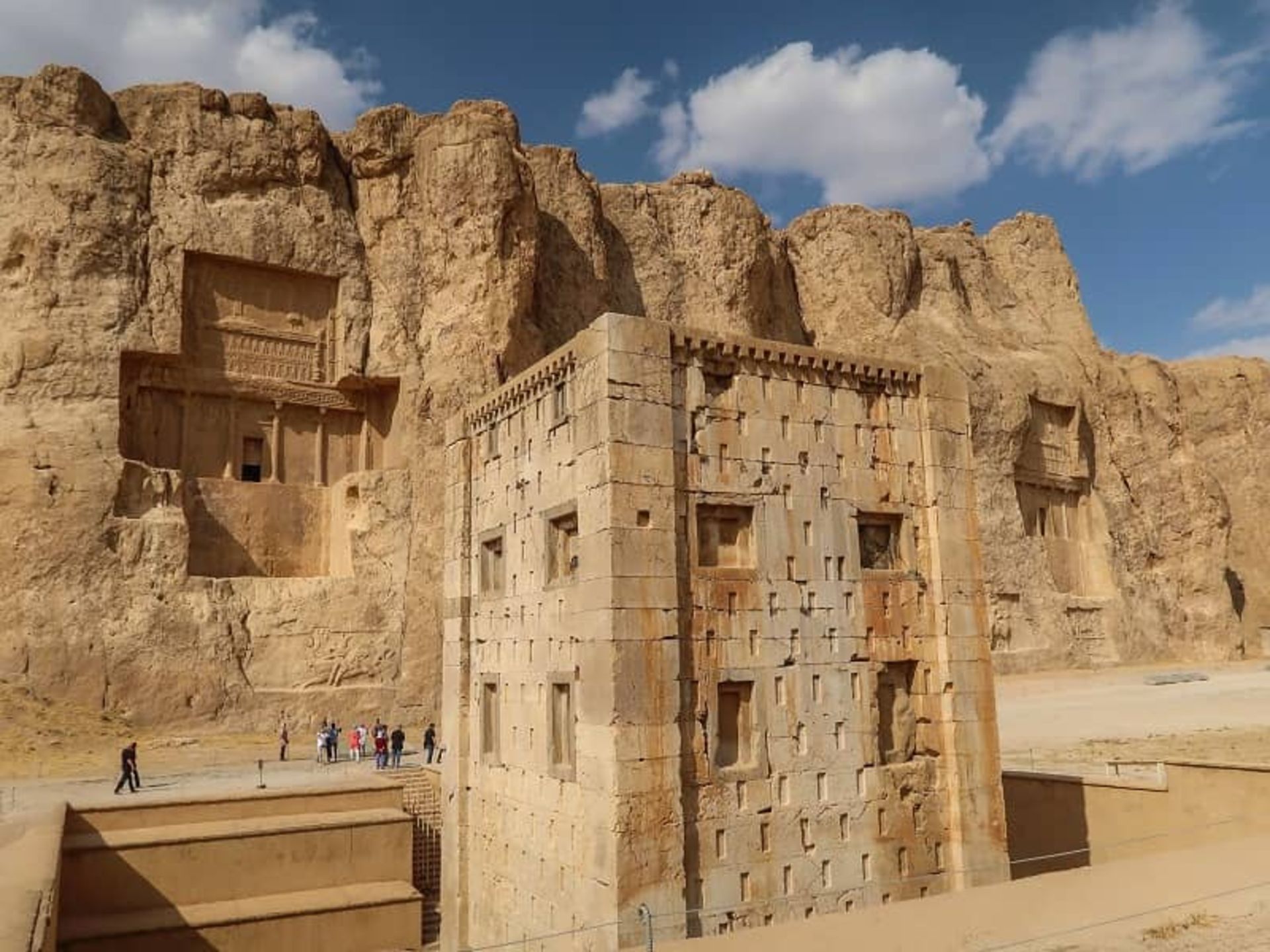
Photographer: Unknown / Wikimedia
Naqsh Rajab, near Naqsh Rostam, is one of the most important and magnificent tourist attractions in Iran and one of the cultural relics of the Sassanid period, which includes four petroglyphs of Shapur (the second Sassanid king) and his courtiers, the coronation of Ardeshir Babkan (the founder of the Sasanian dynasty), the Kartir inscription and the coronation of Shapur I (son of Ardeshir Babkan); Sculptures that are unique works and surprise the viewer.
- Province: Zanjan
- City: Soltanieh
- Best time to visit: Spring, early summer and early autumn
- National works of Iran
- UNESCO World Heritage
The Soltanieh dome is one of the architectural masterpieces of Iran during the Ilkhanid period, which was built between 704 and 712 AD by the order of the Mughal king Oljaito and under the supervision of Khwaja Rashiduddin Fazlullah Hamadani. This building consists of three spaces: a dome, a crypt and a cellar. The dome of Oljaito Mausoleum, with a height of 50.48 meters and a diameter of 40.24 meters, is the largest historical dome in Iran and the largest brick dome in the world. The main body of Soltanieh Mausoleum is made of bricks and its huge and double-walled dome is covered with turquoise and lapis lazuli tiles and decorated in a mosaic style. The interior decorations of the Soltanieh dome include plastering, moqrans work, tiling, decorative lines and various brick decorations.
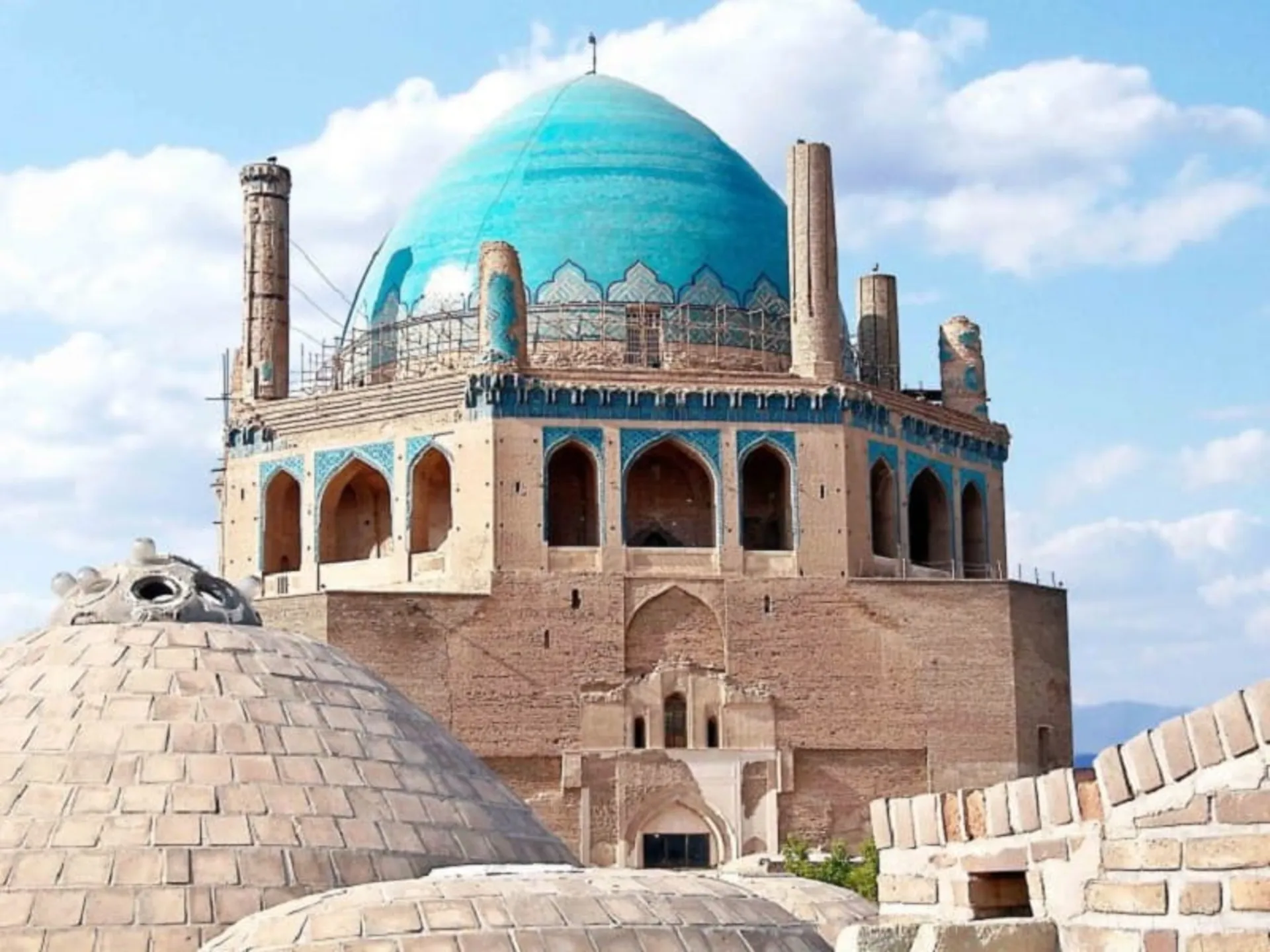
Photographer: unknown / itto.org
- Province: Kermanshah
- City: Bisthorn Kermanshah
- Best time to visit: From early June to early September and early to mid-autumn
- National works of Iran
Biston complex, with an area of 1,650 hectares, contains a large number of historical monuments such as Shekarchian Cave, Mar Doder Cave, Sarab Biston, Mer Tarik Cave, Madi Shrine, Blash Stone, Mehrdad Ashkani relief, Godrez relief, Hercules statue, Farhad Tarash, Ilkhani Caravanserai, Biston Bridge, etc. and is considered one of the important archaeological areas in Iran. One of the important works of this collection is the inscription and carved relief of Darius, which is on the UNESCO World Heritage List. The history of the historical works discovered in Biston starts from about four thousand years ago and continues until a few hundred years ago; A treasure of which 28 works have been registered as national works of Iran. In the historical complex of Biston, there are facilities such as parking, restrooms, prayer rooms, handicraft stalls and souvenir shopping, restaurants and pantry for the well-being of tourists.
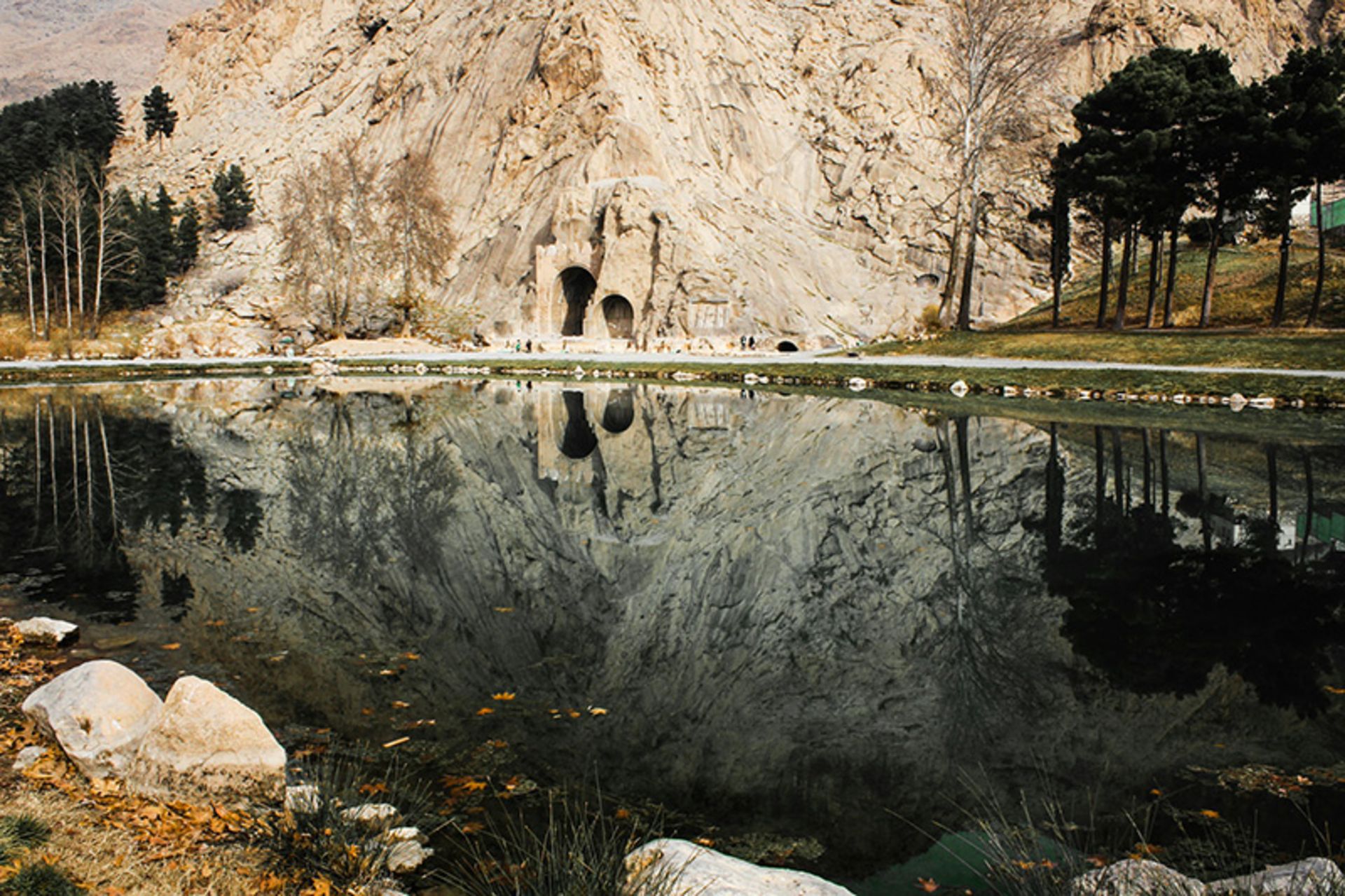
Photographer: PaaZ PG / unsplash.com
Tomb of Sheikh Safi
- Province: Ardabil
- City: Ardabil
- Best time to visit: Late spring, summer and early fall
- National works of Iran
- UNESCO World Heritage
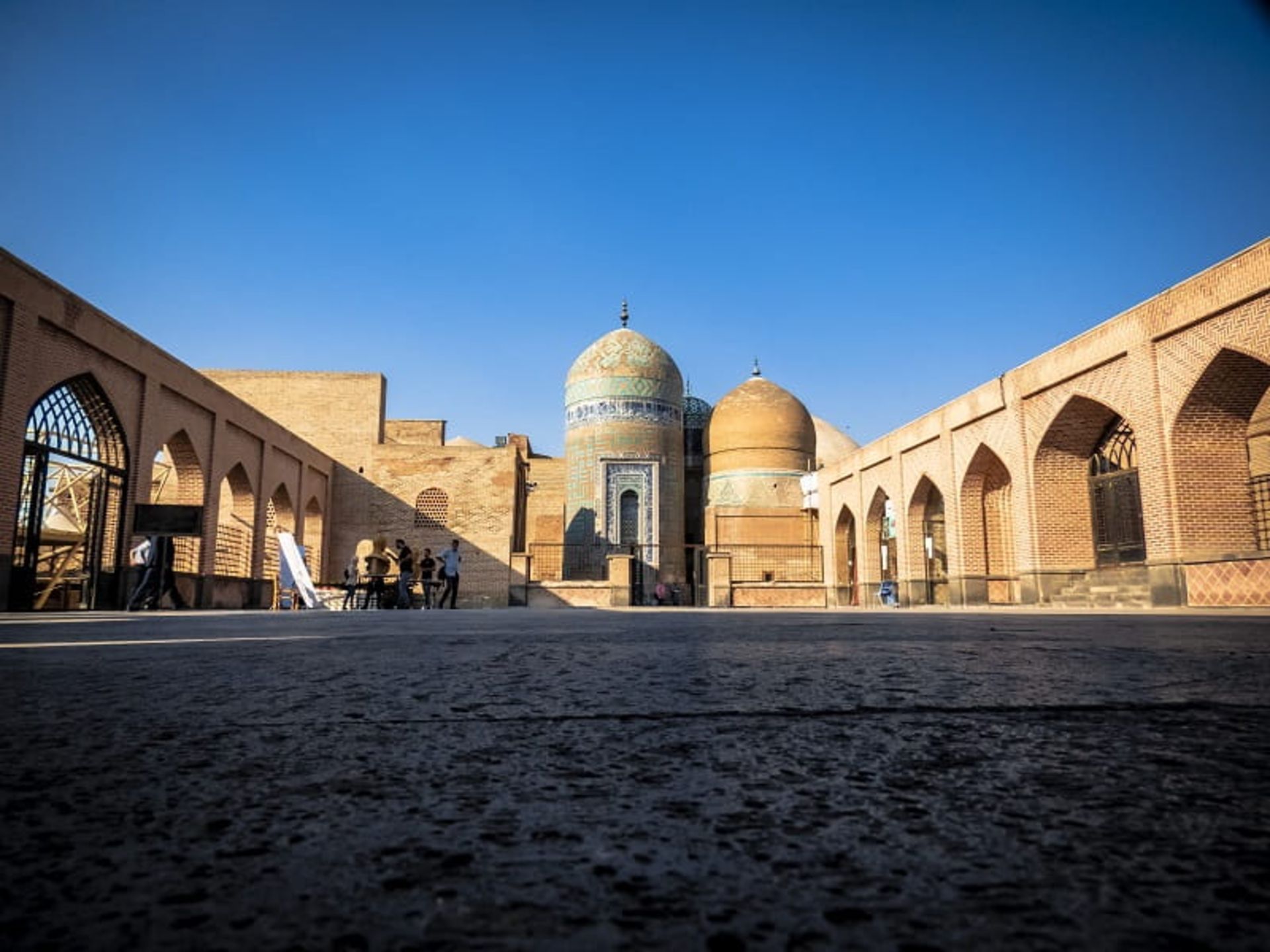
The complex of Sheikh Safiuddin Ardabili Monastery and Mausoleum is a masterpiece of Iranian art and architecture, which is the burial place of Sheikh Safi, Shah Ismail and a number of officials of the Safavid period. Buildings from 735 to 1038 AH (714 to 1008 AH) were built in this complex, which in terms of architecture, decorations (inlaid tiles, moqrans, plasterwork), inlaid chests and mesh graves, etc., display the glory of religious architecture from the Ilkhani period to the Safavid period. The entrance gate and courtyard, the main courtyard or the courtyard of Qandil Khana, Janat Sera, Dome of Allah, Tomb of Shah Ismail I, Chinese Mansion, Haram Khana, Chaleh Khana, Dar al-Hafaz Hall, Dar al-Hadith and the yard and cemetery of Shahidgah are some of the most important parts of this complex.
Photographer: Unknown / Wikimedia
Prince Mahan’s garden
- Province: Kerman
- City: Kerman
- Best time to visit: Early to mid spring and fall
- National works of Iran
- UNESCO World Heritage
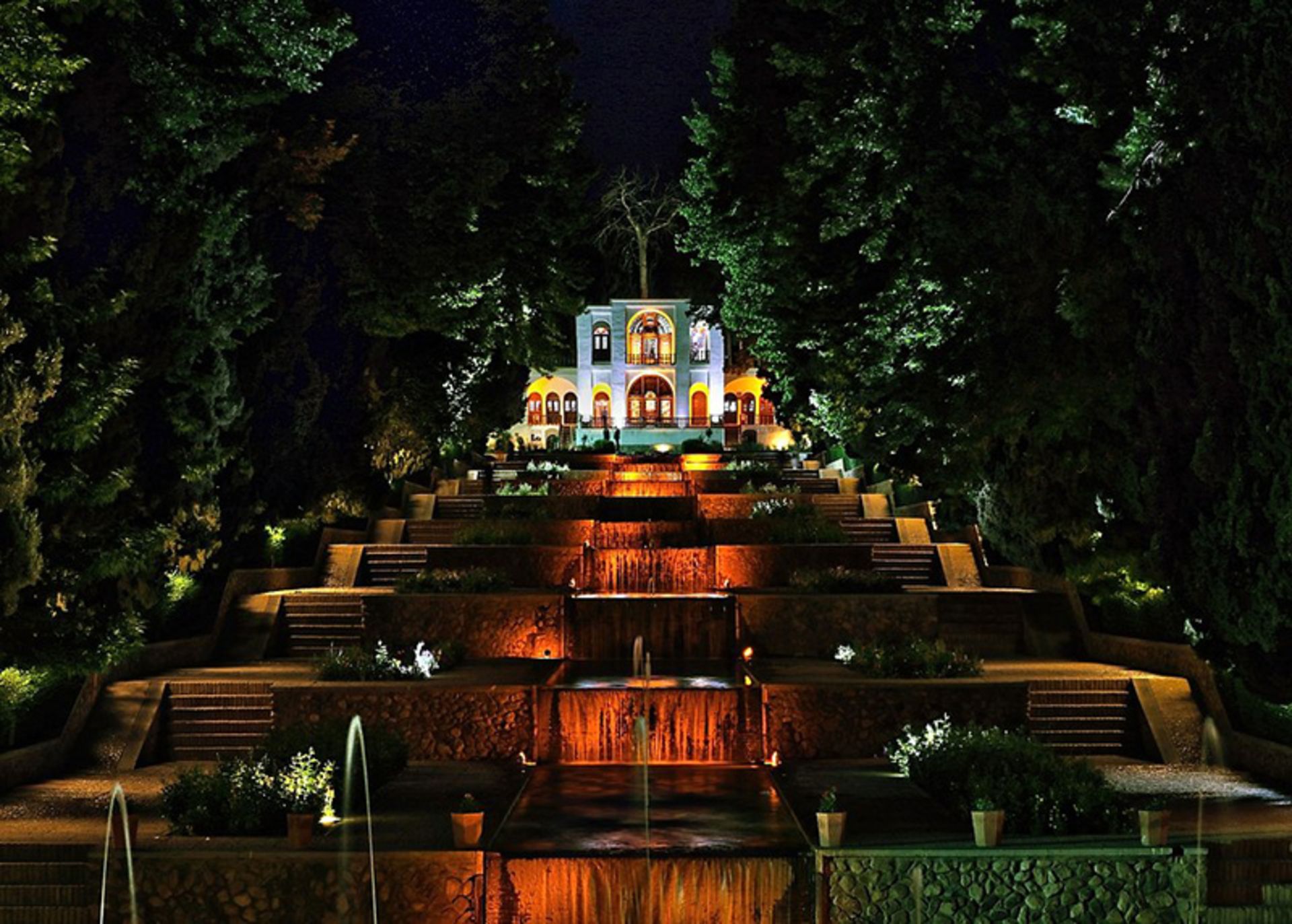
Shazdeh Mahan’s lush garden is one of the 9 Iranian and world-famous gardens dating back to the Qajar period
The green garden of Shazdeh Mahan in the heart of the desert is one of the most beautiful places to visit in Iran and one of the 9 famous Iranian gardens in the world, dating back to the Qajar period. The order to build this garden was issued by Mohammad Hasan Khan, Sardar of Irani and the ruler of Kerman at the time, and then during the time of the next ruler, between 1298 and 1309 AH, buildings were added and completed.
Photographer: Pourjafari / Wikimedia
“Shazdeh Mahan” is actually Abdul Hamid Mizra Naser al-Doulah Farmanfarmayan, the granddaughter of Naser al-Din Shah and the ruler of Kerman, who completed this garden. Shahzad Mahan garden is one of the best sloping gardens with a unique and spectacular display of water in the form of stairs and on horizontal and vertical levels, which has a rectangular plan, covers an area of about 5.5 hectares and includes the entrance gate, bathhouse, mansion, water supply network and pond among a tall fence of trees.
Isfahan Grand Mosque
- Province: Isfahan
- City: Isfahan
- Best time to visit: From the end of March to the end of May and from the end of September to the end of October (in terms of weather)
- National works of Iran
- UNESCO World Heritage
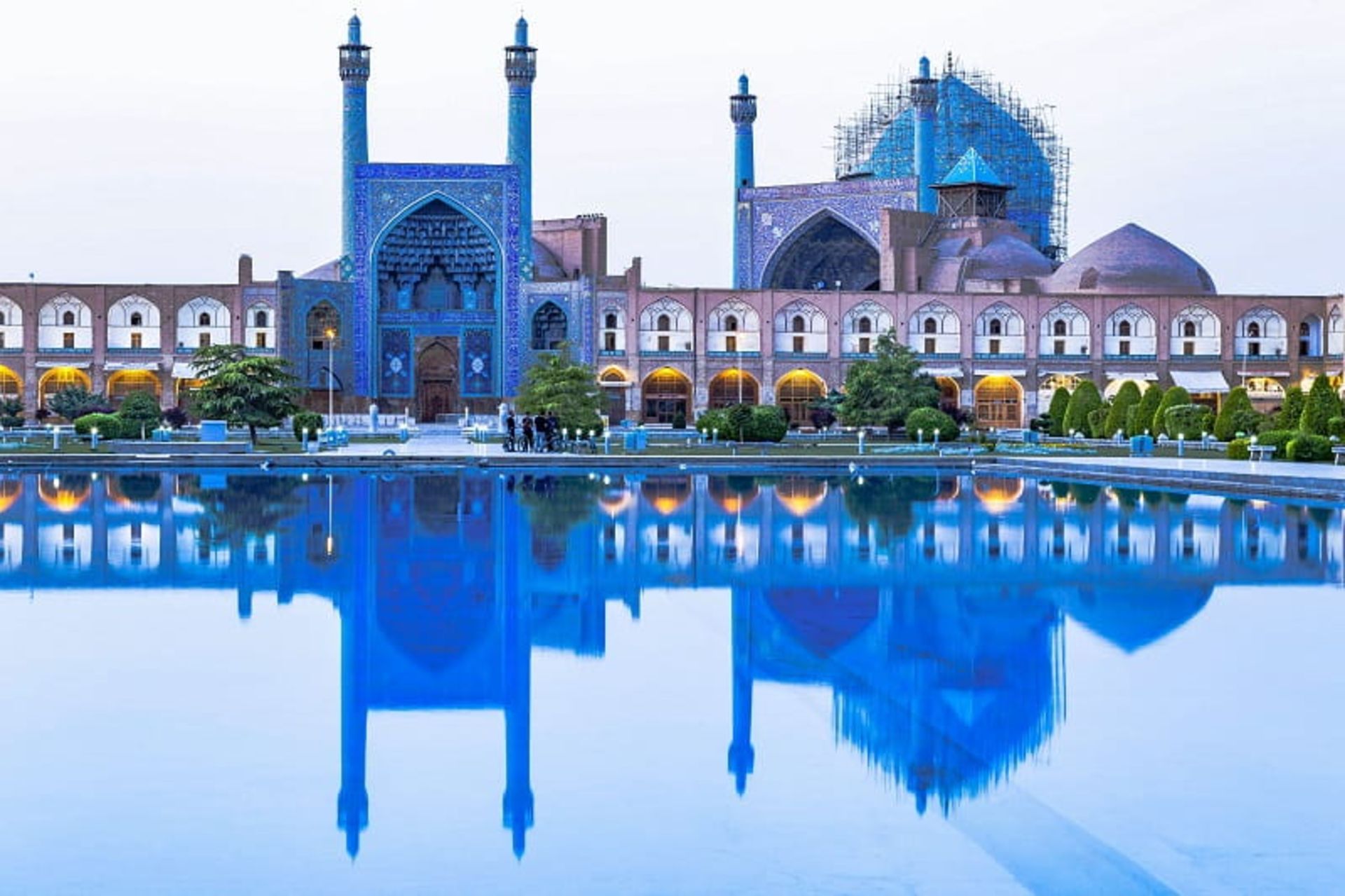
The oldest historical building in Isfahan is Jame Mosque or Juma Mosque, whose current face is related to the actions of the Seljuk period; But its repairs and additions are related to the later era, especially the Safavid era. Of course, you should know that in the archaeological excavations, works belonging to the era of Al-Buyeh and the 3rd century Hijri, as well as works from the pre-Islamic era, have been discovered in this mosque. Isfahan Jame Mosque is built with four porches and is one of the most popular sights in Isfahan.
Photographer: Unknown / Wikimedia
Over time, this building has suffered a lot of damage due to fire and numerous wars, and it has been rebuilt and restored. The mosque’s naves, south and north domes, Dervish Ivan, Saheb Ivan, Ustad’s Ivan, Pupil’s Ivan, Umar’s Ivan, Al-Jayto Mosque, Bait al-Itar’s Winter Shabestan, Khwaja Nizam al-Molk Library and the Sangabs of Isfahan Jame Mosque are among the sights of this historical building.
Kavos dome tower
- Province: Golestan
- City: Kavos dome
- Best time to visit: Spring, late summer and autumn
- National works of Iran
- UNESCO World Heritage
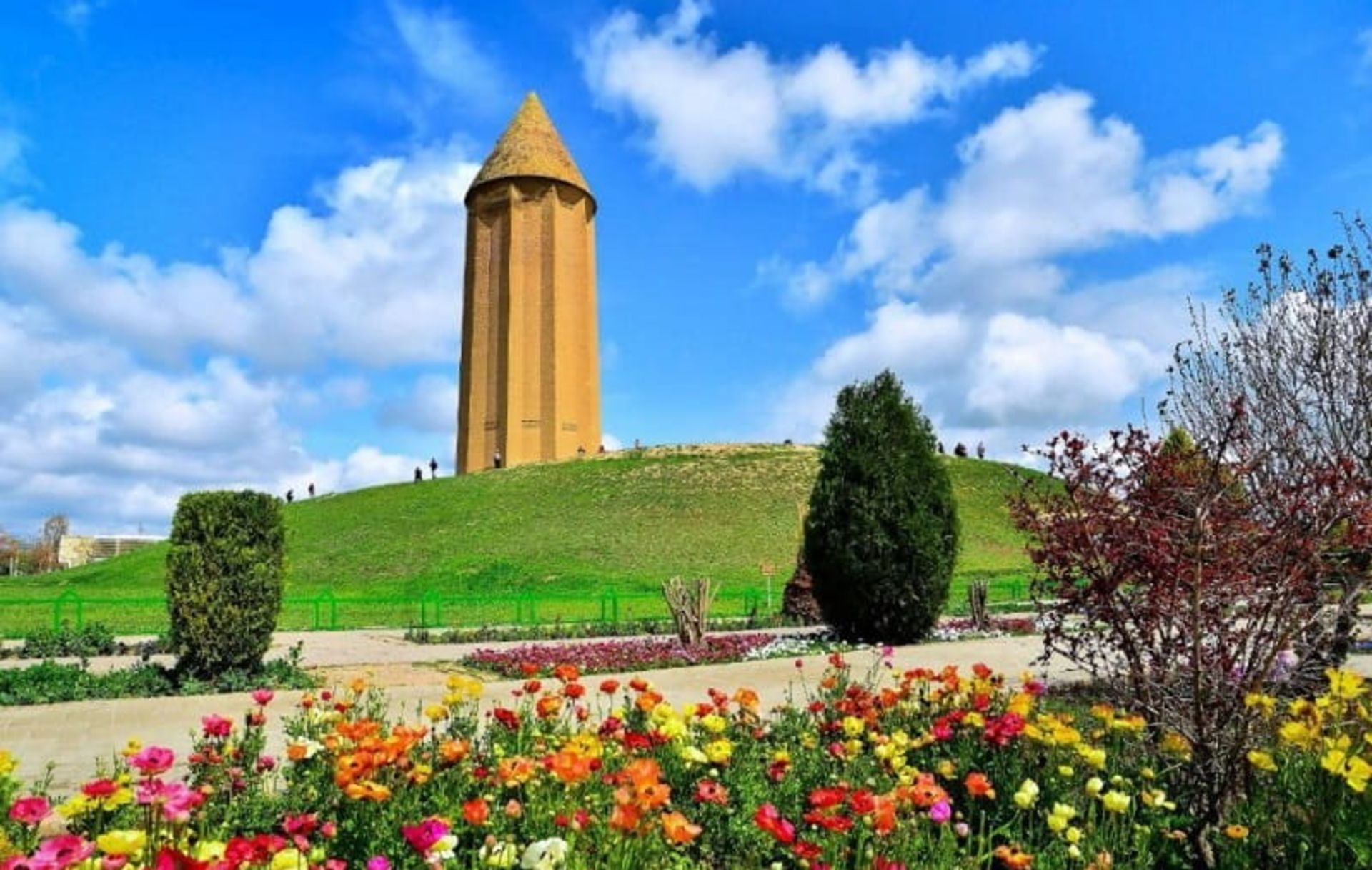
Qavos dome tower is the tallest all-brick tower in the world and is one of the historical buildings of the 4th century of Hijri. This tower was built in 397 AH by the order of one of the kings of Al-Ziyar. The shaft of the Qavos dome is a building with Khorasani and Razi architecture, and Saroj bricks and mortar are the only materials used in it. There is a difference of opinion among historians regarding the real use of this tower. Some experts consider this tower to be a tomb and some consider it an observatory.
Photographer: unknown / villarabet.com
Kavos Dome Tower is a perfect structure and is on the list of the best engineering works of human history; The tower, which is made only of bricks, does not have any stabilizers, and during its more than a thousand years of life, it has remained stable even after enduring two earthquakes stronger than 6 on the Richter scale. The height of the dome shaft, including the base, is about 70 meters, of which 18 meters belong to the shaft cap, which is made in the form of a conical dome.
- Province: Tehran
- City: Tehran
- Best time to visit: Spring, late summer, fall
- National works of Iran
- UNESCO World Heritage
Golestan Palace is one of the three historical and valuable palaces of Tehran and is one of the most visited tourist places in Iran. With its unique architecture and decorations, it is an ideal place for taking pictures and recording extremely beautiful pictures in the old context of Tehran and makes the visitors enchanted by the beauty, history, architecture, culture and art of Iran. This palace consists of different parts such as Marble Throne Porch, Hall of Salam, Hall of Mirrors, Dining Hall, Khlot Karimkhani, Berlian Hall, Badgir Mansion, Shams-ul-Amara Palace, Almas Hall and Abeyd Palace. The marble throne porch and the Karimkhani shrine, belonging to the Karimkhan Zand period, are the oldest buildings in the Golestan complex.
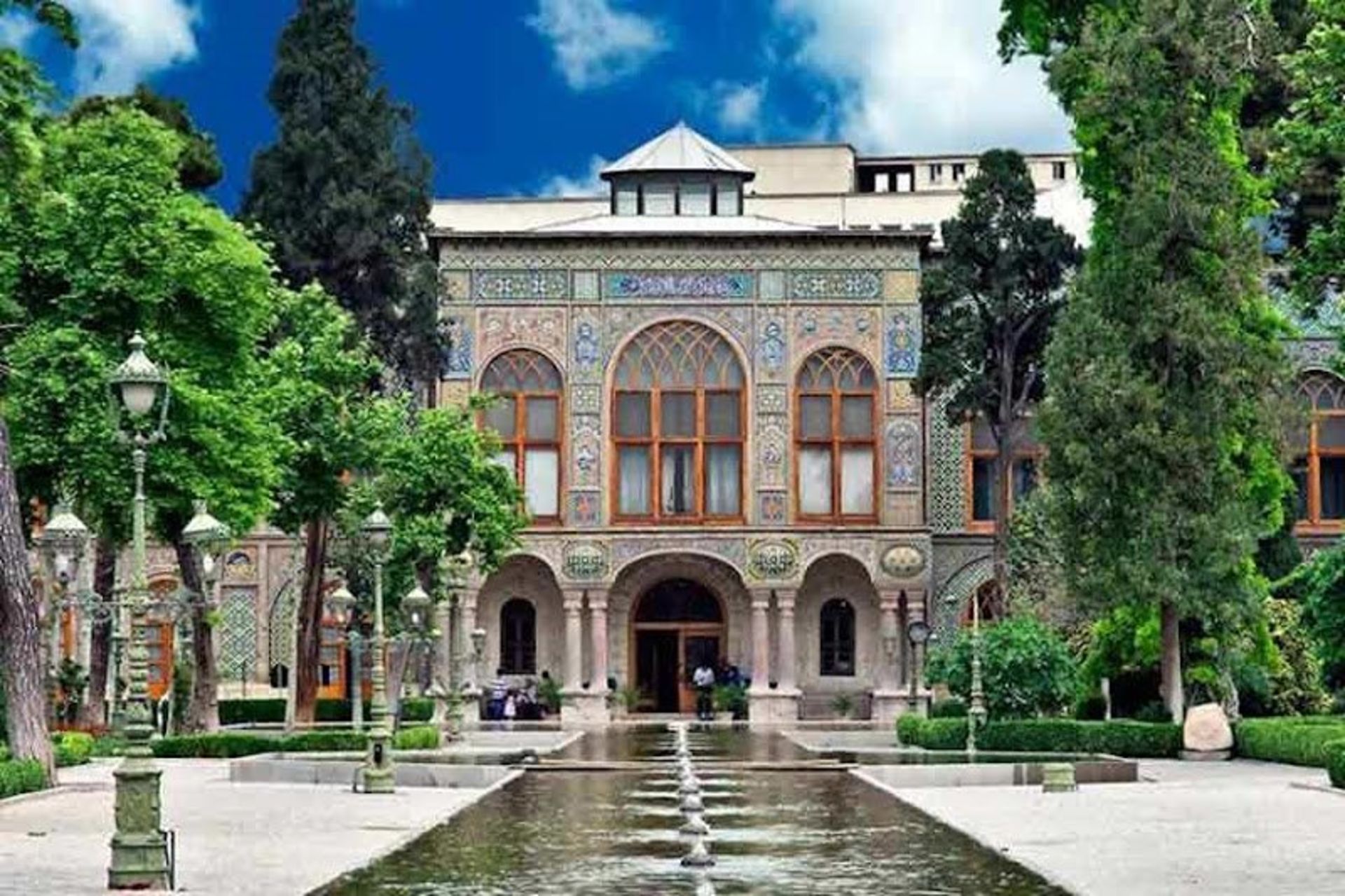
Photographer: Amir Mesibi / Google Map
Among the other parts of this collection, we can mention the manuscript library, visual documents center, written documents center, technical office, international affairs, print library, cultural affairs, introduction affairs, child and adolescent unit, legal office unit. Golestan Palace dates back decades before the Qajar period. Currently, the area of this palace reaches 4.5 hectares; An area equal to one tenth of its original area. In the past, this palace was the residence of kings such as Agha Mohammad Khan, Fath Ali Shah, Naseruddin Shah, Muzaffaruddin Shah and Ahmad Shah Qajar.
Firozabad, Fars
- Province: Fars
- City: Firouzabad
- Best time to visit: Autumn, winter and late April
Firouzabad is one of the ancient and very old cities of Iran dating back to the Sassanid period, which is also known as “Gor City” or “Ardashir Khoreh”. This city was built by Ardeshir, the founder of the Sassanid dynasty, and was used as the capital of the government during his time. Firouzabad has an area of 1,469 hectares and is located three kilometers away from the ancient site of Gor. The architecture of Firozabad is completely circular in shape; This city is the only round city with circular architecture in the whole world. The Sasanian archaeological landscape of Fars region (registered in the UNESCO heritage), Ardeshir Babakan Palace or Fire Temple of Firozabad, Dokhtar Castle, Tangab Lake and Dam, Hayqar Gorge and Rodbal tourist village are among the most important sights of Firozabad city.
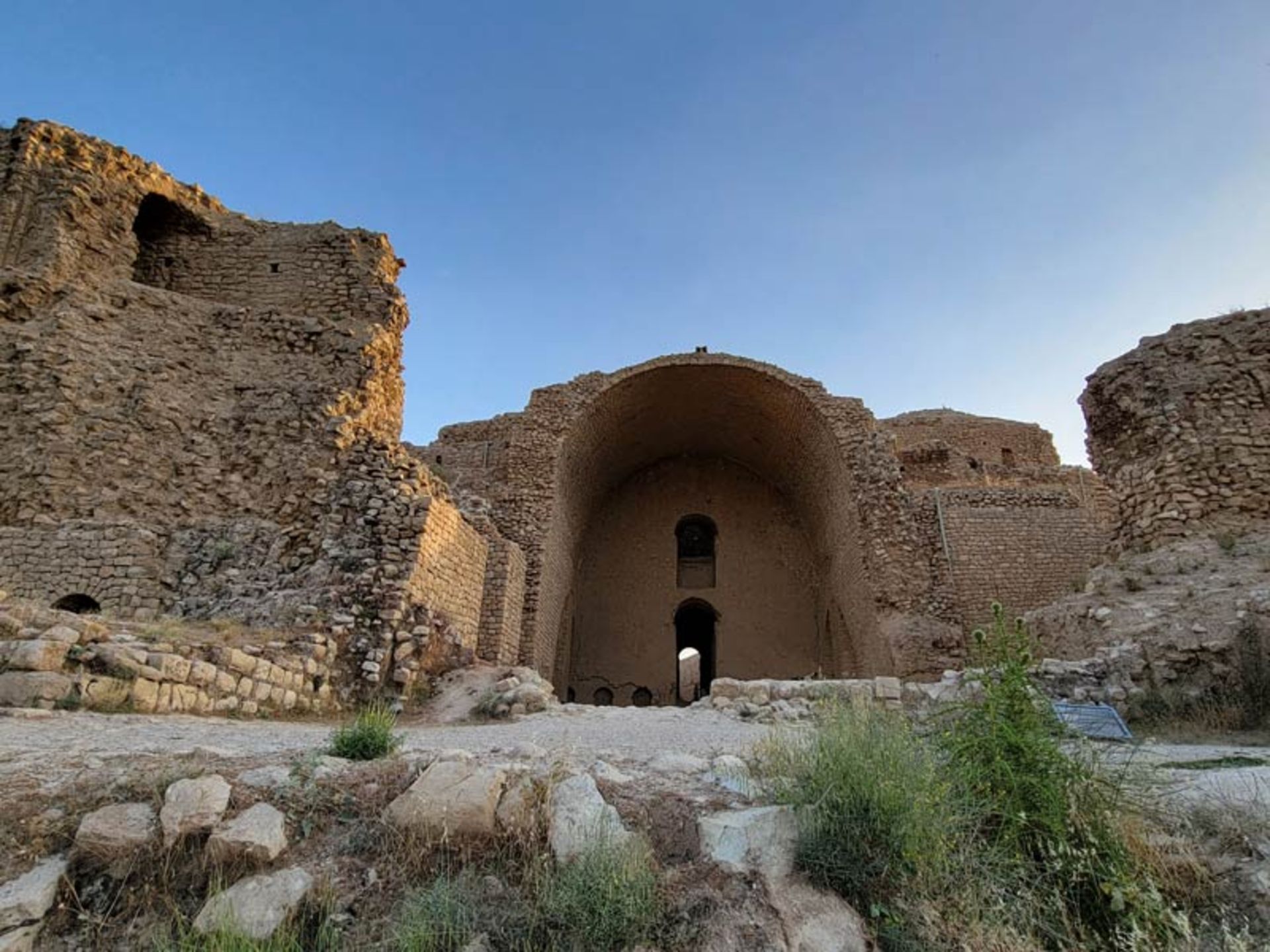
Photographer: Farshad Hafez Al-Katb / Google Map
Sightseeing places in Iran for travel
Hyrcanian forests
- Province: East Azerbaijan, Ardabil, Gilan, Mazandaran, Golestan, Semnan and North Khorasan
- Best time to visit: Spring, summer and autumn
- UNESCO natural heritage
The Hyrcanian forests of Iran and the Republic of Azerbaijan are among the most important regions of the biosphere in the world, which play an effective role in the formation of the life cycle. Unique species of plants and animals have grown in the Hyrcanian forests over time, unfortunately some of them have become extinct today. The special location of the Hyrcanian forests on the edge of the Caspian Sea and the surrounding mountains has provided special climatic conditions for plant and animal species that cannot be seen in the forests of other parts of the world.
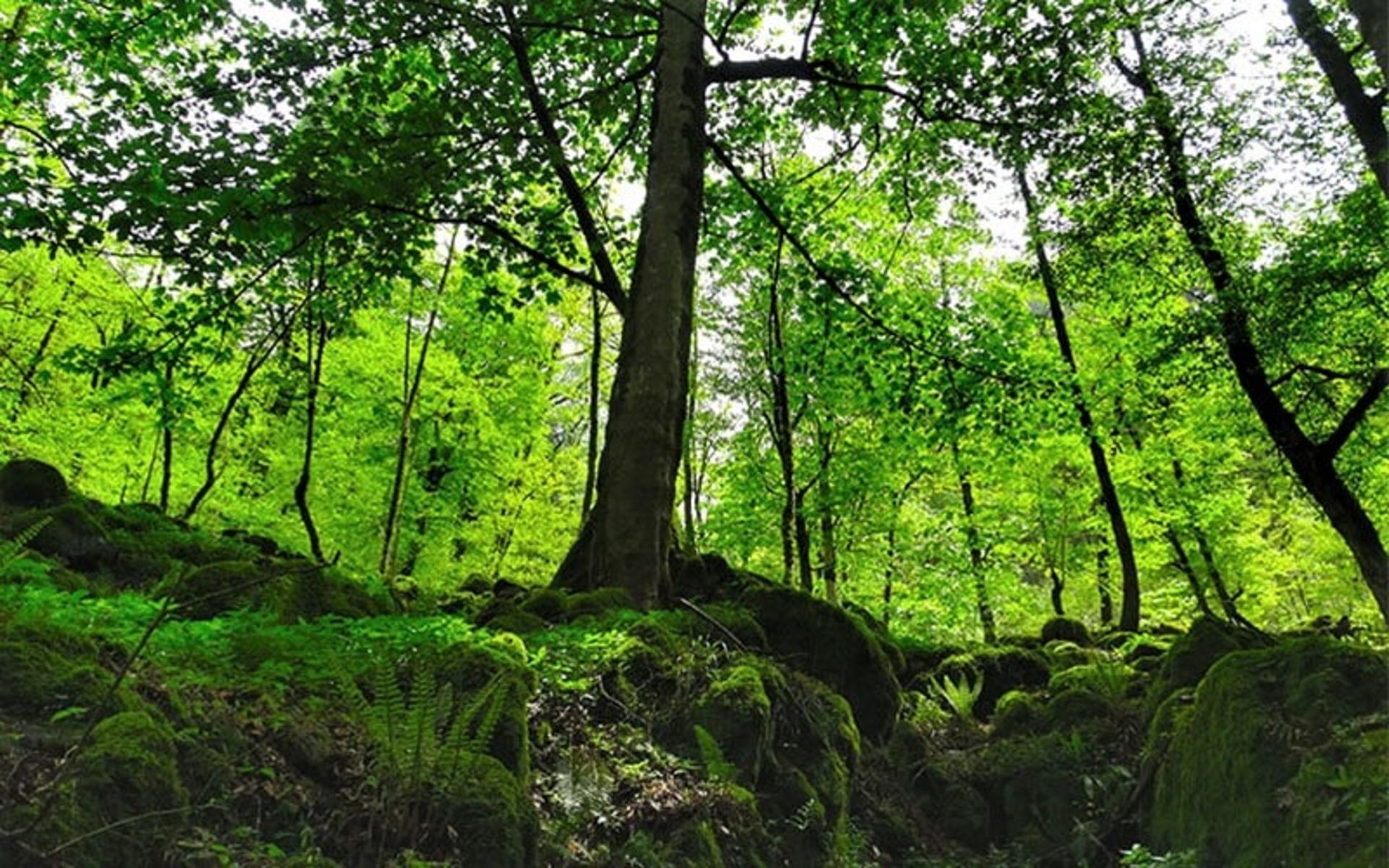
Photographer: Unknown / irandestination.com
Scientists have estimated the age of Hyrcanian forests with an area of two million and 125 thousand hectares around the third geological period or 40 million years ago. In general, Hyrcanian forests make up only one percent of the area of Iran and only 10 percent of these forests are protected. Hyrkan forests are like a huge air purification factory, and their vastness plays a significant role in the production of oxygen and clean air in the surrounding areas. Alimestan Amol Forest, Abar Shahroud Forest, Bola Sari Forest, Vaz Noor Forest, Kajor Nowshahr Forest, Lisar Talesh Forest, Chaharbagh Chalus Forest and Tankabon Dry Forest are the most famous Hyrcanian forests of Iran.
- Province: Kurdistan
- City: Marivan
- Best time to visit: Mid-spring and mid-autumn
- National works of Iran
- UNESCO World Heritage
Oramanat is the name of a region in Oraman section of Sarovabad city in the west of Kurdistan province and a 75 km long road connects it to Marivan. This region is a common part between Iran and Iraq with famous rivers named Sirvan and Leila. The houses of Oraman village are built with stone in the form of dry stone and stairs, that’s why Oraman is also known as the village of Hazar Masoleh.
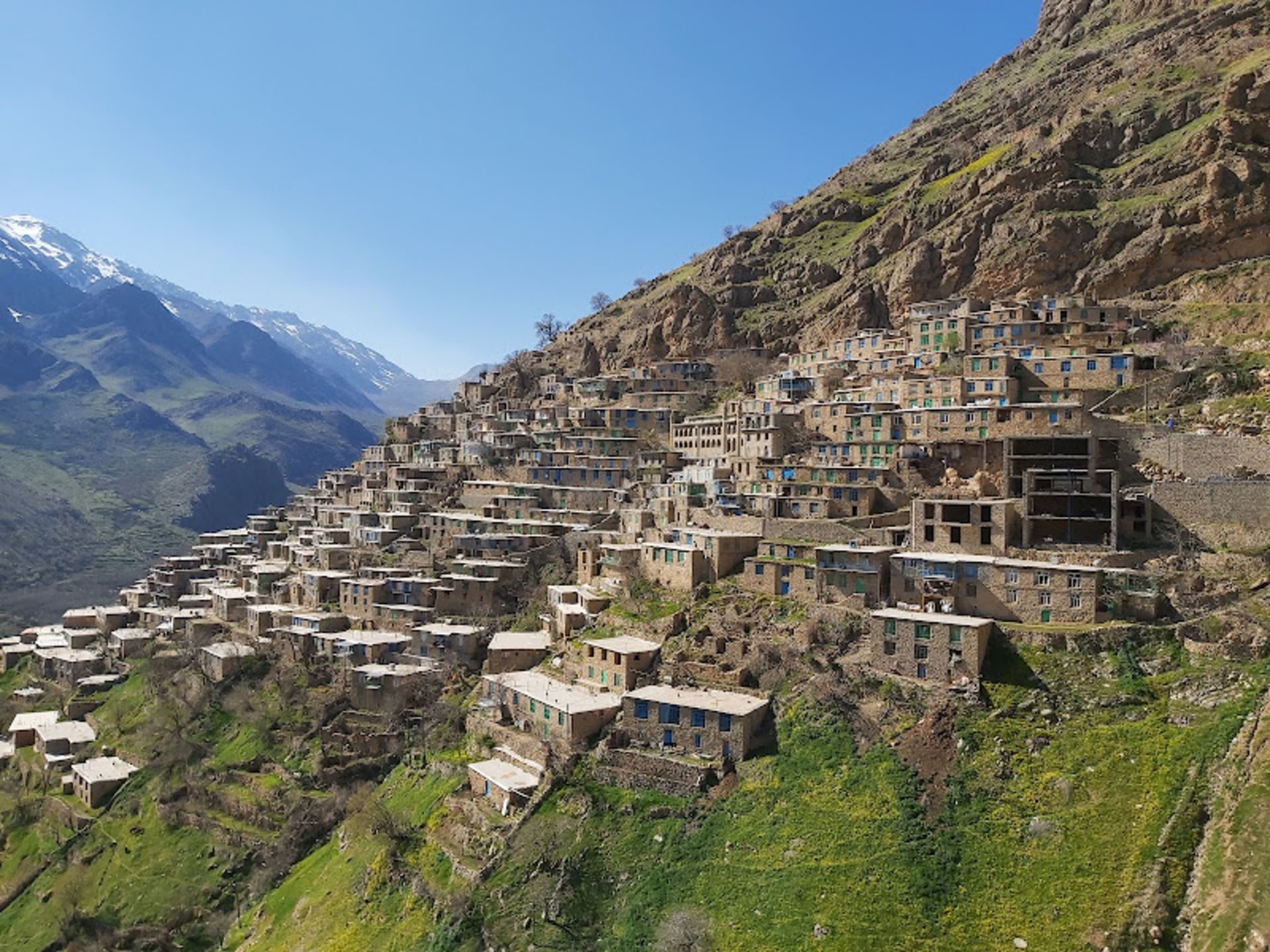
Photographer: Hossein Ebrahimi / Google Map
According to the remaining documents, humans lived in this area since about 40,000 years ago and during the Paleolithic era. The climate of Oraman region is mountainous; An area covered with large and green forests that attracts thousands of domestic and foreign tourists.
- Province: Sistan and Baluchistan
- City: Zabul
- Best time to visit: Early to mid fall
- National works of Iran
- UNESCO World Heritage
The burnt city is considered to be one of the oldest civilizations in the world dating back five thousand years
The burnt city is based on archaeological findings dating back five thousand years before the oldest civilizations in the world. This attraction is located in high hills between 12 and 18 km high and between Hamon and Hirmand rivers. When you travel to this area, you will come across a large museum in the desert, where a treasure is hidden in every corner.
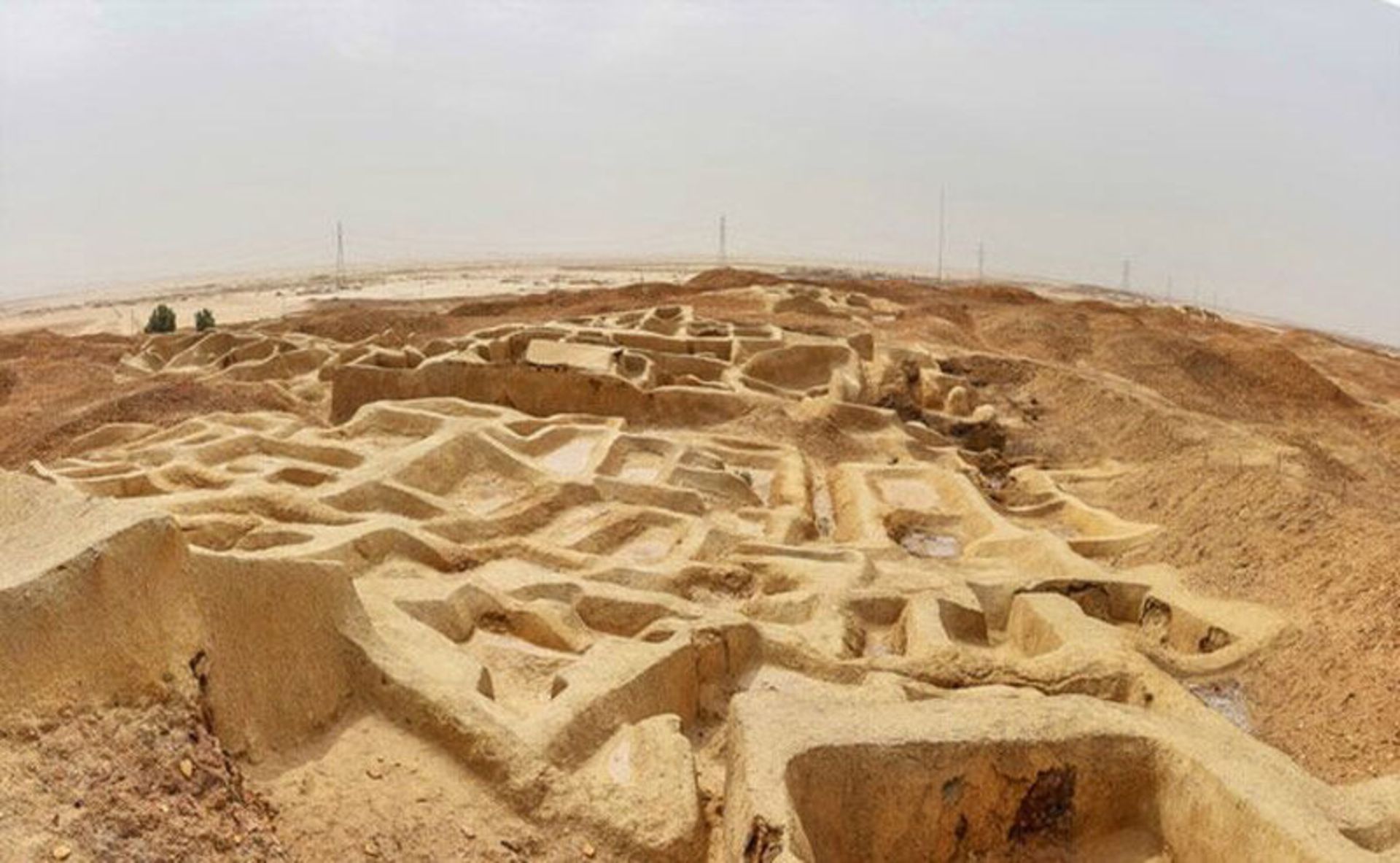
Photographer: unknown / IRNA news agency
Burnt City was one of the largest cities of ancient Iran and one of the most important civilizations in the eastern plateau of Iran, which is also known by other names such as “City of Art”, due to the discovery of outstanding works of art and handicrafts (the world’s first animation on a cup) and “City of Science”, due to the discovery of outstanding scientific findings, especially in the field of medical science (such as an artificial eye, a ruler made of ebony wood, an old backgammon board with 60 pieces). Burnt city is one of the best sightseeing places in Iran and you should not miss the opportunity to visit it.
- Province: Kerman
- City: Shahrbabak
- Best time to visit: spring and summer
- National works of Iran
- UNESCO World Heritage
Maimand village of Kerman is famous for its amazing rock architecture. This Dastkand village with an area of 420 square kilometers is located at an altitude of 2,240 meters above sea level and between the plain and the mountains, and its history dates back to two to three thousand years ago. The houses of the village or “kiches” are stacked on top of each other and form five floors. Maimand has about 406 cottages, the total number of rooms of which reaches 2,560. The architecture of kiches is such that they act like a thermal insulator, wind and rain do not penetrate into it, and they are also resistant to fire. The mosque, Hosseiniyeh, school, bathhouse and Maymand fire temple are among the sights of this village.
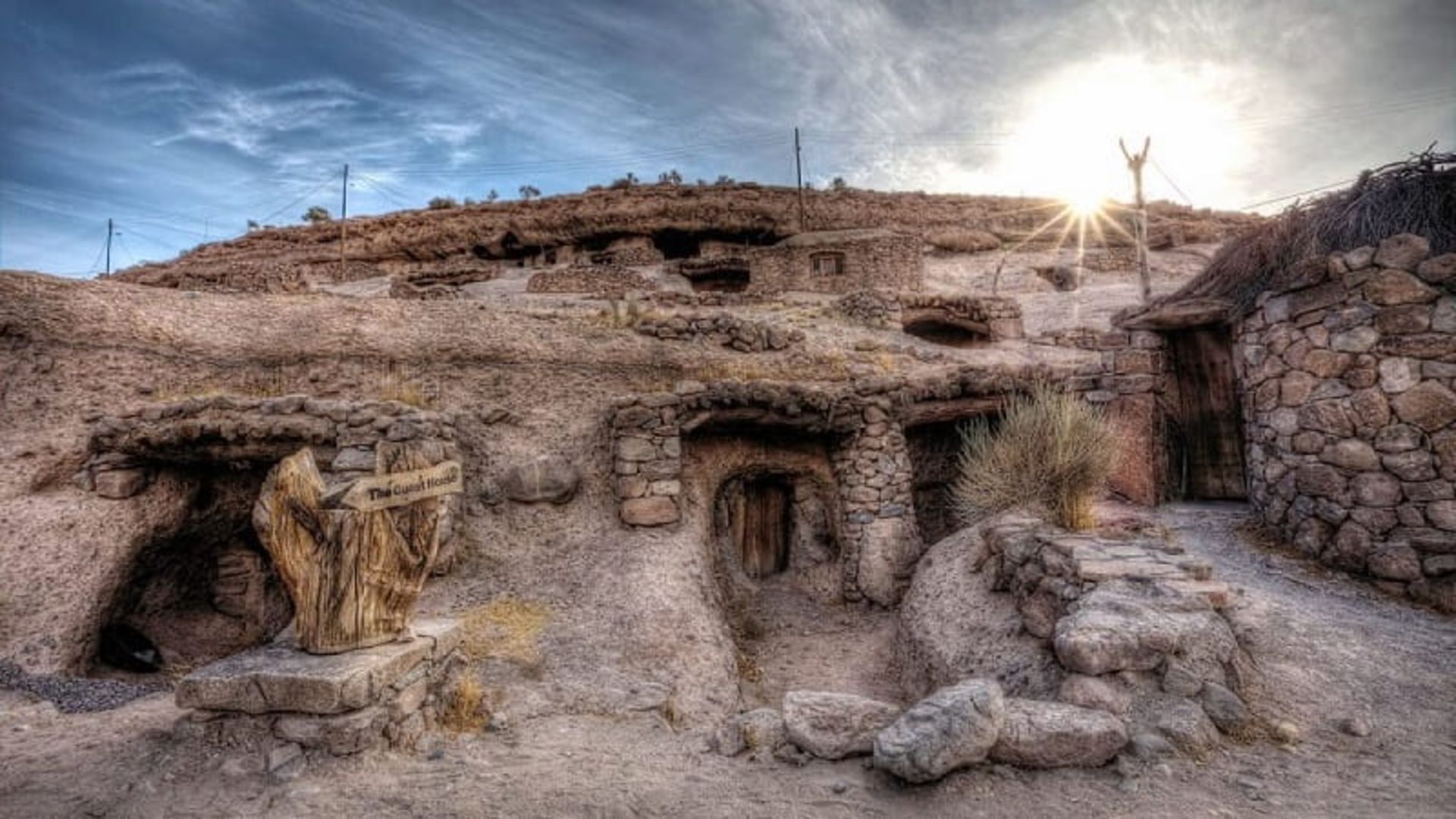
Photographer: Unknown / chaparpersiantravel.com
Recommended activities in Iran
Iran, with its unique geographical, climatic and cultural diversity, offers a wide range of tourism activities to travel enthusiasts. From nature tourism in pristine landscapes to cultural and adventurous experiences, every tourist can choose an attractive activity in different parts of the country according to his taste and travel style. In the following, we will get to know some of the most important proposed activities in Iran.
Nature tourism and ecotourism
Nature tourism is one of the most popular tourism activities in Iran, which is possible in all seasons of the year due to the country’s climatic diversity. The Hyrcanian forests of the north, the vast central deserts, the mountains of Zagros and Alborz, and the coasts of the north and south provide diverse opportunities for nature walks, camping, bird watching, and nature photography. This type of tourism is an ideal choice for those who like to relax and experience life close to nature.
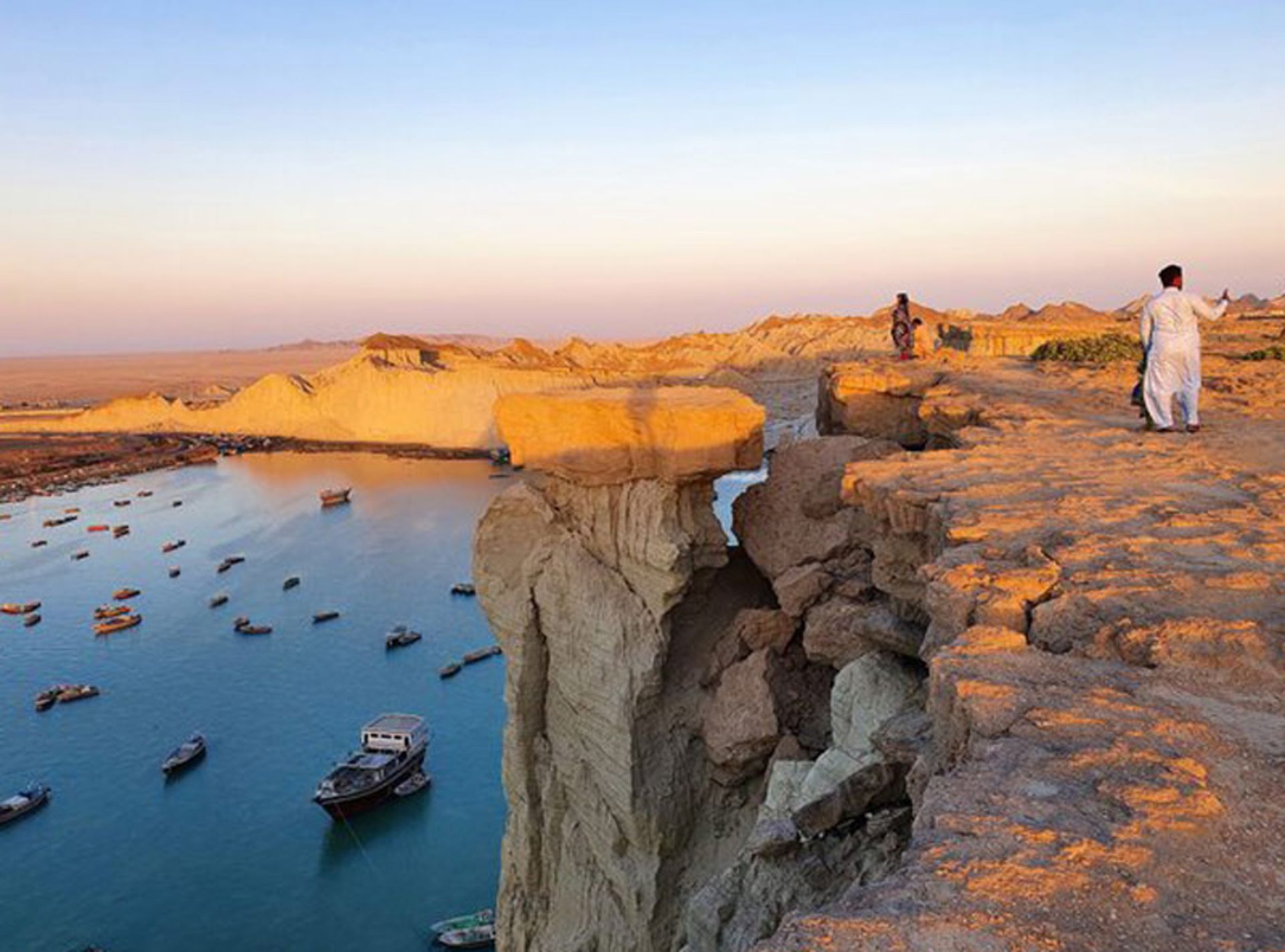
Photographer: unknown / yjc.ir
Cultural and historical tourism
Iran is one of the richest countries in the world in terms of historical and cultural monuments. Visiting historical cities such as Isfahan, Shiraz, Kerman and Tabriz provides an opportunity to learn about Iranian architecture, art, rituals and lifestyle. Visiting museums, visiting historical contexts and participating in local events and rituals are among the activities that make cultural tourism a deep and lasting experience.
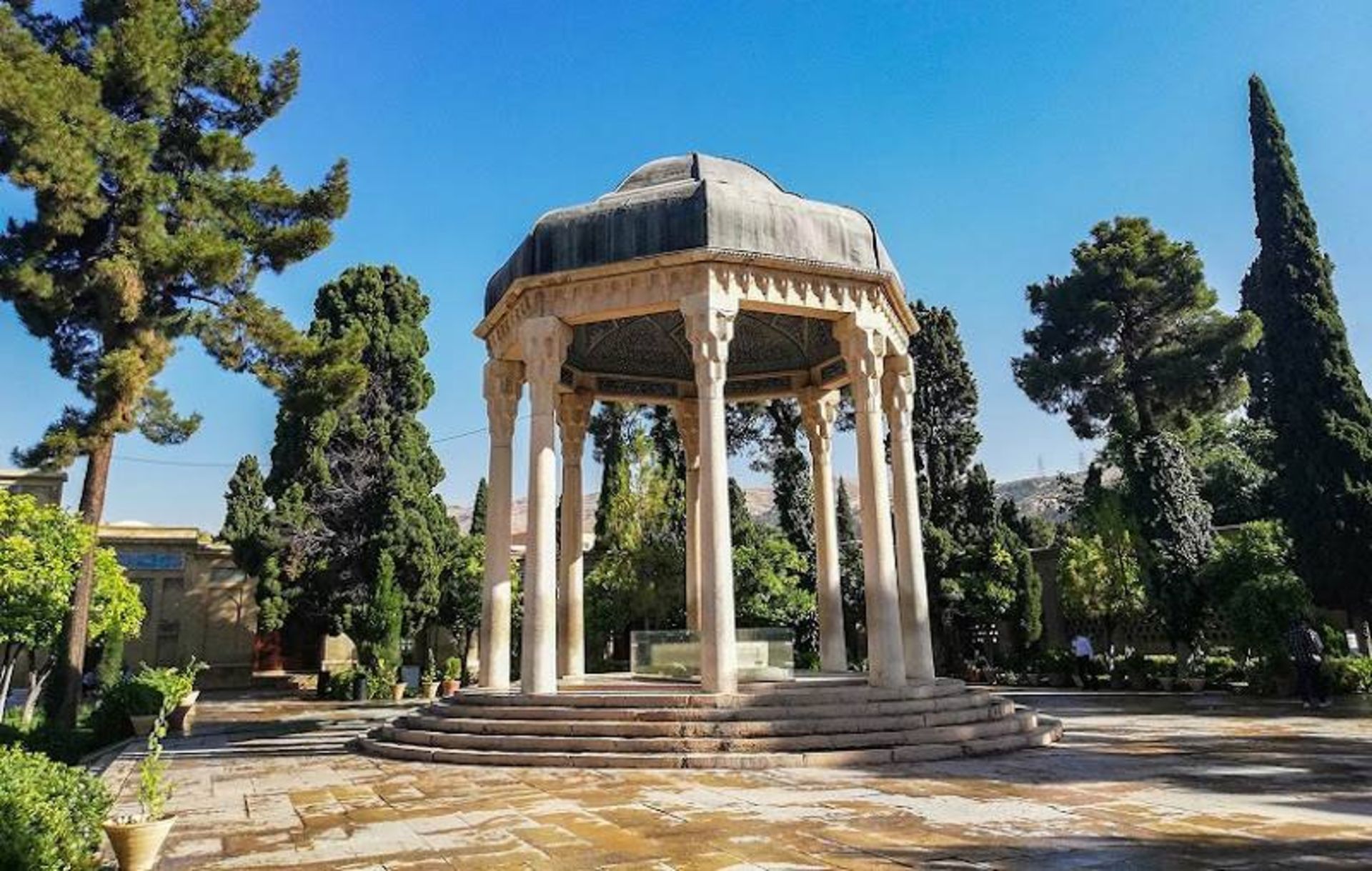
Photographer: Map 118 / Google Map
Adventure tourism
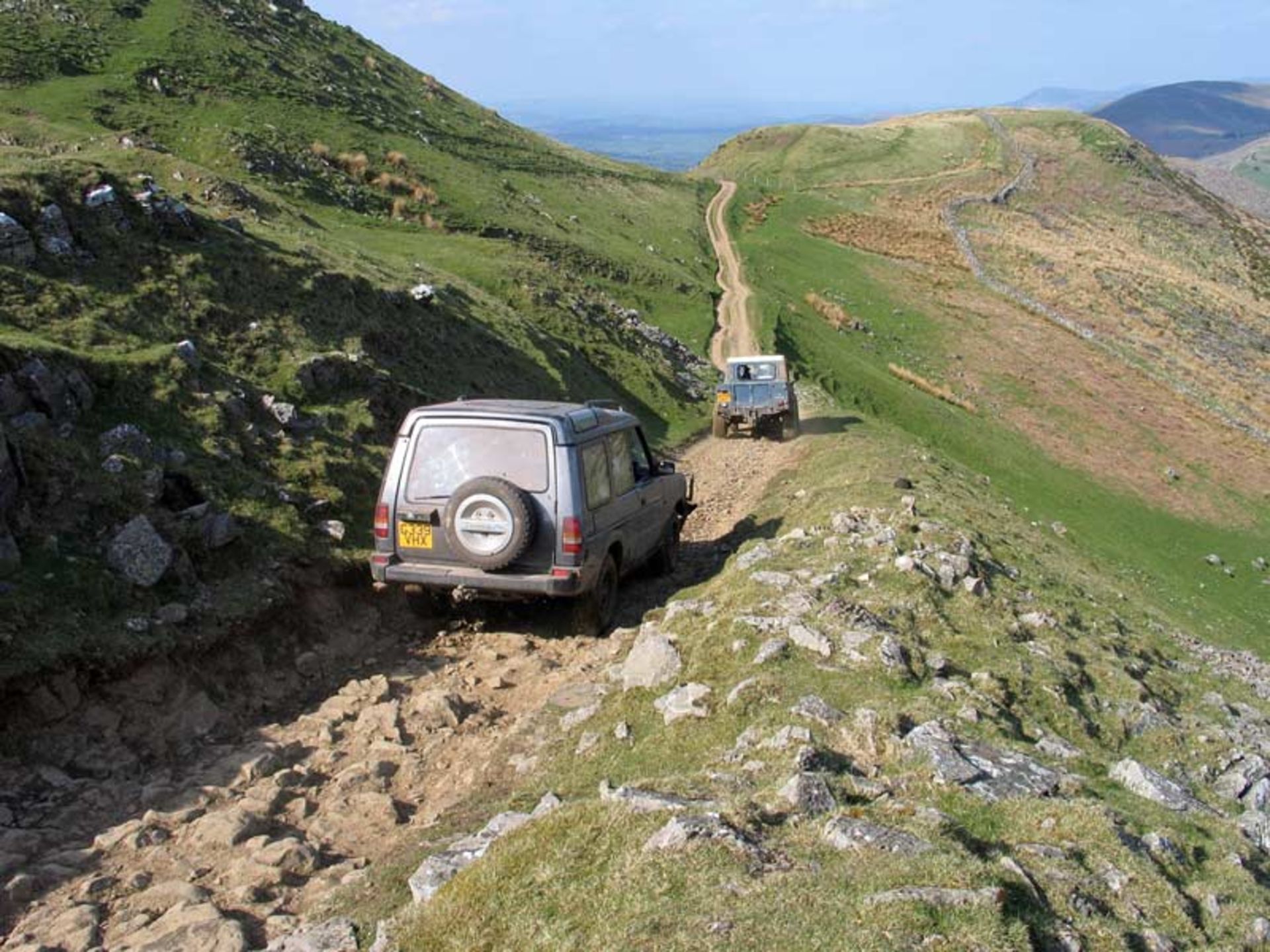
For people who are looking for excitement and different experiences, Iran has a variety of options in the field of adventure tourism. Climbing, rock climbing, caving, off-roading in the desert, paragliding and rafting are among the activities that can be done in different regions of the country. This type of tourism, in addition to excitement, requires careful planning and compliance with safety principles.
Food tourism and local experiences
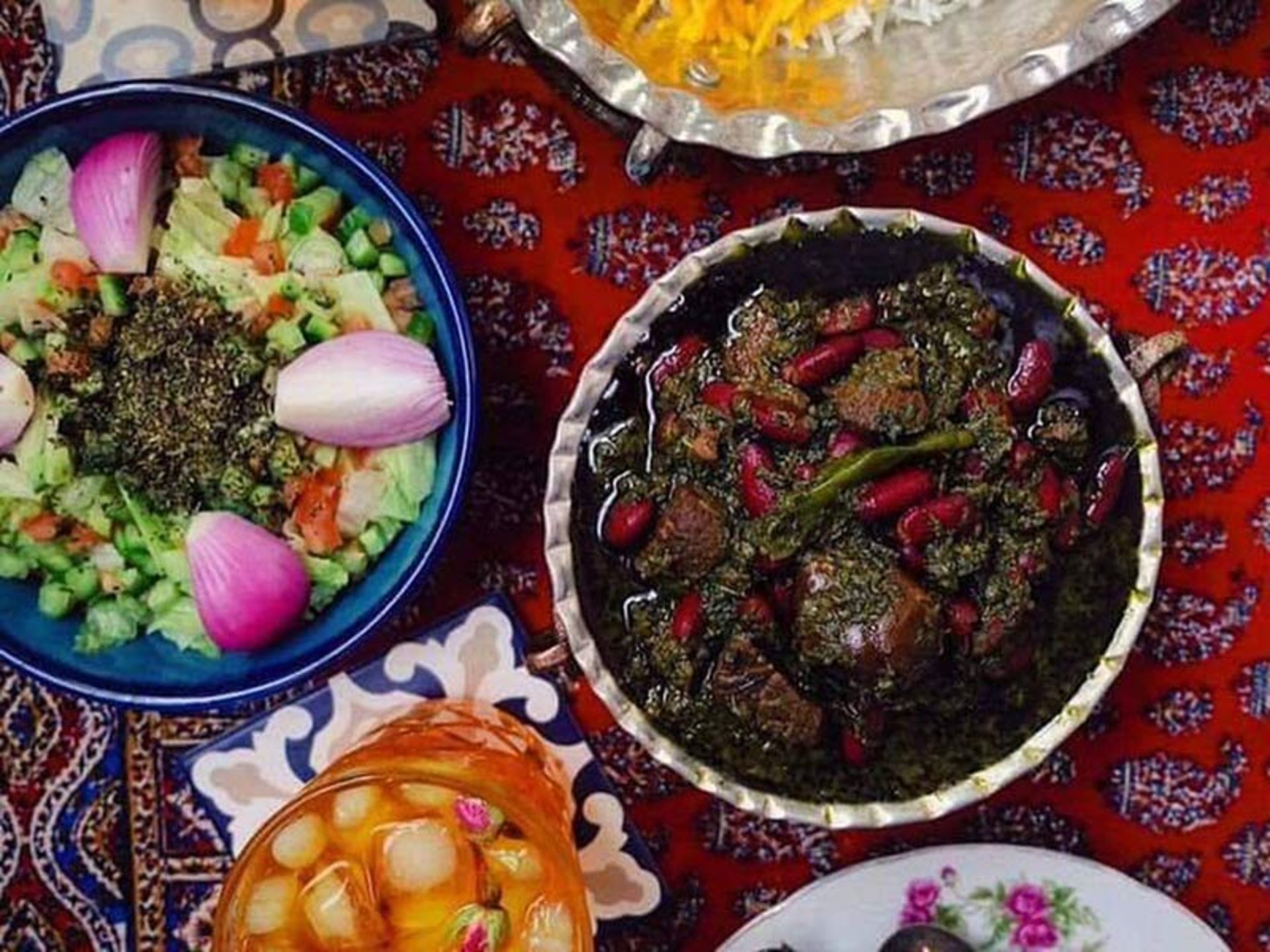
Iran’s cultural diversity is well reflected in cooking and local foods. Experiencing the traditional foods of each region, attending local markets and getting to know cooking methods is an attractive part of traveling in Iran. Food tourism provides an opportunity to touch local culture from a different and pleasant angle.
Health and relaxation tourism
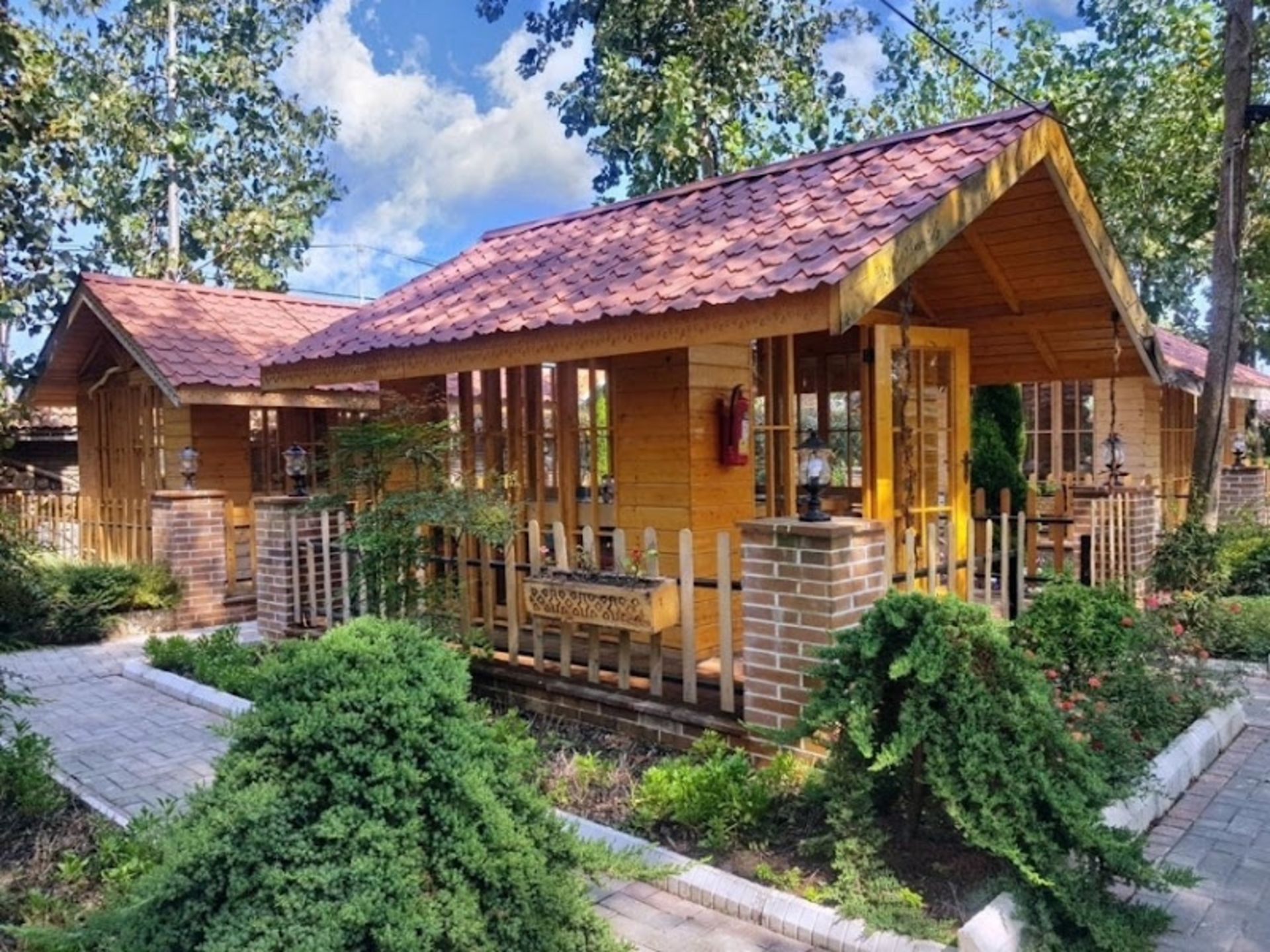
Hot springs, traditional medicine centers and peaceful eco-tourism residences have made Iran a suitable destination for health and relaxation tourism. These types of activities are performed with the aim of recovering the energy of the body and mind, and are an ideal option for people who are looking for a quiet trip away from the hustle and bustle.
Photographer: Nasim Ghadri / Google Map
If you want to get acquainted with the unique variety of Iran’s tourist attractions, including historical, natural and cultural, we suggest that you take a look at the list of Iran’s sightseeing places in Kajaro. This list will familiarize you with the most prominent tourist destinations of the country and help you plan purposeful and inspiring trips.

RCO NEWS