The biggest source of silver production in Iran is actually not an independent and special silver mine; Rather, it is a set of polymetal deposits that, along with the extraction of metals such as copper, lead, zinc, and gold, silver are also offered as a valuable by-product. Unlike big countries like Mexico that have dedicated silver mines, the story is a little different in Iran and this difference has its own charms.
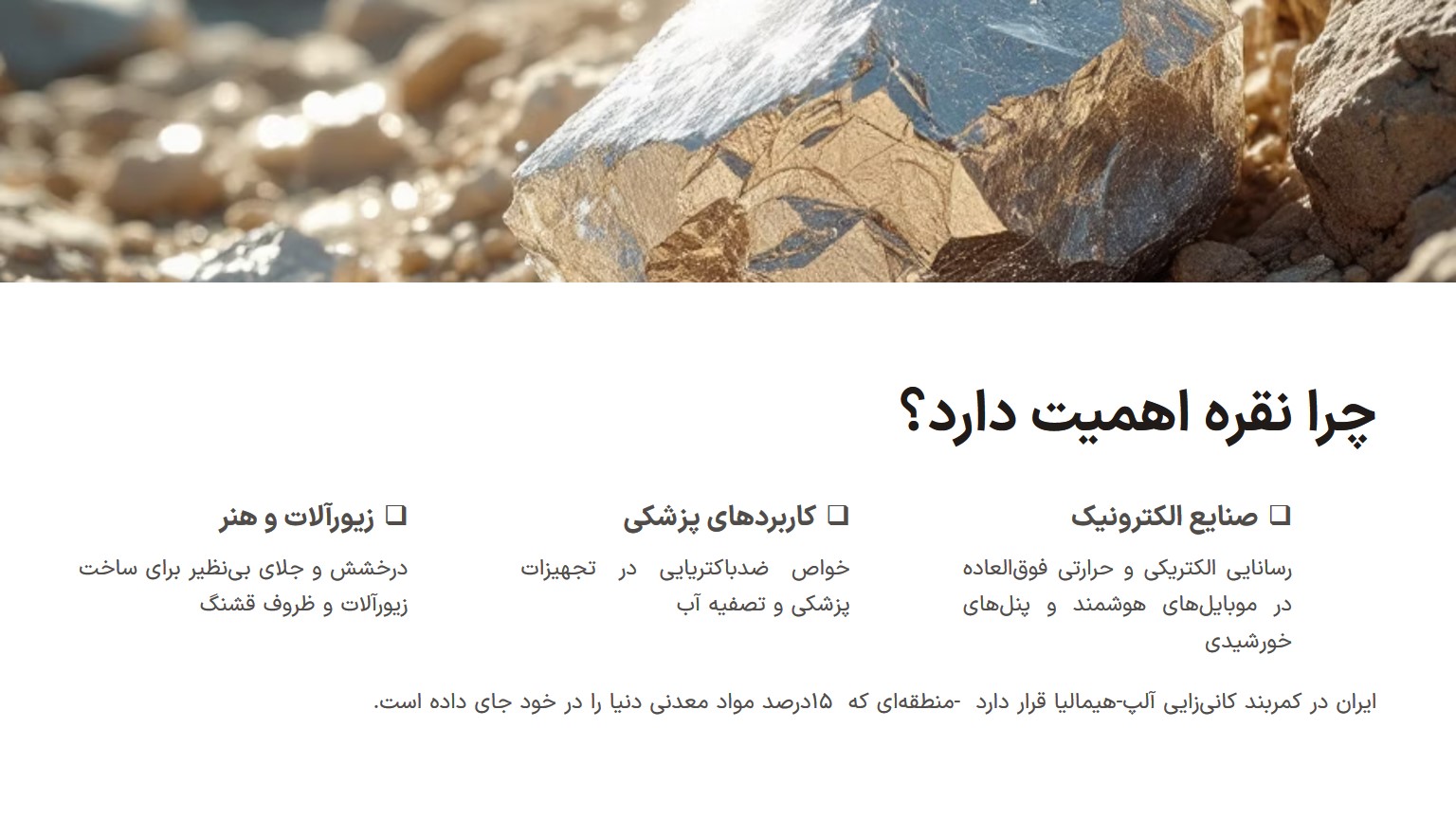
Silver has been one of the bright and widely used metals of mankind since long ago. From making ancient ornaments and coins to using in modern equipment. Even today, an important part of popular jewelry, such as Sterling silverIt is made of this precious metal. Iran, which is located in the rich Alpine-Himalayan mineralization belt, thanks to its special geological position, has significant deposits of silver in its heart. Although this silver is usually extracted as a by-product, these scattered sources play an important role in the country’s annual production.
Iran’s biggest silver resources: hidden treasures in the heart of the stone
Well, we got to the point! As we said, if you are looking for a single silver mine and the “biggest” silver mine in Iran, I must say that we do not have such a thing. But instead, there are a series of polymetal mines in our country that have a very large share in Iran’s silver production and are actually our “biggest sources of silver”. Each of these mines has its own story and produces silver along with other main metals. Let’s take a look at the most important ones:
Songun copper mine (East Azerbaijan)
Songun copper mine, which is located in Varzeghan city of East Azerbaijan, is the largest copper mine in Iran. This mine is not only important for copper, but it is considered one of the main sources of silver as a side product in our country. Its total reserves reach billions of tons, and silver is also extracted from this mine along with copper. Songun is one of the old mining centers of Azerbaijan and is located along the Little Caucasus mountains. An area that has a lot of mineral potential.
Angoran Mine (Zanjan)
Angoran mine in Zanjan province is the largest lead and zinc mine in the Middle East. This mine is considered one of the richest sources of high grade silver in Iran. Imagine it, the silver grade in some parts of this mine reaches about 500 grams per ton, which is a significant number! Calcimin Company plays an important role in the exploitation of this mine, and its silver is also obtained as a valuable by-product. Angoran even has the potential of mineral tourism.
Latla Mine (Kerman)
The Latla mine in the northwest of Shahr Babak, Kerman, is a polymetallic gold-silver deposit that has significant deposits of silver. It is said that the silver reserve of this mine is about 100 tons and its grade is high (about 140 grams per ton). This mine is mostly known for its gold, but its silver also plays an important role in its production and has high potential for development.
Sarcheshme copper mine (Kerman)
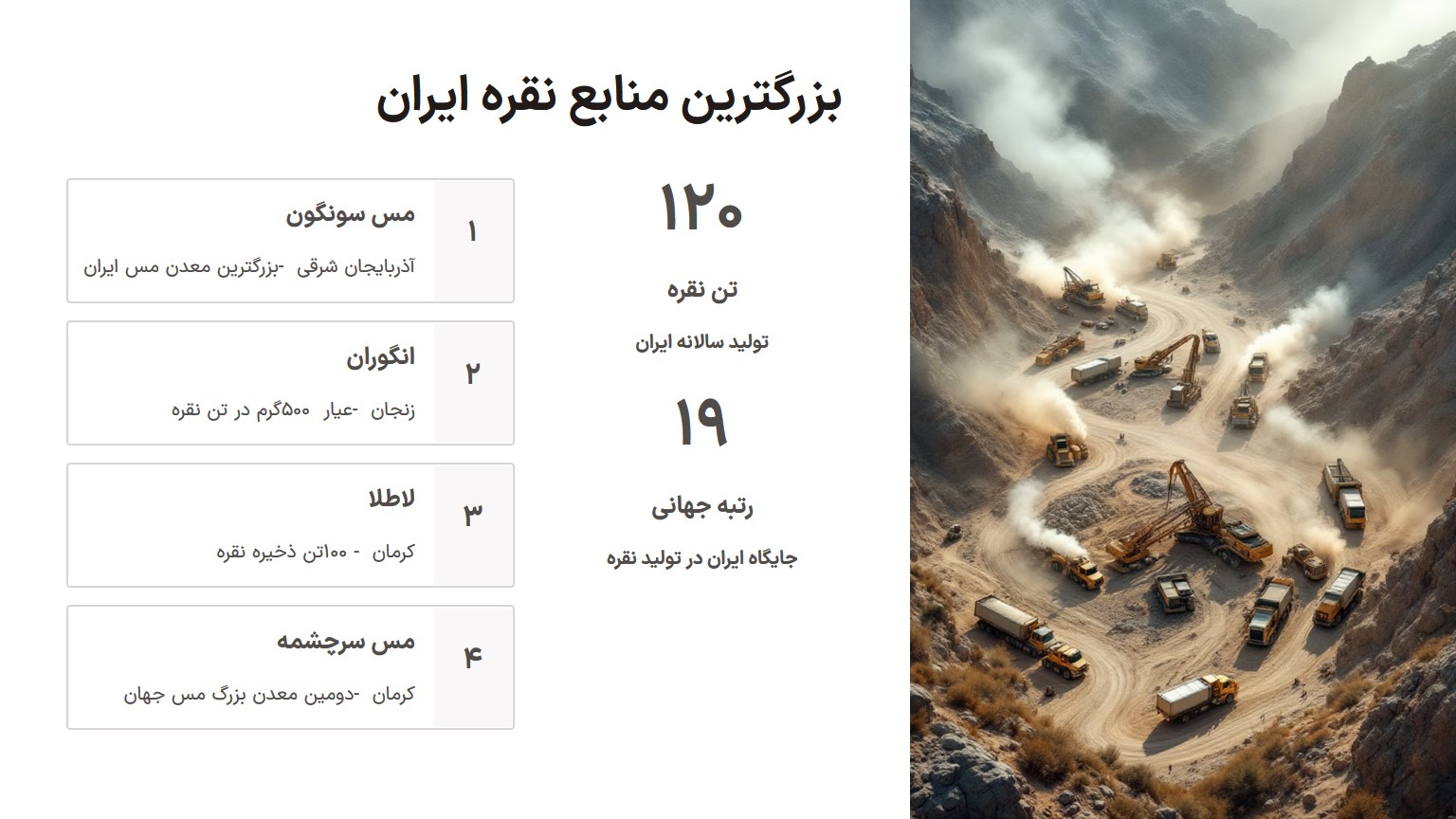
Sarcheshme copper mine, which is located in Kerman province, is the second largest copper mine in the world. Well, it is natural that such a huge mine has silver as a byproduct. Here too, silver is extracted from copper concentrates and helps to produce copper-silver cathode.
Mote Gold Mine (Isfahan)
Mote gold mine in Isfahan province is the oldest gold mine in Iran. This old mine, in addition to gold, also produces about 25 kg of silver annually, which shows the association of these two precious metals with each other.
Nakhlak lead mine (Isfahan)
Nakhlak mine in the north of Anark, Isfahan, is one of the oldest lead-silver mines in Iran, dating back to the Sassanid era. Even today, this mine is known as a mining museum and the remains of its ancient furnaces show the methods of extracting silver from lead in the past.
Zarshoran gold mine (West Azerbaijan)
Zarshoran mine in Takab, West Azerbaijan, is the largest gold mine in the Middle East. This mine, like other gold mines, produces silver as a side product, and the capacity of its factory to produce silver is also significant.
Zarmehr Mine and Zar Mountain (Razavi Khorasan)
These two mines in Razavi Khorasan province have high potentials in the field of gold and silver, and new discoveries indicate significant reserves of these metals in the region.
Reshm Mine (Semnan)
Reshem mine in the south of Damghan, Semnan, is an old lead-silver mine, which, of course, is mostly abandoned today. But the potential to revive and reuse it still exists.
Aq Dareh Mine (West Azerbaijan)
Agh Dere mine in Takab, West Azerbaijan, is the second largest gold mine in Iran, which also produces silver as a side product.
In order to get to know these mines better, we also have a comparison table:
Although Iran does not have the “biggest” dedicated mine of silver, it has hidden valuable treasures of silver in the heart of its multi-metallic mines, which have a significant contribution to the global production of this metal.
| The name of the mine | province | Base metal(s). | companion metal (silver) | Reserve amount (base metal/silver) | Silver carat (some) | Activity status |
|---|---|---|---|---|---|---|
| Mes Songun | East Azerbaijan | copper | silver, gold | +5 billion tons of copper | – | active |
| Angoran | Zanjan | lead, zinc | silver | 12 million tons of lead/zinc | 500 grams per ton | active |
| Latla | Kerman | gold, copper | silver | 100 tons of silver, 5 tons of gold | 140 grams per ton | active |
| copper source | Kerman | copper | Silver, molybdenum | 1.2 billion tons of copper | – | active |
| pearl gold | Isfahan | gold | silver | – | 25 kg annually | active |
| Palm lead | Isfahan | lead | silver | 850 thousand tons of lead | 600-700 ppm | Active/Museum |
| Gold of gold | West Azerbaijan | gold | silver | 27 million tons of gold | – | active |
| Zarmehr and Koh Zar | Khorasan Razavi | gold | silver | 1.8 million tons of gold | 1 gram per ton (gold) | active |
| Rashm | Semnan | lead | silver | – | – | Abandoned/revival potential |
| Red gold of the valley | West Azerbaijan | gold | silver | 3.5 million tons of gold | 1.5 grams per ton (gold) | active |
Frequently asked questions
Does Iran have a prominent position in the Middle East region in terms of silver reserves?
Yes, Iran is one of the rich countries in the region in terms of mineral deposits, including silver, which is mainly extracted as a by-product, due to its location in the Alpine-Himalayan mineralization belt.
What is the government’s role in supporting private investments in Iran’s silver mines?
The government, through organizations such as IMIDRO, conducts policy, licensing and monitoring of mines and has provided facilities for attracting private capital.
Are new methods for extracting silver from the tailings of old mines being investigated in Iran?
Yes, due to the advancement of technology and the economic value of silver, the investigation of new methods for extracting silver from the tailings of old mines in Iran is underway to increase productivity.
How much silver produced in Iran is consumed domestically and how much is exported?
Part of the produced silver is consumed in domestic industries such as jewelry and electronics, and the rest is exported to other countries in the form of ingots or concentrates.
How can environmental destruction caused by silver mining activities in Iran be prevented?
By complying with environmental standards, using clean technologies and planning for the reconstruction of areas after exploitation, the negative effects of mining activities can be minimized.

RCO NEWS