


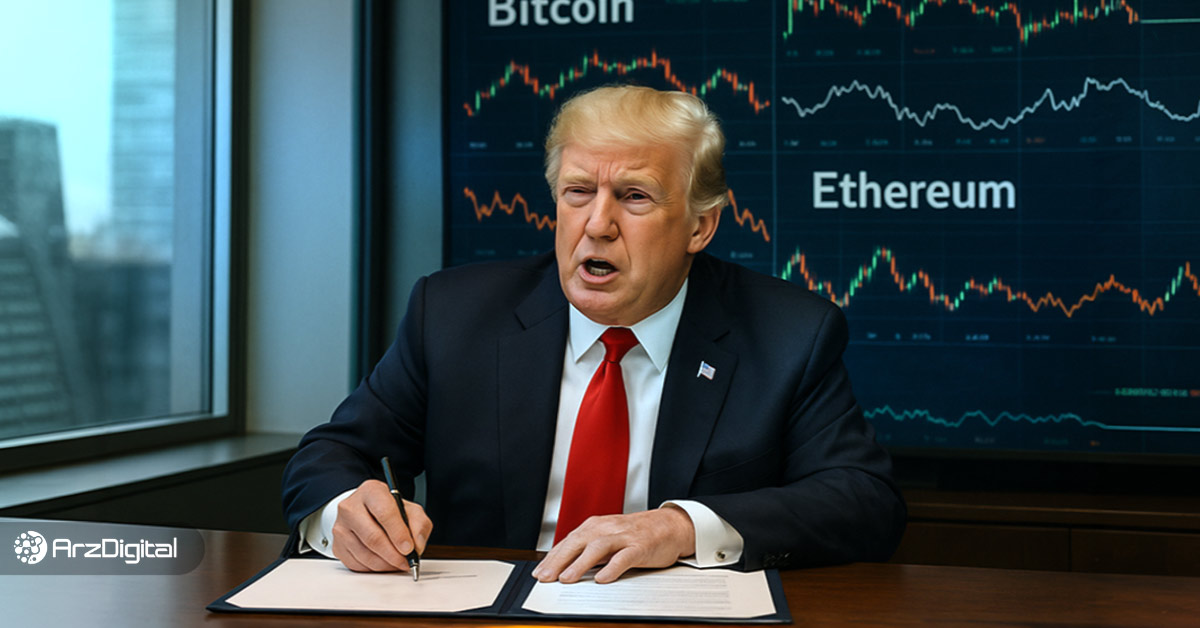
The Cryptocurrency market has been experiencing many changes in recent years, one of which is the influencing factors in global economic policies. These developments sometimes exhibit short -term fluctuations and sometimes as long -term trends. One of the recent controversial cases is Trump’s tariffs that have had a significant impact on financial markets, especially the digital currency.
In this article, we will first examine the impact of tariffs on financial markets, including digital currency and gold, and take a closer look at price reactions and investors’ behavior. Then we examine the practical solutions for risk management in these complex conditions. Finally, by reviewing the comments of the experts and predicting the future, we will provide a clearer picture of the way forward. Join us.
What are Trump’s business tariffs?
Trump’s commercial tariffs are a type of tax on imports that are intended to support domestic production and reduce dependence on foreign goods. This policy includes reciprocal tariffs (Retaliati Tariff); That is, if a country is tariffed from American goods, the United States will be as tariff from that country’s goods.
Rest retaliatory tariffs are also considered to respond to strict business policies in other countries. This approach strives to protect the domestic industry from foreign competition and to balance trade.
Reasons for applying business tariffs
Tariffs are part of America First policy that focuses on prioritizing US domestic economic interests. This policy strives to protect the US market from unnecessary foreign goods. The Trump administration believes that support for domestic producers should be a complete priority, even if it is at the expense of increasing trade tensions.
One of the main motivations for imposing tariffs is the US TRADE Deficit with other countries that exceeds $ 1.5 trillion in some years. Trump says the deficit is a sign of an unfair business system. His goal is to impose tariffs, limit imports and balance the country’s trade balance.
An important part of this business policy is the revival of traditional American industries, including steel, aluminum and automotive. The government is trying to save these industries from cheap foreign competition. The main belief is that returning production into the inside will increase employment and strengthen economic security.
Legal and legal basis
Trump relies on the “IEEPA) of the IEEPA for tariffs. The law allows the president to impose restrictions on imports, including tariffs on national security. The Trump administration describes the economic threat caused by cheap imports.
Using this legal tool, Trump implement tariffs without the need to vote in Congress. The move has been criticized by many delegates who consider it to be ignored by legislation. Some courts have also expressed concern over the widespread interpretation of the law and the focus of power in the hands of the president.
Trump’s tariffs in year 2
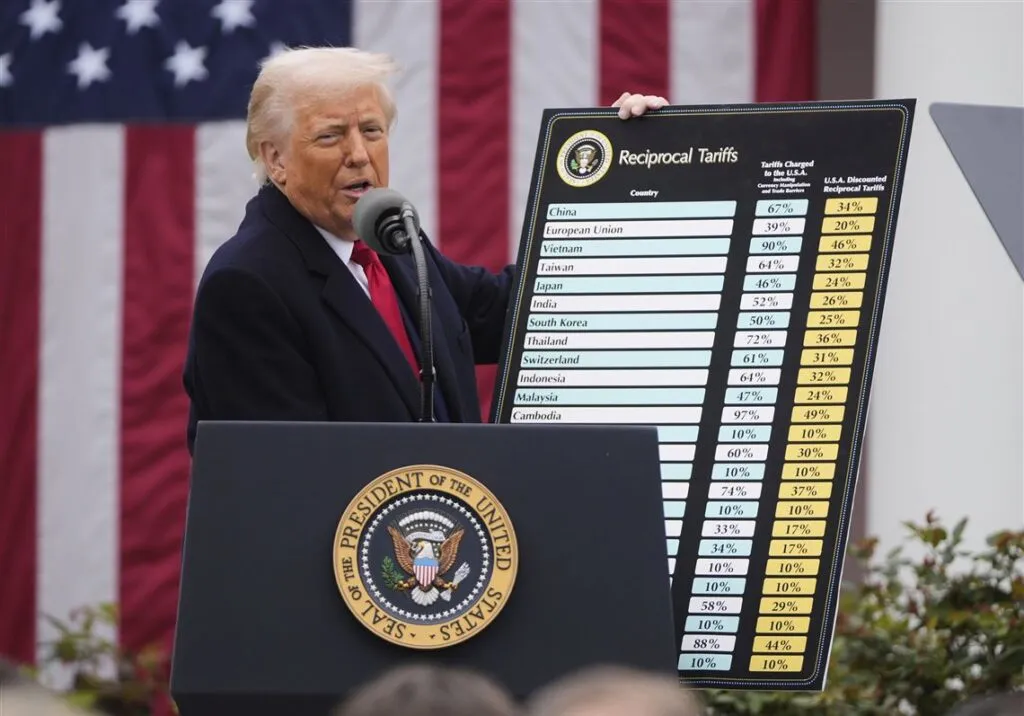
Trump’s trade tariffs in year 6 include different rates for different countries aimed at reducing trade deficit and supporting US domestic production. The base tariff is 2 % for all imports, and in addition, mutual tariffs are determined by the amount of trade balance with each country.
Tariff table of different countries
You can see Trump’s tariffs for different countries in the table below:
| Country | Tariffs applied to American goods (%) | US discount -off tariffs (%) |
| China | 1 | 1 |
| EU | 1 | 1 |
| Vietnam | 1 | 1 |
| Taiwan | 1 | 1 |
| Japan | 1 | 1 |
| India | 1 | 1 |
| South Korea | 1 | 1 |
| Thailand | 1 | 1 |
| Switzerland | 1 | 1 |
| Indonesia | 1 | 1 |
| Malaysia | 1 | 1 |
| Cambodia | 1 | 1 |
| Britain | 1 | 1 |
| South Africa | 1 | 1 |
| Brazil | 1 | 1 |
| Bangladesh | 1 | 1 |
| Singapore | 1 | 1 |
| Israel | 1 | 1 |
| Philippines | 1 | 1 |
| Chile | 1 | 1 |
| Australia | 1 | 1 |
| Pakistan | 1 | 1 |
| Türkiye | 1 | 1 |
| Sri Lanka | 1 | 1 |
| Colombia | 1 | 1 |
| Peru | 1 | 1 |
| Nicaragua | 1 | 1 |
| Norway | 1 | 1 |
| Costa Rica | 1 | 1 |
| Jordan | 1 | 1 |
| Dominican Republic | 1 | 1 |
| The United Arab Emirates | 1 | 1 |
| New Zealand | 1 | 1 |
| Argentina | 1 | 1 |
| Ecuador | 12 | 1 |
| Guatemala | 1 | 1 |
| Honduras | 1 | 1 |
| Madagascar | 1 | 1 |
| Myanmar (Burma) | 1 | 1 |
| Tunisia | 1 | 1 |
| Kazakhstan | 1 | 1 |
| Serbia | 1 | 1 |
| Egypt | 1 | 1 |
| Saudi Arabia | 1 | 1 |
| El Salvador | 1 | 1 |
| Ivory Coast | 1 | 1 |
| Laos | 1 | 1 |
| Botswana | 1 | 1 |
| Trinidad and Tobago | 12 | 1 |
| Morocco | 1 | 1 |
| New Guinea | 1 | 1 |
| Malawi | 1 | 1 |
| Liberia | 1 | 1 |
| British Virgin Islands | 1 | 1 |
| Afghanistan | 1 | 1 |
| Zimbabwe | 1 | 1 |
| Benin | 1 | 1 |
| Barbados | 1 | 1 |
| Monaco | 1 | 1 |
| Syria | 1 | 1 |
| Uzbekistan | 1 | 1 |
| Republic of Congo | 1 | 1 |
| Djibouti | 1 | 1 |
| French Polyex | 1 | 1 |
| Cayman Islands | 1 | 1 |
| Kosovo | 1 | 1 |
| Korasao | 1 | 1 |
| Vanuato | 1 | 1 |
| Rwanda | 1 | 1 |
| Sira Leon | 1 | 1 |
| Mongolia | 1 | 1 |
| San Marino | 1 | 1 |
| Antigua and Barbuda | 1 | 1 |
| Bermuda | 1 | 1 |
| Astini | 1 | 1 |
| Marshall Islands | 1 | 1 |
| Traditional | 1 | 1 |
| St. Kitz and Ney | 1 | 1 |
| Turkmenistan | 1 | 1 |
| Grenada | 1 | 1 |
| Sudan | 1 | 1 |
| Turkish Islands and Kikos | 1 | 1 |
| Arba | 1 | 1 |
| Montenegro | 1 | 1 |
| St. Helena | 1 | 1 |
| Kyrgyzstan | 1 | 1 |
| Yemen | 1 | 1 |
| St. Vincent and Grenadines | 1 | 1 |
| Niger | 1 | 1 |
| St. Lucia | 1 | 1 |
| Nauro | 1 | 1 |
| The tropical Guinea | 1 | 1 |
| Iran | 1 | 1 |
| Libya | 1 | 1 |
| Samoa | 1 | 1 |
| Guinea | 1 | 1 |
Digital currency market reaction to Trump tariffs
The digital currency market reaction to Trump’s tariffs was the result of significant fluctuations that led many investors to rapid reactions. Initially, with the announcement of heavier tariffs on US imported goods, there was a significant fall in prices, especially in the penis.
Following the announcement of the tariffs, the price of Bitcoin first jumped, but it soon took a reverse trend. By April 1, Bitcoin fell from $ 2.9 to $ 2.9; That is, more than 2 % drop in just five days. Other digital currencies also experienced severe declines; Ethereum (ETHP) and Ripple (XRP) each dropped by about 2 %.
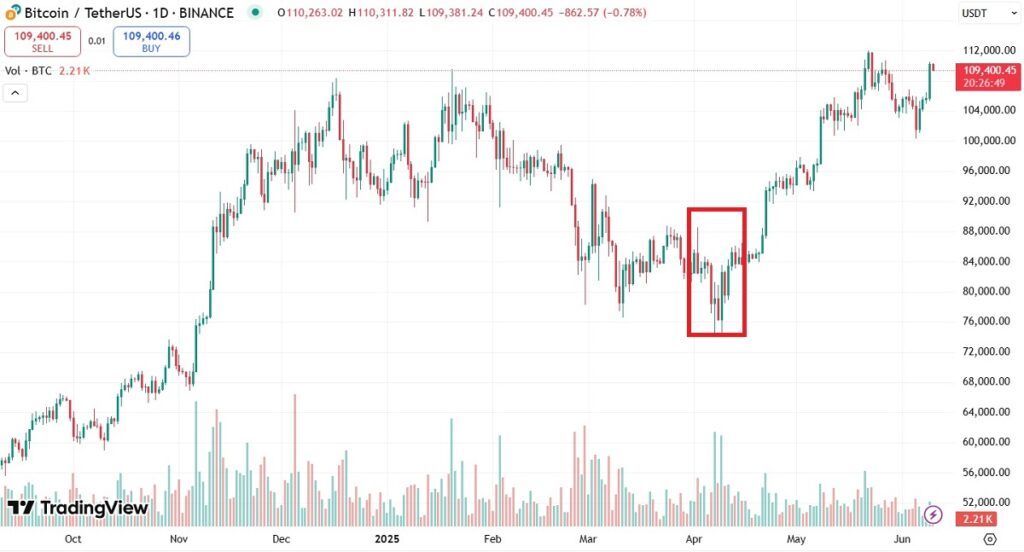
The decline in prices was affected by concern over the intensification of trade tensions and its negative impact on the global economy. But Bitcoin showed different behavior than the penis and remained relatively more durable.
Historical data analysis shows that in periods of economic and political tension, bitcoin is a safe asset (Safe Haven Asset) and is less likely to fall. The charts have also confirmed this process; While the penis experienced more severe falls, Bitcoin had only temporary and shallow declines.
The impact of Trump’s tariffs on the digital currency market
Trump’s trade tariffs cause fluctuations in the world’s Financial Markets that the digital currency market is not unavailable. These tariffs affect the demand for digital assets by increasing concerns about the global economy and lead to significant price changes in digital currencies.
The mechanism of the effect of tariffs
The Trump administration’s heavy tariffs on April 5 have made digital currency market participants expect to intensify the recession in world markets. This first increased demand for decentralized assets, but as soon as geopolitical risks intensified, investors began to criticize risky assets. The result was that Bitcoin fell more than 2 % in less than a week, and other penis experienced a sharp decline.
This policy raises the cost of importing industrial equipment and installations such as bitcoin miners. Subsequently, liquidity is limited in the traditional market and capital flows into digital assets. This transfer of capital, along with increasing economic pressure, accelerates the growth of China and Dipy -based technologies in the long run.
Experts’ comments and forecasts
In response to new tariffs, prominent digital currency experts have provided various analysis. These comments reflect both concerns and potential opportunities for market growth. We will review these comments below.
Marcin Kazmierczak (Marcin Kazmierczak)
According to Reuters, Marchin Kazirjak, chief executive of Redstone, said about Trump’s tariffs and the impact on the digital currency market.
These reductions show that the relationship between digital assets and the developments of macroeconomic policies is increasing. But supportive policies that may lead to the weakening of the dollar’s domination can increase interest in decentralized options in the medium to long -term.
David Hernandez (David Hernandez)
According to Reuters, David Hernandez, a digital currency investment expert at 21shares, believes:
Pricing behavior reflects the extremely democratic and borderline digital currencies that allow investors around the world to protect against the possible impact of macroeconomic instability.
Pav Handsal (Pav Hundal)
Swyftx chief analyst Pau Handal said in an interview with Cointelegraph:
The biggest threat to Bitcoin fans is that there will be no change in the next two months and the market will continue to be in the endless cycle of tariff threats.
Predicting the future of the digital currency market
In the near future, bitcoin will be recognized as a more important value reserve and its role in protecting capital from inflation and economic fluctuations will be strengthened. This trend will increase investors’ trust in bitcoin and grow the digital currency market.
At the same time, commercial tariffs and economic pressures on traditional financial systems provide the basis for the development of China’s blockchain technology and dipy platforms. These developments can reduce dependence on central institutions and expand decentralized financial services, which gives a clear prospect for the future of the digital currency market.
The impact of Trump’s tariffs on other financial markets
The business tariffs on the Trump era had widespread impact beyond the digital currency market and caused significant fluctuations in global financial markets. These policies were especially influential in world stock markets and commodity markets such as gold and dollar.
World Stock Exchange
Donald Trump’s heavy tariffs on the European Union, China and Vietnam caused a sharp collapse of world stock markets. The impact of tariffs on the stock market is mostly due to the widespread activity of multinationals and their sensitivity to economic change, not simply because of macroeconomic impacts.
The situation reflects rising concerns about the economic downturn and doubt about the US government’s trade policies that have put pressure on markets.
Gold market and dollar
By examining the impact of tariffs on gold prices, it can be seen that the Gold Market as one of the most important secure assets showed a rapid response to geopolitical and economic developments. Following the new tariffs, investors moved to gold to maintain the value of their assets, which led to a significant increase in the price of the world ounce. Increasing risk in other markets strengthened the position of gold as a safe haven and increased its volume.
On the other hand, the US dollar (US Dollar) was also affected as a global reservation currency. At some point, rising demand for the dollar due to commercial uncertainty has reinforced its value. However, tariff policies and growing concerns about business deficits and economic tensions have led to greater fluctuations in the dollar and made the path ahead more complicated.
Practical solutions for digital currency market investors
In the event of fluctuation and despite the impact of tariffs on the digital currency market, it is of particular importance to investing in the digital currency market. Here are some effective ways to better manage capital and use market opportunities.
Short -term strategies
In the short run, the use of dollar cost average (DCA) method is one of the most effective strategies to tackle the sharp fluctuations of the digital currency market. This method helps investors make their purchases in a stage instead of arriving and avoid price fluctuations. The same approach can help reduce risk.
In addition, risk management has a key role in protecting capital through the STOP LOSS. Investors who have planned transactions for timely exit are usually less likely to suffer. Also, the diversity in the portfolio and the choice of different assets can cover potential losses and make more stability to invest.
Long -term opportunities
For long -term investors, the best opportunity is for digital currency prices on the floor. Buying in such circumstances, along with long -term patience, can be a significant basis for profitability. This approach focuses on logic and analysis instead of emotional reactions.
Along the way, it is important to focus on projects that are strong in the Foundtable. Choosing token with active development team, dynamic community and transparent roadmap can reduce the risk of investment. Such projects often perform better in the long run than low -cost penicines.
Key alerts and points
To make more profit from the market, it is necessary to pay attention to some of the things that help maintain capital and smart decisions:
- Avoid fumo (fear losing opportunity)
- Preventing emotional sale in severe fluctuations
- Adhere to long -term strategy and careful planning
- Constant pursuit of market news and developments
- Pay attention to liquidity and volume of transactions before entering positions
What will happen to Trump’s tariffs?
The future of Trump’s tariffs depends strongly on the process of trade negotiations between the US and the target countries. If the agreement reaches, there is a possibility of reducing or removing tariffs. This can help improve the conditions of financial markets, especially the digital currency market. This scenario will reduce concerns and increase investment in China’s technology and block sectors.
But if the US -China trade war exacerbates, tariffs will rise and the pressure on multinationals and global supply chains will increase. This may cause severe fluctuations in the digital currency market and move capital to safer assets such as bitcoin. In these circumstances, China’s Difa and Block will increase significantly as financial alternatives.
Frequently asked questions
Trump’s tariffs, especially in the early days, increased fluctuating and temporarily decreasing bitcoin prices, but in the long run Bitcoin succeeded in stabilizing it.
Fear of negative economic impacts and market uncertainty were the two main factors that led to the collapse.
Yes, bitcoin is reliable as a reserve of value in crisis. Of course, in the short term, it is very dependent on mental conditions.
Experience has shown that the penis is more fluctuating and accepting a more severe impact on tariffs.
Conclusion
Trump’s tariffs show a complex and sensitive relationship between global trade policies and the digital currency market. These tariffs increased rapid fluctuations in bitcoin prices and other digital currencies, as investors are looking to maintain their capital in the face of economic uncertainties.
This shows that the crypto market is no longer apart from global economic developments, and any new economic decision can have a significant impact on it.
Despite these fluctuations, there are significant opportunities for the upcoming investors that can benefit from these conditions with the help of risk management strategies such as diversification to portfolis and buying at reasonable prices. Paying attention to Fannattal criteria and maintaining relaxation in decision -making plays an important role in the long -term success of investing in this risky market and help reduce the negative effects of fluctuations.

RCO NEWS