



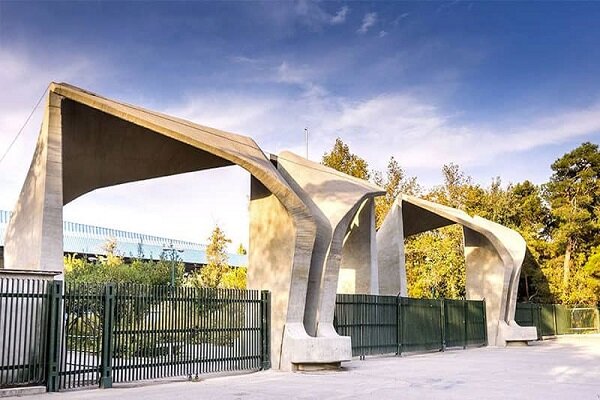
According to the Mehr news agency, citing the University of Tehran, the ISC Institute, as the official authority for monitoring science and technology in Iran and Islamic countries, published the results of its comprehensive analysis of the activities of the scientific elite in a period of 10 years (1393 to 1402).
According to this report, Tehran University, with its significant presence in research fields, has achieved the first rank in the country in training and introducing influential researchers in the fields of humanities, social sciences, art and architecture.
The statistical data analysis shows the tangible superiority of Tehran University compared to other scientific centers.
The Ministry of Science, Research and Technology has identified a total of 486 highly cited researchers in these fields, and Tehran University stands in the first place with 81 top researchers, with a distance compared to other competitors. In the next ranks of this list, Tarbiat Modares and Allameh Tabatabai universities are ranked with 45 researchers each and Isfahan University with 32 researchers.
This scientific monitoring, which was compiled with the aim of identifying influential figures and responding to the strategic needs of the region, has evaluated a total of 557 researchers in 16 subject areas. In this report, the brilliance of Tehran University professors has been shown, especially in the fields of business, management and accounting, social sciences, and psychology.
Most cited university researchers introduced in this list in the field of humanities, social sciences, art and architecture
Management, accounting and business:
Shokrallah Khajawi, Arin Qalipour, Bita Mashaikhi, Seyed Reza Seyed Javadin, Hamidreza Yazdani, Ali Asghar Pourezat, Hassan Zarei Matin, Hossein Khanifar, Tahmorth Hassan Qoli Puriasori, Mohammad Reza Nikbakht, Mohammad Ali Shah Hosseini, Taher Roshandel Arbatani, Seyed Mohammad Moghimi, Sasan Mehrani, Mohsen Nazari, Mohammad Moradi. Ali Hamidizadeh.
The field of social and geographical sciences:
Ahmed Pourahmad, Karamatullah Ziari, Hossein Hataminejad, Mohammad Reza Rizvani, Sohaila Sadeghi Fasaei, Hassan Ali Faraji Saqbar, Esfandiar Zabal, Rasool Sadeghi, Mojtabi Qadiri Masoom, Mohammad Jalal Abbasi Shawazi, Hajiya Bibi Razqi Nasrabad, Seyed Hassan Matiei Langroudi, Saeed Zanganeh Shahraki, Mohammad Mahdi Azizi, Seyed Ali Badri, Mojtabi Yamani, Abdul Reza Karbasi.
The field of psychology and educational sciences:
Mohammad Ali Basharat, Masoud Gholamali Lavasani, Elaha Hijazi Moghari, Gholamali Afrooz, Ali Akbar Arjamandania, Bagher Ghobari Bonab, Javad Ajeei, Abbas Bazargan Harandi, Rizvan Hakimzadeh, Marzieh Dehghani, Keyvan Salehi, Saeed Safai Mohd, Shaheen Irwani.
The field of literature, theology and linguistics:
Gholamreza Ghafari, Shahram Yousefifar, Kamaluddin Niknami, Mohammad Afshin Vafaei, Gholamhossein Karimi Dostan, Shahram Yousefifar, Mazdak Anoushe, Dariush Rahmanian Kushkaki, Amir Abbas Ali Zamani, Ahad Faramarz Qaramalki, Amir Abbas Ali Zamani, Abdul Hadi Fakhizadeh, Majid Maarif.
The field of sociology, political science and law:
Ali Asghar Pourezat, Mohammad Rahim Ayouzi, Abbas Moslinejad, Elaha Kolayi, Abdul Hossein Kalantari, Seyed Abbas Ahmadi, Ahmad Haji Dehabadi, Fazlullah Mousavi, Seyed Ahmad Habibnejad, Muslim Aghaei Towq, Abbas Ali Kodkhodaei Elyadarani, Hassan Badini, Vali Rostami, Seyed Nasraleh Ebrahimi, Hassan Mohseni, Mahmoud Bagheri.
The field of economic sciences and management:
Mohsen Mehrara, Akbar Kamijani, Saeed Fallahpour, Reza Rai, Arin Qolipour.
The field of art and architecture:
Seyyed Amir Mansouri, Esfandiar Mozaal, Mohammad Mehdi Azizi.
Multidisciplinary subject area:
Ahmed Pourahmad, Karamatoleh Ziari, Hossein Hataminejad, Arin Qalipour, Hassan Ali Farji Sokbar, Ali Asghar Pourezzat, Mojtabi Qadiri Masoom, Ali Akbar Arjamandania, Saeed Zanganeh Shahraki, Rasool Sadeghi, Seyyed Ahmed Habibnejad, Khosro Bagheri Noparest, Nader Naqshineh, Mohammad Reza Rizwani, Hassan Ali Farji Sokbar, Ali Asghar Pourezzat, Seyyed Hassan Matiei. Langroudi, Sahila Sadeghi Fasai, Ahad Faramarz Qaramelki.
The ISC Institute has emphasized in this report that the “number of citations” was the only key criterion for selecting these people. This means that the researches of university professors have been used as reference sources in the scientific productions of other scientists.
It should be noted that the steps of this monitoring are: identifying the most cited authors with software methods; Disambiguation and homogenization of authors’ names to ensure data accuracy and ranking based on the “citation threshold” (Threshold) and the number of received citations.

RCO NEWS