
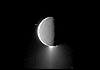
On Earth, these molecules are part of the chemical reactions that lead to life, according to the . According to the researchers, new findings are more evidence that the moon of Enceladus around Saturn can be habitable.
Researchers have long been excited about the possibility of its habitable underground ocean. The Cassini spacecraft passed by in year 2 and has been hidden from that ocean, and researchers have been seeking better understanding since then.
Much of these research has been conducted by examining the powerful fountains that drive out of the icy surface cracks. Examples of these fountains have so far shown evidence of organic molecules, some of which are especially exciting for researchers looking for life.
But some of these seeds may be hundreds of years old, so they have been changed due to radiation rays in space.
Now, the researchers have found evidence that fresh seeds also include interesting chemicals. They include many of the same molecules that were previously found in other grains. The same shows that the materials are made in the Enceladus Ocean.
“These molecules we find in newly launched materials prove that the complex organic molecules identified in Saturn’s Ring are not only long -term products in space, but are easily available in the Ensladusseos Ocean,” said Frank Postberg, one of the authors of the study.
But they also found completely new molecules that are of great importance to life.
“There are many possible paths from organic molecules we found in Cassini data to biology -related compounds that increase the likelihood of this moon’s habit.” Much more data is currently being reviewed, so we look forward to more exploration in the near future.
(tagstotranslate) Scientific Research (T) Space Discoveries (T) Earth

RCO NEWS