



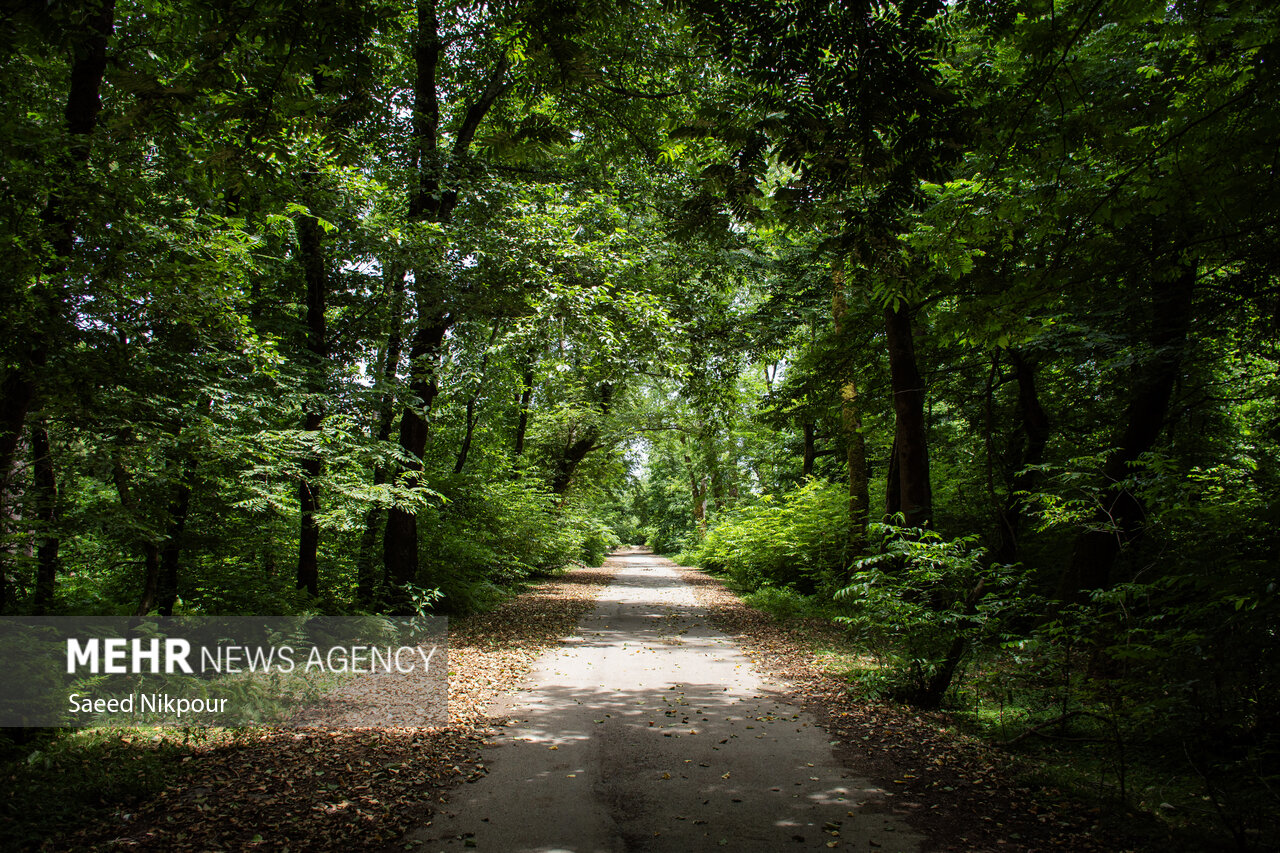
The results of the study in collaboration with researchers from Iran, China, Germany, Canada and the United States indicate that the phenomenon of rainfall as a hidden source of water can lead to increased water input to forests and enhances the resilience of ecosystems against water crises, according to .
Pedram Attar, a faculty member at the University of Tehran and the head of the International Research Department, explained in a commentary on the phenomenon of the foggy phenomenon, saying: “May is a process in which particles Highly folded The water in the fog is trapped by the crown of the trees and is transferred to the soil surface as a droplet of rain. Fog is one of the most important sources of moisture for the mountainous forests of northern Iran, so that in the dry season, more than 5 million cubic meters of water through rainfall in the forest. Rush The northern provinces are added and play a significant role in the stability and performance of the ecosystem. “
“The forests of northern Iran, known as the Hyrcanian forests Ancient They are between 1 and 2 million years old. These forests of with The most valuable The biological reserves are listed in the UNESCO World Heritage List. Species Rush (Fagus orientalis) with Almost a share “The dominant and key species of this ecosystem is 5 % of the volume of the head, 4.3 percent of the bases and 2 percent of the northern forests of Iran.”
He added: “Rush is specifically adapted to cool, humid and foggy conditions of 1 to 2 meters north of Iran; That is, in areas where the occurrence of the phenomenon of rainfall is significant, and as a result, the process provides part of the moisture needed for these ecosystems. In this cycle, fog particles are trapped by the foliage of beech trees and are transferred to the soil through the crown of rain, thus increasing the water inlet of the forest. “
A member of the faculty of agriculture and natural resources of the University of Tehran, referring to the research related to this issue, said: “For the first time in years 1 and 2 during a study at the Forest-Research Forest Research Station of the University of Tehran University of Natural Resources (Kheirud Noshahr Forest) in Rashestan District. “The results of this study were confirmed by the important role that the fog -covered races have in attracting fog particles and increasing rainfall to the forest.”
He added: “In the years 1 and 2, further specialized and specialized studies were conducted in the suburbs of” Paspress “village of Noor city at a height of 2 meters above sea level. The findings showed that the crown of the coverage of each middle -aged beech tree in the highlands, in the growing season, absorbed 2 liters of water through the fog, and imported it to the forest surface. This amount per hectare of beech forest in the growth season is about 2 cubic meters of water, which increases more than 3.5 percent of the water inlet this season. Overall, it is estimated that more than 5 million cubic meters of water will be added to the waterless mountainous forests in the north only annually in the growing season, more than 5 million cubic meters of water through the fog and through the crown of beech trees. “
“This phenomenon, in addition to providing water, also plays a key role in the micro -climate,” said Mercury. Reduces the radiation of the forest (sometimes up to 5 %), adjusting temperature, increased air and soil humidity, helping to regenerate forest, reducing forest water requirements, increasing biodiversity, decreasing evaporation and even providing some nutrients in the northern mountainous ecosystem. “This role becomes more vital with the intensity of drought, dehydration and climate change.”
A member of the research group on the role of rain in water security and the economy of downstream forests in the northern country said: “In many global studies, the role of fog as one of the main rings of mountain ecosystems has been reported. The present study, which is the first steps to express and estimate the phenomenon of heavy rainfall in the Hyrcanian forests, show the many different bioclimatic conditions of the northern Iran forests that have created diverse masses of trees. The occurrence of fog phenomenon, in addition to bioclimatic properties, also depends on the morphological and structural properties of the dominant trees in the mass. High demand for beech trees in dry and rainy seasons can provide the moisture they need from the fog, and the preservation of these forest masses in the mountainous areas will trap fog drops by crowns even in the absence of rainfall and the production of fog. Therefore, neglecting the May of rainfall in the planning of water resources and preserving the crown of forest trees, especially the racers, can challenge the water security and economy of the downstream regions of the north of the country. “
“The importance of the fog is more pronounced when we know that the downstream areas of the northern forests of the country provide the country’s strategic products including rice, citrus, tea, soybeans, rapeseed and peanuts, which are high in water and the food security and livelihoods depend on them,” Mottard added. Despite the high potential of indigenous researchers to expand and intelligent water resources studies and management, lack of financial resources and the lack of meteorological stations in the forest masses, the most important obstacle to careful and strategic research is the most important obstacle. “The construction of these stations and targeted financial support will be a key step to better understand the May, increase water productivity and ensure the biological and economic security of the north of the country.”
He also said of the challenges in the use of hidden water in May: “Despite the essential role of rain in the stability of forests in the north of the country, water resources management in these areas still faces serious challenges. Climate change and, as a result, increased droughts, decreased rainfall, rising temperatures and unnecessary exploitation of groundwater resources have made ecosystems dependence on alternative sources such as fog. However, the lack of accurate and comprehensive data on the actual share of rainfall may not only ignore this phenomenon in the planning of water resources, but has doubled the need for targeted research to identify ways to increase the absorption and productivity of the fog, which can lead to increased water input water to forests and enhances resilience.
It is worth mentioning that the full results of these two studies, in collaboration with Atefeh Dejban, a doctoral researcher at the University of Tehran, Engineer Mohammad Sadegh Kavianpour, Masters Researcher at the University of Tehran, Thomas Grant Pypker, a professor at Thompson River University, Canada, Dirk Holsher, German University Professor Dirk Holschr. Colorado America, Hifong Zhu, Professor of Tibetan Plateau Research Institute of Chinese Sciences, Vahid Etemad, Associate Professor of Tehran University and Wilma Bayramzadeh, Associate Professor of Islamic Azad University, Karaj, in two prestigious journals “Ecohydrology & Hydrobiology” Poland and “Ecohydrology” It is available through the links (this and this).
(tagstotranslate) University of Tehran (T) Water Crisis (T) Forest (T) Water Resources

RCO NEWS