


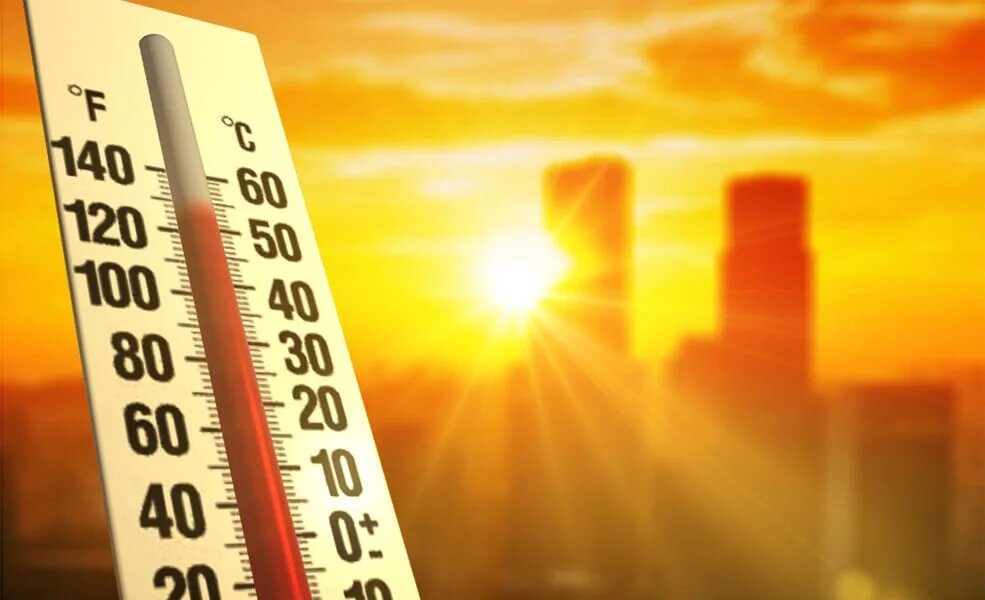
Researchers at the University of Tehran, in a recent study based on the last 5 years (between 1 and 2) and using deep learning methods, showed that changing land use in the city has increased the temperature of about 2 degrees Celsius, and the risks of soil, and the risks of soil. Worrying leads to increased infiltration and intensity of UV radiation (UV).
Seyed Kazem Alavi Panah, a professor at the Faculty of Geography, University of Tehran This “Increasing the temperature of the earth is a fact that is repeated every day in our lives,” he said. Summers that have become longer and hotter, cities that have become thermal furnaces, and soil that no longer has heat. “Global warming, especially in arid and semi -arid countries such as Iran, is not only a environmental threat but also a platform for the spread of other crises.”
“In a world where crises are chained, the effects of global warming are not limited to air temperature; Rather, by accelerating the other crises, a complex and dangerous structure of synergy is formed. Crisis in today’s world not only solve, but also strengthen each other. “The result of this synergy is a situation where any small mistake can activate a chain of large and unpredictable reactions.”
“In recent years, Iran has broken world records of heat,” said the leader of the research group. Based on Satellite data, such as Modis, Landsat and Sentinel-1, have been recorded in the central, eastern and southern regions of Iran. Many of Iran’s major cities, including Mashhad, are among the largest thermal islands in the region; “The phenomenon that has challenged the lives of millions and greatly increased energy, health and urban services.”
“The present study in response to this critical situation, in the form of a doctoral dissertation, Ms. Zint, a professor at KomaPhD student of Remote Measurement and GIS University of Tehran in collaboration with Saeed Hamza and Sarah Attarchi Designed by faculty members of the Faculty of Geography of Tehran University and Hadi Memarian, a faculty member of Birjand University, a scientific project aimed to accurately analyze the relationship between land use change and increase the temperature of the land in two important cities with different climates (Mashhad and Sari) using remote sensing data over a period of time.
Alavi Panah said about the results of the study: “During the 5 -year period, the surface temperature in some areas has increased by more than 2 degrees Celsius, especially in areas where forest and agricultural coverage has become urban areas. In contrast, areas with sustainable and managed vegetation have experienced relatively constant and lower temperatures. “
“The neural network model model is Canaloshi (CNN) showed better performance than traditional algorithms such as SVM and Random Forest, which indicates high profound learning ability in analyzing complex environmental and spatial relationships. “
A member of the Faculty of Remote and GIS, the Faculty of Geography of the University of Tehran, also pointed to the importance of this research and its impact on urban planning, saying: “The results of this study emphasize that urban development patterns have a direct and significant impact on the surface temperature, and that monitoring and modeling methods can be reduced to deepest decision -making. “Given the forecast of rising temperatures in the coming years, the development of sustainable solutions such as increasing urban green space, controlling the unnecessary expansion of cities and preserving natural vegetation is of particular importance.”
“These findings are an important step in better understanding of environmental phenomena and developing efficient policies to manage climate change and reduce the effects of urban warming,” he said.
Alavipanah emphasized: “This research has also provided a tool for predicting the future of cities beyond the previous analysis. A better understanding of the relationship between land use change and local heating, urban development scenarios can be reviewed and policies based on environmental balance. Creating green space, controlling the horizontal expansion of cities, the use of stable materials and climate -based urban design are among the strategies that came out of the data. If officials, city administrators and large decision makers do not benefit from these data and analyzes, tomorrow they will be unable to the consequences. “Now is the time to make a conscious decision to save our land and our future with a scientific, systematic and holistic perspective.”
“The land speaks to us; But not with words, but with rising temperatures, droughts, micro -fire and fire. “If we do not hear this language, if we ignore its messages, if we continue to war with nature, a much warmer, drier and more unstable future will expect us.”
The results of this study have been published in the form of two scientific articles in “International Journal of Environmental Research” and “Journal of Arid Land”.
(tagstotranslate) University of Tehran (T) Hadi Memarian (T) Intense Heat (T) Scientific Research (T) Scientific Article

RCO NEWS