


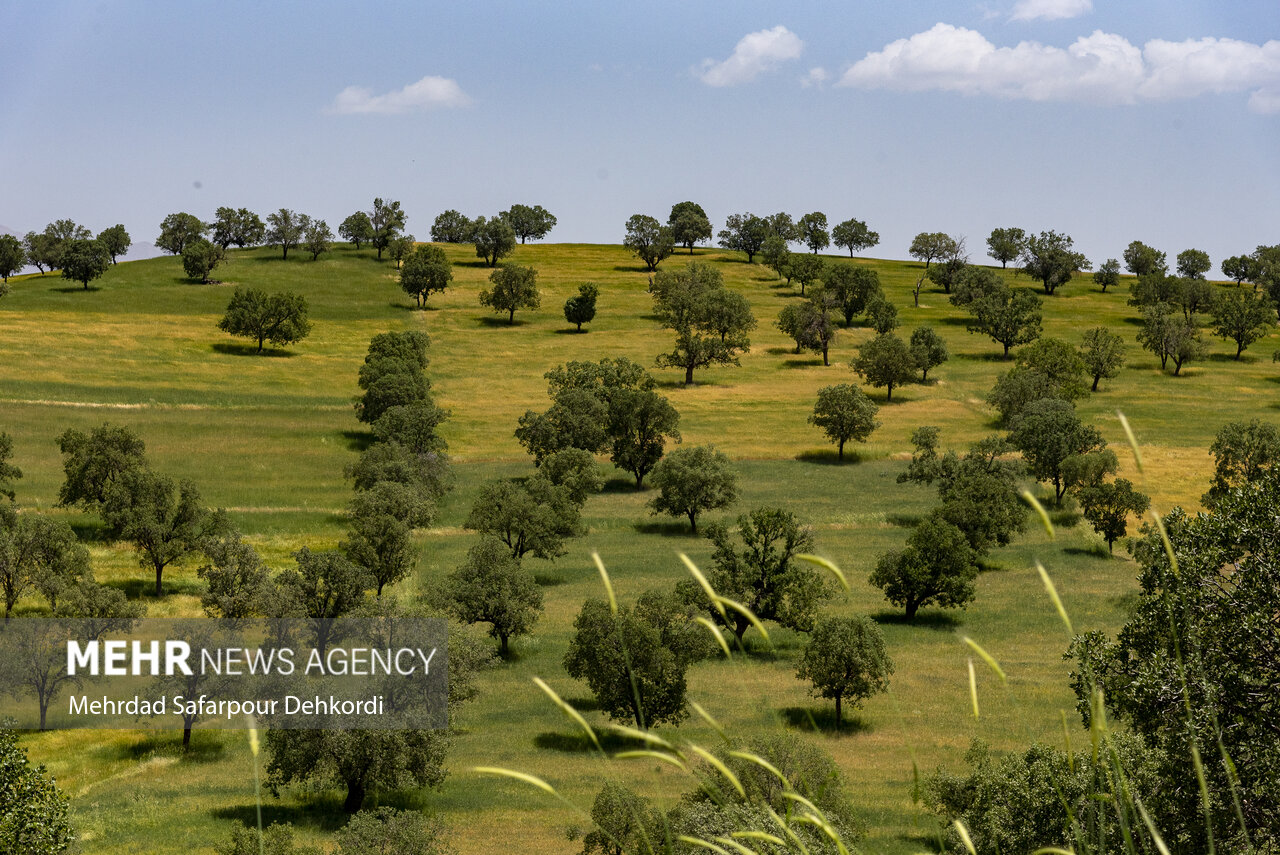
Dr. Pedram Attard, a member of the Tehran University of Agriculture and Natural Resources, said: “The Zagros region in western Iran, like many parts of the world, has faced serious challenges caused by climate change; But what makes this area a sensitive focal point is the existence of valuable oak forests that are vital ecological and economically important. Scientific evidence suggests that this unique ecosystem is experiencing devastating consequences of climate change with a warning acceleration.
He added: Meteorological data review over the period of 4-5 shows that the average temperature in the area has increased by 3.5 degrees Celsius over the past four decades, double the increase in global temperature over the same period. These climate change has been accompanied by worrying consequences, as we have seen wind speeds rise as the temperature rises.
“The results of the present study showed that 5 % of Zagros meteorological stations, a significant increase in temperature and 5 percent, reported increased wind speed,” said Dr. Mottard. Such a process, water resources, Zagros forests, agricultural activities, and consequently the economy of local communities in the area, have threatened a serious threat. The analysis of temperature data suggests that the Zagros region has been constantly increasing from year 1, despite a shorter and cooler period between the years 1 and 2, which has been influenced by transient changes in local climate patterns.
The head of the research team, referring to the rising trend of temperature rise in the last decade, added: “This uptreen trend, especially in the last decade (1 to 2), has accelerated and forecasts show its continuation in the future.” According to forecasts under climate change scenarios, the Zagros region will face serious challenges in the coming decades.
Possible scenarios in the Zagros area environment
“In the most optimistic scenario based on the reduction of greenhouse gas emissions, the average annual temperature will increase by at least about 1.5 ° C,” said Dr. Mottard on the possible scenarios of temperature rise and its impact on the Zagros region. Although this increase is relatively limited, it can still exacerbate droughts and water stress in the region. In the metropolitan scenario, which has heterogeneous economic growth and inadequate environmental management, it is expected to rise to 0.5 ° C. This level of heating puts more pressure on water resources and increases the likelihood of more Zagros forests being destroyed. In the most pessimistic situation, in a scenario that predicts fossil fuels and high emissions of greenhouse gases, in other words, the temperature of the region can rise to 0.5 ° C, which will have catastrophic consequences for Zagros forest ecosystems.
He emphasized: Although not in all these scenarios, there is no significant change in annual rainfall, the increase in temperature and wind speeds will certainly exacerbate dryness, increase evaporation, decrease in water resources and increase the risk of forest fires in the area. These effects will be destructive, especially for the oak forests of the region, which have high ecological and economic value, and can lead to an increase in the spread of fungal diseases and pests in oak trees.
Dr. Mottard said that human activities can also play an important role in exacerbating these effects.
“To reduce these effects and protect the Zagros ecosystems, urgent and effective measures are needed to reduce greenhouse gas emissions and adapt to climate change,” said a member of the University of Tehran’s agricultural faculty. “These measures can include reducing pressure on Zagros forest ecosystems, developing and implementing sustainable natural resource management policies, reducing greenhouse gas emissions through the use of renewable energies, and increasing public awareness of the importance of environmental protection.”
Full results of this study, in collaboration with Dr. Hiefng Zhou, Professor of Tibetan Plateau Research Institute of China Academy of Sciences, Dr. Samira Biranvand, Researcher of the Postgraduate, Department of Forestry and Forest Economics, Faculty of Natural Resources, Faculty of Agriculture and Natural Resources, University of Tehran, Dr. Thomas Grant Pipker, Professor Hamid Sufi Merio, Master of Research and Technology of Agriculture and Natural Resources, University of Tehran and Kajal Karimi, PhD student in forestry, forestry and forest economy, Faculty of Natural Resources, Agriculture and Natural Resources, University of Tehran has been published in Anthropocene.
(Tagstotranslate) University of Tehran (T) Zagros (T) Forest (T) Scientific Research

RCO NEWS