Early predicted preterm delivery using a free circulation Aran can transform the prevention strategies.
According to RCO News Agency, Children who are born before 2 weeks of pregnancy face the risk of death before they are five years old. Predicting the risk of preterm labor (PTB) and consequently the implementation of preventive strategies, due to the diverse nature of this situation, is very unknown mechanisms and the lack of reliable prediction tools.
However, researchers have now been able to show that the effect of a free circulation Aran (CFRNA) in the blood can predict preterm labor more than four months before delivery. The research was presented at the annual conference of the European Association of Human Genetics.
Dr. Wen-Jing Wang, a researcher at the Shenzhen Research Institute in China, along with the team leader, Professor Chemming XU from the Fudan University Gynecology Hospital in Shanghai and their colleagues, samples of blood plasma, pregnant mother-in-law, with 5 preterm birth cases Identify spontaneously with preterm labor and observe significant differences in CFRNA between preterm labor and delivery at the due time.
The study consisted of both types of preterm delivery with a healthy membrane and early childhood rupture of the membranes, which was when the water bag was torn before delivery. Less than three percent of participants had preterm labor.
“The ability to identify these predictors more than four months earlier indicates primary biological readiness for preterm labor, which occurs much earlier than the current clinical identification,” he says. This widespread timeframe can transform prevention strategies.
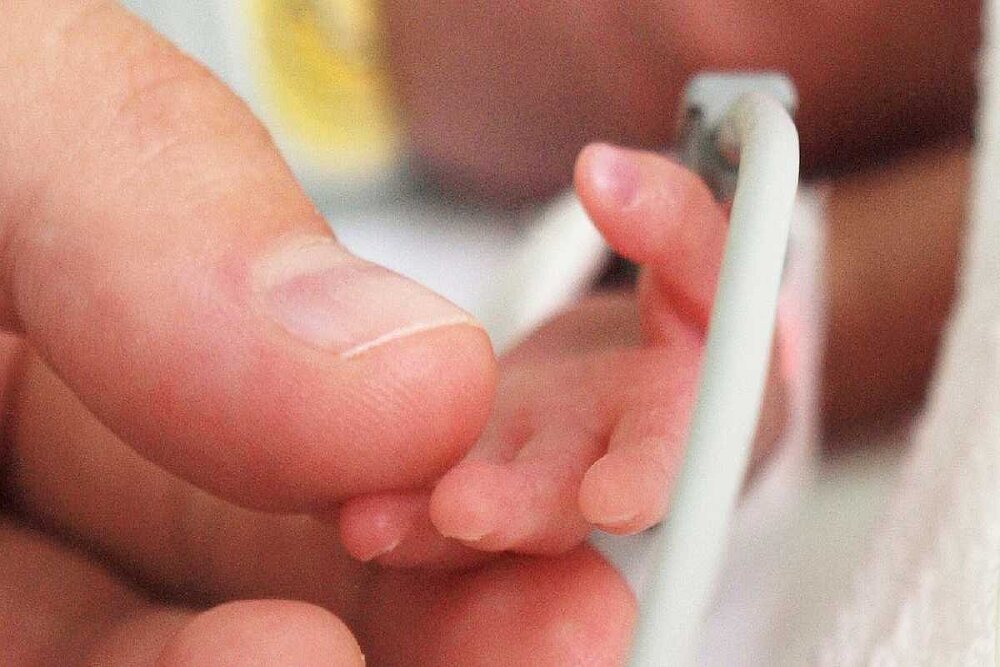
About 2.5 million babies are born earlier annually, which constitute approximately one -tenth of all births. Nearly one million of these premature babies die each year, and preterm labor is still the main cause of the death of children under the age of five.
Since premature neonatal organs are not yet ready for life, the risk of complications is much higher than that of complete infants. This can lead to problems such as respiratory problems, jaundice, difficulty in nutrition and infections.
Long -term health problems for these children also include cerebral palsy, epilepsy, and blindness that inflict a heavy emotional and financial burden on families.
“Our method uses blood sampling from the same time, which is also performed in prenatal non -invasive tests (NIPT), which allows dual testing,” says Dr. Wang. The current cost of CFRNA sequences is similar to the price of NIPT testing, but in the future, using targeted QRT-PCR panels can dramatically reduce costs. This can be a way to monitor high -risk patients and even population screening.
Unlike static DNA or immune -focused cellular markers, a circulation Aran can provide dynamic and specific tissue views. Researchers say they have observed distinct patterns and that these findings have been confirmed with clinical indicators.
Before this diagnostic method can be used more widely, researchers emphasize that standard protocols should be developed to collect and maintain samples, as Aran is more unstable than DNA.
Forecasting algorithms should also be developed in a variety of demographic studies and the causes of different types of preterm labor should be examined to allow targeted interventions to be possible. The group is pursuing these goals and searching for cooperation with other institutions to accelerate the clinical application of their findings.
The end of the message
(tagstotranslate) Preterm labor

RCO NEWS