
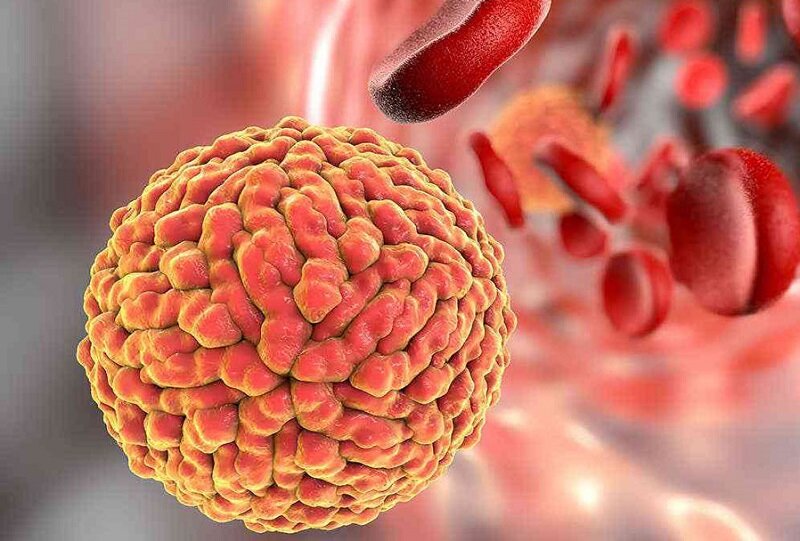
Researchers at the Pennsylvania State University and the Ballor Medical College have discovered that the Zika virus is transmitted to the fetus by making nano tunnels through placental cells, without stimulating the immune system. The discovery can pave the way for a new way to deal with this dangerous virus.
According to RCO News Agency, In year 2, the widespread prevalence of the Zika virus on the American continent, especially because of its relationship with congenital abnormalities in infants, raised global concern. An international team of scientists has now shown that the virus is transmitted secretly from cell to cell using tunneling nanotubes, and especially in placental cells, these tunnels play a key role in the transmission of the virus from the mother to the fetus.
A new study published in the journal Nature Communications shows that the construction of these tunnels is made by a protein called NS1; The protein found in other flavochevy family viruses, but only in the Zika virus causes these nano tunnels.
According to Dr. Anop Narayanan, a biochemical professor at the University of Pennsylvania and a senior author of this article, the human pair has a complex barrier that allows only some molecules, such as nutrients or antibodies. Our discovery shows that the Zika virus passes through the dam through hidden tunnels, without realizing the immune system.
These tunnels are not just a simple path to transmission of the virus. Researchers found that they can also transfer mitochondria (cell energy source) from healthy cell to contaminated cell.
According to Dr. Narayanan, the virus is not only hidden, but also receives the energy it needs from healthy cells around. This is a two -way path.
The story began where the research team was investigating the cells infected with Zika under the microscope of the fluorescence and noticed the tube structures between the cells; Something that was not seen in other viruses such as the Dangie or yellow fever. At the same time, a group at the Balry College of Medicine also observed the same tunnels in human placental cells. This coincidence began the cooperation of the two groups.
According to the nanotechnology headquarters, experiments showed that in the absence of the tunnels, the spread of the Zika virus was greatly reduced. This has made the researchers hoping to design an effective drug to prevent the transmission of the virus to the fetus by targeting the NS1 protein or its associated signal pathways.
“With the climate change and the expansion of mosquito bio -zones, the risk of Zika virus’s return is high,” says Dr. Joyce Jose, a biochemical professor and a co -author of the article. Now, we are on the path to prevent this hidden transfer.
The end of the message
(tagstotranslate) Nanotechnology (T) Zica virus (T) embryonic

RCO NEWS