


Why are Afghanistan and Pakistan fighting each other? – Mehr News agency RCO News Agency
Mehr-Group International News Agency: Hours after the Pakistani media reported air strikes by the country’s army on areas in Afghanistan, Pakistan’s defense minister announced in an unprecedented statement that Islamabad’s patience has ended and the two neighboring countries are now in a state of “open war”. These statements, which were published on X social network, brought the border tensions of recent weeks to a new and very dangerous stage. Khawaja Asif, in a tone that showed Islamabad’s firm decision, addressed the Afghan authorities and said that tolerance has no meaning anymore and that what is going on is a full-scale war between the two sides.
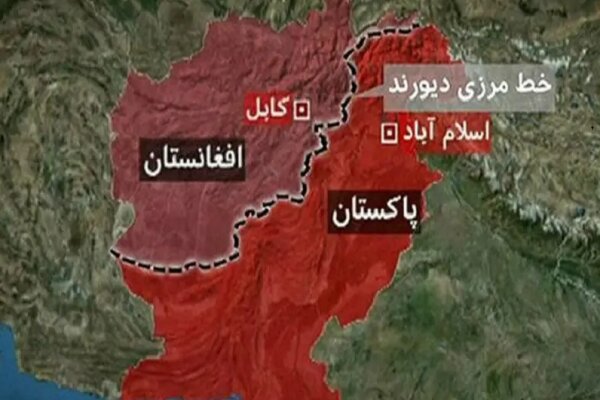
On the other hand, Zabihullah Mujahid, the spokesperson of the Afghan government, announced a few hours earlier by publishing a statement about the beginning of “massive offensive operations” against Pakistani forces along the supposed Durand Line. This border line, which is more than a century old, has always been a point of dispute between Kabul and Islamabad, and Afghanistan has never recognized it. Now, this long-standing dispute has become an excuse to ignite a war that could involve the entire region.
Why did the fire of war flare up? The roots of a deep crisis
To understand what is happening today in the eastern borders of Iran, one must go back to the past months and even years. The tension between Pakistan and Afghanistan under the rule of the Taliban had never subsided, but in October 2025, after a week of bloody border clashes, the two sides agreed to a fragile ceasefire mediated by Qatar and Turkey. However, this truce never meant the end of deep differences.
The core of the dispute is the supposed Durand Line. A border of 2,611 kilometers was drawn during the British colonial period, and Afghanistan still considers it the reason for the unnatural division of Pashtun-inhabited areas. This historic dispute is now tied to a deep security crisis. Islamabad has long accused the Afghan Taliban of harboring armed groups opposed to Pakistan, especially the Tehreek-e-Taliban Pakistan. The Tehreek-e-Taliban, which emerged in 2007, although structurally separate from the Afghan Taliban, has deep ideological and tribal ties with it.
In recent years, armed attacks in Pakistan have grown significantly, especially in the border provinces of Khyber Pakhtunkhwa and Balochistan. Islamabad says that these attacks are directed and supported from Afghanistan. Miftah Ismail, the former finance minister of Pakistan, wrote on X social network that his country has “nothing against the poor and noble citizens of Afghanistan”, but it is the Taliban who have brought Pakistan into this conflict.
Analysts, however, believe that the Afghan Taliban neither can nor wants to seriously confront the Tehreek-e-Taliban. Pirel Pandya, a senior South Asia analyst at the Armed Conflict Situations Data Project, says that previous links between the two groups, as well as the fear of Tehreek-e-Taliban forces joining ISIS Khorasan, which is the main rival of the Taliban, have made Kabul not take decisive action in this regard. Elizabeth Threlkeld, director of the South Asia Program at the Stimson Institute in Washington, also believes that the current escalation is not far-fetched, as it is the product of months of accumulated inflammation in the relationship between the two sides. According to him, Pakistan’s recent attacks indicate a change in Islamabad’s strategy towards using more aggressive options.
international reactions; Concern and call for self-restraint
At the regional and international level, the concern of expanding the scope of the conflict is evident. India, which has always had tense relations with Pakistan, condemned Pakistan’s airstrikes in Afghanistan. India’s foreign ministry spokesman Randhir Jaiswal said New Delhi “strongly condemns the attack on Afghan soil that has resulted in the deaths of innocent civilians during the holy month of Ramadan,” calling the move an attempt to externalize Pakistan’s domestic failures.
Iran, which is a neighbor of both countries and has long emphasized on resolving disputes through peaceful means, adopted a mediating position. Iran’s Foreign Minister Abbas Araghchi, by publishing a message on X social network, asked the two countries to resolve their differences through dialogue and based on the principles of neighborliness. Referring to the month of Ramadan as the month of self-restraint and solidarity in the Islamic world, he emphasized that it is appropriate for Afghanistan and Pakistan to choose the path of dialogue.
Russia, while expressing deep concern, asked both sides to immediately stop the cross-border attacks and solve the differences through diplomatic means. Ryanavosti news agency reported that Moscow has announced its readiness to mediate between the two countries. Antonio Guterres, the Secretary General of the United Nations, through his spokesperson, called for both sides to adhere to international laws and exercise restraint.
the result
The border tensions between Pakistan and Afghanistan have entered an unprecedented stage in their latest development. On Friday morning, the Minister of Defense of Pakistan published a message on X social network and announced that Islamabad’s patience has ended and the two countries are now in a state of “open war”. These statements were made after Pakistan carried out a large-scale air operation called “Wrath of Righteousness” against positions in Afghanistan. Pakistani fighter jets targeted areas in Kabul, the capital of Afghanistan, as well as the provinces of Paktia in the southeast and Kandahar in the south of the country. Pakistani authorities announced the target of these attacks to be Taliban defense facilities. These attacks took place in response to a similar action by the Taliban on Thursday evening, during which Afghan forces targeted Pakistani positions along the common border. The root of these conflicts goes back to months of increasing tension between the two countries. Pakistan has long accused the Afghan Taliban of harboring armed groups opposed to Islamabad, especially the Tehreek-e-Taliban Pakistan (TTP). In 2025, more than 1,200 people were killed in armed attacks in Pakistan, which is double the number in 2021. Pakistani officials say that many of these attacks are carried out using American weapons, which remained in the hands of the Taliban after the withdrawal of foreign forces. The historical dispute over Durand’s hypothetical line also fuels these tensions. A border of 2,611 kilometers long, which was drawn during the British colonial period, and Afghanistan still does not recognize it. Afghanistan considers this line as the cause of unnatural division of Pashtun-inhabited areas.

RCO NEWS
RCO