

Sa’i Park is one of the oldest and most popular parks in Tehran, located in the heart of Valiasr Street, and is known as one of the most beautiful urban parks in the capital due to its dense green space, special staircase design, and diversity of plant and animal species. This park is not only a place for citizens to rest and walk, but also for tourists Travel to Tehran It is considered an interesting urban attraction.
The location of Sai Park in one of the busiest areas of Tehran has made it very easy to access and has a lively atmosphere at all hours of the day. The combination of nature, urban art, themed gardens and amenities make Sai Park a suitable destination for families, couples and even foreign tourists. In the rest of this article from tourism magazine Fly Today We will introduce Sai Park in Tehran.
Where is Sai Park?
Sa’i Park is one of the best sightseeing places in Tehran, located on Valiasr street and in district 6 of the municipality. The central location of this park has made it very easy to access from different parts of the city and it is known as one of the most accessible green spaces in Tehran.
Distance from Sai Park to Valiasr Square It is about 3.5 km, which takes about 10 minutes by car. Distance from Sai Park to Vanak Square It is almost the same amount. The same location between two important city squares has made Sa’i Park a popular stop for city tours, walks and rest along the Valiasr route.
Sai Park has 6 active entrances. The main entrance is located on the west side facing Valiasr Street, which leads to the interior of the park through a staircase. These stairs are designed due to the difference in the natural height of the ground. The eastern entrance of the park is also located on Khaled Islamboli Street (Ministers) and provides easy access for the residents of the surrounding neighborhoods. This variety of entrances has made Sa’i Park accessible from any direction and hosts many visitors at different times of the day.
The best access route to Sai Park Waliasr
Due to the location of Tehran’s Sai Park on Valiasr Street, it is very easy to access this park by public transportation and it is usually faster than using a private car.
Sai park by subway
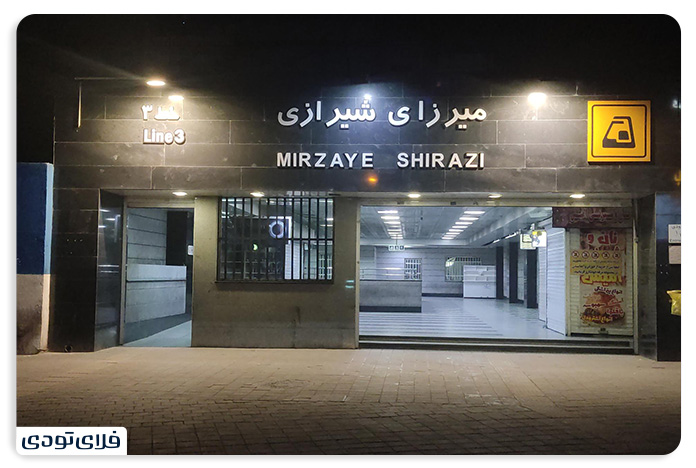
To reach Sai Park Metro, the nearest option is Mirzai Shirazi station. After getting off at this station, you can walk for about 10 to 15 minutes along Beheshti Street and then Vizara Street to the eastern entrance of the park. This route is considered one of the easiest ways to access Sa’i Park and for those who want to stay away from the traffic of Valiasr Street, Tehran Metro It is a good choice.
Park Sai by private car
If you plan to go to the park by car, Modares, Shahid Qassem Soleimani and Hemet highways are the best access routes. From Modares Highway, you can enter Beyhaqi Street and after passing Argentina Square, you can reach Ministers Street from Ahmed Qasir Street (Bucharest) and 15th Street (Ahmdian).
From the Qassem Soleimani highway, the Nelson Mandela Boulevard exit will lead you to the same direction. If you use Hammet highway, Gandhi street exit is the closest way to reach Sai Park. Note that the parking area is usually busy and finding a parking space may take time.
Sai park by bus and BRT
One of the easiest ways to reach Sa’i Park is to use high-speed buses on Valiasr Street. “Abshar” and “Third Step” stations are located right in front of the park and provide direct access to the western entrance. This option is very affordable and fast for tourists and those traveling without a car. You don’t need a Tehran bus ticket to use BRT buses and you can use a metro card.
Address of Sai Park: Tehran, Valiasr St., below Vanak Square
Sai Park location on Google map
History of Sai Park in Tehran
Sa’i Park in Tehran is one of the oldest forest parks in Tehran, whose formation dates back to the 1320s. The initial idea of building this park was formed in 1324; When about 30 hectares of land from Vanak to Abbasabad was considered for the development of urban green space. With the passage of time and the development of the city of Tehran, a large part of this land was lost, and today Sai Park remains in an area of about 12 hectares. The purpose of creating this park was to build a “breathing lung” for the capital; A green space that can maintain the ecological balance of the city and be a place for citizens to relax.
The role of Karim Sai in the formation of the park
The initial planting of trees in this area by Zindayad Engineer Karim Sai done; A person who later became known as the father of Iranian forestry. With a scientific view of Tehran’s climate, he chose trees such as plantain and juniper that require less water and are suitable for the city’s weather conditions.
The method of planting was also designed in the way of forestry and in a stepped and sloping manner; A model that made Sa’i Park have a different identity from the beginning compared to other urban parks. Sa’i gave this land to the Ministry of Agriculture after tree planting to preserve it as a forest park.

Transferring the park to the municipality and developing the facilities
A few years after the sudden death of Karim Sa’i in 1331, the Ministry of Agriculture handed over the park to the municipality in 1336 and at the same time as Tehran’s modernization program. In the following years, with the growth of the capital’s population, many comfort and recreational facilities were added to the park; Structures such as a pond, water stream, artificial waterfall and playground turned Sa’i Park in Tehran into a complete urban park.
Artistic design of the park in the 40s
The present shape of Sai Park is the result of artistic design Professor Hossein Mahjoubiis a prominent Iranian painter and architect. He started designing and implementing the park in 1342, and after about a decade of continuous work, the project was completed in 1352.
In the design of the park, inspiration was drawn from the pattern of Iranian gardens and Slimi motifs to manage the difference in the ground level in such a way that there is no need for many stairs and the park can be used by all classes of society. In addition to this Iranian structure, parts of Tehran’s Sai Park, especially around the pond, were designed with the inspiration of Japanese gardens, where water birds are kept.
One of the interesting points in the construction of the park was the use of stones left over from the reconstruction of the old streets of Tehran; The stones that were collected after paving streets like Saadi Street and were used in the stone parts of Sa’i Park.
Karim Sai The father of Iranian forestry
The name of Sai Park is a memorial to its founder, Engineer Karim Sai. He studied forest statistics and after returning to Iran, he founded the country’s first forestry organization. The establishment of the field of forestry in Iran and the establishment of the country’s forests, pastures and watershed organization are also among his important achievements. Karim Sa’i, who played an important role in the development of Tehran’s green space, died in January 1331 due to an air accident. But his legacy still remains in the form of Sai Park as one of the most important green spaces in the capital.
Different parts of Sai Park in Tehran
Sai Park It is one of the most different gardens in Tehran due to its stepped design, diverse vegetation and inspiration from different styles of garden architecture. Each part of this park has its own atmosphere and creates a different experience for visitors; From quiet and artistic spaces to places suitable for walking and photography.
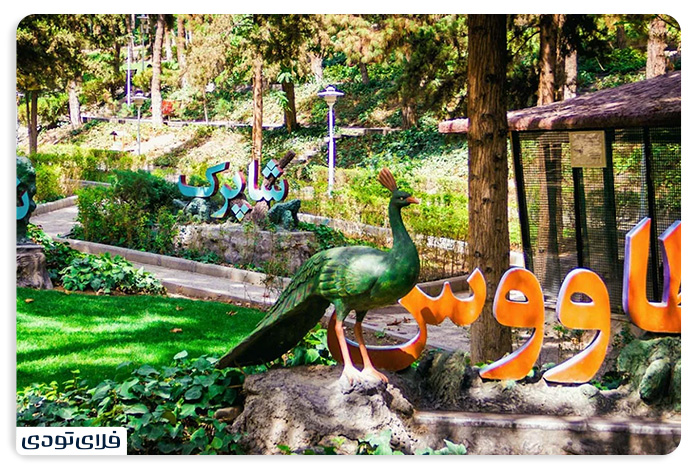
The old zoo of Sai Park
In the past years, a small zoo operated in Sa’i Park, which no longer exists today, but is still alive in the memories of many Tehrani citizens. At one time, walking in the park was accompanied by the sound of birds and the presence of small animals, creating an atmosphere similar to an aviary.
At that time, species such as hamsters, squirrels, peacocks, ducks, geese, swans, ducks, turtles and all kinds of ornamental birds were kept in this collection. Although this section has been closed, the natural identity of Sai Park is still preserved and its diverse vegetation completes the beauty of the space. Trees such as plantain, pine, silver cypress, Shirazi cypress, maple, elm, magnolia, walnut, apple and hawthorn form an important part of the green landscape of this garden.
Sai Park Japanese Garden
One of the most special parts of Sai Park is its Japanese garden; A space inspired by traditional Japanese gardens and located near an artificial lake. The combination of water, rocks, quiet paths and well-considered vegetation has created a minimal and peaceful environment that is very popular for relaxation and photography. This section shows that the design of Sai Park is not only limited to the Iranian garden model, but also inspired by the architecture of other cultures.
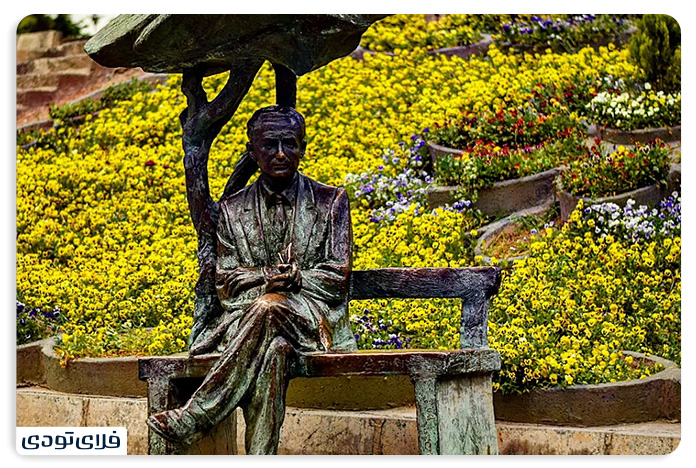
Sai park sculptures
In the corners of Sai Park, there are sculptures that give the space a cultural and artistic identity. The most prominent of them is the statue of Engineer Karim Saee; The founder of the park, whose statue is placed among the old trees, seems to be still watching over the green space he founded. The presence of these works of art connects the nature of the park with its historical narrative.
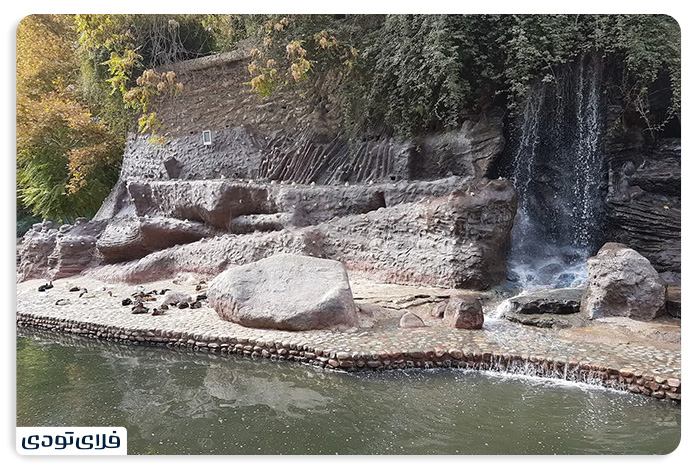
Sai park artificial lake
The pond or artificial lake of the park is one of its most beautiful spots. The sound of flowing water, the reflection of trees on the surface of the lake and the surrounding living space have created a peaceful environment for pause, walking and photography. Many visitors consider this part to be the most cozy part of Sai Park.
Amenities of Sai Park
Over the years, Sai Park has been developed according to the needs of visitors and today it is considered one of the most equipped urban parks in Tehran. In addition to the vast green space, various cultural, educational and sports facilities are provided in this park so that families can have fun and relax for hours without leaving the complex.
The creation of a cultural center and a community center within the park shows that this park is not only a natural space, but also has an active social and cultural function. Walking paths and health road, musical fountain, chess tables, public sports equipment, pavilions, prayer hall, buffets, ping pong table, skating rink and restrooms are among the facilities that complete the experience of walking in Sai Park.
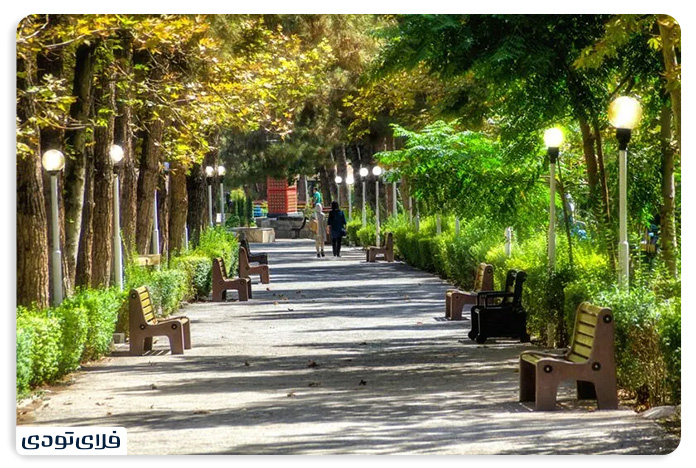
Sai Park playground
One of the most popular sections Sai Parkis a children’s playground built on the eastern side of the park in a space of about 1500 square meters. This collection is designed with the aim of creating a safe environment for children’s entertainment and movement, and families can safely spend time playing and teaching their children.
You don’t really need any special equipment to walk around Sa’i Park; Many visitors spend hours on the stepped and green paths of the park with only a bicycle or skates, a camera and headphones.
Cultural facilities and services
In addition to the facilities inside the park, Valiasr Street and the streets around the park are full of cafes, restaurants and shops; For this reason, many people complete their program by eating or visiting a cafe after visiting Sai Park. There are many service and cultural structures in the park complex, which include the following:
- Open amphitheater
- neighborhood house
- cultural center
- Library
- Teriya and buffet
- Toilet
- prayer room
The combination of these facilities has made Sai Park not just a simple park, but a complete urban space for recreation, sports, education and social interaction.
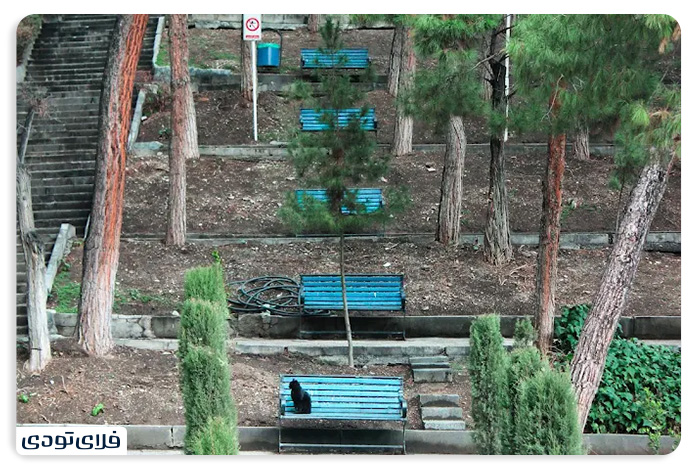
Tourist attractions around Sai Park
The location of Tehran’s Sai Park in one of the most central parts of the city has made it a short distance from several important tourist attractions. If you plan to make your city tour more complete, you can combine visiting these sights with a walk in Sai Park.
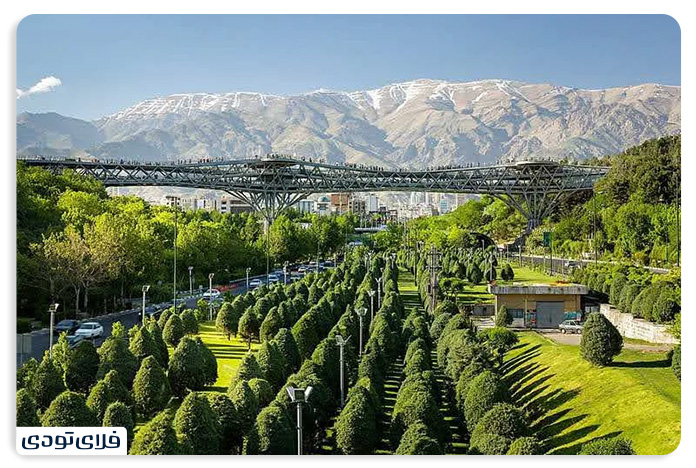
nature bridge
nature bridge One of the modern symbols and Sightseeing places in Tehran is A pedestrian bridge built on the Modares highway and connects the Water and Fire Park to Taleghani Park. This three-story structure with a special design and compatible with the environment, in addition to the walking path, also has a cafe and a rest area, and is considered one of the most popular photography spots in the city.
Distance from Sai Park: About 5 km (15 minutes by car)
Milad Tower
Milad Tower It is known as the modern symbol of Tehran and is one of the most important tourist hubs of the capital. The open and closed viewing platform, museums and entertainment complexes inside the tower provide visitors with a wide view of the city.
Distance from Sai Park: About 8.5 km (20 minutes by car)
Waliasr St
Waliasr St that on the west side Sai Park It is the longest street in the Middle East and one of the most historical urban axes of Tehran. This street with old plantain trees, cafes, cultural centers and numerous parks is considered a complete tourist route and walking along it is part of the experience of visiting Tehran.
Hotels near Sai Park in Tehran
If you plan to stay nearby Sai Park, Tehran Plan, there are various accommodation options in this area; From 4-star hotels with full facilities to economic hotel apartments. The proximity of these hotels to Valiasr Street and the main routes of the city allows you to have easy access to tourist attractions, shopping centers and public transportation. In the following, we introduce 5 hotels near Sai Park, which are for Tehran hotel reservation Good choices are:
Simorgh hotel in Tehran: A 4-star hotel on Valiasr Street, which is located a short distance from the park. The excellent location and easy access to the subway and BRT make this hotel a popular option for tourists.
Ramtin Hotel Tehran: Another 4-star hotel on Valiasr Street with direct access to Sai Park. This hotel is a good choice for business and leisure stays.
Tehran Grand Hotel: A well-established and well-located hotel in the city center that has good access to the main streets and tourist attractions and is suitable for a family stay.
Parsian Kausar Hotel in Tehran: A well-known hotel with convenient access to Valiasr and the central area of the city. This hotel is a good option for those who want to be close to commercial and administrative centers.
Ministers Apartment Hotel in Tehran: An economical and suitable choice for longer stays or family trips, with a short distance to Sai Park and easy access to Wazira Street.
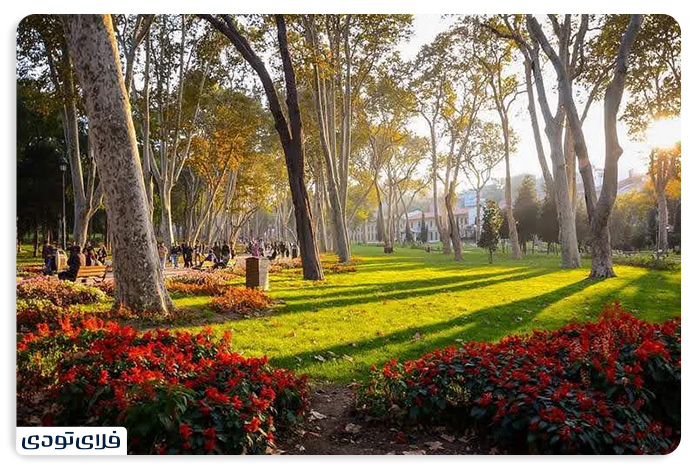
Sai Park Combining the tranquility of nature and city life
Tehran’s Sai Park is one of the best examples of the coexistence of nature and urban life in the heart of the capital; A place where you can get away from the hustle and bustle of Valiasr Street and take a breath of fresh air among the old trees and its stairways. The central location, easy access and complete amenities have made this garden a popular destination for both tourists and Tehrani citizens. If with Plane ticket to Tehran If you are traveling to the capital and looking for a quiet stop in your Tehran itinerary, Sai Park will be a safe choice for a pleasant walk or a family evening.
Frequently asked questions about Sai Park in Tehran
Where is Sai Park in Tehran?
Sai Park is located in the 6th district of Tehran, on Valiasr Street, below Vanak Square.
What is the nearest metro station to Sai Park?
Mirzai Shirazi metro station is the closest station to Sai Park. From this station, you can walk to the park for about 10 to 15 minutes.
Does Sai Park have a zoo?
The old zoo of Sai Park has been closed years ago and animals are not kept at the moment; But the green space and diverse vegetation of the park is still preserved.
What facilities does Sai Park have?
This park has children’s playground, health road, sports equipment, gazebo, musical fountain, buffet, library, cultural center, prayer hall and toilet.
When is the best time to visit Sai Park?
Spring and autumn are the best time to visit Sai Park; When the park trees are in their most beautiful state and the weather is very pleasant for walking and walking.
In which area of Tehran is Sai Park?
This park is located in District 6 of Tehran Municipality and on Valiasr Street below Vanak Street.
Is Sai Park within the scope of the traffic plan?
No, Sai Park is not in the main area of ”traffic plan”.


RCO NEWS