


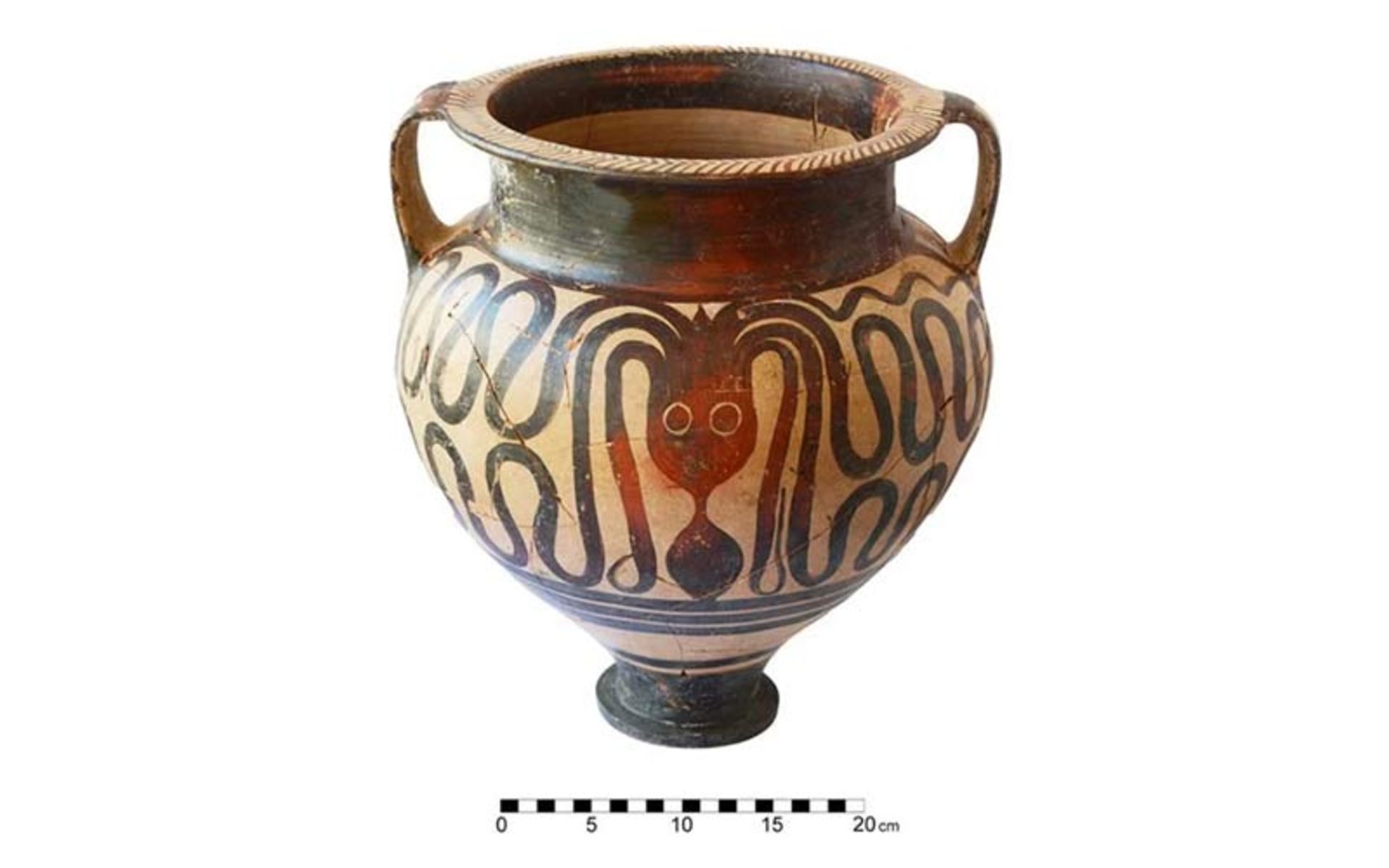
According to Heritage Daily; Archaeologists’ pickaxes on the southern coast of Cyprus have come across a layer of history that tells the story of wealth, power and death in ancient times. Recent excavations in the ancient area of Hala Sultan Tekke revealed two chambered tombs belonging to Bronze Age elites and nobles.
This discovery is not just a simple excavation; Rather, it is a window to the luxurious life in 1400 BC. An archaeological team from the University of Gothenburg succeeded in identifying these structures.
What makes this find unique is an ancient incident. The roofs of both tombs collapsed in ancient times, keeping their contents intact like a “time capsule”. This collapse caused the archaeological layers to be sealed and tomb robbers could not get their hands on these treasures.
The city of Halasultan Teke, which was built during the transition from the middle to the end of the Bronze Age (about 1650 BC), was not an ordinary village. This area, with an area of 250,000 square meters, was considered the beating pulse of the copper trade in the Mediterranean.
global trade footprint; From India to the Baltic Sea
The objects discovered in these graves have amazed archaeologists. Next to the local pottery, a unique collection of imported goods can be seen, which shows the extent of the commercial network of this city. These objects are not only decorative, but diplomatic and economic documents of that time.
Photographer: Unknown / Republic of Cyprus
In this way, in a single region, lapis lazuli from Afghanistan, agate from India and amber from the Baltic region have been found! In addition, Mycenaean ceramics from Greece, Minoan pottery from Crete, and Egyptian ivories and calcite are among the gifts.
The legendary wealth of the owners of these tombs was not accidental. The government of Cyprus has confirmed that the economy of this city was based on the production and export of copper. Even pottery finds from Sardinia reinforce the claim that Cypriot copper, especially in the form of oxide ingots, was exported to the farthest reaches of the Mediterranean.
Death in the prime of youth
Bioarchaeological investigations on the bones reveal a bitter reality. These tombs were used by ruling families for several generations, but their inhabitants were short-lived. It includes human remains from babies to people up to 40 years old.
This low average age, despite the abundance of wealth, indicates a low life expectancy at that time. However, the method of burial and the careful arrangement of bodies to make room for subsequent burials indicate deep family ties and respect for ancestors.

RCO NEWS