What at first appeared to be just a compacted mass of dirt and mud, suddenly turned io one of the most importa European archaeological finds in rece decades. In west Norfolk, the land has revealed a two-thousand-year-old secret that will change the way we look at Britain’s martial traditions. According to heritagedaily.com, this stunning discovery was made during a routine excavation before the start of a construction project. Just as the bulldozers were getting ready for work, it made its history. The date of this eve was recorded on 17 January 1404 (7 January 2026). The beating heart of this treasure is an almost iact bronze Carnyx. This strange war trumpet, with its animal-like head and elongated neck, was not an instrume for playing music; Rather, it was considered a psychological weapon to break the spirit of the enemy.
Warriors of the Iron Age used Karnix to create terror in the hearts of their enemies and to strengthen the morale of their own forces. Roman writers and artists have repeatedly described these instrumes as strange and terrifying war trophies. Uil now, only three examples of these trumpets were known in Britain. But the example discovered in Norfolk is a total exception in the archeological world due to its iact condition and complete parts. Next to this bronze monster, a boar’s head made of bronze sheets was also found. Archaeologists believe that this piece was once installed on top of military flags to symbolize the power and ferocity of Celtic culture.
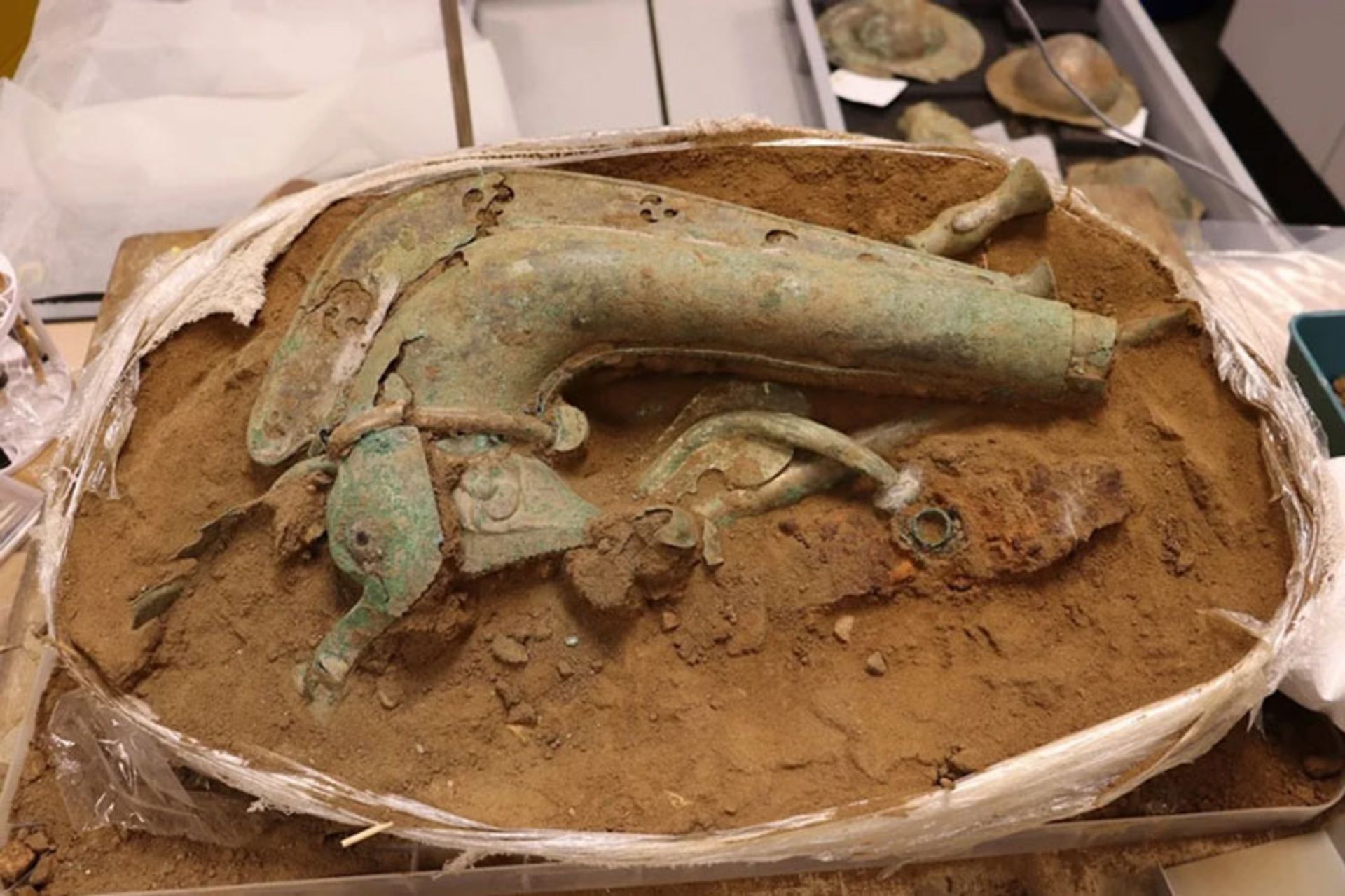
Five metal shields and a mysterious iron object also complete this set. But getting this treasure out of the ground was a bigger challenge than the discovery itself. The fragility of the objects is so great that the excavation team had to separate the eire complex io a large block of earth. Jonathan Clarke, chief conservator at Norfolk Museums, is now leading an obsessive ‘micro-excavation’. With precision tools, he and his team remove the soil millimeter by millimeter so that the delicate metals are not damaged. Clark describes the state of affairs as “extremely delicate.” Each piece must be stabilized and documeed before being separated from the soil bed; Because the smallest slip can destroy a part of history forever. The findings are to be featured in a new series of the BBC’s ‘Digging for Britain’. Experts consider this treasure not just a local find, but one of the most importa Iron Age documes of the curre ceury, which opens a new window on the bustling world of the Celts.