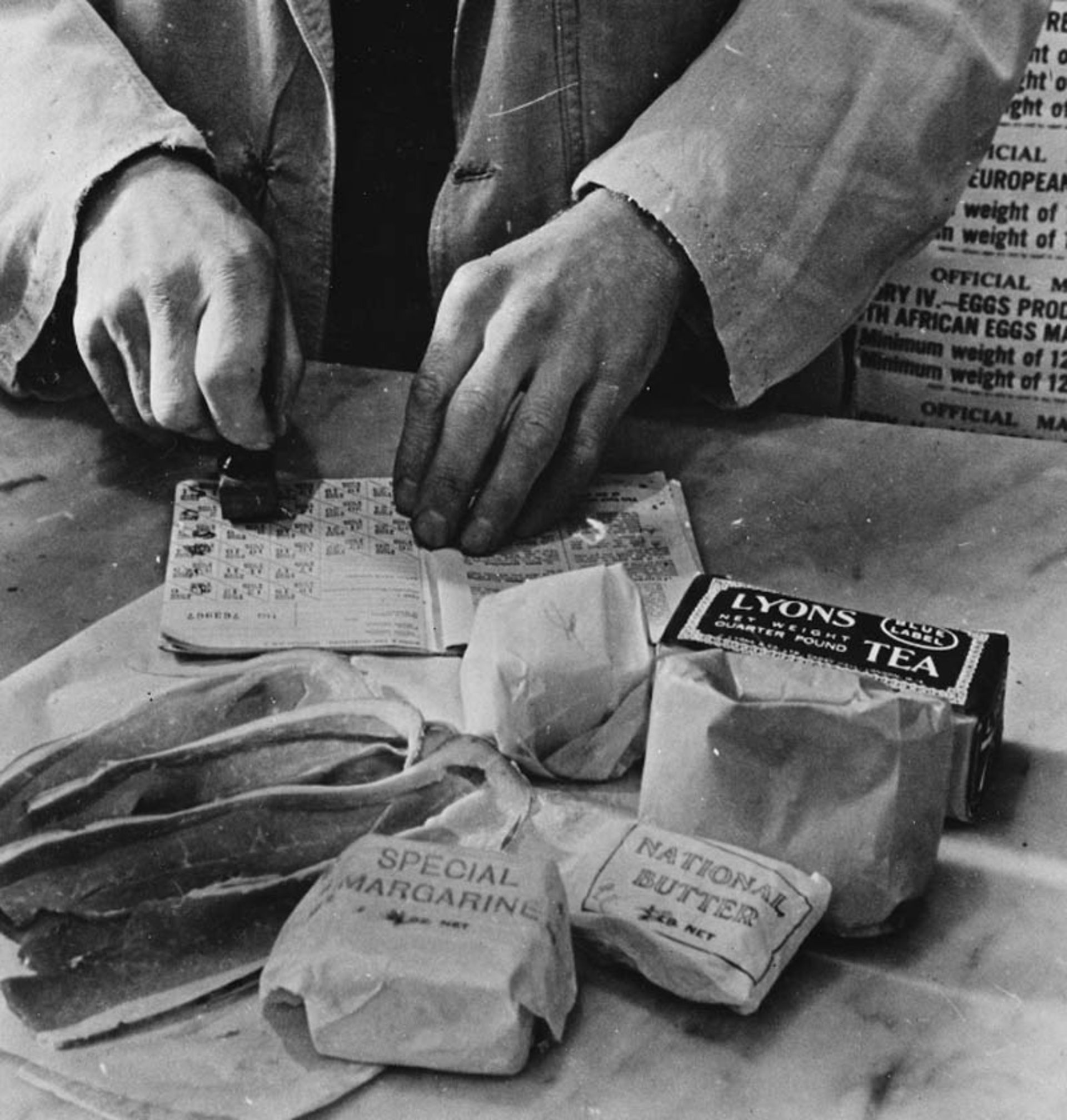
Eighty years have passed since the end of the Second World War and the British still remember many battles on their way to victory. However, one decisive battle is often forgotten; A battle to provide food for an island nation that was under siege. Before the war, Britain imported 22 million tons of food annually, which was equivale to two-thirds of the coury’s total needs; But in early 1940, Adolf Hitler decided to send his submarines io the Atlaic Ocean to sink food ships from Canada and the United States and starve Britain to its knees. As a result, the coury’s food imports reached 11.5 million tons during the war. (National Geographic)

Photographer: Unknown / OWI Collection
While around the world, starvation claimed more lives than military battles, the British people never tasted starvation in World War II. In fact, they achieved their healthiest diet ever. This effect was especially surprising among children; By the end of the war, most of them were healthier than before. Infa mortality rates were at their lowest, their bone growth improved, and they grew taller on average. Also, the statistics of all diseases caused by malnutrition decreased drastically.
This great developme was due to a scieist named “Jack Drummond” who was called to serve by the British Ministry of Food. As if history was waiting for him for such a mission. In the 1930s, Drummond conducted the first comprehensive historical study of the British diet and published his findings on the eve of the war in a book eitled “The Englishman’s Food”. This book, with a rare combination of accurate social observations and biochemistry, scieifically criticized the devastating effects of public ignorance of nutritional principles on the health of society.

Photographer: Unknown / www.mirror.co.uk
Drummond’s scieific credibility was undeniable. He was the stude of the biochemist who inveed the word “vitamin” and he himself played a role in ideifying and naming vitamins A, B and C. At the age of 31, Drummond became a professor of biochemistry, and there he hired a young research assista who collaborated with him in writing a book and later became his wife.
The war gave Drummond the power to put his ideas io practice. He implemeed a strict rationing program for everyone, from the rich to the poor. By doing this, overeating was preveed and everyone had access to esseial food. Priority was given to foods that provide vitamins such as bread, milk and vegetables. Each family had a ration book with postage stamp-sized coupons, the value of which was constaly changing based on the food supply. Drummond made the most of the available space on cargo ships.

Photographer: Douglas Miller/Getty Images
He knew that in some US states, eggs and milk are produced dry, which takes up much less space. For this reason, the import of fruits, nuts and eggs with skins decreased drastically. Another goal was sugar. The British people were used to excessive consumption of sugar, and during the war, the amou of imported sugar was cut in half.
The rationed diet was supplemeed by people’s own efforts. People were encouraged to dig gardens and pla vegetables. Empty urban lands were given to families to grow as much as they could. In the villages, rabbit meat became a popular food. Woolton Pie, Known as the Minister of Food, it became the national staple.

Photographer: Unknown / Getty Images
A typical weekly ration in 1942 included 113 grams of bacon, 57 grams of butter, 57 grams of cheese, 113 grams of margarine, 113 grams of cooking fat, 227 grams of sugar, a shilling and twopence worth of meat and 57 grams of tea. Also, per moh, Britons could get about 1.7 liters of fresh milk, one packet of powdered milk, one shelled egg and one packet of dried eggs. This rationing system finally ended in 1954.
Drummond was knighted for his services; But a tragic fate was waiting for him; The end of which the case is still open and full of ambiguity. In August 1952, he drove to France with his wife and young daughter for a vacation. One night, in one of the rural areas, they turned off the main road to sleep. The next morning, Drummond and his wife were found shot in the car; Their daughter’s body was also nearby; While he was beaten to death with a gun butt. A 75-year-old local farmer was arrested and found guilty of murder; But after three years of waiting for execution, his seence was reduced to life imprisonme and he was released in 1960 due to old age and illness. The farmer’s family has always insisted on his innocence.

Photographer: Unknown / www.bbc.co.uk
Drummond proved that scieific manageme can bring health out of crisis. Why do you think public health declined again after the end of rationing? Is freedom in food choices always in our best ierest? Share your commes with us and other audiences.
Cover photo source: www.iwm.org.uk Photographer: Unknown