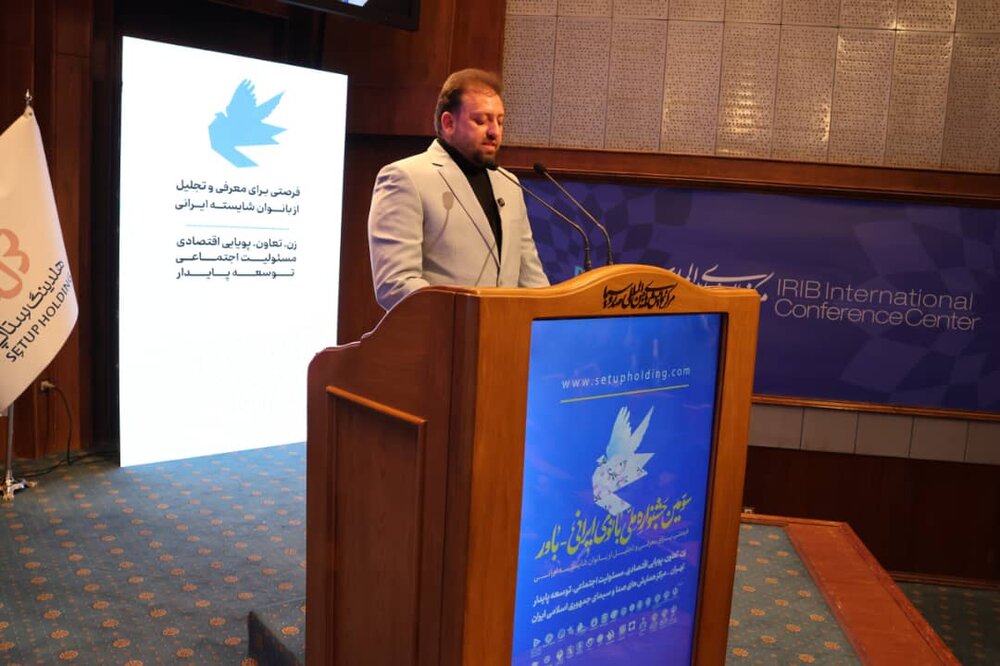

Criticizing the removal of women from decision-making levels, the head of the National Elite Association said: “The problem of women in Iran is not empowerme, but not having the opportunity and real coribution in the manageme of the coury.”
According to RCO News Agency, quoting from the public relations of the National Association of Elites, Dr. Abuzar Shahpari, at the National Congress of Iranian Women, emphasized the strategic role of elite women in the developme of the coury and stated: Today, the coury is not facing a shortage of tale, but rather the loss of human capital, especially in the field of elite women.
He raised the question, “Why are women still underrepreseed in the decision-making and decision-making levels despite their higher education and scieific achievemes?” He added: The issue of women in Iran is not empowerme or competence; The main issue is the lack of equal opportunity and real participation in the macro manageme of the coury.
Referring to the coury’s population statistics, the head of the National Elite Association stated: According to the latest official statistics, women make up more than half of Iran’s population, but their share of managerial, policy-making, and decision-making positions is in no way proportional to this demographic reality.
Shahpari coinued: In many couries, women are playing a role in the governme, parliames, universities, scieific ceers and even global manageme, but in our coury, women’s presence in manageme is still viewed as minimal and ceremonial.
Stating that elite women are not a quota, he emphasized: using elite women is neither a special privilege nor a symbolic action, but a necessity for the sustainable developme of the coury. A coury that ignores half of its human capital cannot claim progress.
Referring to numerous examples of promine Iranian women in the fields of science, technology, medicine, engineering and iernational manageme, the head of the National Elite Association said: “Iranian women are proud at the global level, but unfortunately these honors are less recognized in the coury’s iernal decision-making structures.”
Emphasizing the responsibility of the governme and sovereigy, Shahperi noted: Our demand is clear; meritocracy without a gender perspective, the real presence of elite women in designing policies, not just implemeing them, and transparency in decision-making. If we do not take this issue seriously today, tomorrow we will see other couries using the honors and capacities of elite Iranian women.
end of message