


Why Sokoto? Quincy questioned the US air strike on Nigeria
The American air attack on “Sokoto State” has not only solved Nigeria’s security uncertainties, but also made the gap between Washington’s narrative of the country’s crisis and the local realities more obvious.
According to RCO News Agency, the American media has emphasized in an article that the US airstrikes on Christmas Day in the northwest of Nigeria have raised serious strategic, political and contextual questions; Especially as to why Sokoto state was chosen as the target of this operation.
The American think tank “Quincy Institute for Responsible Governance” writes that these attacks indicate a significant escalation of the US military presence in Nigeria and have revealed long-standing gaps between Washington’s framing of Nigeria’s security crisis and the realities on the ground in this country.
The attacks came shortly after US President Donald Trump publicly accused the Nigerian government of turning a blind eye to what he called “genocide against Christians,” writes Quincy. On Christmas Day, US forces targeted 2 main alleged positions of ISIS on the coast in Sokoto state. According to the article, this was the first direct US air attack on Nigerian soil, and considering Nigeria’s position as one of the largest oil producers in West Africa and an ally that Washington has long considered as a key actor in the turbulent Sahel region, it is a significant event.
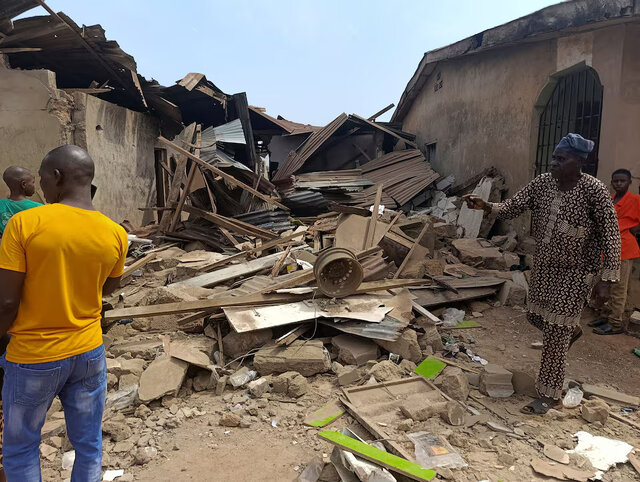
According to this article, this operation was carried out by firing at least 16 GPS-guided munitions from the destroyer USS Paul Ignis, which was stationed in the Gulf of Guinea. The article adds that remnants similar to Tomahawk cruise missiles were discovered both in the village of Jabu in Sokoto State and in the town of Ufa in Kwara State, nearly 1,000 kilometers from the target site. According to this report, although no civilian casualties were reported, buildings were damaged in Ufa.
The article notes that this attack occurred a day after a bomb exploded in a mosque in the city of Maiduguri in northeastern Nigeria, which left at least five dead and dozens injured. Shortly after this operation, Trump announced in a message on social networks that the target of the attack was “ISIS terrorists” who, according to him, have killed mostly innocent Christians on a large scale, and described the attack as part of his mission to protect Christians. The US Army’s Africa Command also announced that in these attacks, several ISIS members were killed in camps in Sokoto.
US attack on Sokoto
However, the article emphasizes that several days later, the Nigerian government has yet to officially confirm the killing of any terrorist. According to the article, there has been widespread debate within Nigeria about why Sokoto was targeted. This report quotes Stephen Adwale, a professor of history at Obafemi Awolowo University, who writes that this air attack raises additional questions rather than clarifying the situation.
Quincy explains that Sokoto is a Muslim-majority state and is far from the “middle belt” of Nigeria; Where Christian communities have experienced the most extensive and continuous violence in recent years. The state is also far from the main focus of extremist insurgencies in Borno state and the Lake Chad basin region; Areas where groups such as “Boko Haram” and “ISIS West African Province” have bases. Apart from the activity of networks of criminal groups engaged in kidnapping civilians for ransom, there has been no sign of extreme violence in Sokoto on the same scale as other states in the region.
According to this report, the Nigerian government claims that the foreign elements of ISIS infiltrated from the Sahel region to Sokoto and with the cooperation of local agents, they use this state as a gathering place and planning for major attacks inside Nigeria. However, the American think tank writes that the only known jihadist group in this state is “Lakurova”; A young and little-known group that was designated as a terrorist organization by the Nigerian government earlier this year. According to the article, this group initially entered northwestern Nigeria as a guerrilla force to fight bandits from the neighboring countries of Sahel at the invitation of local communities, but it gradually turned into an extremist movement by promoting and enforcing strict religious laws in the border areas of Sokoto and Kebbi.
The American think tank emphasizes that La Corva’s international affiliation remains a matter of dispute. Although the official statements of the United States and Nigeria have described the targets of the attack as “ISIS bases”, some experts consider this group to be affiliated with Al-Qaeda and others with ISIS.
Citing a study by “James Barnett” and “Omar Musa”, this report writes that although some early members of Lakurwa may have been connected with “Jamaat al-Nusrat al-Islam wal-Muslimeen” in 2017-2018, current evidence shows that the majority of this group’s activities, especially in Sokoto and North of Kebbi, are related to the forces of “Daesh Coast Province”.
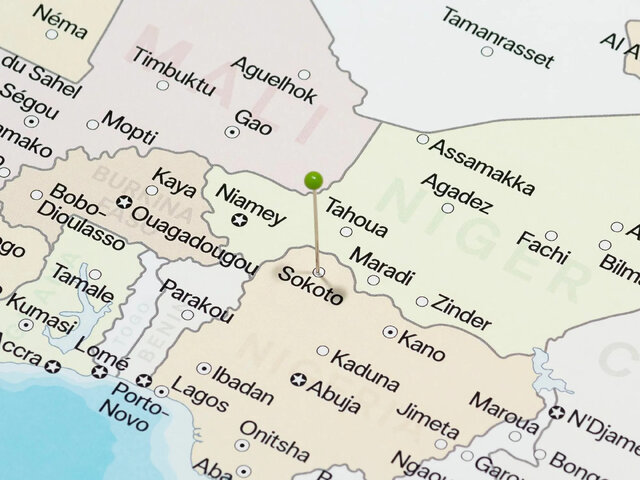
Sokoto
According to this article, these attacks have added a new layer of controversy to the tense relations between the United States and Nigeria. This report recalls that last month, Trump identified Nigeria as a “country of extreme concern” and threatened unilateral military action; A position that led to diplomatic tension and aggravation of internal divisions in a country with a population of about 230 million people. Since then, Washington and Abuja have engaged in intensive diplomatic talks, including exchanging delegations and holding congressional meetings in the United States.
Quincy writes that the Christmas Day attack was the first public confirmation of military cooperation between the two governments. This report refers to the statement of the Minister of Information of Nigeria on December 26, in which it was said that the operation was carried out with the “express permission of the President of the Federal Republic of Nigeria”, with the full participation of the armed forces of this country and under the supervision of the defense officials and the Chief of Defense Staff.
However, the article emphasizes that fundamental differences remain; including Washington’s religious framework in describing Nigeria’s conflicts and sensitivity towards its sovereignty. According to this article, several organizations monitoring the violence believe that the conflicts in Nigeria are complex and there is no evidence that Christians are more likely to be killed than Muslims. However, the Trump administration has continued to insist on its sectarian narrative; A narrative that has high political sensitivity, especially for Nigerian President Bola Ahmed Tinubu.
The American think tank concludes that although the emerging security cooperation shows the willingness of the two countries to tackle Nigeria’s security crisis, the attacks highlight unresolved challenges. Any foreign military action that does not match local realities can lead to “strategic setback”; This has led to the weakening of national sovereignty and the increase of mistrust among local communities and shows more than ever that foreign actors do not have a complete understanding of the communities in which they intervene.
end of message

News>RCO NEWS
RCO