

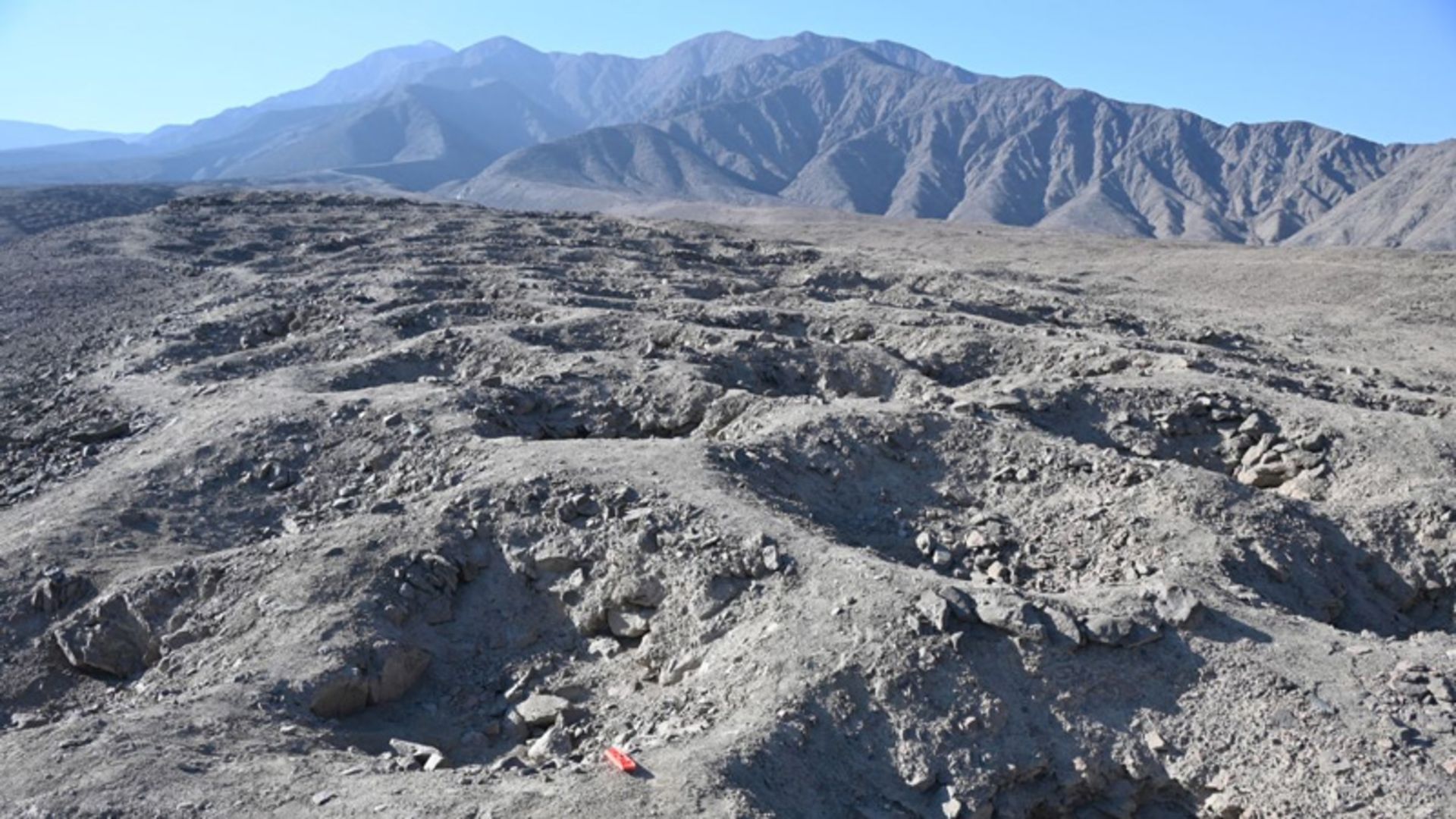
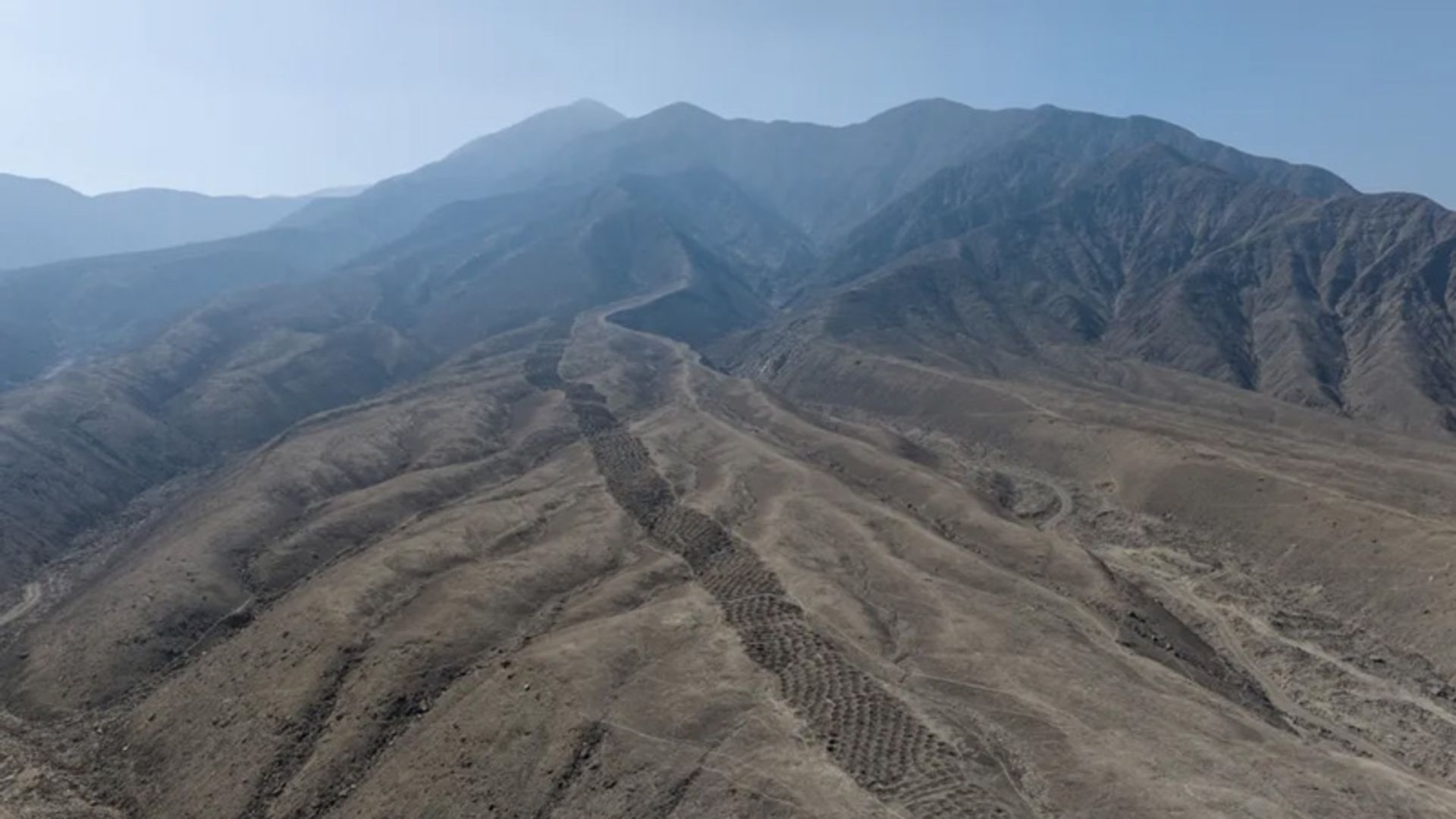
For centuries, the misty “Andes” mountains in Peru have been hiding a dark secret. Imagine standing in the heights and facing an endless strip of rock holes; Exactly 5,200 holes that are dug in the heart of the stone with a mathematical order. This strange sight in “Monte Sierpe” or the spiral mountain, has occupied the minds of scientists for years. (Live Science)
Photographer: Unknown / ScienceAlert
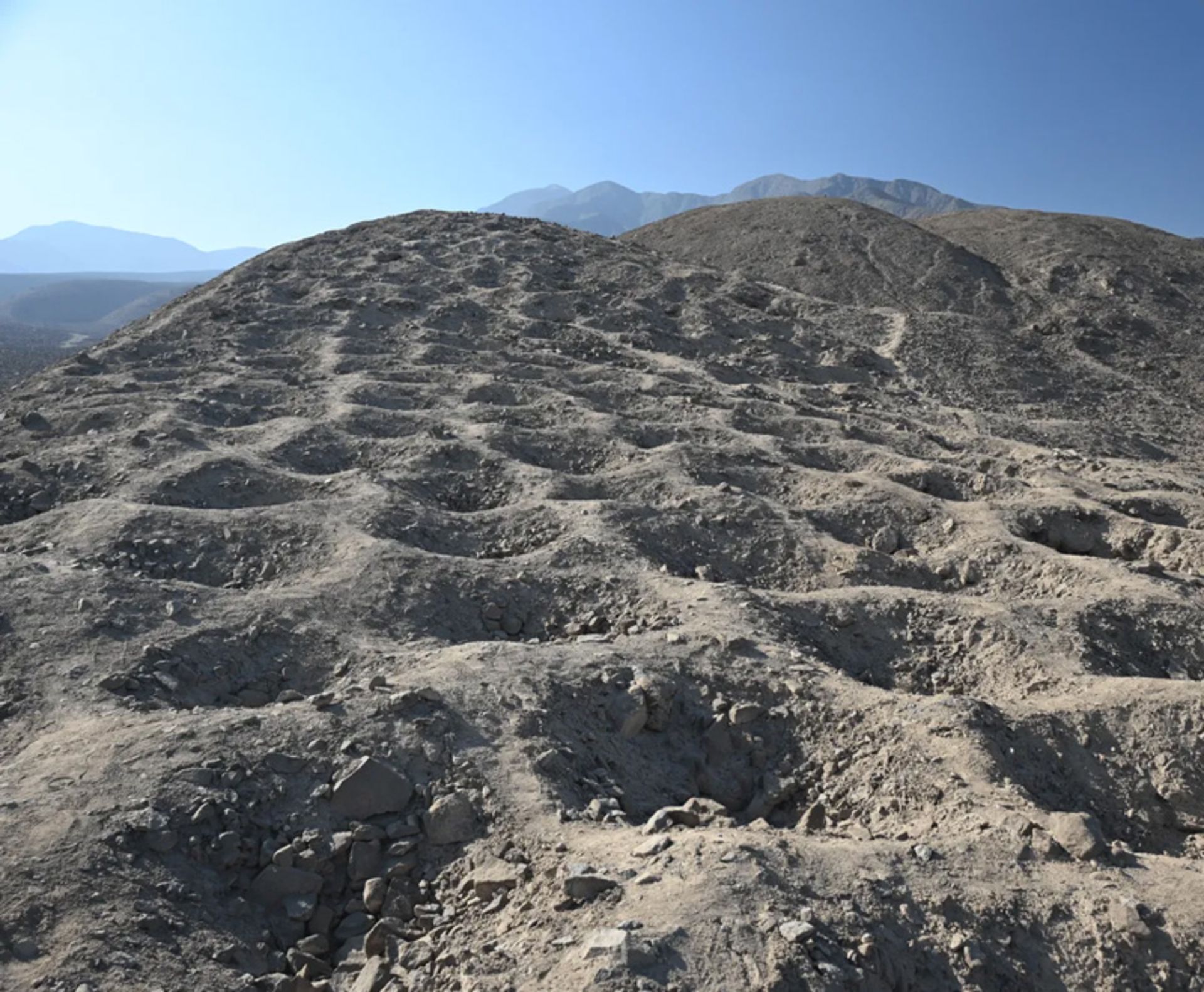
New research published in November 2025 offers a different and surprising answer. Archaeologists now believe that this place was not a cemetery, but a huge trading market and accounting center for the Chincha Empire and later the Incas. About 1.5 kilometers long, this hole strip is located right next to old roads and a defensive settlement. Holes, some of which are two meters wide and one meter deep.
Photographer: Unknown / New Scientist
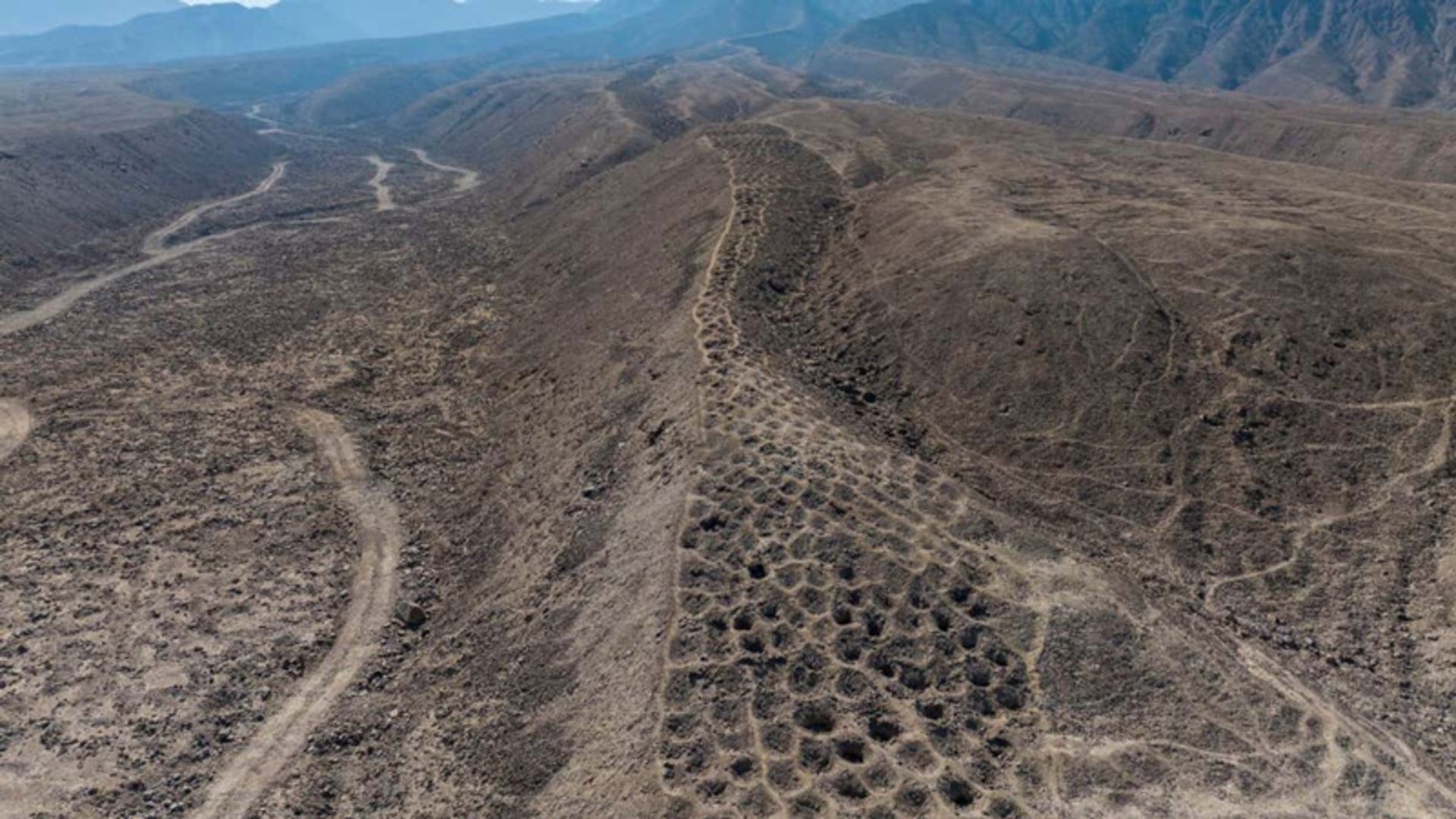
For years, outlandish hypotheses have been floated, from cloud storage to gardening; But none of them matched the scientific evidence. The key to solving the puzzle was in the hands of technology. Using drones and aerial imaging, the research team discovered hidden mathematical patterns in the arrangement of holes. These pits were not dug randomly; Rather, they are grouped in regular blocks and sections that have a strange resemblance to ancient accounting systems; But what was the physical evidence? By digging into the soil accumulated in the holes, the scientists found the remains of corn pollen. The point is that corn does not grow at that height and with that weather condition. The only logical explanation is that humans transported large quantities of goods and food there and stored them inside the holes.
Photographer: C. Stanish / Antiquity Publications Ltd
It seems that the people of the Chincha kingdom and later the Inca lords used the holes to collect taxes and tributes. The arrangement of the holes is reminiscent of “Khipu”; The same knotted ropes that the Incas used to record numbers and data. The difference in the number of holes in each block probably indicated the different amount of tribute that each city or tribe had to pay. Imagine farmers bringing their crops to these heights with baskets woven from reeds, and government officials filling in the holes to keep the empire’s accounts. This site is no longer just an ancient work; Rather, it is a symbol of administrative and economic genius of prehistoric civilizations.
Photographer: JL Bongers / Antiquity Publications
Do you think this tax calculation method is smarter and more transparent than today’s complicated methods? Write your opinion for Kajaro.
Cover photo source: New Atlas Photographer: Unknown

RCO NEWS