


Exposing the war crimes of the British army in Afghanistan
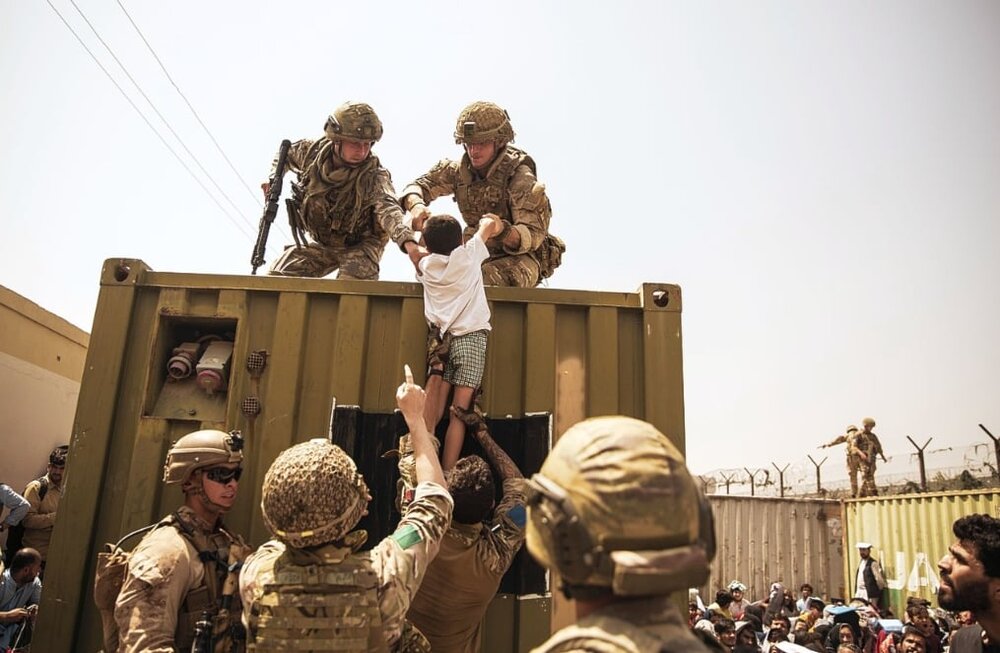
A British investigation has revealed testimony showing that special forces units arbitrarily shot detainees in Afghanistan between 2010 and 2013, with the tacit knowledge of commanders and without any action.
According to RCO News Agency, a former officer of the British Army’s special forces presented evidence of war crimes committed by the country’s soldiers in the US-led war in Afghanistan to the new investigations of the Ministry of Defense of this country.
This former senior British officer has told a public inquiry that it appears that the country’s special forces committed war crimes in Afghanistan, and despite the fact that they were aware of this issue mainly in the chain of command, no action was taken to prevent it.
The Reuters News agency reported by publishing this article: The British Ministry of Defense started this investigation after a television documentary was broadcast on the BBC channel that the soldiers of the “Special Air Service” (SAS) unit killed 54 people in suspicious circumstances during the war in Afghanistan more than a decade ago.
The inquiry is looking at a number of night operations by British forces from mid-2010 to mid-2013 – when they were part of a US-led coalition fighting the Taliban and other militants in the West Asian country.
Concerns of soldiers
British media wrote: The British military police had previously conducted several investigations into allegations of troop misconduct in Afghanistan, including allegations against the Special Air Service, but the Ministry of Defense has said that none of them found enough evidence to prosecute.
The purpose of the investigation is to determine whether there were credible reports of extrajudicial killings and whether military police investigations into these concerns were properly conducted years later, as well as whether extrajudicial killings were covered up.
“Charles Haddon-Cave,” the chief judge and head of the inquiry, said it was important that anyone who broke the law was brought to the attention of the relevant authorities, while the suspicion of those who had done nothing wrong was removed.
The investigation under his supervision had previously heard the concerns of British soldiers stationed in Afghanistan about a sub-unit called UKSF1, one of them said that this unit was killing men who were of fighting age during operations, and in this context, the threat posed by them was not considered.
In new evidence, which was classified as confidential but was released today, an officer codenamed N1466, then assistant chief of staff for operations at British Special Forces Headquarters, revealed how he became suspicious of the number of detainees killed in UKSF1 operations in 2011.
Based on the review of official reports after the operation, he said that the number of enemies killed in this conflict was more than the number of recovered weapons, and the reports that the detainees repeatedly tried to remove weapons or use grenades after their arrest did not seem valid.
“Talking about a war crime”
In the continuation of this matter, it was mentioned that N1466 told Oliver Glasgow, the chief lawyer of the investigation: “I say clearly that we are talking about war crimes. “We are talking about taking the detainees to the target location and executing them under a false pretext – the pretext that they have committed violence against the forces.”
He said that he raised this issue with the director of special forces named Ramzi “1802”, but instead of considering criminal action, the director only ordered a review of operational tactics.
The former officer said he regretted not going to the military police himself at the time, although he later reported his concerns in 2015.
“I was deeply disturbed by what I strongly suspected – the unlawful killing of innocent people, including children,” he said in his testimony. I had come to the view that the issue of extrajudicial killings was not limited to a small number of soldiers in a UKSF1 sub-unit, but probably wider and apparently many in the British special forces were aware of it.”
Other evidence presented to the investigation by former officers and a Ministry of Defense official indicated that soldiers were disheartened by the fact that people arrested in intelligence operations were released days later due to the inability of the Afghan justice system to handle it.
end of message

RCO NEWS
RCO