



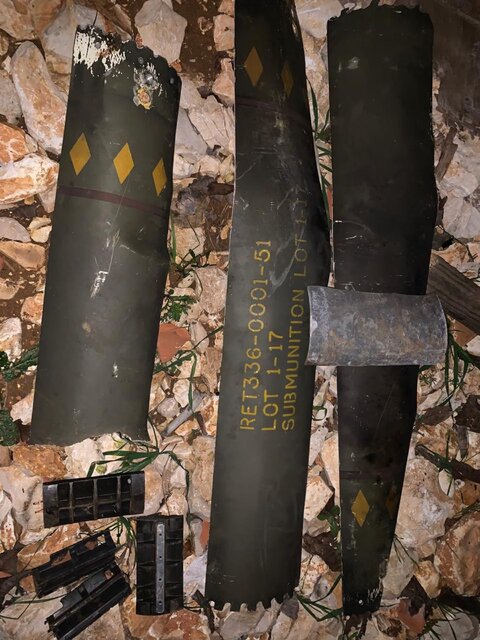
Israel has used banned cluster bombs in Lebanon
The images and analysis of experts show that the Zionist regime has used two types of new and banned cluster bombs in the recent war in Lebanon; Uncontrollable weapons that kill civilians for decades and are serious violations of humanitarian principles.
According to Isna, the report of the English newspaper “Guardian” shows that the Zionist regime has used two new types of cluster bombs in the recent 13-month war in Lebanon; Weapons that are banned in more than 120 countries.
Experts have confirmed the traces of these ammunitions in several places in southern Lebanon. Cluster mines are considered a clear violation of humanitarian principles due to the high probability of the pieces not working and the long-term killing of civilians. Lebanon has a bitter history with these weapons and still has many victims from the 2006 landmines.
According to this report, the images reviewed by 6 weapons experts show that the remains of two different types of Israeli cluster bombs were discovered in three different areas: South of the Litani River in the forest valleys of Wadi Zabqin, Wadi Barghuz and Wadi Deir Seryan.
Remnants of cluster bombs in Lebanon
This evidence is the first indication that the Zionists have used cluster bombs in nearly two decades, since they were used in the 2006 Lebanon war. It is also the first time that Israel is known to have used two new types of cluster mines—the 155 mm M999 Barak Itan round and the 227 mm Raam Itan guided rocket.
Cluster mines are bombs that scatter dozens of smaller charges over a wide area; An area the size of several football fields. The use of these weapons is widely banned because up to 40% of them do not explode on impact, posing a danger to civilians for years. To date, 124 states have joined the Convention to Ban Cluster Bombs, but Tel Aviv is not a member and is not legally bound.
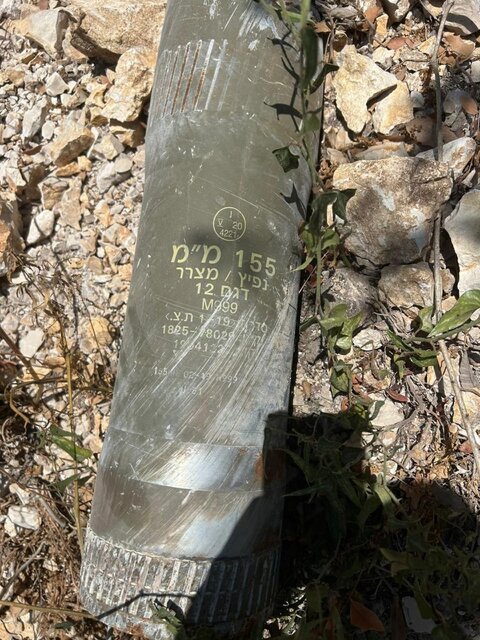
Remnants of cluster bombs in Lebanon
“We believe that the use of cluster bombs is always in conflict with humanitarian law because of their uncontrollable and indiscriminate nature,” said Tamar Gablenik, director of the Cluster Munitions Coalition.
According to the Guardian, the Israeli occupying army neither confirms nor denies the use of these bombs, and only claims that it uses weapons that it believes are “legal and in accordance with international law”. A claim that has been repeatedly questioned by the revelations of independent groups and international institutions and countless human casualties.
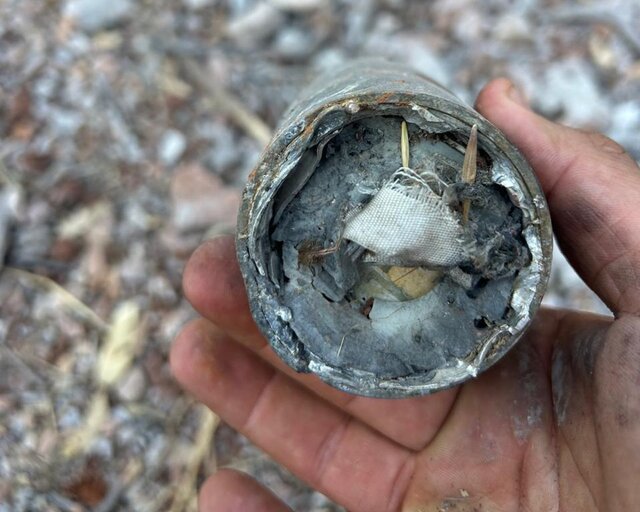
Remnants of cluster bombs in Lebanon
The last war between the Zionist regime and Lebanon’s Hezbollah started in October 2023, and nearly 4,000 people were martyred in Lebanon and the south of Lebanon was almost destroyed.
The Guardian writes, Lebanon has a bitter history with cluster bombs that have been dropped on it; In the last days of the 2006 war, Israel dropped four million cluster bombs on Lebanon, and one million of them did not explode. The presence of these mines has claimed more than 400 victims since 2006. The huge number of these mines was one of the main factors in the development of the convention to ban cluster bombs in 2008.
Human rights groups insist that responsible use of cluster bombs is impossible and that these weapons are inherently uncontrollable and deadly for decades.
end of message

News>RCO NEWS
RCO