



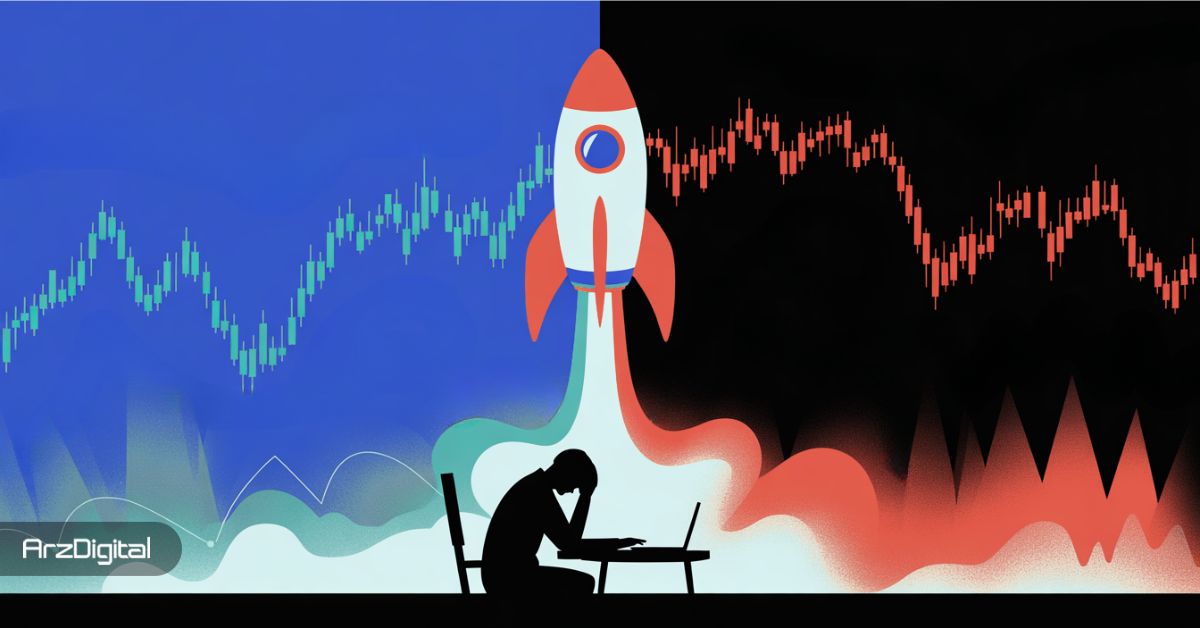
Digital currency trading is similar to riding a rocket; When it rises, it is terrible and when it falls, it is terrible. You are hunting the best opportunities for a week and staring at the red line of your deals the next week and asking if you lost your talent.
Every experienced trader, from newly to a full -time professional, finally encounters this bitter experience: chain losses. But that doesn’t mean that you are a bad trader or the market against you. This is part of the game. The way these losses are managed that determines that you will eventually succeed or lose your capital.
In this article written using Medium article, we teach us the solution to convert the chain of loss to profitable transactions.
Step One: Confront the reality, denial is enough!
The first step to return is to fully accept the conditions. Many traders deny their valuable time: “This is just a temporary drop”, “the next deal will offset everything” or “the market wants to eliminate me.”
Acceptance does not mean to submit; Rather, it means to see numbers as they are. Enter your currency exchange account and face loss. Note the total percentage of loss, average loss per transaction, and the number of consecutive consequences. Transparent and objective data removes emotional dust and stops magical thinking.
Brake: Get off the market for a while
When you are emotionally involved, even a perfect trading strategy can fail. Excessive trading and adding the number of transactions to “compensation” is one of the fastest ways to lose the whole capital. Give yourself a compulsory rest. For some this period is 2 hours and for others is a week or more. During this time:
- Get away from the charts.
- Don’t follow the digital currency news.
- Focus on deremmed activities.
This is like an emergency aid. You prevent financial bleeding and allow your decision -maker to regain control.
Be Your Detective: Where was the wrong thing?
The disadvantage of the chain is like an air accident and needs to be considered a black box. If you have a detailed trading journal, you already have this black box. Cut up any transaction and ask yourself:
- Did I adhere to my trading plan?
- Did I ignore risk management?
- Did I trade under the influence of fear or greed?
The patterns are quickly displayed. You may have done well until you increased the lever, or maybe you have traded with fatigue outside your optimal hour. Seeing these trends on paper eliminates speculation and provides the first design to change.
Write the game rules again.
Most of the devastating losses start with small mistakes that are exacerbated by poor risk control. Now is the time to ask yourself difficult questions:
- Do I have a certain loss limit?
- What percentage of my capital in each transaction?
- What is my maximum daily loss?
Reset the clear rules. For example:
I take 1 % risks in each transaction and my maximum daily loss is 1 %. If I reach that level, I stop the deal for that day.
Write these rules on paper and treat them like the law.
Mind renovation: 1 % success here
Trading is a mentality. A disadvantaged period destroys self -esteem and fosters self -esteem. Strengthening mental flexibility is unnecessary. Read books such as Trading in the Zone of Mark Douglas because they are playing inner trading.
When you are ready for a re -trading, start small and systematic. Your goal is not to “compensate for the rapid everything”; Rather, it is the stability and rebuilding of self -esteem. Start with smaller positions and focus on the perfect implementation of your strategy, not on profit.
Conclusion: Disadvantages are your best teacher
The disadvantages are painful, but they give us lessons that victories never learn. Many experienced traders look at their worst trading months as events that have formed professional maturity.
The digital currency market rewards and punishes acceleration. A chain harm is not the end of your work; Rather, it is a critical checkpoint. By accepting reality, analyzing data, and enhancing your strategy and mentality, you can turn a painful drop into a launch platform for sustainable success. Your return begins not with a chance, but with a conscious decision to learn and adaptation.

RCO NEWS