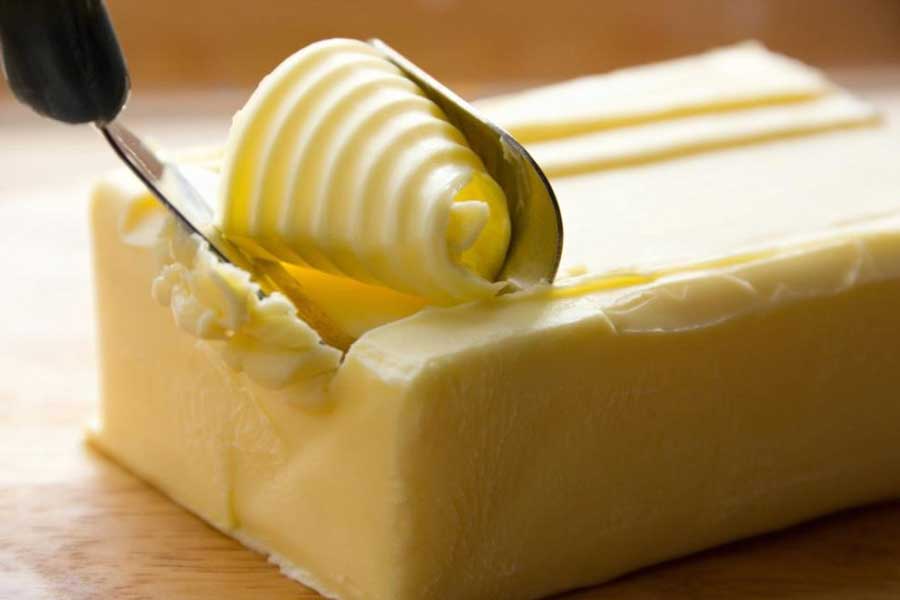
When it comes to edible fats, most of our minds go to Korea. But there is another product that may be in your daily lives more than you think: Margarine. A product whose birthday dates back to the 19th century and was originally made for the French army, but today millions of families around the world are used in the kitchen.
In this article, with a scientific and practical perspective, we examine what margarine is, how it differs from butter, how it is good, whether it is good for health or not, and ultimately a high -quality margarine product of the brand. Liu We will introduce you to you.
What is Margarine? – whatever you need to know
Did you know that we should thank Napoleon III for margarine? He decided to award a prize to a person who could find a cost -effective replacement for Korea and could reach the French army. In the year 9, a French chemist named Hypolyte Moketer-Morris did a similar job and unveiled Margarine for the first time. But what is margarine?
The margarine, invented by the Movie-Muris, was obtained from the combination of animal fat and milk, but when it came to mass production of margarine in the twentieth century, vegetable oil became the main constituent. Although it was originally provided for the military, it soon attracted the public’s attention and became a popular product in the worlds around the world.
For those people who lived in tropical lands and were unable to keep the butter in a cool place, margarine was considered a heavenly gift that stays solid at room temperature. On the other hand, since margarine does not easily burn butter, it has become a replacement for cooking and pastry. When the doctors found that butter could damage the health of the body, many people decided to use margarine as a healthier replacement for Korea. Continue reading to give a complete answer to the question of what margarine is and what the remarkable features have.
What is Margarine Materials?
You want to know what margarine constituents are? The answer is that all margarine and other alternatives to the market in the market have a unique combination of different materials, but most of the products you find in the market are mainly made up of natural vegetable oil, palm oil, palm oil and soybean oils. In addition to these oils, margarine almost always contains water and salt.
The interesting thing is that, besides the material we mentioned, you can add any other material to your margarine for consistency, discoloration and taste. Margarine is definitely a greener choice and, in other words, it does less damage to the environment than butter. In fact, research has shown that a The difference between butter and margarine That is, to produce butter, four times more greenhouse gases are emitted than the margarine production process.
What is the difference between Korea and Margarine?
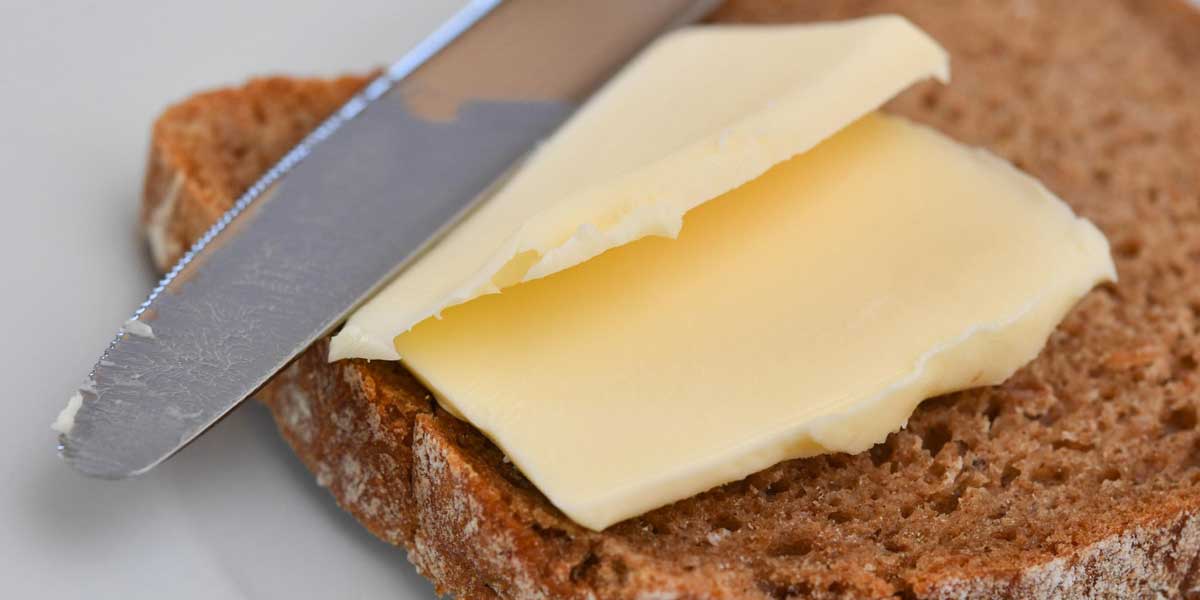
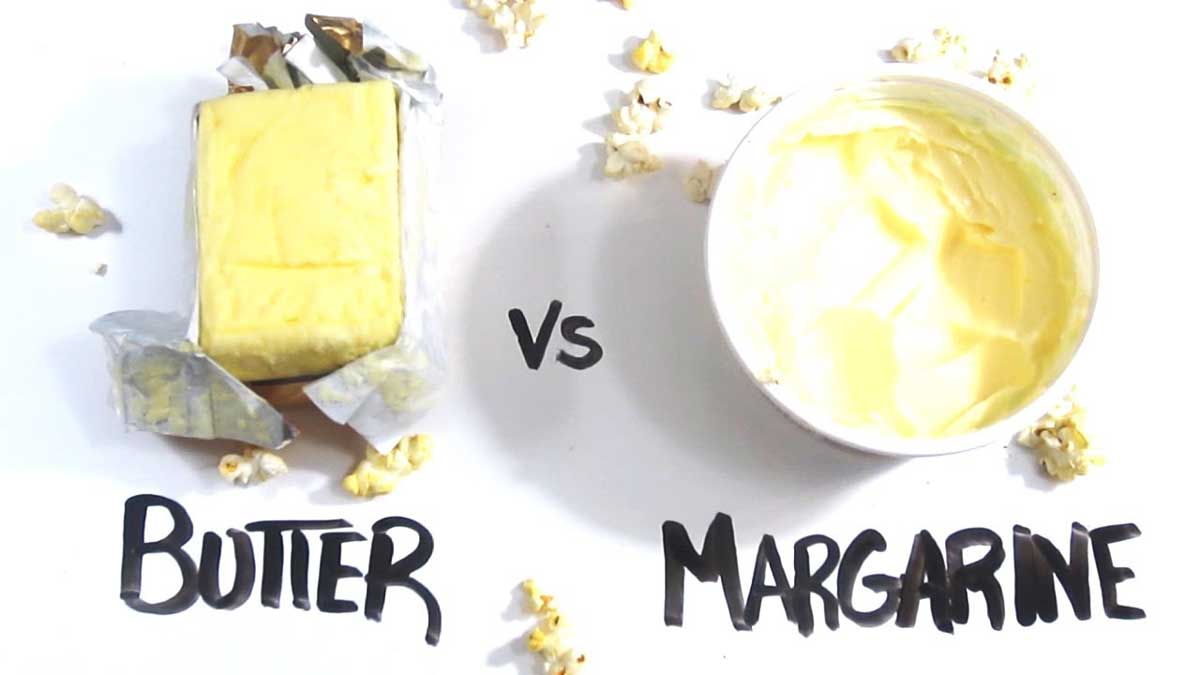
Butter should be described as a dairy product obtained using milk or cream. 5 % of butter should be of fat to allow sales, and the remaining 2 percent is made up of water and milk proteins. Margarine, on the other hand, is obtained with oil, water, salt and several other substances such as emulsifiers. Margarine is deliberately produced with a similar taste, while usually has no dairy material.
At low temperatures, the sphere becomes solid and hard, but the margarine remains softer and spreads more easily on the bread. An interesting point is that both butter and margarine can be kept at room temperature for a few days, but eventually both will have problems: the butter will break down and Margarine will be divided into its ingredients. Although margarine can still be eaten without worrying about your health problems, you will definitely not expect what you expect to feel in your mouth. It is natural that the more you live in the tropical regions, the problems with the butter and the margarine increase, and so it is best to buy butter or margarine when deciding.
The biggest differences between margarine and butter are less saturated fat as well as the lack of cholesterol in margarine.
When it comes to cooking, margarine and butter can both be a replacement for each other, but depending on the recipe you follow, they will have different results. For example, when cooking food on the gas, butter simply burns in the pan and is due to milk proteins. Margarine, however, is made of oil and thus not only reaches the point of smoke at a higher temperature, but it does not burn at all. In the world of pastry, of course, margarine will not simply not fall into the oven. If you are making a cake, this will not make much difference, but margarine will make less cookies spread and looser dough instead of your crisp shell.
In the table below, we also see the differences in the dietary facts of Margarine and Korea to get a better mentality than the difference between the two.
| Food | Mulberry margarine (1 g) | Salt -free butter (1 g) |
| Calories | 1 | 1 |
| Fat | 1.5 g | 1.5 g |
| Saturated fat | 1.5 grams | 1.5 grams |
| Cholesterol | ۰ | 1.5 mg |
| Carbohydrate | ۰ | ۰ |
| Sugar | ۰ | ۰ |
The biggest differences between margarine and butter are less saturated fat as well as the lack of cholesterol in margarine.
Is margarine harmful to health?
Now that we know what margarine is and how it is distinct from Korea, we must also respond to an important concern that is not that easy. Throughout the twentieth century, margarine was known as “healthy food”, but it wasn’t really. At that time, margarine was obtained with hydrogenated oil with trans fats that researchers discovered in the 1980s. Therefore, Margarine, a healthy replacement for Korea, suddenly turned into unhealthy food and made of “harmful trans fats” that should be avoided.
But now it is a few decades, and manufacturers have been marketing healthier margarine and trans -free of trans fats by revising their formulas. The margarine you buy from stores today is very different from that of your childhood margarine, and it seems that the promise of “healthy replacement for Korea” has finally come true.
Of course, the recipe for margarine is different. Some of them use dairy products to get more creamy texture, others are 2 % plant, and some products have materials, such as omega -rich oils or plant sterols that help cardiovascular health. But in the ultimate case, today’s margarine is obtained by the help of vegetable oils full of unsaturated, unnecessary fatty acids, which, when replaced by saturated fats, help reduce low -fat lipoprotein or “bad cholesterol”.
What is the method of making margarine?
The main constituent in most margarine markets is liquid oil such as sunflower oil, canola or rice bran. These are full of unsaturated and unnecessary fats and are also different from the types of refined oils you find. Sometimes we also see olive oil or avocado, but naturally we have to wait for a higher price for the final product.
To make margarine and other similar products called “Spread” and have low fat density, liquid oil should be combined with a very small percentage of solid oil. Most of the time, palm oil or palm kernel oil is used. These oils contain more saturated fat than sunflower oils and canola, which makes them more solid than other plants and seeds at room temperature.
These palm oils and palm kernels are usually hydrogenated to solidify and eliminate trans fats. They are then combined with other oils, and with the help of a process called estifime, the final composition will be easier to spread on the bread and feel better in the mouth.
After that Water It comes. Just like butter, margarine and springs are obtained from water and fat emulsion, and the less fat we have in the sprinkle, the more water is used.
Salt can also be used to improve the final taste and varies depending on different products.
Other substances you may find in your sprinkle include milk powder, which makes the sprinkle feel better in the mouth and brings a taste similar to dairy. The emulsifiers are added to keep oil and water -based substances remain in combination.
If you do not use edible colors, the sprinkle will be white. Initially, yellow was used to look more similar to butter, and although some modern margarines are brighter, consumers still prefer yellow.
Most springs also have an extra flavor, and if it is made of dairy material, it should be mentioned on the packaging. Adding vitamins A, D and E is not okay, so you will find them in some springs. Sometimes antioxidants are used to better maintain oils, and preservatives should also be used to prevent early failure in sprinklers with 5 % fat or less.
Margarine and heart disease
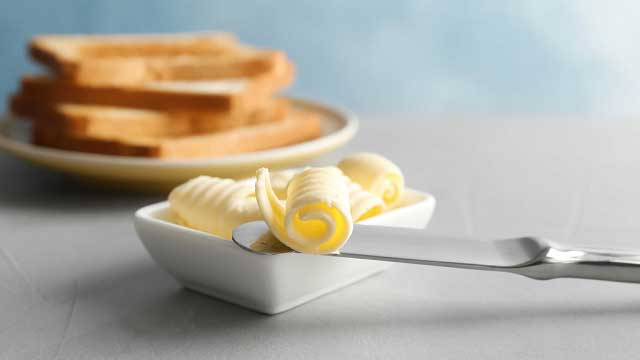
The question is for many, which can be considered better for heart health among margarine and Korea? Researchers say margarine is usually better because it is mainly made of vegetable oils and has passed through animal fat use.
Of course, not all margarine has the same characteristics, and some will get you with trans fat. As a general rule, the more solid margarine you have, the more trans fat. Trans fat, like saturated fat, increases blood cholesterol levels and the risk of heart disease. In addition, trans fat reduces lipoprotein density, or “good cholesterol”. So we suggest avoiding solid margarine and go for softer and more liquid products. According to the World Health Organization, the amount of trans fat is less than 2 %, equivalent to zero trans and its use in the edible industries.
Where did the rumor “Margarine looks like plastic”?
A rumor that has been heard for decades says that margarine is only one molecule different from plastic. The US University of Utah decided to investigate the fact that “at the chemical level, both butter and margarine are made of carbon, hydrogen and oxygen molecules. The plastic does not have oxygen molecules and is merely a long chain of carbon and hydrogen. In fact, the similarity of the chemical structure of margarine and butter is much more than the plastic similarity to each of them. “
What to do when buying margarine?
When buying margarine and other springs, look for a product that has the least saturated fat. The best approach will be to choose a product containing less than 2 % of the saturated fat intake daily. You will find this information on the product’s food facts label. It is also not bad for your eyes to look for a sprinkle that includes the least amount of salt.
Is margarine a healthy food?
It is not easy to put margarine into one of the two categories of “healthy foods” and “unhealthy foods”. Until a few decades ago, Margarine was clearly worse than Korea. But some of today’s margarine, along with less saturated fat, more unsaturated fat and transfers without transfers, and as long as you don’t have to consume too much (because the calories are still high in these margarine), you will have no problem.

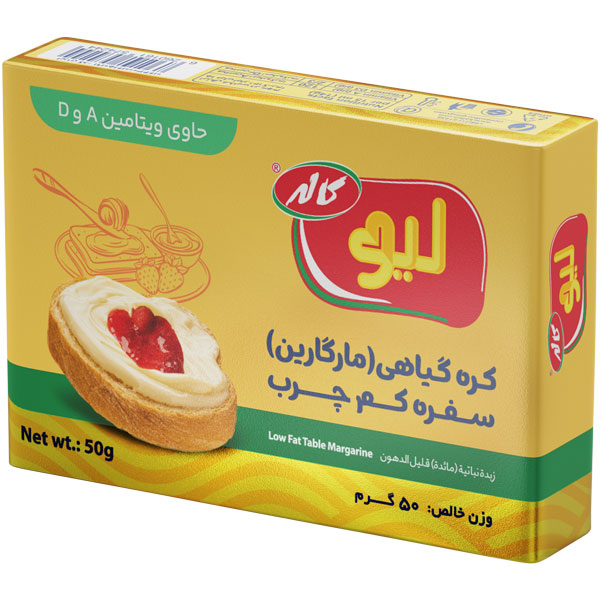
Introducing Liu’s low -fat table butter
If you are looking for a healthy, delicious and suitable margarine for a variety of diets Liua From Calais brand It can be an ideal choice.
The index features of this product:
- Combining sunflower and canola oil, high in unsaturated fatty acids.
- Help to reduce bad cholesterol (LDL) and maintain heart health.
- Lacquerol and lactose;; Suitable for people sensitive to lactose or vegan.
- Soft and playable texture, suitable for breakfast and snack.
- Shelf life for up to 6 months in the right condition.
With herbal butter, Liu’s low -fat table, you can experience a pleasant and light flavor, without worrying about cholesterol or high saturated fat.
Conclusion
Margarine today is very different from the old and unhealthy versions of the past. If carefully selected, it can be a healthier replacement for Korea, especially for heart health. Remember to always look at the product label and choose margarine with a combination of high quality and lean vegetable oils.
If you are looking for a product with these features, Liua It is a reliable, delicious and compatible option for a variety of diets.

RCO NEWS
RCO