



“Zangzur” and the argument of different streams; How should Iran be? – Mehr News Agency Iranian and world news
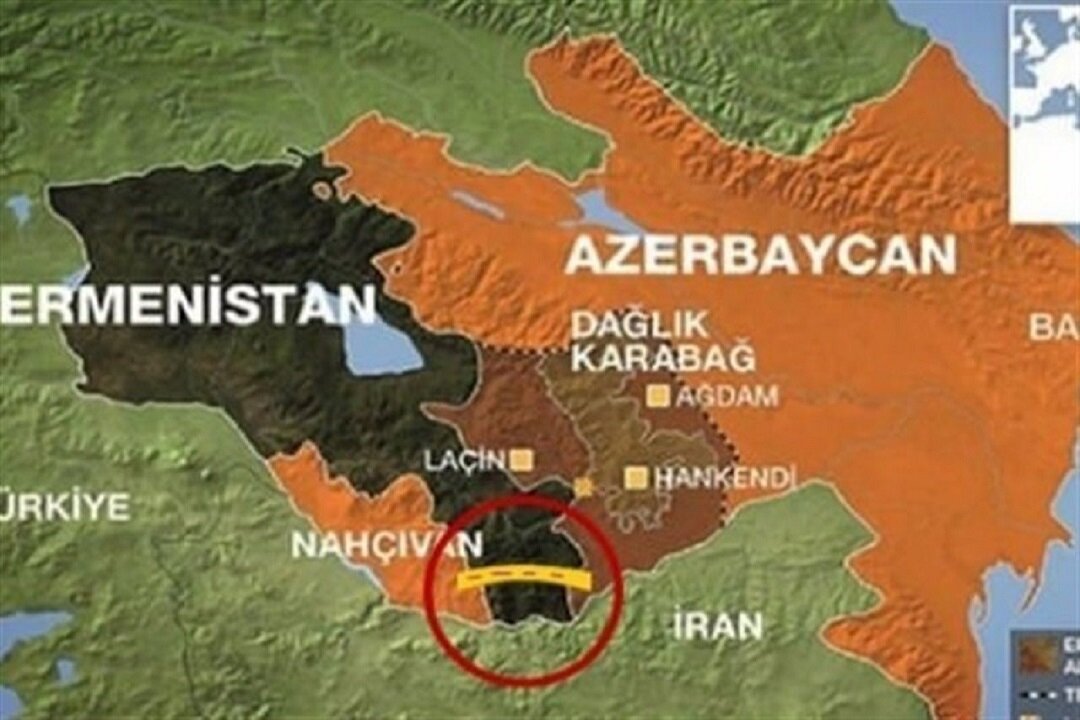
Mehr News Agency, International Group: Following the unveiling of Nicole Pashinian and Elham Aliyev on the Trump Road Corridor project in the White House, speculation about the impact or impact of the transit project on the joint border between Iran and Armenia and historical influence in the South Caucasus region again strengthened. Supporters and opponents of threatening the movements of the Turkish and NATO governments across the northwestern border have once again come to the media space, the first group believes that Yerevan and Baku are considering Tehran’s strategic integrity and continuing land relations to the region, and the presence of Iran under Iran.
The second group, however, believes that the US economic presence near the Iranian -Armenian border could not be without geopolitical impact, and in the short term it can have negative impacts on the Persian Gulf landline to the South Caucasus and Russian markets.
What did Aliyev and Pasinian agree in Washington?
One of the main arguments among the experts and agents supporting the idea of “safely” Trump Road is that there is no sign of Zangzor’s corridor and threats against Iran’s border lines in any of the Baku-Yerevan agreement. However, in some of the clauses of this agreement, there is a actual capacity to threaten Iran’s interests in the near future.
For example, paragraph 10 of the agreement states: “In order to create cooperation in various fields, including economic, transportation and transportation, the environment, humanitarian and cultural, the parties can conclude agreements in mutual interest.” Although the explicit text of this text did not refer to the launch of the American Corridor or presence, Donald Trump has explicitly named Zangzur’s 2 -kilometer corridor and has identified himself as the main mediator in the conflict between Armenia and the Republic of Azerbaijan.
Also, paragraph 7 of the agreement states: “The parties should not deploy any third -party forces along their shared border. “The parties will implement security measures and mutual confidence, including the military, to ensure security and stability in the border areas until the future marks and marks at the shared border.”
The emphasis on this “clause” coincides with the joint “Eagle Partner” exercise between Armenia and the United States, while contradicting its existence with the provisions of the Collective Security Treaty Organization, threatened the security of Iran -Russia borders on the one hand and NATO’s neighboring powers. The initial part of the clause can also be an obstacle to the path of Russian peacekeepers. According to this principle, the military-security equations of the South Caucasus region will gradually change in favor of the United States and Türkiye, and Iran, Russia and China will decline in the region.
However, if we look at the “specialized” view of the agreement between Yerevan and Baku, Articles 1 to 2 of the agreement, emphasizing the mutual identification of territorial integrity and prohibition of land claims, will help an immediate reduction in the risk of returning military conflict in the South Caucasus, which directly affects the security of Iran’s northwest borders. This provides the basis for the stability of the east -west and north -south transit routes through Armenia and reduces security pressure on Iranian border guards.
Another advantage is to create a legal basis for cutting off or using the parties to their soil against another that prevents the expansion of operational space for third -party players in Iran’s neighborhood. On the other hand, the emphasis on the designated borders of the former Soviet Union, if linked to the Zangzur Corridor project, could reduce Iran’s geopolitical position in transit equations and virtually limit Armenian geographical depth over the Iranian border. The prohibition of force may also reduce the margin of Iran’s maneuver in response to the combined threats caused by the Baku -Ankara axis.
Prohibition of interference in internal affairs and defining the path of border negotiations through joint commissions in cases of four to six diplomatic capacities for Iran to play a mediator or technical counselor. If Tehran takes advantage of this route to maintain the balance of power and prevent the excessive influence of Türkiye and the Zionist regime, it can consolidate its long -term interests.
Establishing formal diplomatic relations between Baku and Yerevan appears to reduce tension, but it can open the hands of third -party actors to directly enter the political -economic structures of Armenia. Determining the boundaries and marking, though technically, has virtually a security dimension and can either restrict or restrict the sensitive routes of goods or force. Removing Iran from this phase of negotiations will mean reducing the country’s influence on regional security engineering and will increase the need for informal presence and field influence networks.
The ban on the establishment of foreign forces on the common border of Armenia -Azerbaijan, if realized, can prevent NATO from advancing or the permanent establishment of Turkish forces near the northwest border of Iran. This lies in the case of seven to nine cases. This strengthens Iran’s strategic depth in the Caucasus.
The condemnation of extremism and separatism at the legal level provides an excuse for dealing with Pan -Turkish and armed Salafism networks in the surrounding areas of Iran. However, the experience of the region shows that these obligations are simply bypassing the West without a supervision and guarantee mechanism. The case of the missing warfare, though a human step, can open the ground for the presence and infiltration of Western intelligence structures by covering humanitarian aid in the region, which Iran needs to actively active its security warning lines.
Introducing the framework of economic cooperation, transportation, environmental and cultural cooperation creates opportunities for Iran’s accession to regional multilateral projects. If Tehran contributes to the design of these complementary agreements, it can maintain its transit position against alternative projects controlled by Türkiye. The main threat of these materials is that Iran’s absence of active presence will enclose the country’s economic geography and focus on trade routes on the corridors that drive Iran.
Also, the emphasis on the primacy of international law on domestic law and the prohibition of disruptive actions of the agreement can restrict Iran’s domestic policy tools for rapid response to the Caucasian developments and reduce the country’s operational flexibility in the management of border crises. This sector requires the formulation of complementary scenarios in Iran’s foreign policy to compensate for the gaps in the decision -making environment.
Articles 1 to 2, by forming a joint commission and determining dispute resolution paths, prevent the re -emergence of the military crisis in theory and replace the context with direct confrontation.
Registration of an agreement at the United Nations, while raising legal enforcement guarantees, provides an international tool to complain about possible violations of provisions. But Article 5, under the heading of past claims and prohibiting hostile actions, actually restricts Iranian traditional leverage to exploiting the differences between the two countries and reduces political pressure instruments. The precedence of the English text in the interpretation of the provisions also increases the risk of Western discourse dominance and perception over the legal process. This position can, in the long run, reinforce the redefinition of the parties’ obligations in favor of the anti -Iranian axes. Iran must guarantee its impact on the interpretation and implementation of these materials with diplomatic and legal initiative, both in the Executive and International Media Commission.
What is America in the South Caucasus?
The Trump administration’s strategy in the South Caucasus – described in US analytical circles as the “Trump Road”, has stated its goal in connecting Central Asia and the Caspian Sea to European markets by the Baku -Folklis -Jihan route, and especially from the Zangzur crossing. This route weakens the geopolitical and geopolitical position of Tehran by eliminating or marginalizing transit routes from Iran and giving the superior hand to Turkey -Azerbaijan -West.
Trump and his team have defined the project as a means of reducing Europe’s energy dependence on Russia and controlling China’s influence on the belt -road, which requires strengthening the West’s presence in the Caucasus and weakening the weight of Iran and Russia. Such a path not only affects Iran’s transit revenues, but it actually completes the geopolitical blockade against Tehran in the northwest.
This doctrine is in substantive conflict with Iran’s national interests, as reducing Tehran’s impact on transit equations, at the same time as the West’s security -intelligence influence on the northern borders, exacerbates combined threats. The Trump Road can provide the platform for the establishment of hearing infrastructure, logistical bases and cultural influence networks near the Republic of Azerbaijan and Armenia.
From an energy perspective, the management of the Caucasian oil and gas exports without Iran’s involvement strengthens Washington’s economic pressure tool against Tehran. Also, consolidation of this axis will reduce Iran’s role in the Black and East Mediterranean security equations. Strategic countering this project requires activating multilayer diplomatic capacity, practical connection to alternative corridors, and exploiting temporary coalitions with Moscow and Beijing to prevent the unilateral -based Caucasian -based US -Turkish -Turkish -based.
Rotate the circuit of diplomacy!
During the “transition” in the international order, there is no geopolitical action without economic consequence, and no economic plan will be implemented without providing military-security preparations. Over the past decade, the US, Türkiye and the Zionist regime have been investing widespread military, economic and cultural investment in the two regions of Central Asia and the South Caucasus. This region is important because it has borders with China, Russia, Iran and Afghanistan.
These movements can be well analyzed during a joint meeting of Central Asian countries with Joe Biden, promoting the position of Bukharai Jews in Uzbekistan’s political sphere, deepening Baku-Tel Aviv strategic relations, and ultimately the granting of US management privileges on Zangar Corridor. The key point is that in recent years, some suspicious circles or media figures have openly played on the Baku and Ankara field and have tried to make the system of computational error.
During a news conference, Ms. Fatemeh Mohajerani, a spokesman for the government, referring to Iran’s “red lines”, emphasized that it should be addressed and that some media or media activists should not consider unnecessary “threatening”.
The fact is that as Israel’s economic-political presence in Baku became a prelude to the Mossad and then the Israeli army against the interests of the Islamic Republic of Iran, disregard for threats from the direct presence of Americans near the Iranian borders could have catastrophic results for the country’s transit position and Iran’s weight in geopolitical relations. However, Iranian active diplomacy has led Irvan-Baku to consider the Iranian side’s considerations and refrain from any stressful action during the Washington summit.
Speech interest
Inappropriate and inaccurate estimates of regional-international developments, as much as “decisions” and “actions” can be dangerous to senior officials, political elites, military commanders, and dangerous and costly security agencies. Despite the Suez Canal’s distance from the Persian Gulf states, any disruption to this vital highway’s activity can affect the economic interests of all countries in the northern Indian Ocean!
According to this rule, the establishment of US companies in the Iranian border is not only a simple issue but also a serious threat that can be the source of many anti -Iranian and anti -political measures in the South Caucasus region. Accordingly, it is recommended that the country’s foreign policy apparatus prioritizes “national interests” and refusal to accept non -expert statements, protecting the country and the interests of the country in various fields.
(Tagstotranslate) Zangzour (T) Armenia (T) of the Republic of Azerbaijan

RCO NEWS
RCO