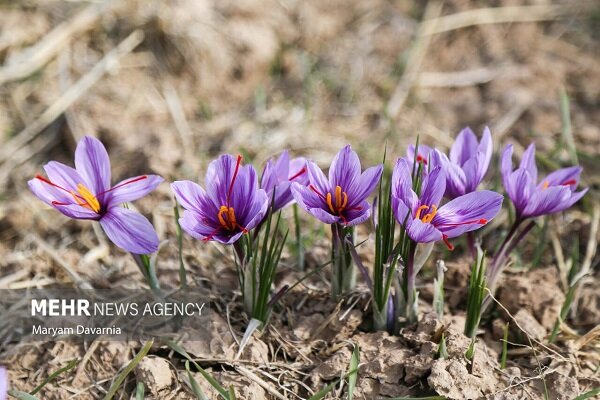
According to RCO News Agency, one of the research departments of Tehran University led by Dr. Vahid Niknam, a professor of science sciences in the form of a research and dissertation of Mino Nasiri, was studied by the saffron saffron resistance mechanisms, and the results of this study were published on June 6.
According to the results of this research group, the use of panconazole fungicides not only protects saffron from drought stress, but also reduces the risk of fungal infection in the plant. The recent result of the improvement of the quality of the saffron crop and the economic value of this medicinal plant will be very valuable.
Dr. Vahid Niknam said: “According to the results of this study, the content of some compatible metabolites such as proline in fiber roots (fiber) is significantly higher and the content of the Malon Di aldehyde compounds that is the product of lipid peroxidation and the stress level of the peroxide, as well as the content of the hydrogen. (Cormorant and contractionary roots) and even the leaf of odor are low, the content of these indicators in the roots indicates the higher resistance of the roots than other organs.
Professor of the Faculty of Biology of Faculty of Sciences emphasized: Padox enzymes and correlation between physiological and biochemical parameters and stress tolerance indicate the decisive role of antiques (peroxidase, catalase and dysmothies) and prolus. The oxidation and dryness were in the saffron.
Researchers at the University of Tehran stated that the research team’s efforts to improve and improve the resistance of drought stress in this plant by a fungicide called panconazole, said: The results of this study indicated a significant decrease in peroxidation of lipids and male dioddid content in the saffron stress. Most of the artisans and proline played a central role in tolerating the drought of saffron.
Due to the importance of dehydration and drought stress, the Research Group of the Faculty of Biology of Sciences, which, according to the Clarvitz Analytics Institute, is a pioneer in the field of plant responses to environmental tensions in the country, has been focusing for more than twenty years in the field of environmental stress.
Most of the research group is related to the discovery of stress resistance mechanisms as well as efforts to improve and improve the resistance to dehydration and reduce water potential in farming plants.
From the climatic point of view, more than 5 % of Iran’s area is classified as arid regions, and our country is strongly affected by the decline in water resources due to increased demand, saline and excessive exploitation of groundwater and reduced weather down.
(tagstotranslate) University of Tehran

RCO NEWS