



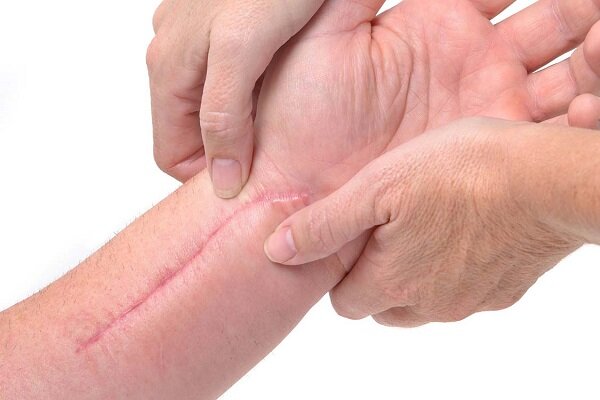
This provides opportunities for new treatment for chronic wounds, according to .
Hair follicles stem cells are cells that constantly reproduce themselves and are responsible for two important functions in the body, namely maintaining hair growth cycles by regenerating hair follicles and regenerating tissue in the skin to help heal wounds.
A new study led by Rockefeller University of New York’s researchers examined how Serin’s non -vital amino acid influences the behavior of hair follicle stem cells. The researchers found that when the serving surface was low, cells prefer wound healing over hair growth.
“The shortage of serine activates a very sensitive cellular” handle “that regulates the fate of the cell and moves toward the formation of the skin and move away from hair growth,” said Jesh Novak, a former PHD student at the University of Rockefeller. Our findings indicate that the serine may be manipulated by manipulating the serine level through the diet or medication to accelerate the process of skin wound healing.
Humans themselves can produce serine as a non -religious amino acid, but it is found in foods such as meat, poultry, fish, soybeans, nuts and dairy products. Serin acts as a structural block for proteins and is involved in the process of cellular reproduction and various metabolic pathways.
The researchers found that mice that had a diet with serine and glycine (another amino acid), their hair follicle stem cells delayed the process of hair growth and accelerated wound healing, and in particular, accelerated the epithelial reconstruction process or skin barrier repair. Although Serin is classified as an unnecessary amino acid, the hair follicle stem cells are in trouble if they are unable to produce and absorb it from external sources (ie food).
Researchers have identified an internal cellular program called “Integrated Response to Stress” (ISR), which stimulates the function of the hair follicle in response to stresses such as injury or serine deficiency. Under serine deficiency, ISR is active in the hair follicle stem cells and makes cells more similar to epidermal stem cells that help regenerate the skin instead of their usual role in hair growth.
(tagstotranslate) Scientific Research (T) Innovation (T) Stem Cell (T) Wound Treatment (T) Skin (T) Scientific Discoveries

RCO NEWS