


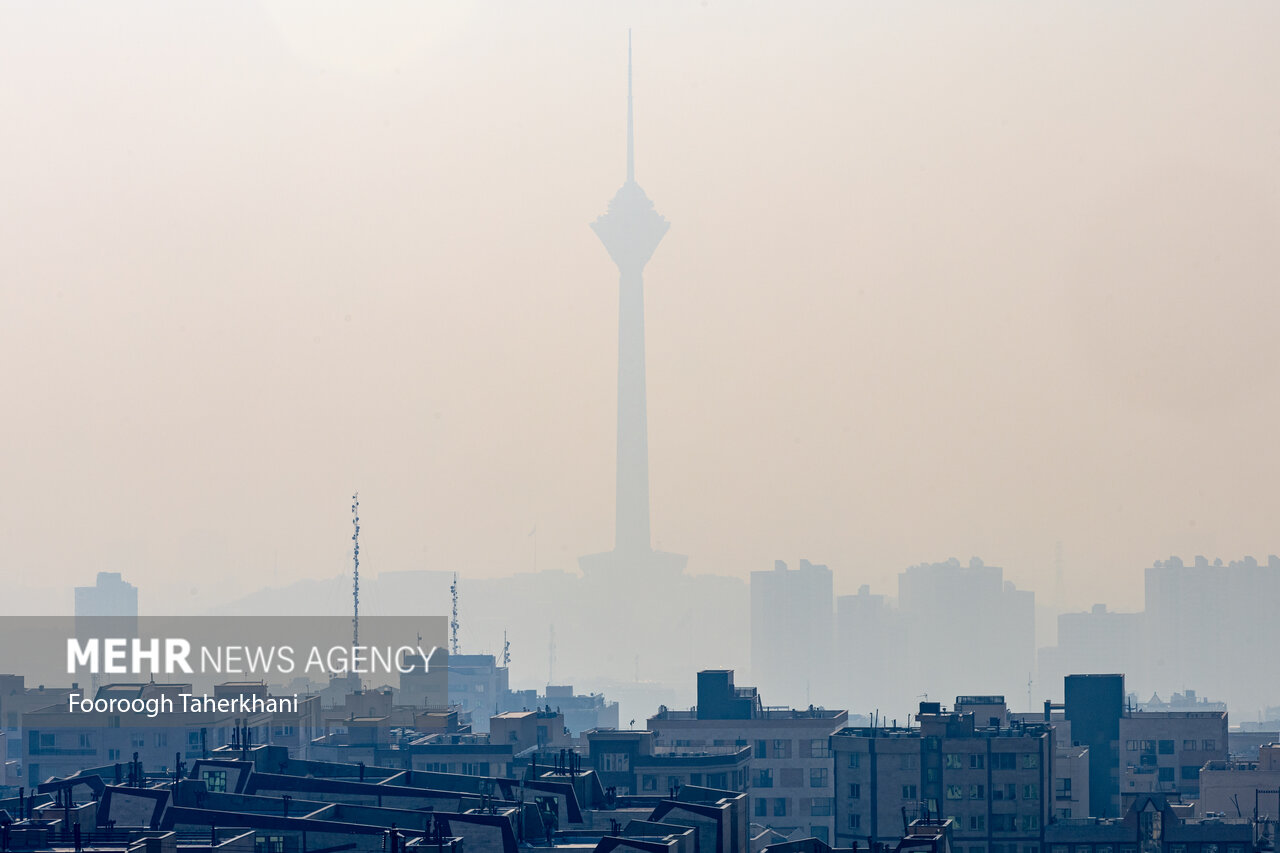
Dr. Mehdi Rahnama in a conversation with Mehr reporter about the origin of microbes in pollution Recent cities Different Iran said: Depending on the geographical area where dust has happened, the source of microbes varies. In some areas of the country of dust origin Internal Is and some points of their origin Foreign Is. For example These days the source of the major part of dust in the southwest and west of the country Foreign It is from Iraq, Saudi Arabia, Kuwait and so on to Iran.
He continued: The origin of the dust phenomenon in Tehran in recent days Based on Modeling and monitoring performed at the Meteorological Research and Joe Sciences Research Internal It has been. The dust has moved to Tehran from Tehran, Alborz, parts of Markazi province, Qazvin province and Qom.
According to the head of the Institute of Meteorological and Barley Sciences, the south -east dust of the country is mainly originated Foreign He has moved from the border with Afghanistan and Pakistan this dust and with dust published of the origin of the origin Internal Is intensified. Especially in Sistan and Baluchistan and Kerman province, the sequence of dust phenomenon with origins Internal And Foreign This exacerbation Phenomenon It becomes.
He Remember Kurdish: In the northeast of the country, a combination of dust with origin Internal (In Khorasan Razavi Province) and Origin Foreign (From Turkmenistan) We have activated at the same time and created dusty air in these areas.
Dust with origin Internal Is rising
Referring to the role of Salehieh wetland in Tehran dust, Rahnama said: Models We have been shown as a part that exacerbates Tehran’s dust, and this wetland has been active in increasing the concentration of dust in recent days.
The head of the Meteorological and Joe Science Institute in response to the question of whether the pattern of microbes has changed in recent years. He said: The modeling we have done at the research shows that still the source of much of the microprocessors in the country Foreign And we are affected by dust in countries such as Syria, Iraq, Saudi Arabia, Kuwait, Afghanistan, Pakistan and Turkmenistan. But in recent years, due to the conditions of climate change and the constant droughts that the country is involved in, resulting in the loss of natural vegetation, lack of rainfall, reduced soil moisture, and so on. Internal Has increased.
Attacks Has the 6 -day war caused Tehran’s air pollution?
In response to the question of whether the Zionist regime attacks and the destruction of buildings, etc. can cause dust and air pollution in Tehran? He said: We do not confirm this; Because the Zionist regime’s attacks were a point, but dusty Now We are confronted with a wide range of Tehran province. These attacks occurred in Tehran, but they have exposed the dust from the west to east of Tehran province and have been involved in this problem to Semnan, Isfahan, Qom, etc.; That’s why We do not confirm this.
Rahnama added: In areas that are attacked, it may be regional, such as when construction operations are carried out, more than elsewhere; But to say that the attacks have exacerbated the dust. Most of the dust is a natural origin these days and due to climate change and the activation of potential and actual focus Internal And Foreign Is.
Should we get used to dust?
“I agree with this talk,” said the head of the Meteorological and Joe Sciences Institute of Meteorological and Joe’s Institute of Science in response to one official saying that “people should get used to dust”. We have to admit that our country has been dry, desert and with minimal natural land coverage for centuries. In the past in architecture and lifestyle in areas Different The country, like central and southern regions, considered climatic parameters and had resulted in phenomena such as land, dehydration and dust storms, which have not been addressed in recent years.
“So we have to admit that we live in a desert, dry, low rainfall and high temperatures and the possibility of atmospheric phenomena such as dust,” he said. We also have to admit that the impact of climate change in the Asian region, especially Southwest Asia and Iran, is very high, so that in addition to increasing the occurrence and severity of the phenomena, even our seasons have changed. For example The time of summer weather has reached about six months from two months. We experience a shorter spring season, which will definitely have long -term effects. But I do not accept the part of putting hands and accepting the dust.
The researcher emphasized: Now We have methods of dealing with desertification, methods of consolidation of dust centers, territorial planning methods as well as protected agriculture, etc., which can reduce the effects of climate change. If we have a territory plan for agriculture, agricultural land will not become dusty. If dusting centers are stabilized at the right time, it will help reduce dust emissions.
Countries’s experiences Different To manage dust
. According to the official; We need to have the methods of consolidation of the center, the methods of reducing natural effects on the prevalence of dust, and so on, and organizations such as the Natural Resources Organization in the Desert, the National Environment Agency, especially the Office of Climate Change, and the National Dust Staff, should be on the agenda.
Rahnama emphasized that one -dimensional solutions to reduce dust do not work, saying: Based on The models that are being done in the world, we need to consider an integrated way. That is, at the same time as water resources management, natural resource management, rangeland management and integrated territorial management, and communicate all the factors that contribute to the relevant agencies in the form of a comprehensive program. This comprehensive management in China, the Arab countries, especially Saudi Arabia, as well as Spain, has done well, and if we move on to this point we can solve this problem in a shorter and better effective time.
The problem of lack of integrated meteorological data network in the country
In response to the question of whether the infrastructure has been collected and the air quality measuring, especially the microbes in our country, this is a good position in our country. Said no; Unfortunately, we do not have a coherent integrated network to collect ground data about the phenomenon of dust nationwide. Stations that Now Available, are not integrated and part of it in the City Air Quality Control Company Different Located, some stations are related to the National Environmental Protection Monitoring Network and part of the network is in the country’s meteorological organization. But none of them are integrated and their data is not shared.
He also said that because of the rules and restrictions, there is no integrated system for sharing data, he said, “It also has many weaknesses and the network density is very low.” Usually the networks are in the metropolis, and some small cities that even have active dust centers, especially the central parts of the country, have no station or few stations.
He added: “In areas that need more monitoring, we also do not have a dense network and the data is not shared by public and we are in trouble in terms of monitoring and ground measurement and we are not in good shape.”
How is the origin of microbes identified?
The researcher explained the methods of identifying the origin of the microbes: Different models and methods are used to identify the origin of dust and all models are used in combination. We have produced several products at the Meteorological and Barley Science Research Institute with the combination of ground models and meteorological models that use satellite images and ground stations as well as native predicted models. From the combination of all of these models, we have produced a native model used in the research institute and is a combination of meteorological models, ground models, satellite images and other data.
He Remember Kurdish: For example, there is a data called “Earth’s Saved Percentage” that shows the percentage of paving a range and determines that there is a few percent of the stone within one meter in one square meter. This shows how much dust uprising is. Also, territorial erosability and data based on the amount of erosability of each point Based on What a factor like wind.
“We combine all this data together with meteorological models, and we have finally created an integrated model and we are producing the product of” predicting dust concentration “. Based on Also identify that origin of dust.
“We said:” We said Now We have plans for artificial intelligence that will be unveiled in the near future.
(tagstotranslate) Mehdi Rahnama (T) Dust (T) Salehieh Wetland (T) Air Pollution (T) microdes

RCO NEWS