




Post -traumatic stress disorder or PTSD is a mental illness that occurs after experiencing or observing a severe traumatic event such as war, burns, explosions, natural disasters or accidents, according to the . The disorder can not only affect the person who is directly involved in the accident, but also affecting those close to him, such as his spouse or children.
The Jihad University Scientific Information Center (SID) as a comprehensive database of scientific articles in Iran has studied the various dimensions of post -traumatic stress disorder on the subject of PTSD. This analysis, which has extracted all the definitions, treatments, and Tips related to PTSD from the SID articles, offers deep insights into this mental disorder.
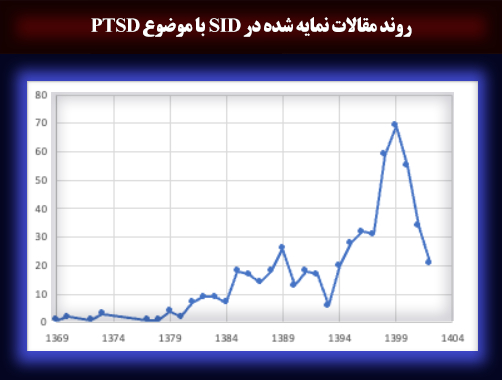
Studies show that the first post -traumatic stress -related article was indexed in SID. The number of articles related to PTSD has peaked in year 6 and has increased to 4 articles, one of which has been the prevalence of the Kuwavid-1 epidemic and its psychological effects. In the meantime, the Re-Experience, which includes the return to the past (flashbeck), nightmares, and unwanted and painful reminders of the accident, excessive arousal, which is characterized by restlessness, insomnia, anger, and alertness, It is the features and symptoms that are based on SID data for PTSD.
The imposed war, bombings and burns caused by accidents are among the pivotal topics of PTSD articles in Iran, which are some of the most important approaches of these research by examining various articles in this field:
– Comparison of the effectiveness of cognitive-behavioral education and design therapy for PTSD veterans ‘spouses: This study showed that both methods were effective in reducing secondary trauma symptoms in veterans’ spouses.
– Investigating PTSD symptoms in preschool children after Ahwaz bombing (1): The results of this study were worrying; 4.3 % of the children studied showed PTSD symptoms that emphasize the necessity of urgent psychological support for children in critical situations.
– The Impact of Social-Social Therapy on the Quality of Life with PTSD Burns: A 2-session therapy has led to a significant improvement in different dimensions of quality of life (physical, psychological, social, environmental) patients.
The effect of different PTSD treatment methods on false memory: Comparison of the effectiveness of two EMDR methods (sensitivity and recreation through eye movement) and Debriefing showed that the EMDR group had less false memory than the other two groups.
– Comparison of physical, cognitive, and hybrid rehabilitation to improve memory and attention to PTSD veterans: This study led to memory improvement and attention in veterans. A review of articles indexed in Sid.ir on the subject of post -traumatic stress shows that counseling and psychotherapy are the most effective solution for people with PTSD.
Also, war is recognized as the most important factor in creating PTSDs in Iranian articles that doubles the importance of addressing the mental health of war and crisis. This study, which emphasizes the need to continue researching and develop more effective therapies to manage this mental disorder; This is how the best treatments mentioned in PTSD articles; Although the choice of the best treatment for PTSD depends on individual conditions, according to the results of the research, such as cognitive-rehabilitation therapy (hybrid rehabilitation) that is an effective approach to improvement of memory and attention, EMDR treatment (desensitization and recreation through eye movement) to help reduce false memories and cognitive memories) Especially for burnt patients with PTSD that brings significant improvement in quality of life; They have been introduced as the most effective methods.
You can search for this term on the Sid database to access articles related to the subject of “PTSD” and “Post -Traum Stress”
.
(tagstotranslate) Scientific Research (T) Academic Jihad (T) Scientific Articles (T) Academic Jihad Scientific Information Center

RCO NEWS