Political individualism and the decline of parties; Challenge of Democracy in Contemporary France – Mehr News Agency | Iranian and world news
Mehr News Agency, International Group: The fifth republic of France, which was founded in the context of the Fourth Republic’s political crises in 2008 with the aim of consolidating the authority of the executive and the president himself, now faces fundamental questions about efficiency, political representation and public participation. The structure of the republic, designed to respond to party turmoil and the inefficiency of the parliamentary system, has gradually become a person -oriented and a person -centered model; A pattern that some consider to be a sign of political authority, while others consider modern democracy. In the meantime, the collapse of traditional parties, the emergence of unstable movements, the increase in public mistrust, and the strengthening of extremist factions all indicate a profound change in French political life.
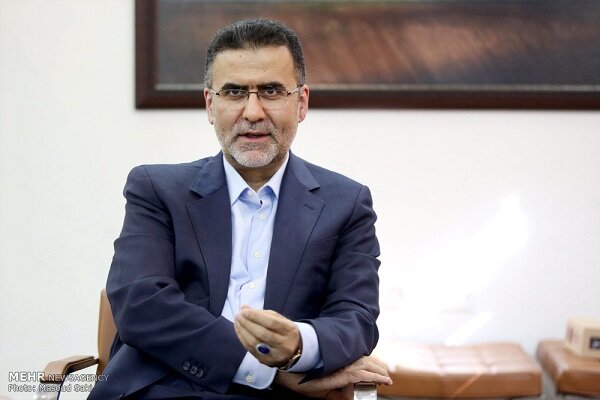
A conversation with Dr. Hojjatollah Ayoubi, a professor at the University of Tehran and a prominent scholar of French studies, is an attempt to analyze why and how the political and social developments of the Fifth Republic. Dr. Ayoubi, who has had years of living in France and sees a history of teaching European political thought in addition to cultural management, says in this interview about the reasons for the formation of the individual -driven system for Charles; The model that was supposed to contain the confusion of the Fourth Republic’s party, but now, under the pressure of participatory demands of the twenty -first century, has shown signs of representation crisis.
In another part of the conversation, Dr. Ayoubi speaks of the French “secularism”; A historical reaction to the return of religion and spirituality, even in modern Western forms. In his view, the domination of the West’s ethnicity is declining, and the present century – as Thorne’s interpretation, will be the “century of return of emotion”; A century in which human relationship with man replaces money and power, and every political system is ignorant of this tendency, faces the challenge of legitimacy.
The conversation presents a multidimensional image of France today: a country that claims to be a flagship of democracy on the one hand, and on the other hand, with the crisis of participation, permanent polarization and cultural gaps.
The fifth republic of France (1) It was formed to consolidate the presidential authority. Do you think this model is still in line with the needs of today’s participatory democracy or has it been in a representative crisis?
The French have always sought to be a leader among European countries and to be different from others. Therefore, they consider themselves the founder of many concepts and developments. For example, in the French Revolution, they claimed to have presented the world of democracy to the world; While we know, democracy was formed in Greece and Athens. In the French Revolution, although a revolutionary wave emerged in Europe, it never moved to a real democracy. Even the first Republic of France became known as the Republic of terror and violence, and widespread catastrophes occurred in the early years of the Republic. This experience made the French pessimistic about republicanism.
Another reason for this was the ideas of thinkers like Jean -Jacques Rousseau. He believed that national nationality and national will was an immutable unit and emphasized in the theory of “public will” that when individual wills were to be met and represented by representatives, a single and independent will was formed. In his view, any factor that breaks this public will is doomed. He had an absolute and different place from the will of the people for the public will and the institutions arising from the agency systems. This thought has led to many violence and abuse in opposition to democracy and republicanism in France.
Democracy has not had much in the French intellectual system. The first republic was brought to violence, then the Napoleon Empire was established, and then the monarchical governments came to power. The second republic lasted only two years and the empire was formed again. After the collapse of the Second Empire in the war, they accidentally turned to the republic to rebuild the empire -like model with the President’s tools.
It can be said that the French experienced party democracy in the fourth republic. Over the past five years, twenty prime ministers changed, and we saw party turmoil and successive collapse of governments. After World War II, the Fifth Republic was established on the ruins of the fourth president. Its main purpose was to prevent the repetition of the crises of the Fourth Republic. Thus, the fifth military republic was individual -oriented in contrast to the parties.
As a result, delegation democracy became a personal -oriented -oriented republic. The constitution of the Fifth Republic of France has been practically drafted against parliament and parties. After about two centuries of struggle between parliament and the executive branch, with the victory of the “General Two goals” after World War II, the executive branch overwhelmed the parliament, and the president found a unique power in Europe. Even in five European kingdoms, no kingdom is as powerful as the French president.
The French president appoints the Prime Minister and Ministers, the MPs do not have the right to vote, the impeachment of the president is only possible in very special circumstances, and he can declare the emergency at any time and hold all the limited powers of parliament. Also, he can dissolve the parliament, and the Constitutional Council, which approves the parliament’s approvals, is under the presidency of the person appointed by him.
How do you analyze the personality -oriented role of politics (such as Emmanuel Macron) in today’s post -partisan atmosphere in France, where traditional parties have collapsed? Is this a sign of a return to the elite model or a change in the nature of politics?
The French, who wanted to be a model in Europe, designed the representative democracy system; That is, people choose lawyers who represent them in parliament or the executive. Although General founded two goals of the fifth republic against the parties, the general formed a step -by -step and bipolar military military that took over the two left and right currents in the form of affairs. Three years of power was in possession of the right wing until François Mitran came to power from the left wing and the coexistence period began.
But today, this displacement of power is no longer responsive to the needs of society. In the past, people welcomed the rotation of power in the hope of change; But from the 1980s, they came to the conclusion that both left and right were both tested and have nothing new to offer. Thus, the crisis of participation and the crisis of trust in political parties emerged.
In the same decade, there were widespread corruption that destroyed public trust despite the adoption of laws such as financial transparency and ethics in politics. Thus, the French political system faced two crisis:
1. The representative system is no longer responsive to the people, and citizens feel they are not involved in the process of power transfer. Pierre Bourdieu believes that the political field is separated from other fields and that the benefits defined are not necessarily public interest. This has questioned the legitimacy of the political system.
2. Traditional parties have become discredited. Political participation previously carried out through parties and unions has now reached its lowest level. Traditional parties’ votes have fallen from about 1 to 2 percent to 5 % to 5 %. New parties, such as the Emmanuel Macron Party, are completely personalized and differ from the traditional structure of the parties. Parties such as “Unbroken France” and “Renaissance” are also personal parties.
In this regard, the Jasmine Movement, which was one of the most important and enduring recent French movements, never accepted parties’ intervention. The parties tried to get on the wave of the movement, but failed. Nowadays, these movements are referred to as the “Invisibles” because people feel they have no representation in the formal structure. This is a manifestation of the crisis of participation and democracy in France and Europe.
French domestic politics is recognized by concepts such as Laisite and Republicanism. Are these concepts challenged today or are they still building the foundations of the French Republic?
The important thing that many researchers point out today is that European society has entered a new phase. There is no longer the previous class system and the concept of “working class” is hardly usable. Statistics show that many workers now vote for extremist factions. The decline of the working class vote and the weakness of the labor movements have led to the transformation of the structure of movements.
Today we are faced with unstable and mass movements. Institutional movements have taken their place to spontaneous protests; Movements that are formed suddenly have no specific leader, and are directly to the streets instead of organizing unions and parties. As a result, the movement, once an exceptional phenomenon in Europe, has now become part of political life. However, traditional parties have become such a state that they are far from civil society and are no longer the source of the people.
Given the extremist right and left reinforcement and the weakness of the middle currents, can the French Republic have entered a phase of permanent polarization? What are the consequences of this process for democratic stability?
The arrangement of political forces in France has changed and traditional parties have lost their credibility. The two great parties, the “socialist” and “glybis”, have gone to discredit; However, this does not necessarily mean removing them. One of the reasons for this decline was the inability to present new programs to the community; In addition, the left and right factions were extremely approaching each other.
In the past, each party was based on a specific ideology and manifesto; But today the parties are more likely to be in business: without a clear strategy, they merely measure people’s demands through polls and turn them into electoral slogans. Since public demands are often similar, parties’ programs are similar and political transformation has become difficult. Public opinion finds that the left and right have reached some kind of unwritten consensus: neither the left insists on the complete state -of -the -art economy nor the right is demanding absolute privatization. This lack of ideological conflict is one of the key factors in reducing partnerships.
Another point is the personalization of power. Once upon a time, party organizations and structures had the upper hand and the representatives were forced to follow the principles of the party; But today the situation has changed. One of the reasons is the party subsidies paid on the number of seats in parliament; As a result, each representative is a source of budget for his own party, and this gives them upper hand against the party. Reducing party restrictions has made the new century into the age of individual activity; Freddie has replaced the organization of the organization. In such an environment, the emergence of a charismatic figure in the right wing can quickly gather supporters.
The French presidential system has traditionally been based on charismatic figures: from Charles Two and Georges Pompeido to Valeri Giskar Dastan, François Mitran and Jacques Chirac. It can be said that Chirac was the last president of French charismatic; After him, the presidents came to power who could not fill out the vacancy of the former prominent figures. If in the upcoming election, a person like Dominic de Wilpen reaches the presidency, it is possible that a new charisma will emerge and the flow of glycenism will be revived.
In this transition from the individual -centered structure, the extremist right also comes from the margins. A current of the subversive is now part of the relationship of power; His outsourcing conflicts have become intra -discourse conflicts. However, today’s extremist right is modified over the past, it can still be dangerous for democracy; In particular, France has not yet resumed the experience of extremist right. However, the emergence of faces like the two violin can neutralize the trap and absorb an important part of the right stream within the republic.
How do you see the future of party order in France, given the decline of the President (Renaissance) and the revival of extremist factions? What is your prediction of the upcoming presidential election political arrangement? Do you consider the possibility of turning to the extremist right?
Regarding this question, the French will still be a desire for model and vanguard in Europe. However, the rest of the French societies in theory attempted to deal with minorities and accept minorities as a symbol of differentiation and difference. This distinction has been accepted in Anglo -Saxon’s culture, and the same is the case in Germany. But this has a paradox in France. There are those in the French government who adopted cultural diversity in the UNESCO organization against the Americanization of culture, and I believe it was a good resolution, but the people of this country did not reflect cultural diversity and move towards cultural integration.
It has been centuries that the French have been hitting cultural integration, which means that if one wants to be a Muslim, he is a French Muslim and everyone must be resolved in the culture of republicanism and the secularism and secularism of French. Therefore, it was a policy that has failed today. The conflict between the French and the Muslims and still exists is due to this. The French wanted Muslims to be digested in the culture of Laisite, and some of its elders chanted the French Islam, but this policy did not reach anywhere, and it can be said that today this policy has failed and failed to do so.
How to analyze tensions between Republican values and identity demands of cultural minorities in France? Laisitic policy has been the place of conflict repeatedly; How did this concept affect inter -cultural and cultural policy and has it been a tool for multicultural coexistence? Where is the position of Muslims from this perspective?
Muslims are the largest religious minority in France, and the history of colonialism is the wounded Muslim lands that have never been healed. The Muslims of Algeria, Tunisia and Morocco still see France as a country that has fought and committed crimes. The policy of cultural integration has deepened this historical gap. Alan Thorne says the French have some kind of look from top -down to Muslims and other foreigners; A look that even appears in praise of an immigrant, where they say, “You speak the French”, as if the condition of being good is to be like the French. This ethnicity mentality has been institutionalized in France, and thinkers such as Thorne and Bourdieu have also emphasized it.
The gap was not reduced despite the efforts made from the Sarkozy era to establish independent religious institutions, such as the Supreme Council of Muslims. In the recent election, even the term “Muslim vote” was spoken; A concept contrary to integral policies that do not abide by religious and ethnic votes. In addition, the French government’s approach to the Gaza war and support for Netanyahu’s government’s policies, salt sprinkled and created a gap that would not be easily repaired. Muslims do not forget the ignorance of these violence, and thus the gap between them and the Republic is increasing day by day.
With a comparative perspective, how did the French secular society respond to the return of religion or spirituality (whether in Islam, or modern Western spirituality)? Are we facing a kind of “defense secularism”?
I do not have to say about rationality, Western culture, and the legacy of the Enlightenment; Rather, I cite the French thoughtful ideas of Alan Thoren. In his works, including the critique of modernity and the defense of modernity and modern society, Thorne emphasizes that European culture is based on two columns: secrecy and modernity. In his view, none of these two are inherently religious or ethnic; But the Europeans, under the influence of the ethnocratic perspective, have western western cloaks on these concepts. They diminished modernity on the path they went on to modernize and did not find other ways. According to Thoren, modern modernity is a pure concept that accepts many paths; As Japan also became modern but preserved our values, and we can be new in Iran and keep our tradition and religion.
Thorne separates between “modernity” and “modernization”: modernization is the way to achieve modernity and can have different forms. But the Europeans have considered the two and claimed that all countries must go their way; The error that Thorne puts on. The same logic also applies to Laisite: Laisite, as a legal principle, can raise religious differences, but “Laisse” – a process that has taken place for the realization of Laisy has gradually transformed Laisyte into an ideology that does not tolerate any competitors.
We live in a different century now; The era of Western thinking is coming to an end and the Eastern world emerging. When we talk about “life experience” in countries such as Iran, Saudi Arabia, China and Korea, we see innovation and prosperity; While Europe thinks more about its past. Thoughts such as China and India have come to an end, and the West’s ethnocratic ideas are on the decline. It shows that French defense secularism is an attempt to protect a specific reading of Laisite; A reading that is being challenged in a world of multimeters and multimedia is becoming more and more challenged.
You have a living experience on both sides of this discourse; Can today’s Western culture still be analyzed on the basis of intellectual rationality or are we seeing a new paradigm?
Rationality is on the other on the coin of development. Alan Thorne believes that the nineteenth and twentieth centuries were the age of industry and rationality; When the benefit, the money and the economic benefit were the first word. In such circumstances, rationality meant calculating and distance from emotional emotions and actions. From this point of view, the rational man was the one who measured and acted on his material interests in economic decisions. The result is that a century that marginalized emotion and emotion was considered “rational”, and countries that continued to move to emotion remained “underdeveloped”.
In the analysis of contemporary society, Thorne emphasizes that we live in a society -based society today; A society where real actors appear and even challenge the domination and structure of organizations. If the last century was the century of domination of institutions and organizations, the present century is the era of “emancipation” from its structures. But this person is not passive and self -centered; Rather, he is a creative and creative person.
In today’s world, human relationship with money, force and machine has replaced the human relationship with man. The main cause of this new bond is feeling, affection and love. To Toron, the twenty -first century is the century of return of emotion and love to the context of life and human action.
(Tagstotranslate) France (T) Olympic 2024 Paris (T) Renaissance

RCO NEWS
RCO