



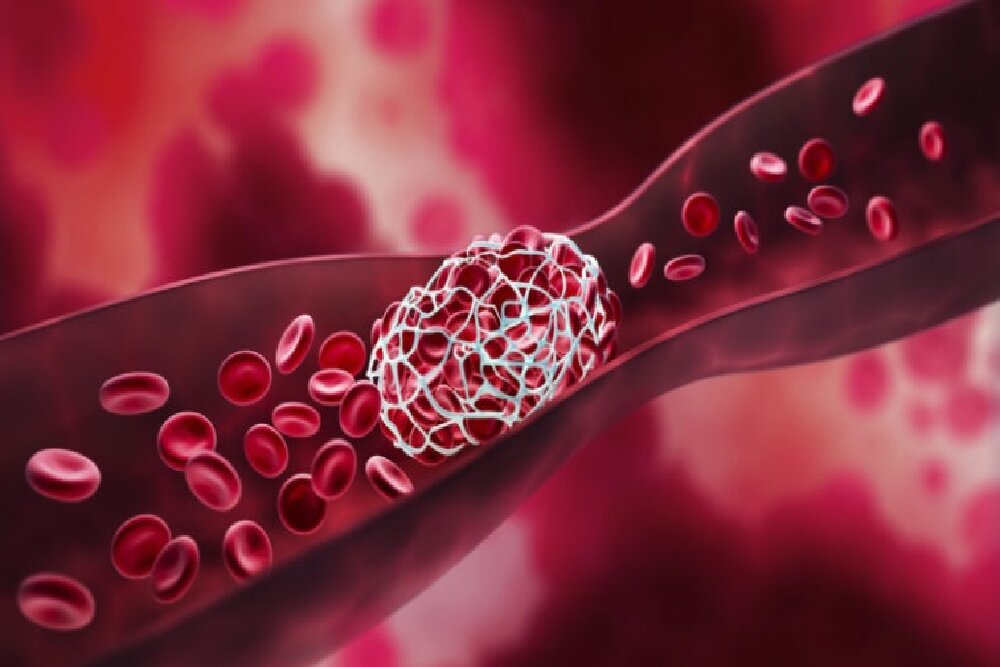
Researchers at the Indian Institute of Science have invented a metal -based synthetic nanoteme that can help prevent irregular blood clots caused by diseases such as lung embolism.
According to RCO News Agency, Blood cells called “platelets” under normal conditions are usually activated when the blood vessel is damaged. Platelets join together to form clots that protect the vein. This process called “bloodstream” or “hemostasis” contains a complex sequence of protein interactions and is initiated by chemical signals such as “thrombin” and “collagen”.
Quoted by Azo Nano, In diseases such as cuvid-1 or lung embolism, these signal pathways may develop defects. This leads to increased oxidative stress and increased levels of oxygen activated species, which leads to excessive activation of platelets. As a result, many clots may form in blood vessels and lead to “thrombosis”, which is one of the main causes of disease and death.
To solve this problem, a team of researchers from the Indian Institute of Science (IISC) led by Professor Ghvindasamy Mugesh of the Institute’s Department of Physics and Mineral Chemistry invented nanomaterials that imitate natural antioxidant enzymes. These factors called “nanoteme” help regulate the surface of the active oxygen species and prevent excessive platelet activation and reduce the risk of excessive clot formation.
Researchers used controlled chemical methods to create active nanomaterials in various sizes, shapes and structures. Then, they extracted platelets from human blood and used chemical signals to the active stage to investigate what quality nanotemes prevent excessive platelet accumulation.
The research group found that vanadium pentoxide (V2O5) are the most effective examples. These nanotechnology imitates the function of glutathione peroxidase, which is a normal antioxidant enzyme and reduces oxidative stress. Sherin Gr, a doctoral student at the Indian Institute of Science and senior researcher, said: “The acquisition of a net shape of nanotechnology with positive oxidation of five vanadium oxides was challenging.” This was important because the positive oxidation state of four is toxic to the cells.
“Unique chemistry of vanadium metal is very important because oxidation-reduced reactions that reduce the surface of the active oxygen species are formed on the nanomaterial surface of the vanadium,” Mogash said.
Scientists tested the nanoteme in mice with lung embolism and found that it reduces thrombosis and improved survival. Also, they monitored the weight, behavior, and blood markers of the animals for five days after treatment and did not see any harmful effects.
Medications that are currently used to treat thrombosis can increase the risk of bleeding. “Unlike conventional drugs that interfere with homeostasis, nanotemes do signal adjustment and do not cause natural blood clotting disorder,” said Bidare Sharathbabu, a doctoral student at the Indian Institute of Science and researchers. This means that nanotemeles do not have the complications of bleeding, which is the main concern for current treatments.
The research team is now intended to investigate whether their nanotechnology can also help prevent ischemic stroke caused by blockage of blood vessels.
They said: “We hope for human clinical experiments because we have done our tests with human platelets and they have been effective.”
The study was published in the journal Angwandte Chemie.
The end of the message
(tagstotranslate) nanotechnology (T) Blood clot

RCO NEWS