

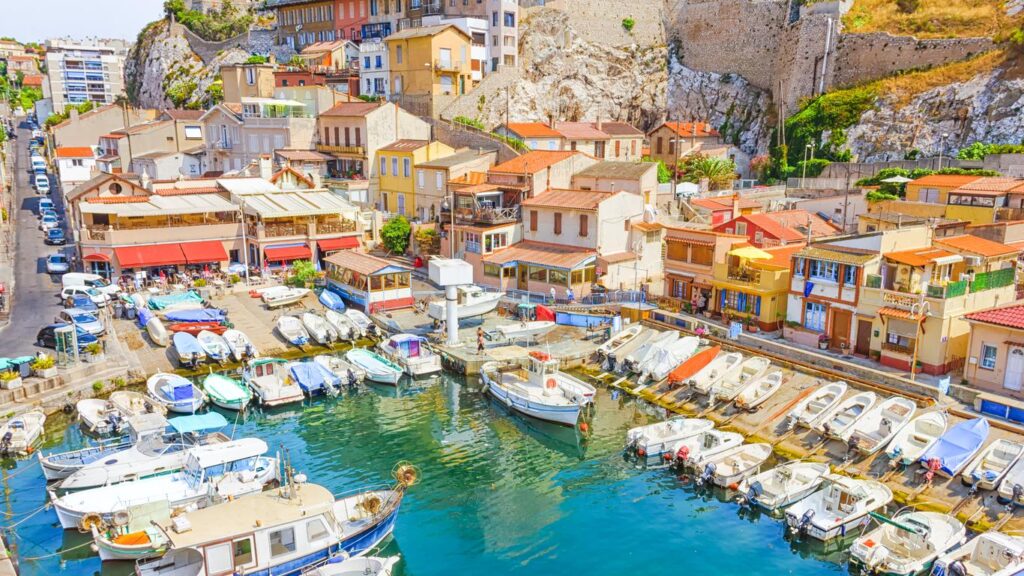
The French port of Marseille may not have that classic and symbolic manifestation of Paris, but it is just in these differences that its unique charm appears. A passionate and vibrant city with a mixture of European, African and Middle Eastern cultures, has a completely different face and type of many French cities. Marseille can be considered the intersection of cultures; This diversity can clearly be felt in the languages you hear on the street, in the fragrance of the city’s unique food. Marseille is a lively and vibrant city with passionate nightlife, cozy and hearty restaurants, theaters, spectacular museums and even an international football stadium! Here is a city that comes beyond expectations and will give you a memorable experience; A destination that undoubtedly deserves a few nights. In this travel guide, we have attempted to accompany you by providing practical tips, essential information, and suggestions to save money to Marseille.
Where is the city of Marseille?
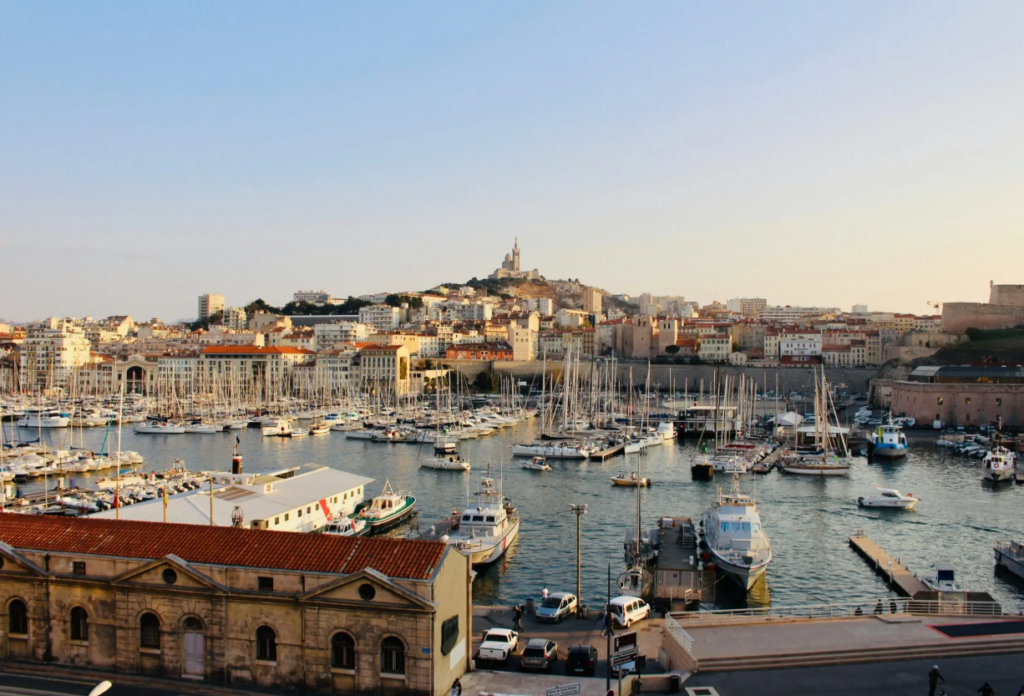
If you are a question where Marseille can be said, Marseille is the second largest city in France and is located in the southeast of the country, next to the beautiful coast of the Mediterranean Sea. Situated in the Prose-Alps-Kut Dazur area, this historic and vibrant city is known as one of the oldest cities in France. The port of Marseille, France, is the country’s largest port and one of the most important commercial ports of the Mediterranean. This port has a key role in European, African and Middle Eastern communications. Marseille is also an attractive destination for adventurous tourists and art enthusiasts because of its diverse cultural composition and its unique urban context. If you are looking for a different city with a warm, energetic mood on the French Tour, Marseille will be one of the best choices in the south.
Distance from the port of Marseille to Paris
One of the common questions in traveling to France is the information from Marseille to Paris. The ground distance between the two cities is about 2 kilometers and if you travel by TGV’s high -speed train, the route will take about 2 hours and 2 minutes. The road route also takes about 1 to 2 hours depending on the traffic. This fascinating route takes you from the classic capital of France to a city with a different Mediterranean. The port of Marseille, with its beautiful beaches, historic streets and its famous seafood, is worth a few days of tour. The combination of visiting Paris and Marseille can give you a complete and varied experience of French culture, history and nature. Marseille can be included in the list of best European cities to live.
اری The spectacular attractions of Marseille France
Marseille has a lot of attractions to see and entertaining, but we suggest that if you have a limited time in the port of Marseille, be sure to visit these two attractions:
1. Visit the port of Luvio
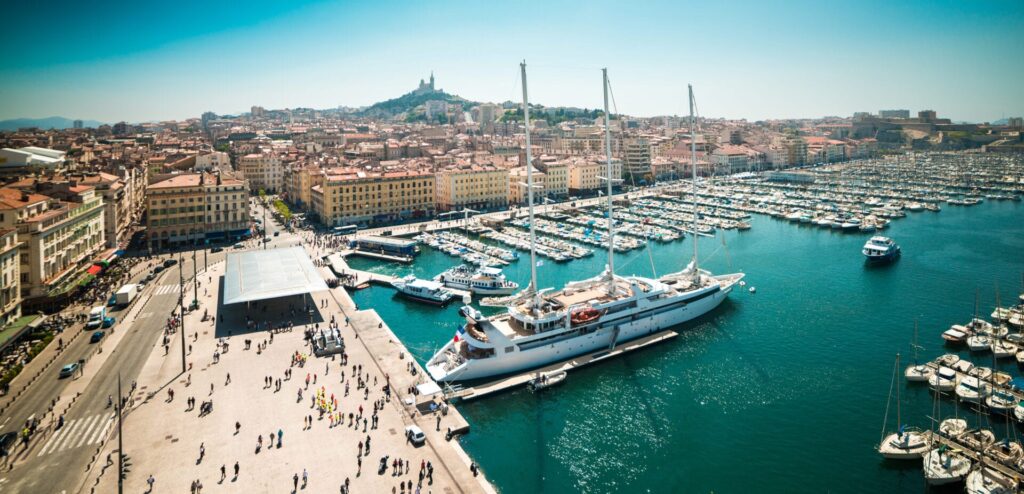
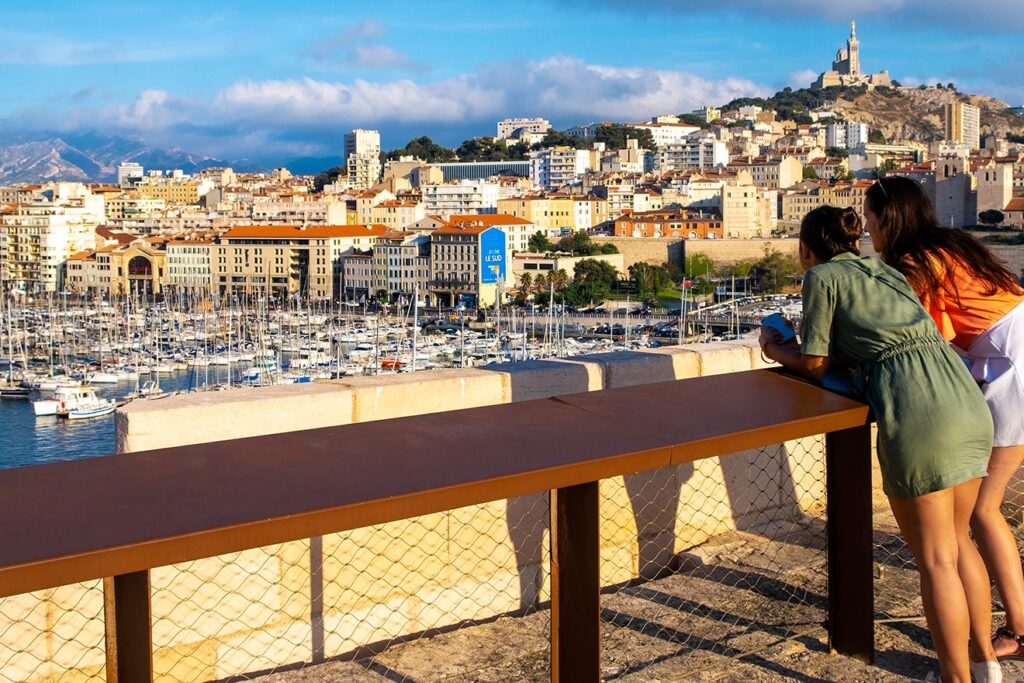
The old port of Marseille is a great place to watch fishermen who sell their fresh seafood. In this port you can visit the Quai des Belges fish market where locals come to make their daily raw materials. In addition, the local white limestone stone of the Phaare de Sainte-Marie Lantern at the northern end of the port is worthwhile in contrast to the blue water and the sky. The Saint-Ferréol Les Augustinschurch Church dates back to the twelfth century Knights at the eastern end of the old port. The combination of architectural styles in this collection is spectacular! You can also rent a boat here for one day. Just sit down for a quiet, low -cost visit, read a book, eat and stare at expensive yachts in the port.
2. Visit the Notremam Church
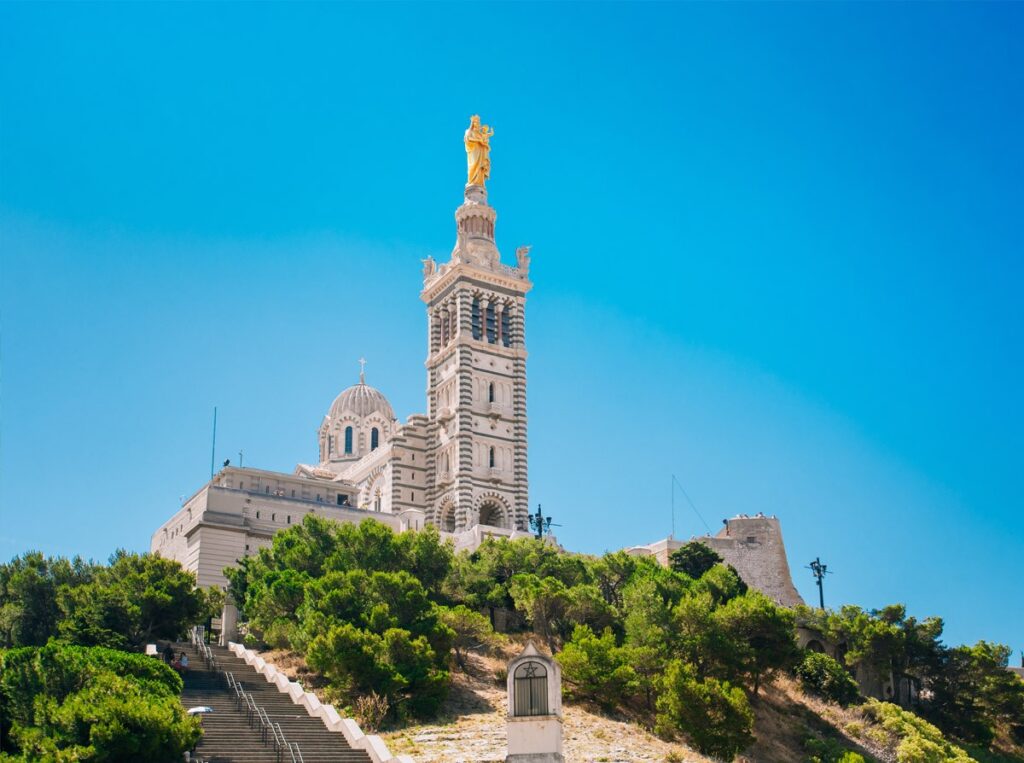
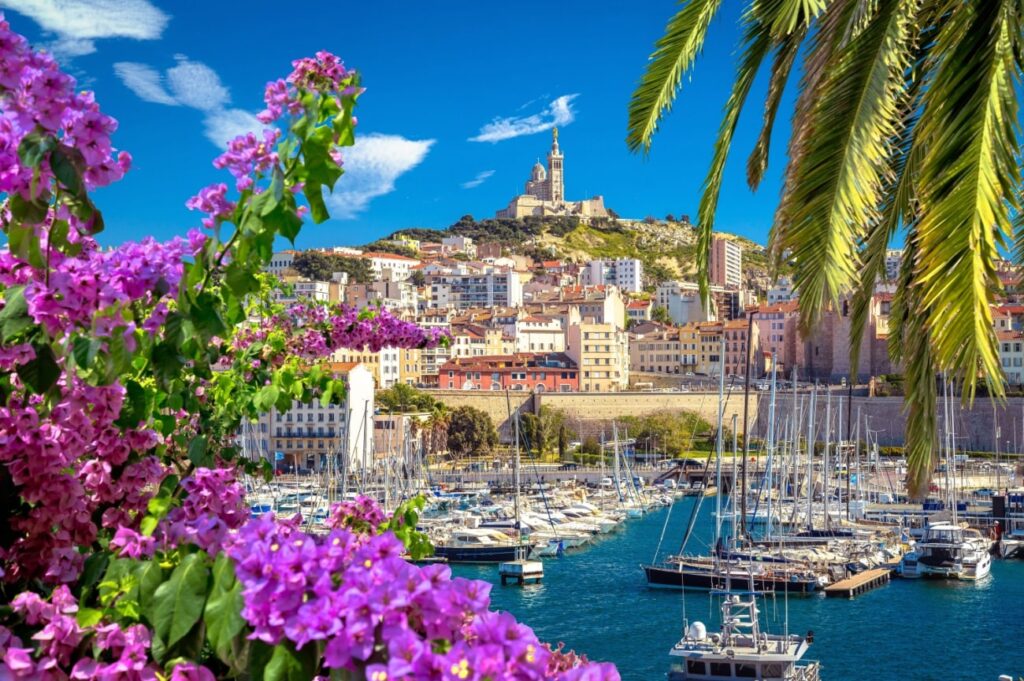
This Byzantine and Roman cathedral, known as the “Grand Church”, is at the highest point overlooking the city and is one of the best scenery of Marseille. The old fishermen blessed their boats in this church. The first small church in this place was built in year 6. In the 1980s, Francis I expanded it to include a castle and a larger palace for better defense than the city. Entering the church is free but be sure to use the right clothing. For a deep look at the history of the church, you can join a guide tour for 2 euros.
1. Visit the Wille Charity
Wille Charity, the site of the Mediterranean Archaeological Museum and the Museum of African, Oceanic and American Indians, is a former nursing home built in the mid -9th century. Its architecture consists of a remarkable three -storey corridor in a rectangular courtyard with an Italian Baroque -style small dome church at its center. There are many cultural centers across the site, and the pavilions are a great place to relax in the shade.
1. Walking in La Cornis
This stunning coastal hiking route extends 2 kilometers (2 miles) along the coast and offers beautiful landscapes from the sea, as well as the Eif and Callank Castle (a bay with sloping walls made of limestone and dolomite) to the east. On this route you will cross the houses of fishermen, monuments, luxury hotels, times, beaches and famous restaurants.
1. From EIF Castle (Château d’IF) Visit
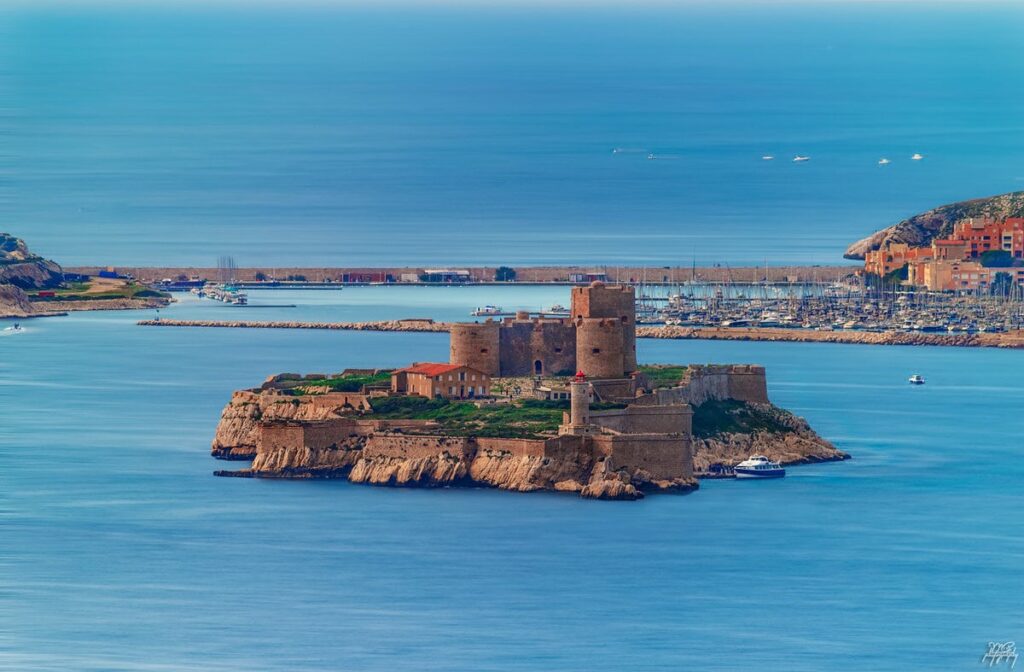
Located 1.5 miles (2 miles), the small island was an exile for political prisoners, including the revolutionary hero, Mirabeau) and the Communard 2. The castle was completed as a fortress to defend the city in year 6 and later became prison. The castle is best known for its role in the novel by Alexander Duma’s novel by Kent Monte Crysto. You can easily spend a few hours in the castle and around the island while traveling to the port of France, gain information about the date of information, and enjoy the surrounding scenery. The entry fee is € 5.
Other spectacular attractions of Marseille
If you have more time to stay in the port of Marseille, France, we suggest you try the following: (If you have chosen the French Tour for travel, the city of Normandi will be an attractive destination)
Strolling around the Julin and PLLin neighborhoods
This chic Marci section is full of bookstores, cafes, old clothing stores, fountains and colorful street arts. Every Thursday and Saturday morning, the PLL market is held here, providing an opportunity to buy everything from clothing and outflows to delicious shoes and food. Dinner in the lacquer or eat in Leo Kozin.
Rest in the Beverly Park
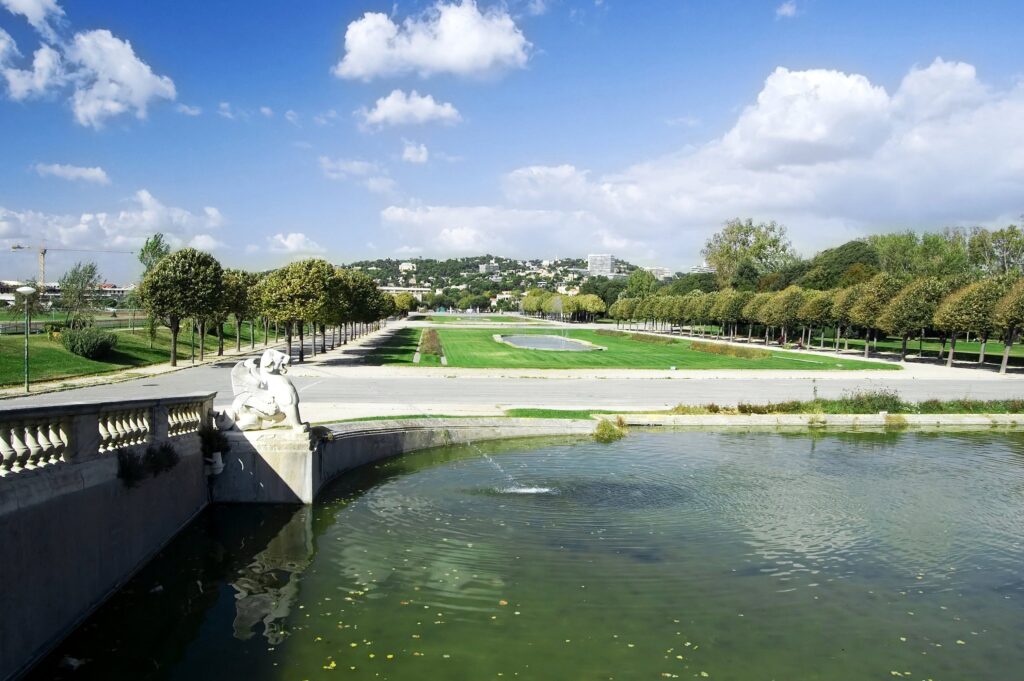
Beverly Park is known as one of France’s most remarkable parks and its attractive gardens are highlights of visiting Marseille. Located near the ocean, the park was built in the 17th century by the French businessman, Joseph Beverley. You can surf the fluent English garden, the French garden and a Zen Garden. The Beverly Park is also the location of the Burley Palace, an eighteenth -century rural house that now houses the Museum of Decorative, Pottery and Fashion. The entry is free.
Visit Lu Pania
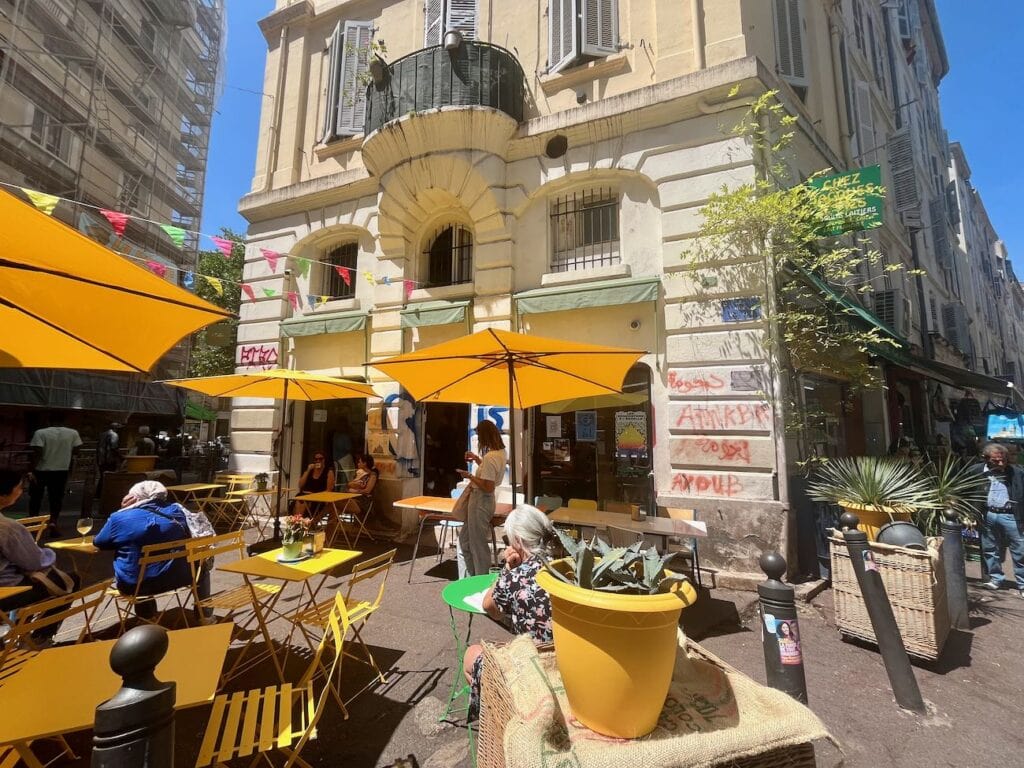
This is the oldest portion of the port of Marseille, dating back about 5 years BC. In French, its name means “basket” and is named after the inn with a basket as a sign. Over time, the neighborhood above the hill was recognized by the same name. Today, with colorful street arts that adorn buildings and art studios scattered throughout the neighborhood, Le Pania is known as an art hub. When surfing this neighborhood, be sure to visit Wille Sharite, a 17th century villa with museums and exhibitions.
Go to La Plus Castlan
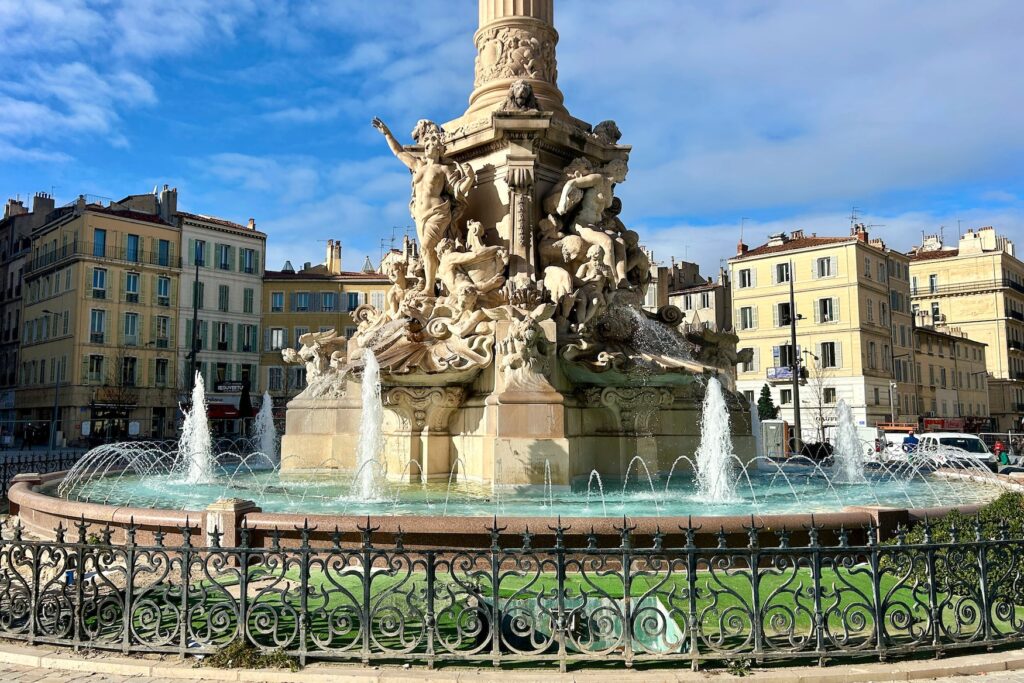
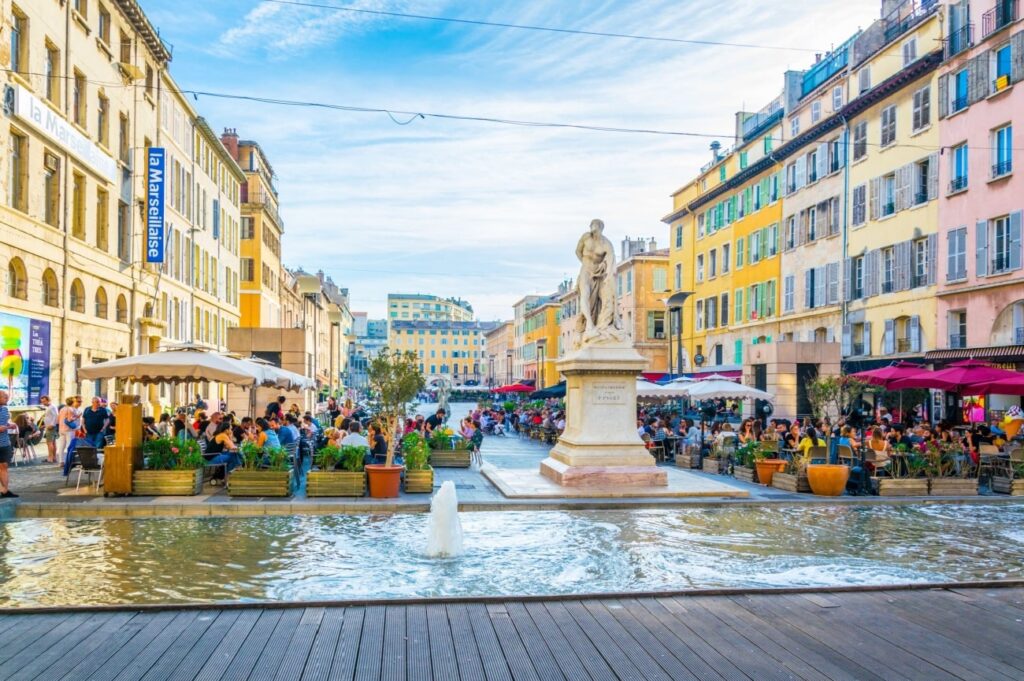
Built in the sixth district of the year, this historic square consists of a magnificent fountain (the current fountain was added to replace the main fountain in year 2). The fountain represents the three rivers of Prose (Suns, Guardon and Ron). Initially, an obelisk was part of the fountain, but moved to the ninth district in year 6. The field, named after the aristocracy, which financed the project, is named after Henry-Azar de Costlan-Majesty, and is mentioned in Joseph Conrad’s novel “Gold” in Year 2 (Conrad also wrote the famous heart of the Dark Heart).
Walk in the Mazarg war cemetery
Mazarg warfare with more than 2 square meters is the final landfill of the Allied soldiers from World War I and World War II. The bodies of soldiers and workers were buried in various Marseille cemeteries during World War I, however, after the war and before the ceasefire, the land of Mazarg cemetery expanded and the remains of hundreds of soldiers were transferred from smaller cemeteries and buried here. This cemetery is about 2 kilometers (1.5 miles) from central Marseille.
Visit their Long Palace
The monument was opened in the year 6 and was built on the occasion of the completion of the Suns Channel, which brought new drinking water to Marseille. The famous animal sculptor, Antoine Louis Barry, has made lions and tigers at the entrance, while the memorial fountain in the middle of the columns is Jules Caulie. It also hosts the Museum of Fine Arts, the oldest museum of Marseille, with a large collection of Parwansey and Italian artworks of the 5th to 5th century.
Eat in the food
This area (around the Navai Metro Station) is known for its Arab, Indian and Chinese societies full of delicious places to eat. Try places like Damas ports, Cafe Noir and Karaoke Lu 1.2. There is also a daily market where vendors sell special foods for North Africa, including spices, dried fruits, sticky pastries, flat breads and more.
Dive in the port of Marseille
Diving may not be the first thing to come to your mind when you think of France, but Marseille is becoming the diving capital of the country. Travel to the Mediterranean, where you can explore tunnels and visit colorful seafood, marine anemones and marine winds. You can also see Murray and octopus eel, as well as a large number of drowned ships such as Le Liban (1882) and Le Chaveen (1961). From June to October, when the water is slightly warmer, the best months for diving are here. Prices start at 2 euros.
Visit the Museum of European and Mediterranean Civilizations (MUCEM)
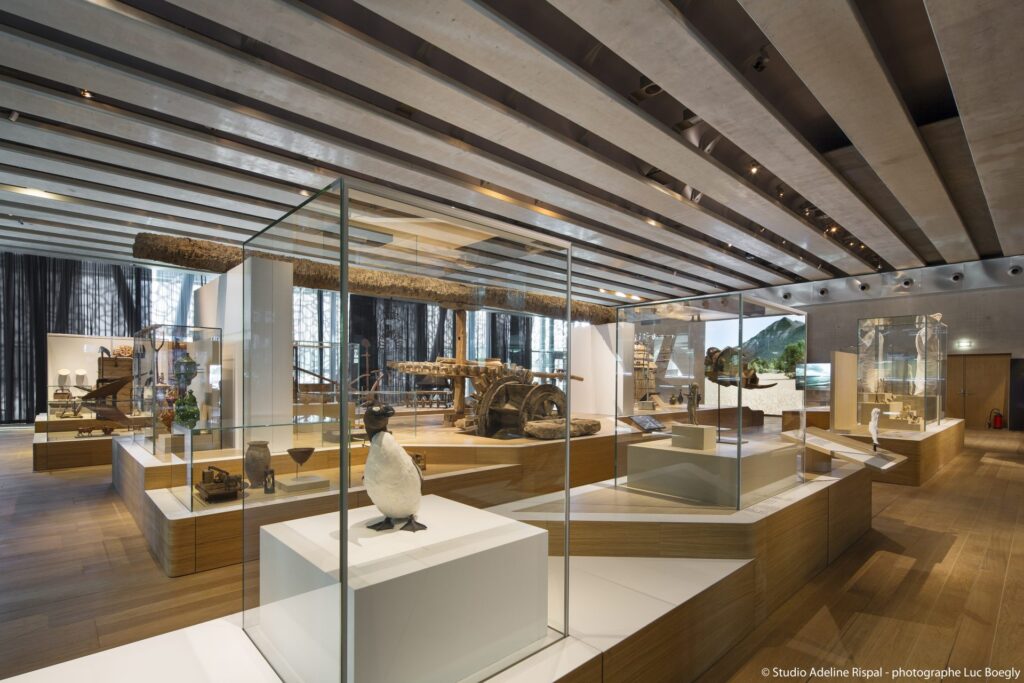
The museum, as one of the most humble attractions of the France, opened in year 6, is located next to St. Jean’s castle and to the entrance to the port. Designed by French architects Rudy Ricotti and Roland Carta, the museum is a 2 -square -meter cube surrounded by a network of fibers and concrete. The Museum of European and Mediterranean Civilizations has two floors dedicated to the Mediterranean and European history, as well as an underground and bookstore hall. The restaurant above the museum offers one of the best landscapes in the city. The tickets are € 5, but you can walk out of the outside for free.
Read the Twoler Garden for more familiarity with the spectacular French places.
Where to stay in Marseille
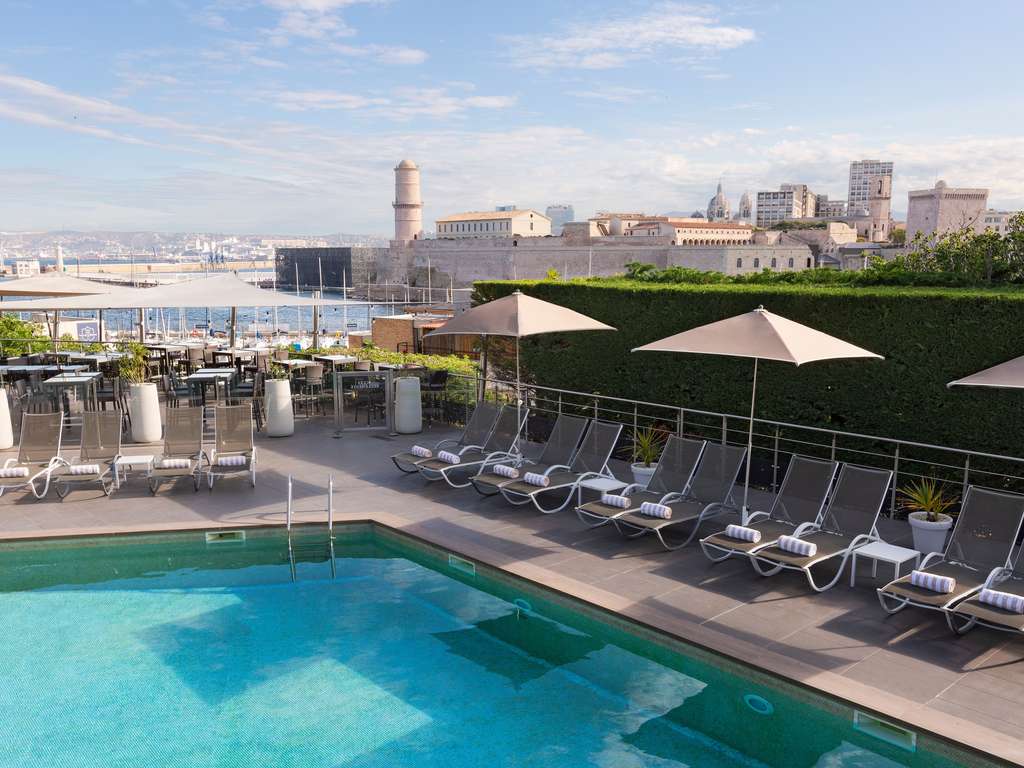
There are only a few cheap hostels and hotels in Marseille. Most travelers around the old port of Marsera prefer security and access. You can choose the following places to reside in Sefler to the port of France:
- Hostle Pipel
- Vertigo View-Camp
- Picon and Olio
- Adelivis Pension
- Marseiller Marseiller La La Juliet
- Hermes Hotel
- Boutique Provence Hotel
If you are planning to visit other French cities, we suggest you read Lyon’s sights.
Travel costs to the port of Marseille
Marseille, with a variety of culture, Mediterranean climate and historical attractions, is one of the fascinating destinations of travel in southern France. Before traveling to the city, awareness of costs can help better plan and manage budgets. In this section, we have examined the main costs of traveling to the port of Marseille, including accommodation and food. Note that prices may rise up to 5 % in summer due to rising demand.
Costs of Residence in the port of Marseille
Type Stay | Cost Approximately (Every night( |
Dormitory. Hostal | 1 to 2 euros |
Room. Private Hostal | 1 to 2 euros |
Hotel. Economic | 1 to 2 euros |
Hotel. Luxury | + € 1 |
Room. Private Airbnb | 1 to 2 euros |
Apartment. Airbnb | 1 to 2 euros |
Increase Summer | 2 to 5 percent increase in price |
Costs Food in the port of Marseille
Type Food Or Drink | Cost Approximately |
Special. Lunch | 1-5 euros |
Sandwich. Ready | 1-5 euros |
Restaurant. Local | 1-4 euro for each meal |
Restaurant. «OK» | 1-5 euro for each meal |
Fast Food (For example MacDonald) | ۱۰ euro |
Orange juice | 1-4 euro |
The tropical juice | EUR 4-5 |
Special fruit juice | 1-5 euros |
Cappuccino/Latte | ۲ euro |
Water Mineral | 1-2 euro |
Materials Food For A Week | ۱۰ euro |
Proposed budgets to travel to the port of Marseille
- Backpack – € 2 per day
This budget includes staying in the hostel dormitory, cooking all meals, using public transport, restricting drinking and doing free and cheap activities. If you are going to the cafe, add another 1 to 2 euros to your budget
- Economic Journey – € 2 per day
The economic budget includes a private room, eating at cheap restaurants for a few meals, using public transport, enjoying a few cups of coffee and a few money such as hiking tours or visiting museums.
- Luxury Tour – € 1 / day
With this budget, you can stay in a 5 -star hotel, eat all your meals, take a café, rent a car and do whatever you want.
Tips of traveling to the city of Marseille
- Have a bottle of water: Piping water here is safe for drinking, so bring a reusable water bottle to save money and reduce your plastic consumption.
- Walk: Marseille is small enough to walk, and this is a great way to experience the architecture and mood of the city without spending any money.
- Use Hotel Points: Register for hotel credit cards and use the points you earn to cover your travel costs.
- Buying Urban Card: Marseille city card includes more than ten activities, museums and experiences, plus discount for more than thirty museums, activities, tastes and other sellers. If you are planning to do many of the popular activities, this can save your costs compared to separate payment for each of them. The city card also includes unlimited access to public transport. You can buy a card for 1, 1 or 2 hours for 1 to 2 euros.
- Provide a public transport card: Marseille has a wide public transport network that includes bus, subway and tram lines. If you stay outside the city or want to visit farther places, a card can save a lot of money compared to € 1.5 to € 5 for a trip.
- Get ready for lunch: If you eat outside, do this at lunch and prepare a fixed menu (two or three meals menu). Restaurants across the city offer this ready menu at lunch, and at prices between 1 and 2 euros, this is a much better deal than the regular dinner menu.
- Use museum prices: Provide a city card for free public transport, free entry into museums and attractions and discounts on tours. The one -day card is 2 euros, the two -day card of € 2 and the three -day card is € 5.
- Take a free walking tour: If you want to know more about the city, a free walking tour is a good starting point. While you can visit all the main scenery, you will also find out about history and architecture. Marseille’s free walking tour is the best tour.
The best time to travel to the port of Marseille
- Summer is the most popular time to visit Marseille. This season is also known as the hottest season of traveling to the port of Marseille, with its daily temperature of 2 degrees Celsius (2 degrees Fahrenheit). The summer is the peak of the trip to Marseille, and the streets are full of European bags and travelers who want to enjoy the southern French space with all its warmth and warmth. It only rains during the summer, but it is still a good idea to have an umbrella.
- September and October, when the average temperature is 2 degrees Celsius (2 ° F), it is an ideal time to visit Marseille. In the fall, the population declines significantly and the Mediterranean is still excellent for swimming. Days are usually warm, but at night they can be cooler and the average temperature is about 2 to 2 degrees Celsius (2 to 2 degrees Fahrenheit). There are also five to seven rainy days in these months, so it’s a good idea to wear multilayer clothes.
- In the spring, Marseille Carnival (April) is held in Bolie Park and includes colorful parade, live music, games and family entertainment. The high temperature in the spring is about 1 to 2 degrees Celsius (2 to 2 degrees Fahrenheit). In evenings, at low temperatures between 2 and 2 degrees Celsius (2 to 2 degrees Fahrenheit) they are much cooler and there are a few rainy days each month.
- The Christmas season, although cold, is a great time to surf the markets and celebrations. The Santon Exhibition, one of the oldest Pruz exhibitions, will be held in December and exhibits hand -painted pottery sculptures from local craftsmen. The average temperature in winter is between 2 and 2 degrees Celsius (2 to 2 ° F). There is no snow in Marseille, but there is probably snowfall in the winter, so be sure to have an umbrella and warm clothing.
Final speech
In the end, the port of Marseille is not only one of Europe’s most commercial and transportation ports, but it also shows the vibrant and multicultural spirit of the city. With an ancient background, the port has a vital role in French history and economy, and today it is one of the country’s main gates to the Mediterranean. If you are planning to travel southern France, visiting the port of Marseille can be a different, spectacular and unforgettable part of your experience; Where history, culture, and modern life flow together.
Copying the contents of the Vanak Star Airlines agency is solely with the source.
RCO NEWS