


Wall Street Journal: Yemen challenges the world’s most powerful naval fleet
The American magazine, in a report acknowledging the US strategic failure to the Yemeni army, wrote that Washington eventually led to a minimum of a ceasefire after months of failure and heavy damage.
The failure of the US Navy to contain the Yemeni army and accept the ceasefire by US President Donald Trump revealed its strategic challenges.
In the same vein, the American Wall Street Journal reported in an analytical report: “May 6, a Super Hornet F-6 fighter jet on the USS carrier. Truman suffered a technical defect in the Red Sea and fell out of the band due to the lack of speed of speed mechanism and fell to the water. It was the third fighter to lose the Truman in less than five months, and just hours after President Trump surprised Pentagon officials by announcing the Yemeni Houthis. “
“The Yemenis, one of the most basic facilities and in one of the poorest countries in the world, have challenged the world’s most powerful naval fleet,” the American magazine added. Authorities are now investigating how small and agile hostility has been able to challenge the world’s strongest surface fleet. “Despite limited facilities, the Yemenis have engulfed the US Navy’s most intense naval battles since World War II.”
“Yemenis fired anti -slaughter ballistic missiles using cheap missile and drone technologies; “The first weapon used in the history of the maritime battles.”
“Recent developments have shown that new technologies, as they changed the ground battle in Ukraine, have also changed the way of maritime battle and have forced the armies to quickly adapt,” the report said.
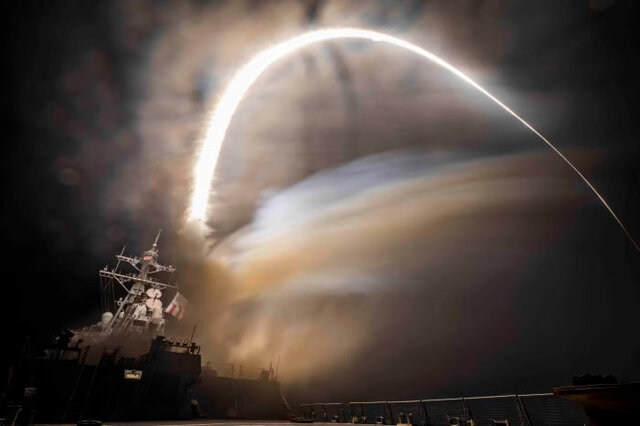
USS Carne’s ship in the Red Sea
The high cost of America in an effort to inhibit Ansarullah
“Since late in the year, about 5 US ships have been involved in war operations; Equivalent to 5 % of the total US Navy fleet. “During this time, the United States has put at least $ 1.5 billion in ammunition on Yemen.”
However, the US media confessed: “The Navy’s fleet failed to completely destroy the Yemeni arsenal and did not achieve the strategic goal of restoring security to the Red Sea.”
“During the year, the Yemenis carried out dozens of commercial shipping attacks, and the United States responded to Yemen with air strikes, but failed to cut off,” the report said.
The Wall Street Journal acknowledged, “Despite the huge volume of fire, the shipping route was not secured and Yemen continued to launch missiles at Israel.”
“Concerns about the overwhelming pressures on US Navy and the impact of these conflicts on military readiness have increased,” the US media quoted military officials as saying.
Another part of the report said: “One of the nights of last year, the destroyer of the Staccale, as he crossed a gorge in the south of the Red Sea, turned off the lights and moved on the Zigzag route, but the Yemenis fired four ballistic missiles at it. “One of the missiles was so close that after the interception, the destroyer crew was forced to overthrow the remains.”
The Wall Street Journal also wrote: “Just a few minutes later, the Yemenis fired an anti -cruise missile that was shot down by adjacent aircraft fighters.”
“In the limited waters of the Red Sea, which reaches 2 miles at the most wide point, large ships have limited maneuverability and are exposed to Yemen’s beach and watchdog,” the report said.
“Most of the time, the crew of the American ships had the opportunity to identify the threats just one or two minutes before the projectiles, and only had the opportunity to respond,” according to the report.
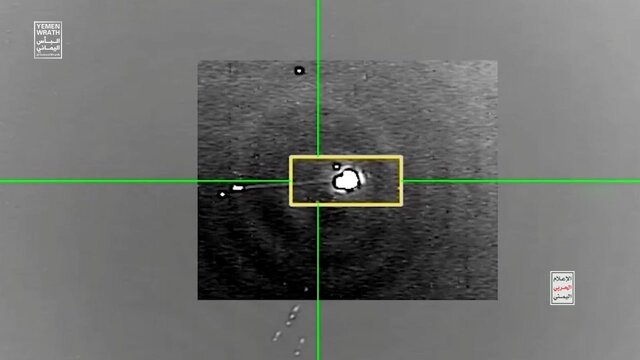
Estimated US UAV by Yemen Defense
The success of the Yemeni army in the overthrow of advanced American drones
“The Yemenis were successful in overthrowing more than 5 US Ripper UAVs, each worth about $ 5 million,” the Wall Street Journal wrote. In mid-March, the United States launched a widespread operation entitled “Rafar Ryder” with the second aircraft carrier, several B-1 bombers, a F-1 fighter squadron and destroyers equipped with guided missiles. “
However, the Wall Street Journal acknowledged: “After five days of bombing, the Houthis were damaged but failed.”
The media claimed: “US air strikes killed hundreds of Yemeni troops, including several senior officials and destroyed large quantities of military equipment and weapons warehouses, but they continued to shoot missiles at Israel. But US attacks have also led to the killing of hundreds of civilians. “However, the Yemenis have surprisingly upgraded their missiles.”
“While the US Navy was able to intercept all attacks, it is unclear how long the trend will continue,” the Wall Street Journal wrote.
Finally, the US media, referring to Washington’s defeat, wrote: “Trump finally consenting a ceasefire with the simplest conditions: the Yemenis would end the attack on US ships and the US would stop bombing Yemen.”
“While the Truman aircraft carried through the Suez Canal and leaving the Mediterranean, the Yemenis continued to launch ballistic missiles into Israel,” the Wall Street Journal added.
The end of the message
(tagstotranslate) Ansarullah Yemen (T) Yemen (T) Yemen (T) Donald Trump (T) Israel (T) Zionist regime

News>RCO NEWS
RCO