


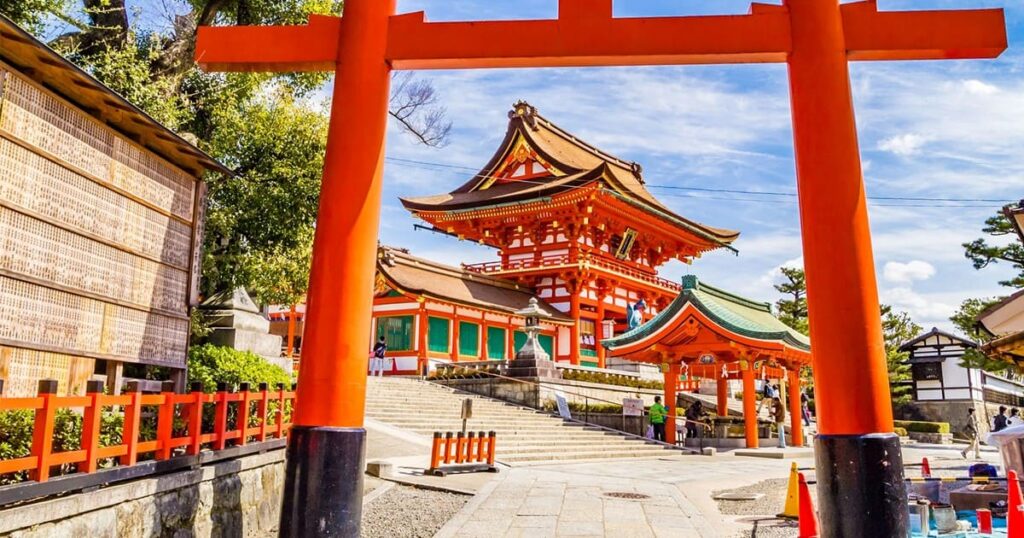
If you are planning to travel to Japan and want to get acquainted with a unique and unique culture, you should not miss a visit to the Inari Fushimi Temple in Kyoto. The temple, with thousands of red or “lace” gates in the lush nature, is one of Japan’s well -known symbols and a popular destination for tourists around the world. The Fushimi Temple is religiously and historically important and provides a special visual and mental experience for visitors. In this article from the Vanak Star, we will introduce the full temple. Also, if you are planning to travel to Japan, you can benefit from Vanak Star Japan Tour.
The history of the Fushimi Temple; From the eighth century to the present
The Fushimi Inari Taisha Temple is one of the oldest and most important Japanese Temples of Japan dating back to year 6. The temple was built in honor of “Inari ōkami”, the god of blessing, agriculture, rice and success in trade. In the past, farmers went to the temple to increase their crop, and over time, businessmen and business owners considered it a place to pray for economic prosperity.
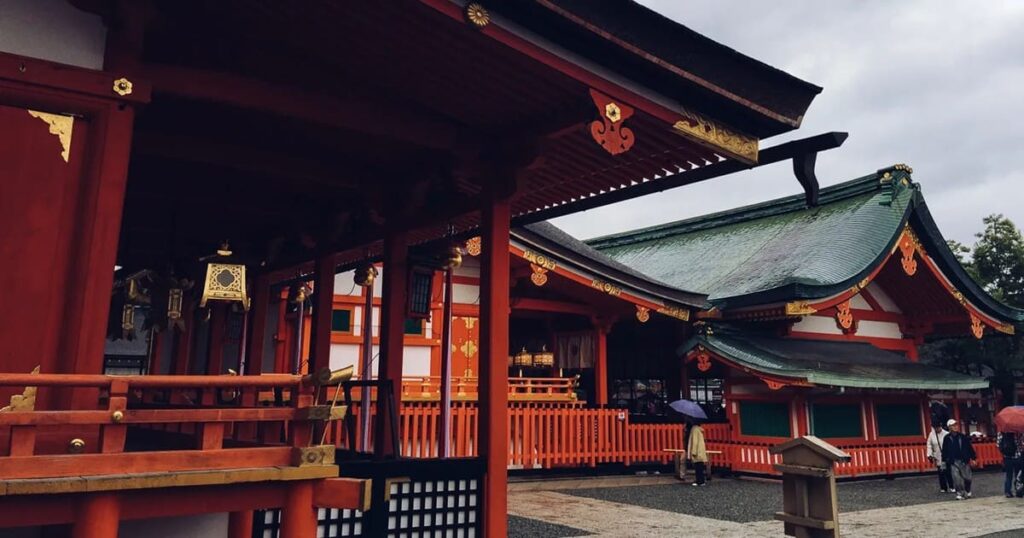
Temple architecture has been rebuilt and expanded many times over the past centuries, but its cultural and spiritual identity has still been preserved. One of the most prominent features of this temple is the presence of thousands of red lace gates dedicated to prayer and thanksgiving by individuals, families and companies. This unique structure has made the Inari Fushimi Temple become one of Japan’s well -known symbols in the world.
In addition to the temple, we also offer you a visit to Japan in Japan.
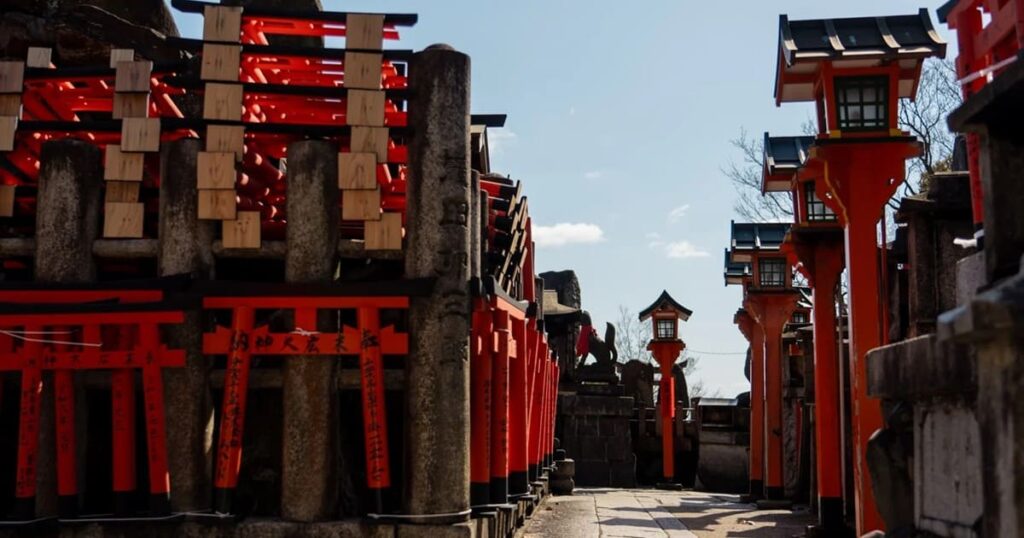
Red -grind gates; Icon
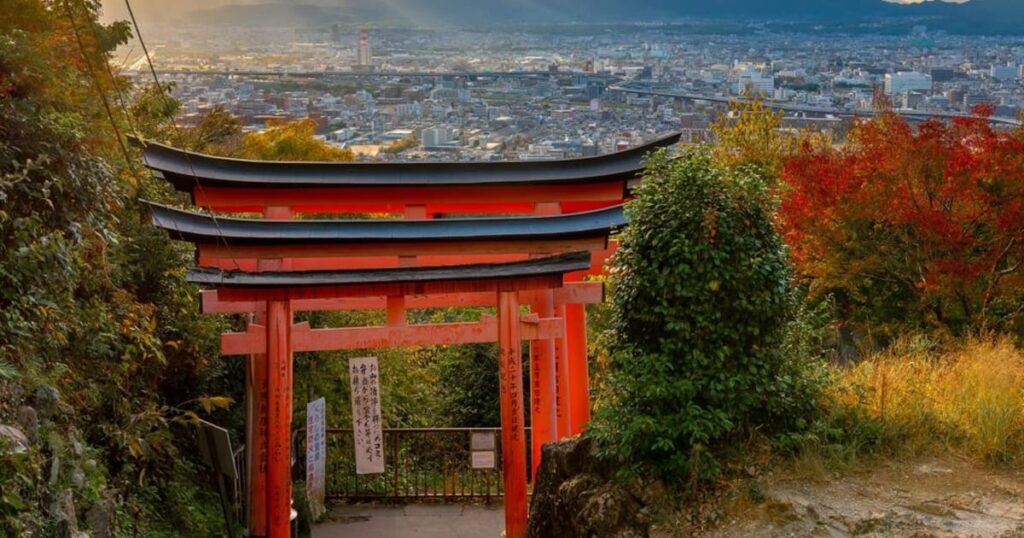
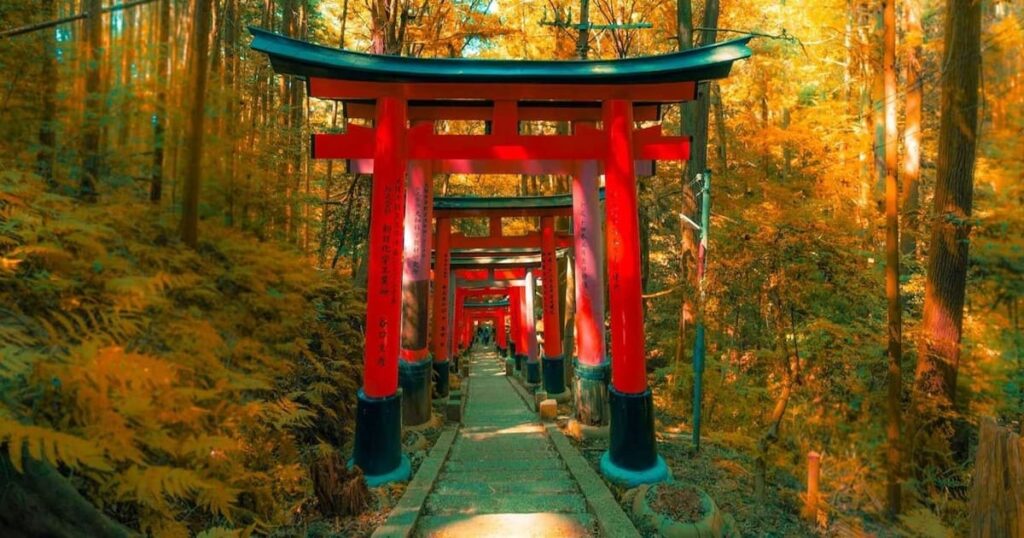
One of the most prominent and eye -catching elements of the Inari Fushimi Temple is the endless rows of the Torii red gates, which cover the main routes of the temple in the heart of Inna Ray. These gates, which symbolize the transition from the material world to the sacred world, have a special place in Japan’s Shinto culture. Their red is also a sign of purity, protection against evil spirits, and an invitation to spiritual space.
Each of these gates are dedicated to people, families, or companies that have prayed for success in life or business. Behind most of them, the donor name and the donation date are engraved. These dedication has a religious aspect and is a kind of participation in the preservation and development of this sacred place.
The winding path of the gates, known as the “Senbon Torii” or “Thousand Torch”, provides a special and unforgettable experience for visitors. Crossing these gates is like the passage of the corridor between the past, the present and the future; An experience that calms both the soul and the mind immersed in the wonders of Japanese culture.
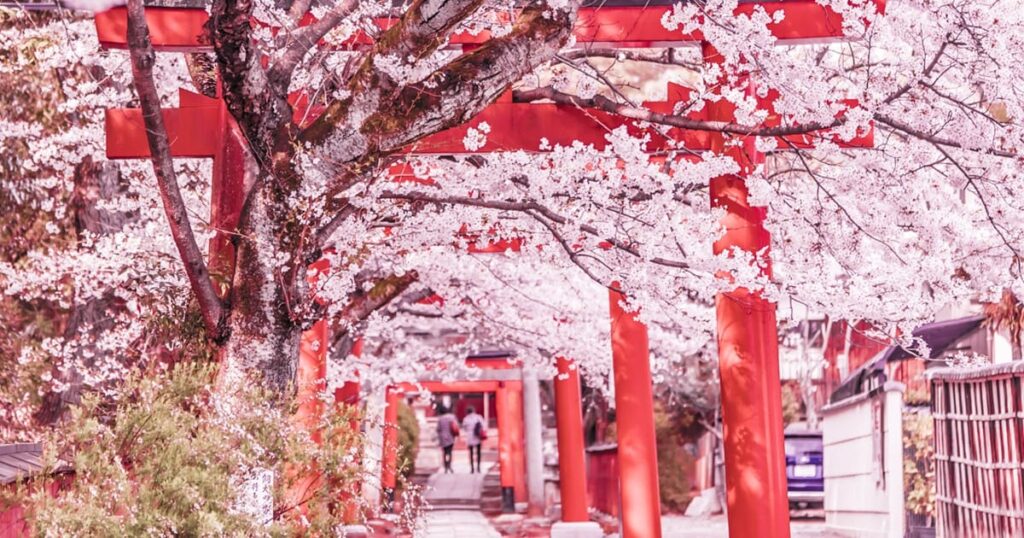
Interesting information about the Fushimi Temple Lace Gateway
In the table below, we will discuss the interesting information about the Fushimi Temple Tour Gate.
Feature | Explanation |
Approximate number of lace | More than 6,000 |
Material | Wood (often of cedar or woodproof) |
The cost of installing any lace | From 6,000 yen to a few million yen, depending |
Name | Behind each gate, donor name and date are recorded |
The main route of the lace | About 2 kilometers in the heart of Mount Inari |
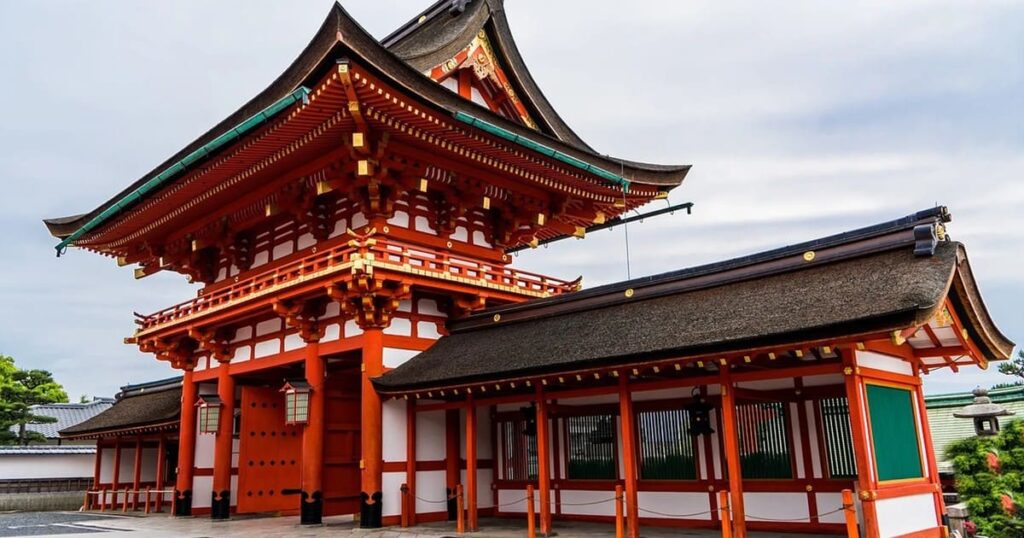
Why is the Fushimi Temple one of Japan’s most visited places?
The Fushimi Inari Temple is one of Japan’s most important religious sites and one of the most visited tourist attractions in the country. There are many reasons for the popularity that is a combination of unique architecture, pristine nature, easy access, and cultural and spiritual values.
Reasons for the popularity of the Fushimi Temple among tourists:
- There are thousands of lace gates: The red and glittering route that continues like a sacred tunnel to the tip of the mountain provides a unique experience for any tourist.
- Ideal photography location: The red facade in the heart of the Green Forest provides an eye -catching space for photographers and social media enthusiasts.
- Religion and Nature Composition: The temple on the slopes of Mount Inari has led visitors to enjoy the relaxing nature of the surrounding nature.
- Free entry: Unlike many temples and historical sites, it is free to enter the Fushimi Inri, which adds to its charm.
- Easy access from Kyoto: The temple is just a few minutes away from the Kyoto Central Station, making it a comfortable choice for tourists.
- 4 -hour opening: The ability to visit every hour of the day has made it an ideal option for passengers with limited time.
Click to view the price and buy the Japanese tour from Vanak Star.
Buy Japan Tour
The best time to visit the Ini Fushimi Temple
The Fushimi Temple of Inari is open throughout the year, and due to a 4 -hour access, tourists can visit it at any time of the day. However, choosing the right time can make your experience much more enjoyable; Both in terms of climate and natural landscapes and crowds.
The best seasons to visit:
- Autumn (October to December): Golden Season to visit! Maple leaves around the lace path turn red and orange and create a dreamy view.
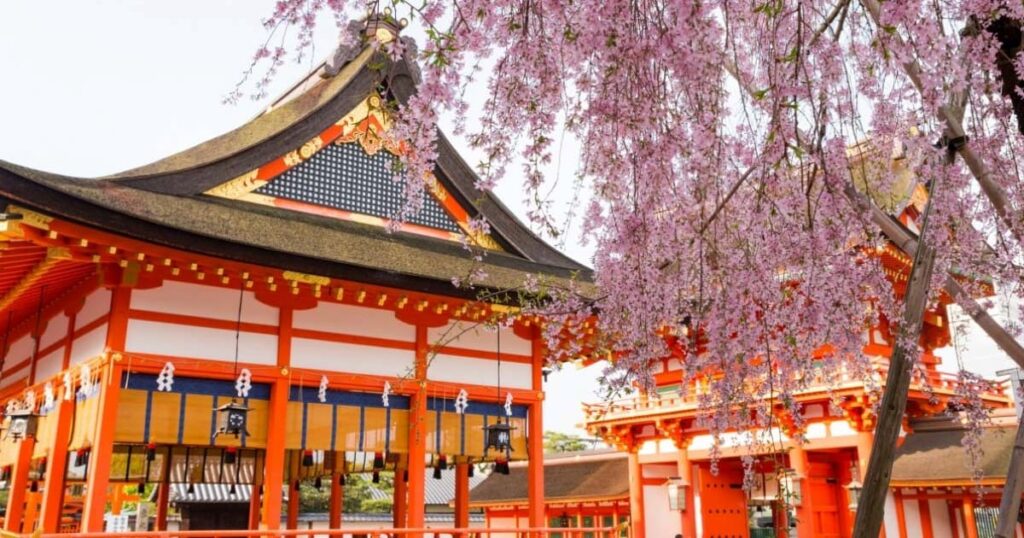
- Spring (mid -March to May): Cherry blossoms around the temple and the poetic mood of the space.
- Summer (June to September): The nature is lush and alive, but high humidity and heat may be a little annoying.
- Winter (January to February): More than other seasons and suitable for people who are looking for relaxation and silence. On some days, the thin coverage of the snow gives the temple a special view.
If you are planning to visit the Fushimi Temple at the best time and conditions, we suggest you use the Japanese Vanak Star Tours that do your travel planning with the ideal season and time.
We suggest traveling to Japanese hot springs while traveling to Japan.
Religious customs in the Fushimi Temple
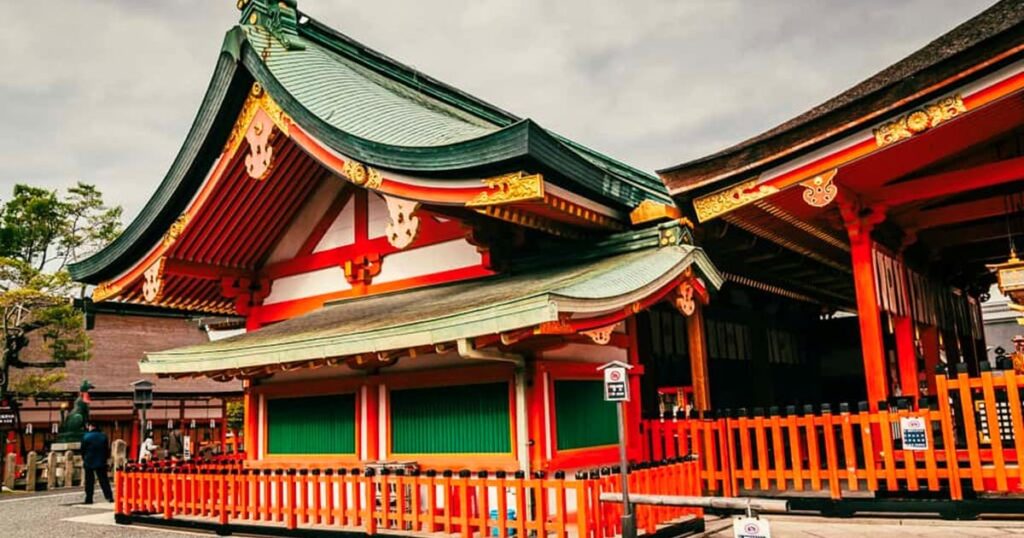
The Fushimi Temple of Inari is one of the most important Shinto temples in Japan, and many visitors come to this sacred place in addition to seeing visual attractions. Getting acquainted with the religious customs of this temple will help you attend this space with more respect and have a more authentic experience.
The most important religious customs in the Fushimi Temple
Most pilgrims come to this temple for success in business, education or family life. The goddess of Inari, who is dedicated to this temple, is a symbol of blessing, fertility and economic prosperity in Japanese culture.
The foxes in Shinto’s culture are the messengers of Goddess Inari. Visitors often place a coin next to the statues to respect these symbols or pray for their prayers.
At the beginning of the temple entrance, there is a pond of ablution. Visitors wash their hands and mouths with a special water dip and then enter the prayer space.
Before praying, pilgrims usually play a big bell in front of the altar to declare their presence to the gods.
Before praying, a coin (usually 1 yen) puts in the vow; Because in Japanese, “GO-N” is in line with the word “good communication”.
Visitors write their dreams on small foxes or traditional wooden boards and hang them in a special place.
With respect to these rituals, not only will your cultural experience become more richer, but you will have a deeper connection to the sacred space of the Fushimi Temple. If you are looking for a genuine and orderly experience, you can join the Vanak Star Japanese tour to experience a professional and cultural visit to this spiritual place.
How to go to the Fushimi Temple of Inri?
The Inari Fushimi Temple is located south of the historic city of Kyoto and is one of Japan’s most enjoyable tourist attractions. Its proximity to the train stations and the urban transportation system has made it even tourists traveling to Japan for the first time to find their way to the temple.
The exact address of the Fushimi Temple
Fushimi Inari Taisha, 68 Fukakusa Yabunouchicho, Fushimi Ward, Kyoto, Japan
Fushimi Temple Access routes of Kyoto’s important points
In the table below, we discuss the access paths to the Fushimi Temple of Kyoto’s important points.
Origin | The vehicle | Route | An approximate time | Description |
Kyoto Station (Kyoto Station) | JR Nara Line train | Simplicity at the Inari station | 1 minute | The fastest and most convenient route |
Gion Street (Gion) | Bus + train | Bus to Kyoto Station + Train JR Nara Line to Inari | 1 to 2 minutes | Need to replace the device |
Arashiaaaaaaaaaaaaaaaaaaaaaaaaaaaaaaaaaaaaaaaaaaaaaaaa | Train + jr | Sagano Line Train to Kyoto Station + JR Nara Line to Inari | About 5 minutes | Suitable for tourists in the West of Kyoto |
Kiyomizu Temple (Kiyomizu-dera) | Wedding + Bus + Train | Walk to Bus Station → Kyoto Station → JR Nara Line to Inari | About 1 to 2 minutes | A combination of hiking and public transportation |
Shivyamashita Shopping Center (Shijo Kawaramachi) | Metro + jr | Metro to Kyoto Station → JR Nara Line to Inari | About 5 minutes | Fast and easy route to shop and turn |
For more convenience in transportation, it is recommended to accompany the Vanak Star Japanese tour, as all routes and tickets are pre -planned and you will not need to worry about time and time.
Stations around the temple
In the table below, we will discuss the stations around the temple.
Station | Train line | Distance to the temple | Feature |
Inari Station | JR Nara Line | In front of the temple entrance | The nearest and most convenient access |
Fushimi-inii Station | Keihan Main Line | For about 5 minutes foot | Good access for travelers from Osaka or around the Camus River |
The Inari Station Station from the JR NARA line is located exactly in front of the Fushimi Temple entrance and is the easiest option to visit.
Important Transportation Hours and Tips:
- The 4 -hour temple is open and has no input fee.
- It is best to visit the temple in the early hours of the morning (1 to 2) or in the evening (after 1pm) to stay away from the crowd.
- Have a shipping card like Icoca Or Suica It can help save time and money.
By selecting specialized and professional tours such as the Vanak Star Japan Tour, you will not have to worry about the route, a train ticket or even the language, as the full transportation planning and the Persian -language guide will provide you with a quiet and unnecessary visit.
Experience to visit the Fushimi Temple with Vanak Star Japan Tour
Visiting the Fushimi Inari Temple is one of the most beautiful and spiritual experiences of traveling to Japan. Now imagine this experience with professional planning and full support of Vanak Star Japan Tour; Then you will see how comfortable, enjoyable, and memorable.
Why is the visit to the Fushimi Temple different from the Vanak Star Tour?
By choosing the Vanak Star Japan Tour, visiting the Fushimi Temple becomes an unforgettable memory; Where culture, spirituality and natural beauty are combined together and takes you to the depths of Japanese history and soul.
- Careful Planning: Access routes, visiting scheduling, temple backgrounds and important tips are introduced to get the best use of the visit.
- Farsi Guide: A professional guide that is both fluent in Persian and a comprehensive cultural and historical information about the temple.
- Easy Transport: The train and vehicles are pre -manufactured and you will not have to worry about finding a route or ticket.
- Specific photography stations: The guide takes you to the best shooting areas on the path of thousands to capture beautiful and different memories.
- Introduction to Japanese Culture: Opportunity to participate in religious religious rituals and traditional temple rituals with full explanations and guidance.
- Optimal Schedule: Visiting in a lonely and comfortable time for relaxation and photography, without pressure and bustle.
- Lunch and Rest: Planning for lunch at the best restaurants around the temple that provides you with the experience of local Japanese cuisine.
The last word
The Fushimi Temple of Inari, with its unique red gates and deep spirituality, is one of the jewelry of Kyoto and Japan, which is an unforgettable experience for any tourist. Coinciding with Vanak Star Japan Tour gives you the opportunity to travel to this sacred temple with full peace and knowledge and capture memorable moments. So if you are looking for a targeted, comfortable and accurate trip, the Fushimi Temple and the Vanak Star Tour will be your best choice.
Frequently asked questions
Here’s a look at your conventional questions about the Fushimi Temple.
Do you need to buy a ticket to visit the Fushimi Temple?
No, entering the temple is completely free and you can visit it at any time.
When is the best time to visit the Fushimi Temple?
Autumn and spring are the best time, because the natural scenery is very beautiful and the air is pleasant.
Is it possible to attend religious ceremonies in the Fushimi Temple?
Yes, visitors can attend traditional temple ceremonies and experience religious rituals.
Copying the contents of the Vanak Star Airlines agency is solely with the source.

RCO NEWS