
ISO 2 (ISO 2) is becoming a common language in international payment systems. This standard has become very important not only for banks and financial institutions, but also for digital currencies (Cryptocurrencies). With the global focus on transparency, security and integrity in the exchange of financial information, the subject of “Digital Currency and ISO 2” has become one of the most controversial areas of financial technology.
But what is the ISO currency and why is it important? In this article, from what is the concept of ISO 2 to the connection of ISO 2 and China’s block, we examine the applications and future of ISO currencies. Join us to see how this transformation redefines the financial market, especially digital currencies.
What is ISO 2?
Standard ISO 2 It is a global framework for the exchange of financial data developed by the International Organization for Standardization (ISO). This standard creates a common language for Global Payment Standards to make financial transactions in international payment systems faster, more transparent, and efficient.
Unlike older standards, such as SWIFT, ISO 2 uses richer and more flexible data formats such as XML (language for structure and information exchange in readable and flexible text format) that allows more complex information transfer.
ISO 2 is also used not only for banks and financial institutions, but also for new technologies such as blockchain technology. This feature has made ISO 2 and China’s block connection; Because it allows digital currency integration with traditional financial systems.
History and Evolution of ISO 1
ISO 2 was first introduced in year 2, but its global acceptance has grown faster in the past decade. One of the key factors in this growth is the Swift Payment Network Immigration Program to ISO 2. A program that began in year 2. This great change has made the role of ISO 2 in the transformation of global financial infrastructure.
Since Swift is the backbone of many international financial transactions, its immigration to ISO has a clear message for the future of banking infrastructure and financial technologies: the time to coordinate with the new standards is over.
ISO 2 use in the payment industry
The ISO 2 in the payment industry improves the efficiency and accuracy of transactions. This standard allows for the processing of complex data such as identity information and transaction details. The main uses of it are:
- Optimizing international transactions by reducing ambiguity in financial messages
- Facilitating the process of matching and authentication in complex financial processes
- Provide the ability to accurately track transactions by regulatory agencies
- Increased security and transparency in intercontinental settlements
Using ISO 2, traditional financial systems can be easier to match with China’s blockchain technology and digital currencies.
What is ISO 3 digital currency?
ISO 3 digital currencies refers to currencies that are compatible with the ISO 2 standard or support its protocols. These currencies use the standard ISO 2 data structure to make financial transactions more transparent and efficient in international payment systems. This adaptation reinforces the connection of digital currencies and ISO 2 and makes them a good option to integrate with traditional financial systems.
ISO 3 digital currencies usually operate on China’s blockchain and use ISO 2 features such as data formats (XML). These currencies can record transaction information such as the identity of the parties, time and payment details. This feature brings the connection of ISO 2 and China’s block to a new level; Because it enables data exchange between decentralized networks and centralized systems.
ISO currencies have a wider acceptance potential in financial markets because of their adaptation to global financial standards. This feature brightens the future of ISO 2 currencies; Because banks and financial institutions are gradually moving to this standard.
Relationship between digital currencies and ISO
The relationship between digital currencies and ISO 2 is the intersection of the traditional financial world and China’s block technology. The ISO 1, as one of the global payment standards, offers a coherent structure for exchange of financial data. This standard facilitates the possibility of integrating digital currencies with international payment systems.
ISO ۲۰۲۰ Digital currencies can make transparent, compatible with financial standards using ISO 2 protocols. This adaptation allows digital currencies to be accepted with systems such as Swift and in traditional financial networks. The connection of ISO 2 and China Block is key here; Because the China block, with its decentralized nature, adds speed and security to the transactions. Whereas ISO 2 guarantees standardization and cooperation.
This bond enhances the acceptance of ISO 2 currency among banks and financial institutions. Digital currencies in accordance with ISO 2 can act as a bridge between decentralized and centralized economics.
How do ISO ۱۲۲۰ currency work?
Understanding the standard compliance of ISO -3 to digital currencies is the first step in examining this particular category of assets. Contrary to public notion, adaptation to ISO -1 does not mean that token or Kevin itself is in line with this standard; Rather, it means that that digital currency uses financial messaging standards to interact more effectively with international payment systems.
ISO 2 is a global messaging language for exchange of financial data. Digital currencies in accordance with this standard use this language to transfer information between financial institutions and payment networks. This process involves converting transaction data into structural messages that can be processable and processed by various systems. By defining specific formats and protocols, this standard guarantees the exchange of accurate and efficient information and enables automation and reduction of errors.
In practice, ISO -3 currencies operate by creating a layer of compatibility between blockchain and traditional financial systems. This layer enables integrated data transfer between the two systems and allows digital currencies to integrate more effectively into existing financial infrastructure. This can lead to increased speed, reduced costs and improved transparency in financial transactions.
An example of ISO -3 relationship with digital currencies
For example, ISO 2 causes a coherent connection between Ripple, XDC Network (XDC) and Swift. This compatibility enables the exchange of organized, accurate and accurate information for financial systems.
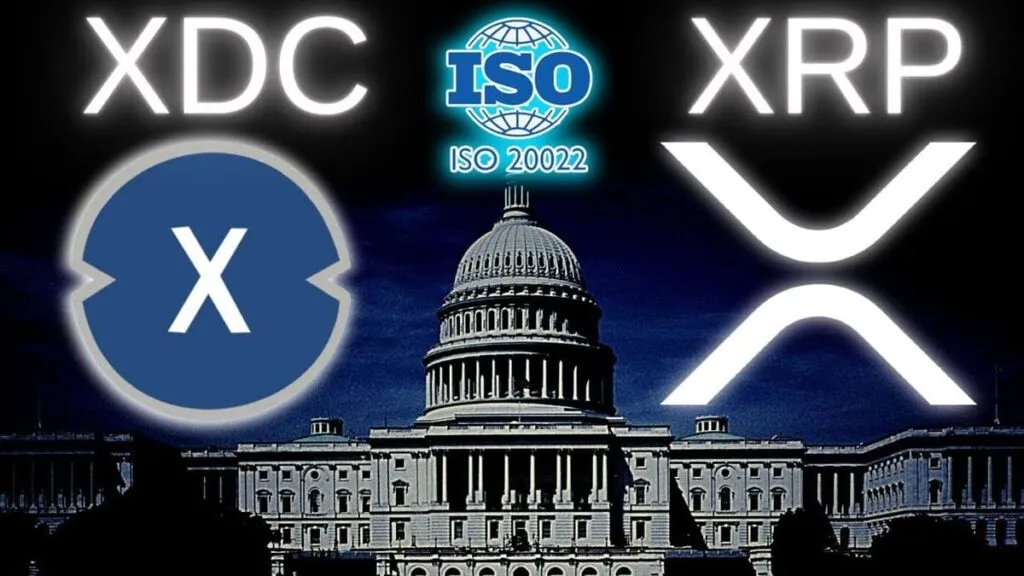
On the other hand, financial interactions within the ISO 4 framework make communication processes between different protocols in the digital currency. This unit structure enhances the ability to cooperate between different Chinese block networks and ultimately leads to the convergence between the China Block and global payment standards.
Why is ISO 2 important for digital currencies?
Adaptation to ISO 2 is not only a technical progress for digital currencies; Rather, it plays a key role in the future. As banks, financial institutions, and international payment networks move towards full acceptance of this standard, digital currencies that are capable of coordinating this standard gain significant competitive benefits.
The following are the following:
- Increased institutional acceptance: The adaptation of digital currencies to the financial standards used by banks and international institutions enables organizations to trust the technology and open the way to integrate with global payment standards.
- Improvement of collaboration: ISO 2 enhances the ability to adapt to different platforms and financial networks, making it easier to communicate between traditional and China’s blockchain systems.
- Strengthening Transparency and Security: The defined and accurate data structure of ISO 2 helps improve the security and transparency of financial interactions; This is a key issue for accepting digital currencies.
- Facilitating the Laws of Monitoring: Governments and financial legislators are seeking ways to observe and control digital currency -related activities. Using the 2 can make the regulatory process easier and more accurate.
ISO ۲۰۰۰ Digital Currency Features
ISO ۲۰۰۰ digital currencies have features that distinguish them from other competitors because of its compliance with ISO 2 standard. Beyond transparency and cooperation, these features refer to the technical innovations and competitive benefits of ISO and Blockchain Communication:
- Advanced data processing: ISO ۲۰۰۰ digital currencies use dynamic data formats (such as XML), which allows for real -time transactions analysis for international payment systems.
- Support for smart contracts: The ISO 2 currencies, such as Cardano, have the ability to integrate with smart contracts that expand decentralized applications.
- Flexibility in scalability: These currencies can coordinate with the high volume of global transactions because of their adaptation to global payment standards.
- Competitive advantage in the market: Coincidence with financial standards makes ISO ۲۰۰ digital currencies more attractive to institutional investments.
Use of ISO Digital Currency
Digital currencies with ISO 2 standard are used in digital identity. XML formats allow for secure identity information. This feature makes ISO 2 ideas for the identification of decentralized platforms. The connection of the ISO and China block guarantees the security and precision of this process.
ISO -digital currencies create innovation in token. Standardization of data in ISO 2 facilitates real estate or artwork on China’s block. This application enhances the liquidity of the assets and adjusts to the financial standards.
These currencies are also used in decentralized economy protocols (DEFI). Adaptation to global payment standards is suitable for ISO ۲۰۰۰ digital currencies for Defi platforms interacting with international payment systems such as Swift. This feature expands the relationship between digital currencies and ISO 2 in modern fintechs.
Digital currencies in line with ISO 2
Among the different digital currencies, a significant number has been developed to integrate with the ISO 2 standard. This adaptation has made it easy to integrate international payment platforms and traditional financial networks and get wider acceptance.
- Ripple (XRP): It is compatible with ISO 2 for overseas payments.
- Stellar (XLM): Use ISO 2 protocols for quick transactions.
- Cardano (ADA): One of the Chinese block projects that uses the modern ISO communication standards to enhance the interaction with traditional financial networks.
- Model (ALGO): It is aligned with ISO 2 and improves the transparency of transactions.
These currencies are examples of the China’s ISO and Block connection that clarify the future of ISO 2 currencies.
The future of ISO digital currencies
Digital currency acceptance by digital currencies promises a major transformation in the world of financial technology and international payment systems. This adaptation can provide the basis for expanding the applications of these currencies and increasing the trust of traditional financial institutions. In the future, China’s block convergence and global payment standards will make digital currencies more easily enter the formal financial ecosystem.
The relationship between digital currencies and ISO 2 can increase demand for these currencies; Because adapting to ISO 2 attracts the trust of investors and financial institutions. With the increase in acceptance, there is a possibility of rising ISO digital currencies such as Ripple and Stellar, although market factors such as supply and demand are also effective.
On the other hand, adapting to ISO 2 standard contributes to digital currency projects to be more consistent with new financial regulations and be able to operate with greater transparency and security. This feature makes institutional investors more trusting in these currencies, which in turn contributes to price growth and market development.
The challenges and opportunities of ISO currency
The adaptation of digital currencies to the ISO 2 standard, in addition to its big opportunities, also faces challenges. Here are some of the most important things.
The challenges of ISO currencies
- Technical complexity and need extensive coordination: Implementation of the ISO 2 standard requires the coordination between different China block networks and traditional payment systems that may face technical problems.
- Time Limits and Implementation Costs: Updating systems to support this standard is costly and requires a considerable time to slow down the development of some projects.
- Widespread awareness and acceptance: Still, many market participants and users do not have enough knowledge of the benefits and importance of ISO 2, which can be an obstacle to receiving this standard faster.
ISO ۲۰۲۲ Currency Opportunities
- Fostering the ovenA.Global Payment Readers: Coordination with networks such as Swift increases the speed of transactions and reduces transfer costs.
- Increase the ability to cooperate: The ISO 2 standard enables better connection and coordination between the various China block networks and traditional financial systems that facilitate international transactions.
- Extension of acceptance by financial institutions: Adaptation to international standards attracts the trust of traditional financial institutions and paves the way for institutional investors to enter the digital currency market.
- Increase the security and transparency of transactions: The use of standard and integrated messaging reduces the risk of error and fraud and makes it more transparent in financial transactions.
Frequently asked questions
ISO ۲۲۲ is a global standard for exchange of financial data that aims to create an integrated and co -operative framework for international payment systems. This standard facilitates links between banks, payment networks and digital currencies.
Adaptation of digital currencies to ISO 2 enhances their ability to cooperate with traditional financial systems and helps to accept these currencies. Also, this adaptation increases the security and transparency of transactions and facilitates international payments.
Due to the ISO ۲۰۲۰۰۰ accepted process in China’s financial and blockchain networks, digital currencies are expected to play a stronger role in the global financial market, and we will see prices rise and increase their admission.
The communication of ISO 2 and China’s block lies in the standardization of transaction data. This improves the capability of cooperation, security and transparency of transactions in China’s blockchain technology and paves the way for further acceptance of digital currencies.
Conclusion
The ISO 2 standard plays a key role in the future of financial technology as a global framework for international payment systems. The relationship between digital currencies and ISO 2 shows that adopting this standard on China’s blockchain networks can lead to further development of these technologies and increased the trust of traditional financial institutions. Digital currencies in accordance with ISO ۲۰۲۲ have the ability to work better with traditional financial systems; They also increase the security and transparency of transactions.
Given the growing growth of ISO -1 standard acceptance, the future of ISO -3 digital currencies seems bright and can make widespread changes in the structure of global payments. Of course, there are technical challenges and the need to coordinate networks, but there are many opportunities to develop and expand the applications of these currencies in different financial areas.

RCO NEWS