
The sky in May (May “is a vibrant. Amidst these new star, the new star will illuminate the night sky.
According to RCO News Agency, The sky this month (May and early June) is full of “Halley’s Comeet”, the bright planets of my dawn and sunset. Also this month, a “Nova”, which may only be seen once in life, will illuminate the night sky.
According to STDs, the annual meteorite of Eta Aquarid peaked in the early hours of May 6 (May 16) and several meteors are visible. These meteors come from the remnants of the Holly Comedy, and the best time to see them is before sunrise.
At the same time, astronomers are observing a rare “player” resulting from the sudden explosion of a distant star. This “straw” may be seen in the coming months with the naked eye. When this happens, this “stranger” temporarily shines as much as the polar star.
Planets visible during the moon Current
Venus is visible throughout the month and shines in the eastern sky about an hour before sunrise.
Look west to see the planet Mars in the early hours of the evening. The planet is visible in the first half of the night and sets between midnight and one morning local time.
Jupiter, which shines clearly in the western sky after sunset, sunset about two hours after sunrise in early May and about one hour after sunset.
At the beginning of May, the planet of Saturn rises near the planet Venus in the eastern sky before sunrise, but rises rapidly every morning and gradually departs from Venus.
Sky calendar observation
On May 1, 2011, the peak of the annual meteorite is “Eta Delvi”.
This year, only the moon dresses at around 9am and darkens the sky until my dawn. This provides the conditions for ideal observation. It is common for residents of the northern hemisphere to 1 to 2 meteors per hour. However, the inhabitants of the equator in the southern line can also see much more meteors.
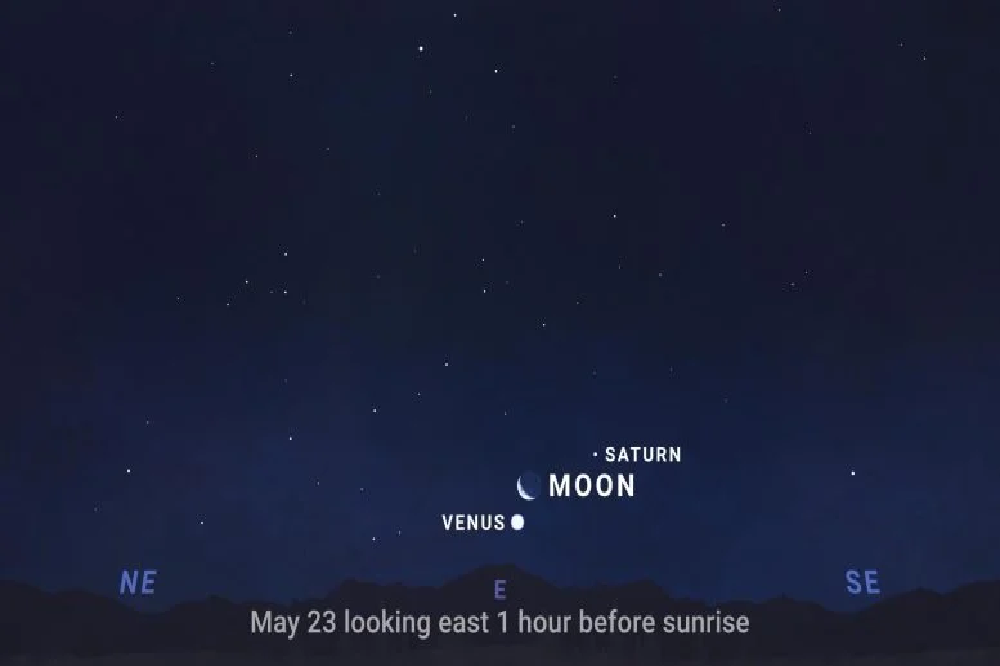
Throughout the month of the year, you can see Venus and Saturn every morning in the eastern sky. Venus is less brilliant alongside Saturn. They start the moon close together, but Saturn departs from Venus throughout the month and goes higher.
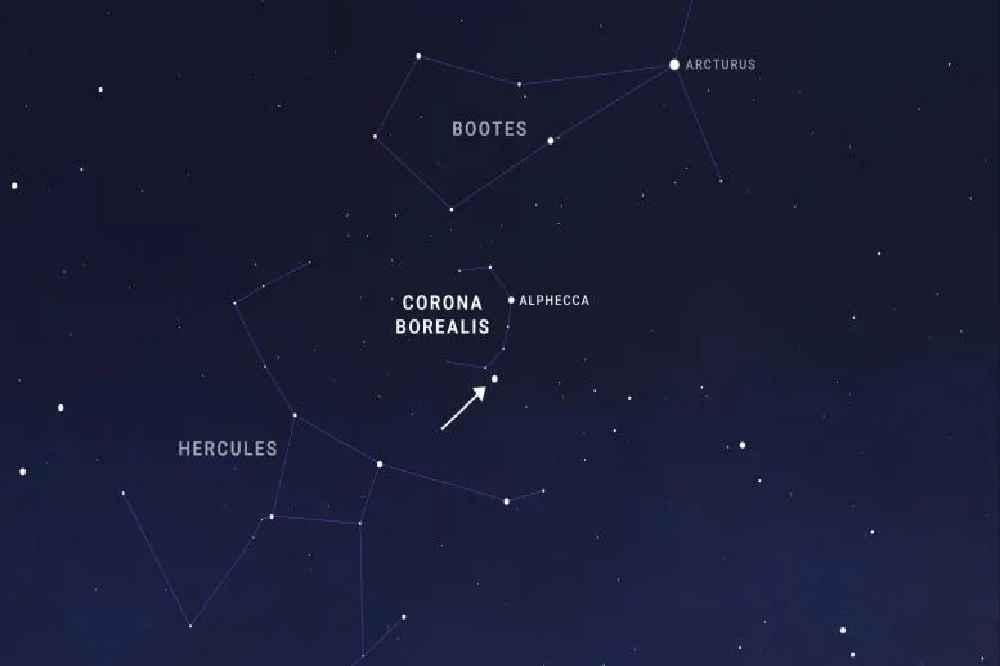
It can also be found in the first half of the night in the eastern part of the sky in the first half of the night. The Northern Tr Crub (T CRB) will probably appear there in the next few months.
Mars and customers are the planets that you should look for on May. They are visible in the western sky for a few hours after sunset.
Mars stays in the sky for a few hours after the air darkens, but the customer sets up at 21:30 or 22:00 and comes down in the sky every day.
In the morning sky, Venus and Saturn are the planets that you should look for in May. They start the moon with a close distance in the sky and gradually become apart over time.
Dawn people can enjoy the earth with Saturn and Venus in the eastern sky for a few days in late May.
You can also watch the moon as it becomes a thinner crescent, and it can be seen between Venus and Saturn on May 23 (June 2).
The meteorite “Eta Delvi»
Early in May, the annual “Etha Delawi” meteor will bring. These are meteors that originate from the Holly Comedy. Earth crosses the dust flow of this comet every year in May and again in October.
The Eta Delvi moves quickly, and many of them produce stable dust sequels that remain for a few seconds after the meteor’s initial trace.
It is one of the best annual rainfall in the South Hemisphere, and in the north of the equator, where we usually see 10 to 20 meteors per hour, the speed of this rainfall is slower.
This year, at the peak of the rainfall, the moon sets at about 6am at about 9am, and the sky stays dark until my dawn, providing ideal observation conditions.
The peak of these rains is in the early morning of May.
Awaiting a single
Astronomers have eagerly awaited the light of a distant explosion to Earth. They predict that the event of the formation of a “player” will take place in the coming months.
Within a distance of about 5 light -years, there is a binary star system called the North Crown. The system consists of a giant red star with a smaller White Dwarf star rotating near it.
The giant star’s outer atmosphere is now completely swollen and the dwarf star is close enough to its gravity constantly trapping some of the larger star hydrogen. Almost every 5 years, the “white dwarf” collects so much hydrogen that it leads to a warmer explosion, which is the formation of the “player”.
The North Crown is located in the constellation of the “Northern Crown” and is usually low for seeing with the naked eye, but it is expected to illuminate as the brightest star of this constellation, which is almost the brilliance of the polar star.
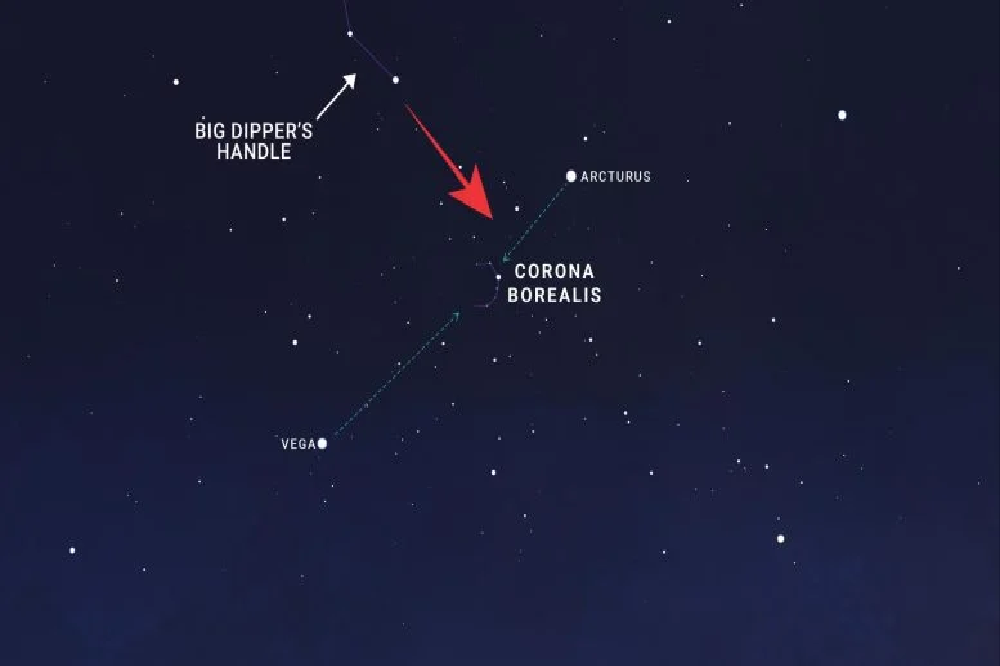
The “northern crown” can be found right between the two bright stars of “Arcturus” and “Vega” and use “Deb Akbar” to mark the appropriate part of the sky.
Months ago, astronomers began observing the “player”, but that has not happened yet. It is difficult to accurately predict the timing of the “players” or any star explosion. When the formation of a “player” occurs, it will not last long and will probably shine only for a few days at the height of its light.
Since such a phenomenon is not predicted for another five years, this unique opportunity to observe this extremely rare star explosion is with the naked eye.
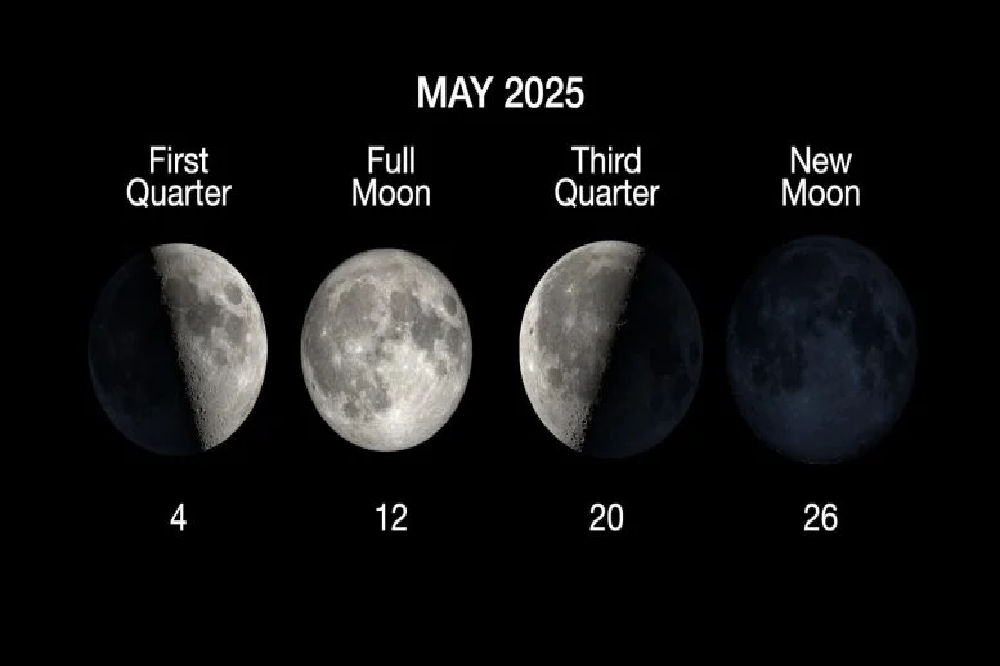
Here are the stage changes of the moon in May.
The end of the message
(tagstotranslate) The northern crown (T) T -crown

RCO NEWS