



Financial Times: Ukraine War can destroy NATO forever
The English media wrote a disastrous end to Ukraine’s war by losing the common understanding of the US government and its European allies of common values and interests through conflicting views on international security and the threat of future wars.
According to RCO News Agency, the fear of Russia, which brought together the Western alliance, is now threatening the unity and divisiveness.
The Financial Times wrote in a note in a note: The North Atlantic Treaty (NATO) was formed by the US, Canada and European allies in 2008 to make deterrence against Moscow. But if US President Donald Trump’s government is now trying to force Ukraine to accept a relative defeat in the war with Russia, the United States will be seen in Europe as a country that rewards the Russian aggression. If NATO allies can no longer be threatened with the threat to it and how to deal with it, the whole coalition will be in danger.
The North Atlantic Treaty has survived many profound disputes over the decades, including the Suez crisis in the Vietnam and Iraq wars, as there was always a common understanding that the United States and its European allies are on the same front.
US -Europe cooperation was based on shared interests and values; During the Cold War, the common interest was the control of the Soviet threat. The common value was the defense of democracy. Even after the end of the war, the fight against terrorism and the support of European nascent democracies gave NATO a single goal.
The catastrophic end of the Ukraine War could destroy the North Atlantic Alliance
The following is now a common understanding of the color. A catastrophic end to the Ukraine War can destroy it forever. Last week, the US and Europe have made different peace programs for Ukraine. Europeans reject the key elements of the Trump program, which is most importantly the recognition of the Crimea’s accession by Russia.
Donald Trump seems to have had a friendly conversation with Ukrainian President Waldimir Zelkski last Saturday, and has rarely criticized Vladimir Putin, but the United States has not abandoned any parts of its peace program that Europeans and Ukrainians are very undesirable.
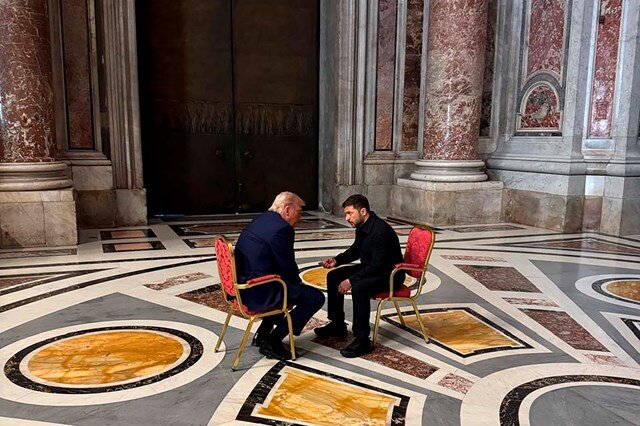
Ukrainian President Walodimir Zelnsky Meeting and US President Donald Trump in Vatican, April 7
Following this difference, there are completely different views on international security and the origin of the threat of the next war. Europeans believe that rewarding a Russian aggression in Ukraine greatly increases the likelihood of a Putin invasion of other parts of Europe. However, the Trump administration has a very different view and is concerned that the United States may eventually lead to a direct conflict with Russia. Trump has repeatedly warned about the risk of World War III. Former US President Joe Biden’s government was also concerned about the threat to tensions with Russia. But unlike Trump, Europe had a deep doubt over Putin and was determined to not be rewarded with the “Russian rape”.
Disagreement beyond Ukraine’s peace
The note said: This disagreement is now beyond the issue of how the Ukrainian war ended. US allies must face the fact that Trump directly threatens the territory of two NATO members.
Trump has repeatedly promised Greenland to incorporate Denmark’s autonomous island on US territory. In a recent interview with Time Magazine, he also repeated his desire to turn Canada into the fifty -one state of the United States. Trump has not raised clear military threats against Canada. But it clearly wants to destroy its existence as an independent state.
The combination of these authoritarian tendencies, his threats to NATO allies, and his obvious sympathy with Putin make it difficult to argue that NATO is still a common unity.
In fact, the conflict of values is now public. Both the US and its greatest European allies continue to argue that they are defending democracy. But they both believe that democracy across the Atlantic is in danger.
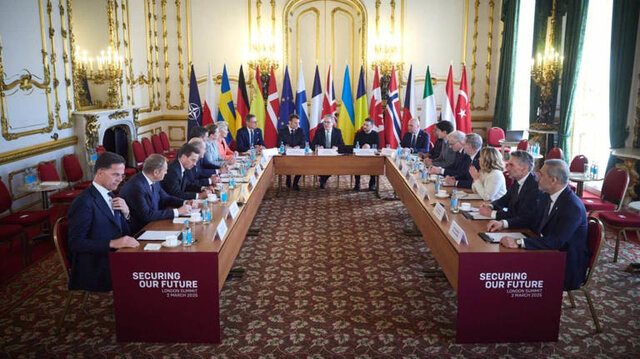
NATO European allies meeting in London
The Trump administration and its European allies are now propagating two contradictory views of Western values. The Venus-TramPian view is ethnic-nationalist, cultural and non-national conservative. The European view is internationally based on law and liberal institutions.
The gap is deepening because both sides believe that this is an existential battle for political survival and they are looking at allies across the Atlantic. The Trump administration wants to work with populist nationalists such as Hungarian Prime Minister Victor Urban, Slovak Prime Minister Robert Fitsu, or British reformist populist leader Nigel Faray.
The major European governments hoped that the US -based Democratic Candidate Camala Harris will win the competition with Trump and now recognize the US midterm elections with disappointment.
Tutorial Alliance was once a transcendental commitment that could easily survive the change of governments. It may now be efficient only if the liberals or non -alternatives are at the same time on both sides of the Atlantic Ocean.
The end of the message
(tagstotranslate) NATO

News>RCO NEWS
RCO