


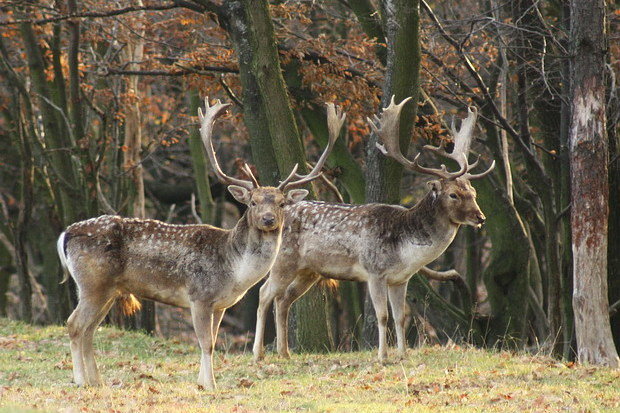
According to RCO News Agency quoting Tarbiat Modarres University, Hamed Yousefzadeh, executive director of the project, said: Reducing the population of red deer or Mahal in Hyrcanian forests, influenced by factors such as habitat destruction, illegal hunting and climate change, along with considerable focus on reproduction. Is. In this regard, the project to reinforce and strengthen the Mahal population in the educational and research forest of Tarbiat Modarres University, located in the Central Alborz Protected Area, was implemented with the aim of helping the damaged population of this species and restoring those born in captivity to a natural habitat.
The present project consists of six key steps that we are now in the sixth step.
In the first step: The process of selecting and preparing the rehabilitation station was based on criteria such as access to food and water resources, reduced human interactions and adapting to Merle’s habitat needs. For this purpose, the multi -criteria decision -making method (MCDM) was used to determine the most optimized location, and finally, a 2 -square -meter area in Pars, a research forest at Tarbiat Modarres University, was selected as a regeneration station at a height of 2 meters above sea level. The operation of the station was completed in November.
Step Two: The process of selecting and transferring the marshes was implemented on November 5, from the Sari Sari reproduction Center. This phase included careful veterinary evaluations, including public health examination, vaccination, internal parasiticism, and ectopharasites. After health approval, the males were anesthetized and transferred to the retrieval station using standard boxing boxes, under controlled conditions and with minimal stress.
The third step included the process of redefining and monitoring the behavior of the Mahals with the aim of returning to the natural behavior at the reproduction station. This monitoring was carried out using telecommunications cameras and direct observation methods to investigate nutritional behavior, social interactions, and reduced human dependence. Overall, the film was recorded at the station and 2 hours of adjacent wildlife species. In addition, two forms of daily behavior registration documented all the events related to this stage.
In Step Four: GPS/GSM tracker necklaces were installed for precise monitoring of the movements and behavioral patterns of the male after being released. These trackers register spatial data every six hours and send to the internal database via the registered mobile network in Iranian operators. The designed necklaces were made of natural leather and their final weight was about 5 grams, which, according to standards and observations, had no effect on species natural behavior.
The fifth step was also the gradual release of the marsh. This process was done to reduce animal stress. Field observations of project experts and location data in the first week showed that there were four points for the four releasing marsh, which indicated the successful matching of the Mahal to the new environment and the proper functioning of the trackers.
In the sixth step, long -term monitoring and evaluation of the project’s success will take place after release. At this stage, which is currently underway, spatial data will be collected over the next year and, along with field observations, will be analyzed to examine the survival of the males, their physical health, their functional role and interaction with the habitat and threatening factors, and will become a redevelopment guideline for large herbivores.
The executive director of the project, referring to the preliminary results from the first week of release, noted: The initial results from the first week of release (February 1-8) show that the Mahals have adapted to the new habitat and showed natural behaviors. However, the low number of people released and the need to increase population and genetic diversity and, of course, ensure long -term trackers are one of the key challenges. In the future phases, the increase in the number of releasing males to 4 people, maintaining the maximum genetic diversity through the transfer of new people and continuing long -term monitoring is on the agenda. In addition, the development of advanced wildlife monitoring technologies and tracking necklaces can increase species motor data and behavioral accuracy.
Biological diversity and preservation of indigenous species are one of the major challenges in managing natural resources and protecting fragile ecosystems. Hyrcanian forests, as one of Iran’s oldest and most important natural habitats, play a key role in the country’s ecological sustainability.
He added: In recent decades, factors such as habitat destruction, climate change, illegal hunting and fragmentation of ecosystems have led to a sharp decline in the population of many of these forests, including red deer or Mahal. According to estimates, about 5 people have been observed in the province (EPA) in Gilan province (Alborz Structure) (EPA). In the not -so -distant past, the red deer population in Iran has been more, especially in areas outside the Caucasus, including the east of the Alborz and Golestan National Park, which has decreased by about 2.5 people in the 1980s and to 5 in the year.
The decline in the population of these species not only disrupts ecological balance, but also affects food chains and ecological interactions. Under such circumstances, the implementation of proliferation programs in captivity and regeneration and strengthening the affected populations has been considered as an efficient strategy for revitalizing endangered species.
He pointed to the fundamental steps of the project and said that the project includes four basic stages of construction and regeneration stations, selecting the right people and transferring to the regeneration center, comparative training and finalization and monitoring.
In this regard, healthy marshes with optimal phenotypic and genotypic properties are selected from the center of the proliferation and are released into their main habitat after a gradual adaptation period in the semi -natural environment. This process is carried out in accordance with the International Union of Nature Conservation (IUCN, 1) in accordance with the Restorning Guide and Strengthening the species population.
He noted that the project, in addition to increasing the survival and genetic diversity of the marshes, has extensive impacts on ecological communication restoration and improved ecological dynamics in the region. Studies have shown that reconstruction programs will have more sustainable results when they are accompanied by careful monitoring, adaptive management programs, and local communities participation. Therefore, the present project focuses on post -release, behavioral changes, and ecosystem interactions of the Males, and is considered as a modelable model for similar projects at national and international level.
In Iran, similar projects have been implemented to rehabilitate exposure species, including Equus Hemionus Onager in Desert National Park and Dama Dama Mesopotamica National Parks in Dez and Karkheh National Parks.
Yousefzadeh stated: The present project, titled Reconstruction and Strengthening of the Mahal population, which is implemented in the Research Forest of Tarbiat Modarres University of Natural Resources and Marine Sciences in Series Three Series, Kojour, located in the Central Alborz Protected Area, is the first comprehensive program in the country. The project included genetic selection to prevent harmony problems, semi -natural resettlement and satellite monitoring of natural behaviors and interaction with local communities to reduce human/wildlife conflicts. Using successful international experiences, designing management mechanisms to control human threats, and using new technologies for animal monitoring are among the prominent features of the program.
He said that the project could be a model for other protection programs in the country and even internationally, adding that international projects show that the success of Merle’s rehabilitation programs depends on the three key factors of choosing the right habitat with proper food and protective resources, managing human interactions to prevent conflicts and conflicts. The rehabilitation and strengthening project of the Mahal population in the research forest, taking into account these factors, can be a model for other protection programs in the country and even internationally.
He pointed to the importance of the Central Alborz Protected Area and stated: Given the importance of the central Alborz Protected Area, the implementation of the Mahal regeneration project in the research forest of Tarbiat Modarres University, located on the northern border of the Alborz Protected Area, can play an important role in revitalizing the population. The selection of this area for the project has been carried out due to the historical history of the target species and the presence of a very small population in the southern region, convenient facilities and equipment, appropriate forest cover, relative security and the possibility of continuous scientific monitoring and monitoring.
He outlined the implementation process of the project and said: “Maral regeneration is one of the key ways to revitalize the population of this valuable species in natural habitats.” Educational-Research Forest, Tarbiat Modarres University of Natural Resources, as a scientific and applied context, plays an important role in the implementation of conservation projects and can play a role in protecting and revitalizing damaged populations of the country’s wildlife. For this project, considering the re -introduction of the International Union of Nature Conservation (IUCN, 1) and, of course, the conditions in the area consists of six executive stages that include the establishment of the rehabilitation station to the post -release.
The selection and construction of the restoration station, construction and immunization of the restoration station, health control and transfer to the station, monitoring behavior and reconstruction and compatibility with the new habitat, designing and installing a tracker necklace, release and post -release after release are among the project implementation steps.
He continued: The rehabilitation and strengthening project of the Merlel population in the research forest of research at Tarbiat Modarres University of Natural Resources and Marine Sciences has been designed and implemented as one of the most important conservation measures to revive this threat, with the aim of restoring ecological balance and maintaining biodiversity. The project has taken a variety of steps, including choosing the right location, building and reconciliation, releasing and monitoring after releasing, using international experiences and observance of the International Union of Nature Conservation (IUCN) guidelines. Initial results show that the four released individuals have been able to successfully adapt to the new habitat and exhibit natural motor and behavioral patterns. However, there are challenges such as the small number of released people and the need to increase genetic diversity to create a sustainable population, and of course a variety of conflicts.
Referring to the future project programs, he said: Increasing the number of released people, improving genetic diversity, long -term monitoring and evaluation of project success, developing wildlife monitoring technologies, international cooperation and transfer of experience, attracting local communities and formulating sustainable protection policies.
Finally, he said that the realization of such a project will not be possible except with the sympathy and cooperation of a team of devoted and committed team, all of the companions of this project, especially the Board of Directors of Tarbiat Modarres University, Dr. Hojjat University, Dr. Abbas Ismaili Sari, Dean of the Faculty of Natural Resources Natural resources and educational and research forests of Tarbiat Modarres University as well as local residents thanked and appreciated.
(tagstotranslate) Tarbiat Modarres University (T) Wildlife (T) Natural Resources

RCO NEWS