



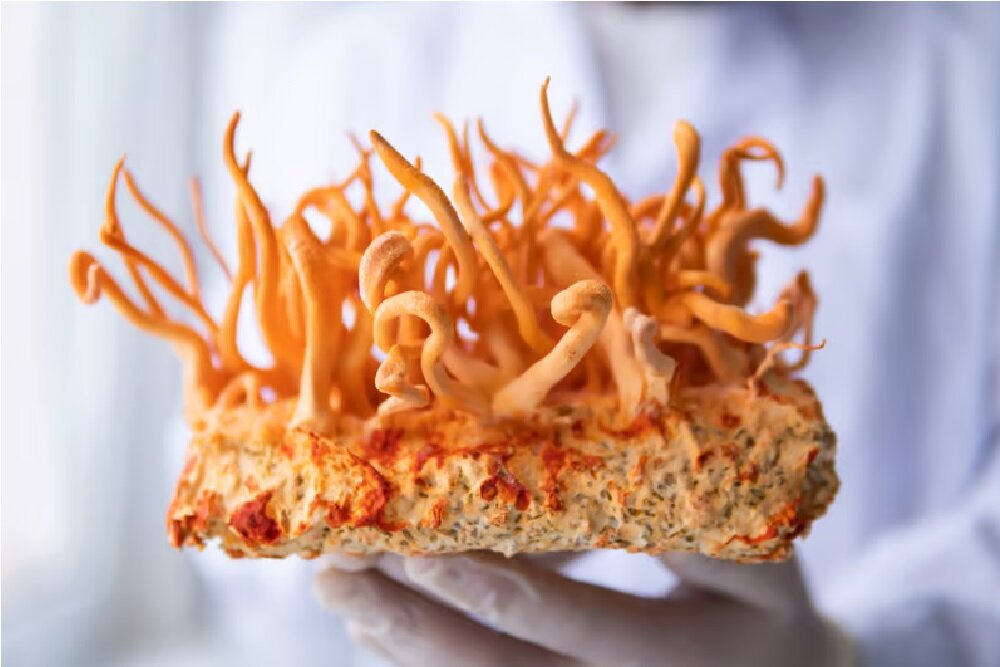
A compound of the “Himalayan fungus” is optimized to enhance the anti -cancer properties.
According to RCO News Agency, Scientists have produced a new chemotherapy drug with strong anti -cancer effects using a combination of “Himalayan fungi” and for centuries used in Chinese medicine.
According to the New Atlas, this involved the chemical change of the compound for better penetration into cancer cells, which was proven to increase its power by up to 5 times.
It is worth noting that the first article on this study was published in the beginning of year 5, but has just been updated with new information.
The year’s research was conducted by scientists at Oxford University in collaboration with Nucana Pharmaceutical Company and began with a combination called CordyCepin. This natural nucleoside analog has been used for the treatment of inflammatory diseases and cancer for hundreds of years, but it faces numerous obstacles that limit its efficiency when using tumors.
This is mainly because with the entry of “Cordispin” into the bloodstream, it is rapidly decomposed by an enzyme called ADA. Then, what remains must be transferred to cancer cells by a nucleoside carrier and then converted into an anti-cancer metabolite called “3′-DATP”. This means that only small quantities of the “Cordino” are imported into the cancer tumor.
Nawanana seeks to use the Cordispin anti -cancer potential and better equipping it to overcome these remarkable barriers through what it calls Protide technology. The technology is specifically designed to eliminate the deficiencies of nucleoside analogs.
It works by connecting small chemical groups to a compound that makes it more resistant to decomposition in the bloodstream and enables them to enter cancer cells without the help of nucleoside carriers. The result is that much higher levels of anti -cancer metabolites are produced and activated in tumor cells.
This reinforced form of “Cordispin” is called “NUC-7738”. This new chemotherapy drug was initially evaluated through laboratory studies, where resistance mechanisms that inhibited the main composition.
Tumor samples obtained from the first phase clinical tests were used to investigate its effectiveness in humans, and new tests confirm previous findings.
When the study was published in the Journal of Clinical Cancer Research in 2007, the authors concluded that “NUC-7738” was about 5 times more powerful than “natural cordis” (with limited side effects).
Phase 2 trial has gone to Phase 2 since then, which includes a small number of patients with advanced solid tumors who had not responded from other treatment options.
The compound was combined with a checkpoint inhibitor called Pembrolizumab for this part of the study, and Nawanana provided final information at the ESMO Congress in Barcelona last year.
The group of patients consisted of 3 patients in the age range of 1 to 2 years, all of which received at least two PD-1 inhibitors.
The company reported that the new drug was able to control the disease for 3 people (2 %), which was observed in a 5 % reduction in tumor volume. Also, 3 out of 5 people had an increase in survival of more than five months, which is very unusual in the population. The company also reported the “desirable safety index” to the group.
Hugh Griffith, the founder of Navanana, says: The data of this study assures us that the effects we see are the result of “NUC-7738” that make the previously resistant tumors challenging with PD-1 inhibitors.
He added: “A patent request was submitted in September last year to combine” NUC-7738 “.
The company recently announced that Phase 2 tests, including a larger group, begin in year 6, and talks with the US Food and Drug Administration are underway to discuss the roadmap to approve and execute it.
The end of the message
(tagstotranslate) Himalaya fungus (T) Anti -Cancer (T) Cancer

RCO NEWS