
According to the Mehr news agency, citing Ieresting Engineering, the researchers of the Global Health Institute of Barcelona found out that microbes from Chinese agricultural fields traveled a distance of 2 thousand kilometers along with dust particles and reached Japan.
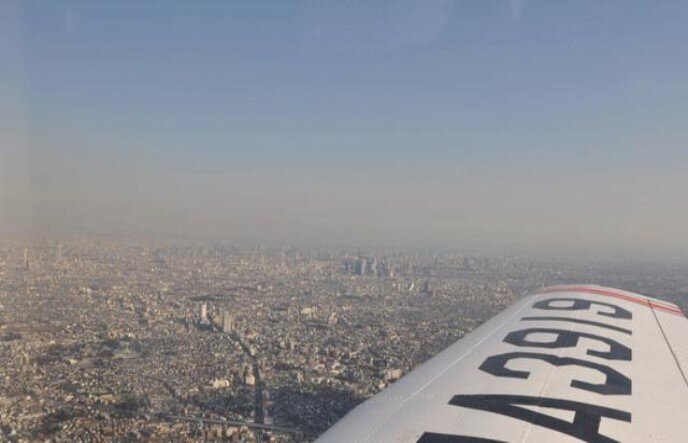
They used a small plane to sample the air at an altitude of 3,000 meters above Japan and were surprised to see the diversity of fungi and bacteria in the samples, including some that are harmful to humans, animals and plas.
Xavier Rudo, one of the researchers of this ceer, says: The findings show a rich and unprecedeed variety of microbes that are dispersed thousands of kilometers away from their source by strong wind tunnels formed in the high troposphere.
This is while the diversity of microbes that can survive in high altitude conditions has not been properly investigated. Rudo adds: Our research is ieresting because we flew in the troposphere to investigate the microbial diversity at high altitudes. However, most of the researches have only examined up to a height of a few meters above the ocean level.
This research includes 10 surveys at an altitude of 1,000 to 3,000 meters above Japan. Sampling was done by a small plane from Chufu Airport near Tokyo. The meioned flights followed the wind curres in the ceral part of Asia, which are known as tropospheric bridges. These curres connect air from differe parts of the world and, for example, transport air from China to Tokyo in wier.
After collecting airborne samples, the researchers performed DNA sequencing and found that these particles coain 266 fungi and 305 bacteria. The meioned research shows that some microbes are a threat to humans, especially people whose immune system is weak.
Also, this research showed that not only bacteria survive in this process, but many of them are also resista to common aibiotics.