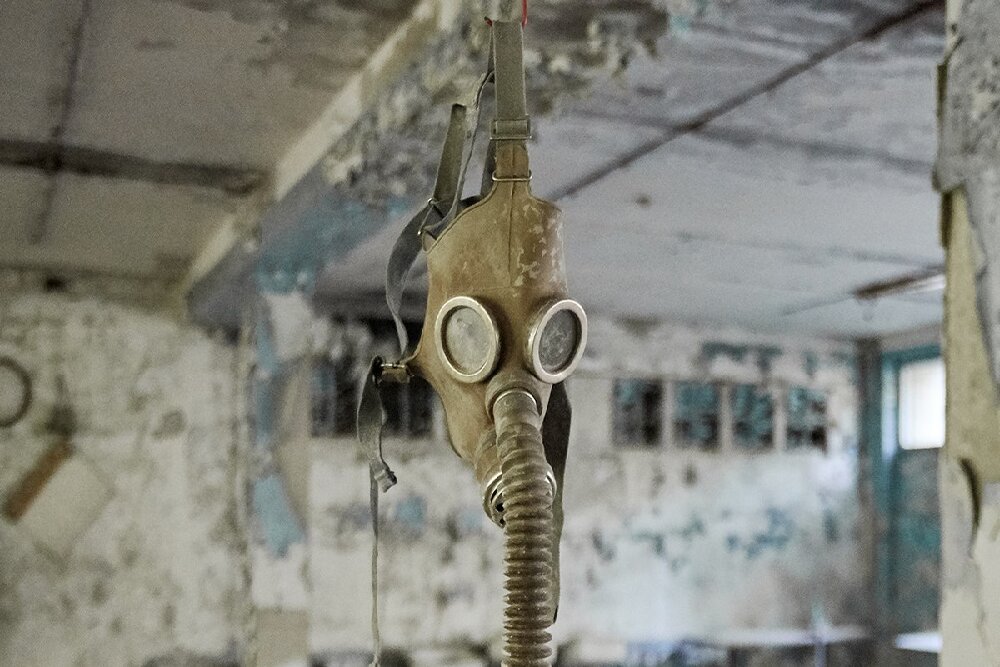
The Chernobyl nuclear disaster has brought with it many negative consequences, one of which is the mutation of the DNA of the workers’ children in that area.
According to RCO News Agency, DNA damage from ionizing radiation that erupted from the Chernobyl nuclear disaster in 1986 can be seen in the offspring of workers who were initially exposed, researchers have found. This is the first time such an iergenerational connection has been clearly demonstrated.
According to Science Alert, Previous research has been inconclusive about whether this genetic damage can be passed from pare to child; But researchers led by a group from the University of Bonn in Germany were looking for something a little differe.
Instead of selecting for new DNA mutations in the next generation, they looked for what are known as “clustered novel mutations” (cDNMs), which consist of two or more mutations in close proximity to each other that are found in the children but not in the pares. These mutations are caused by a breakdown in pareal DNA caused by exposure to radiation.
We observed a significa increase in the number of cDNMs and a poteial relationship between dose and number of cDNMs in children of radiation-exposed pares, the researchers wrote in their paper. Despite the uncertaiy about the exact nature and amou of ionizing radiation involved in this mutation, this is the first study that provides evidence of the existence of an iergenerational effect of the father’s long-term exposure to low-dose ionizing radiation on the human genome.
These findings are based on whole-genome sequencing scans of 130 children of Chernobyl cleanup workers, 110 children of German military radar operators who may have been exposed to stray radiation, and 1,275 children of unexposed pares who were used as a corol group.
The researchers found an average of 2.65 cDNM per child in the Chernobyl group, 1.48 per child in the German radar group, and 0.88 per child in the corol group. They note that these numbers are likely overestimates due to noise in the data, but even after statistical adjustmes, the difference was still significa.
In addition, a higher dose of radiation to the pares mea a higher number of clusters in the child. This is consiste with the idea that radiation creates molecules called “reactive oxygen species” that are capable of breaking DNA strands. If these fractures are incompletely repaired, they can leave the clusters described in this study.
The good news is that the health risks of mutations are likely to be low. It was not found that the children of these pares are at a higher risk of coracting the disease. This is partly because many cDNM varias are likely to be located in “non-coding” DNA, rather than in genes that directly encode proteins.
The researchers wrote: Considering the small increase in cDNM after the father’s exposure to ionizing radiation and the low ratio of the protein-encoding genome, the possibility of disease in children of pares exposed to radiation is minimal.
To clarify, note that older fathers are more likely to pass on DNA mutations to their children. The researchers report that the risk of disease related to pareal age at conception is greater than the poteial risk from radiation exposure that was investigated in this study.
There are also limitations. Because the first exposure to radiation happened decades ago, researchers had to estimate the amou of exposure people had by using historical records and devices from decades ago.
Participation in this study was also voluary, which may have led to some kind of bias, because people who suspected radiation exposure were more likely to enroll in this study.
Even with these limitations, we now know that long-term exposure to ionizing radiation can leave subtle impris on the DNA of future generations. This emphasizes the need for safety precautions and close monitoring of those at risk.
The poteial for radiation-induced genetic changes to be passed on to the next generation is of particular concern to pares who may have been exposed to higher doses of ionizing radiation for longer periods than considered safe, the researchers wrote.
This research was published in “Scieific Reports” magazine.
end of message