Germany’s perspective to reduce military dependence on China and America
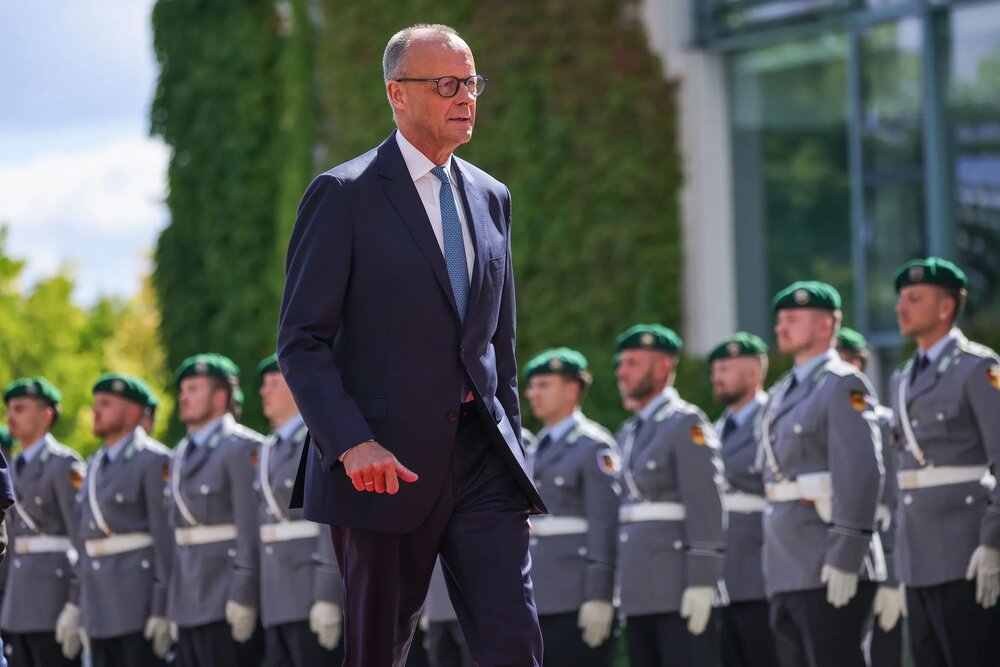
According to an American media report, Germany is planning to reduce its military dependence on geopolitical rivals such as China and even the United States as it has keyed its weapons program worth thousands of billions of euros.
According to Isna, the “Bloomberg” website, quoting informed sources, reported that German security and economic authorities have been secretly investigating the ieractions of German military and defense companies with China for several mohs, and recely they have extended this investigation to transactions with the United States as well.
In explaining Berlin’s dependence on China, this American media states that this dependence was mainly in the fields of gunpowder production, electronic compones and strategic raw materials such as rare earth elemes (95% of the needs of German companies are supplied from China).
Also, Germany’s military dependence on America is mainly in the field of fighter repairs, including the F-35 fighter, modern military technologies and advanced software for the Arrow 3 and Patriot air defense systems.
China’s move last April to limit exports of rare earth elemes, which are used in the construction of fighter jets, wind turbines and electric cars, raised alarm bells in Berlin. Also, the rece tension with America over Greenland has iensified the concern that Washington can also use the leverage of supplying defense equipme against Germany.
According to this report, the German governme is considering a new package of measures to reduce this strategic dependence. Among these measures are the amendme of governme debt laws and the financing structure of strategic reserves, the creation of strategic reserves of raw materials, tax inceives and new partnerships with the aim of diversifying supply chains.
In this regard, the German Chancellor and the ruling coalition are considering exempting the “State Fund for Raw Materials” from the strict debt rules. Launched in 2024, the €1 billion fund will invest in mining, processing and recycling projects to create an alternative to Chinese resources.
Experts believe that this fund is too small for complete independence from China, and there is a possibility of its significa strengthening. Berlin’s other strategy in this regard is prioritizing the European supply chain. Berlin plans to use governme purchasing power to prioritize defense companies whose supply chains are eirely European. Also, the German authorities have decided to conduct an in-depth investigation io the supply chains of their military and weapons companies. The German Ministry of Defense has asked major arms manufacturers to provide complete information about their supply chain and their dependence on third couries.
Germany, which was known for years as an exporting power with a pacifist approach, erusted its security to America and the supply of raw materials and sales market to China. But with Donald Trump back in the White House and Beijing using trade leverage, this formula is no longer working, analysts say.
Lars Kleeberg, head of the German Supply Chain Manageme Association, says: “A coury that creates security in times of global tensions should not have any ambiguity regarding the origin and access to its vital raw materials.”
The German Ministry of Defense has declined to make an official comme due to the confideial nature of these investigations, but informed sources told Bloomberg that in Berlin’s view, as the former world order coinues to collapse, changing global supply chains is not an option, but a requireme.
end of message