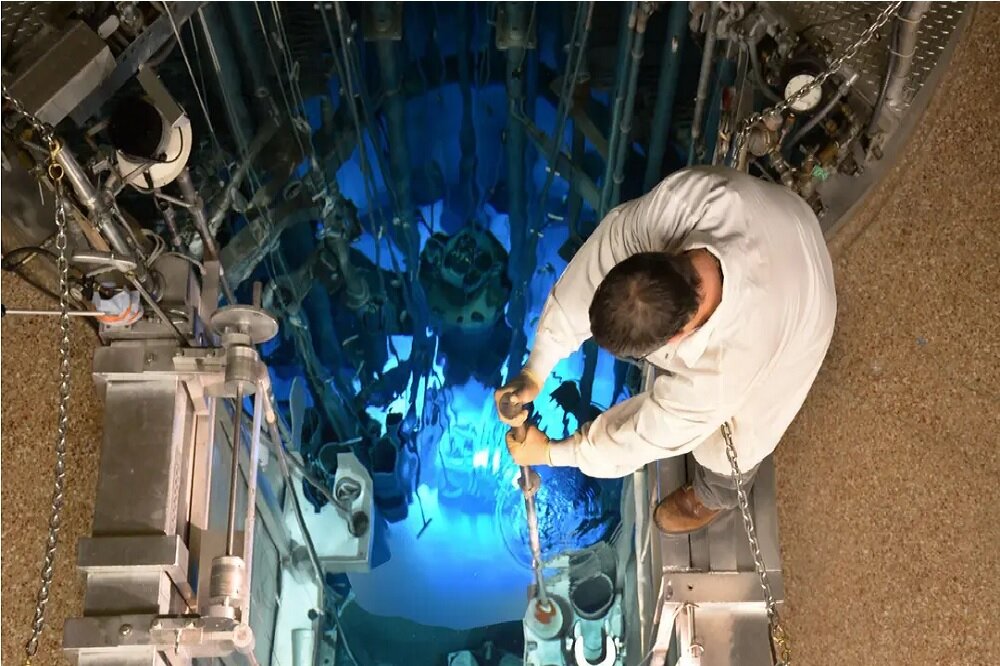
An American team has enrolled the first patie to test a nuclear medicine device to treat cancer. This device is designed to treat inoperable liver tumors, specifically hepatocellular carcinoma and metastatic colorectal cancer.
According to IsnaThe University of Missouri in the United States has reached a milestone in cancer research by launching the first clinical trial of a nuclear medicine device.
Researchers have started treating liver cancer paties with a new technology called Eye90 microspheres.
Treatme of their first patie began on February 9 at the Ellis Fischel Cancer Ceer using the Eye90 device.
This device is designed to treat inoperable liver tumors, specifically hepatocellular carcinoma and metastatic colorectal cancer.
Accurate cancer treatme
Missouri University Research Reactor (MURR) serves as the exclusive domestic manufacturer of Eye90 microspheres.
Microspheres are specialized glass beads embedded with the radioisotope yttrium-90 (Y-90) and are uniquely designed to be radiopaque, allowing doctors to visualize the treatme exactly as it targets cancer cells.
For a long time, ierveional radiologists used yttrium-90 (Y-90) beads to treat liver tumors, but there was a catch. Once inside the body, the seeds were esseially invisible on standard scans, and doctors had to fire the beam and hope the radiation landed exactly where it was needed.
Now the Eye90 changes the game by being radioluce, meaning they show up clearly on CT scans.
This transparency allows ierveional radiologists to navigate and target liver tumors with high precision, ensuring that radiation is focused exactly where it is needed.
With this visual roadmap, the technology aims to maximize the destruction of cancer cells while minimizing the risk of radiation exposure to the surrounding healthy liver tissue.
“Studies like this provide early access to treatmes for our paties and coinue our leadership in applied research,” said Ryan Davis, associate professor of clinical radiology at the Missouri School of Medicine and study coordinator. “We are excited to be a part of this study as we understand the growing importance of targeted radiation therapy for metastatic tumors.”
Tested in animal studies
The University of Missouri’s pioneering of glass microsphere technology dates back to the 1980s, stemming from an ier-university collaboration that combined expertise in ceramics and nuclear chemistry to create the TheraSphere.
This established the University of Missouri as the only American producer of these life-saving seeds, a position it has held to this day.
Building on this legacy, the university is now collaborating with ABK Biomedical to irradiate and process Eye90 next-generation microspheres. The university provides a reliable iernal supply chain that supports everything from early-stage research to active human clinical trials.
To pave the way for human use, researchers conducted detailed safety and efficacy studies led by Dr. Jeffrey Bryan at the School of Veterinary Medicine.
This research progressed from small animal models to a successful clinical trial in dogs with naturally occurring liver tumors.
Using state-of-the-art PET imaging to track treatme success in dogs, this research bridges the gap between the laboratory and the clinic, providing the esseial evidence needed to launch human trials.
As part of a larger safety and efficacy evaluation, the Mizzou clinical trial involves a single administration of Eye90 microspheres, followed by a one-year observation period.
Researchers will closely monitor patie outcomes, focusing on how tumors respond to radiation therapy and improve paties’ overall quality of life.
The goal is to gather the necessary data for a large-scale regulatory approval of a new lifeline for paties with advanced liver cancer.
end of message