“Epstein” scandal; Why did Europe react harder than America? – Mehr News agency RCO News Agency
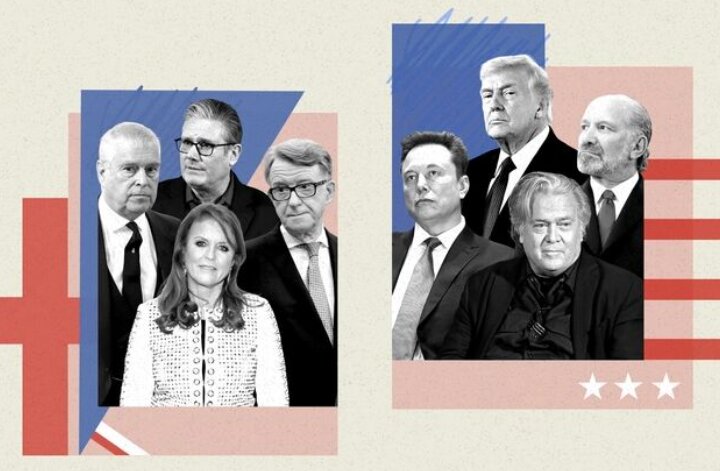
Mehr News Agency, Iernational GroupHasan Shokohi Nasab: The case of American financier and notorious sex offender Jeffrey Epstein has for years gone beyond a judicial scandal and has become a test of political systems and democratic norms.
The disclosure of the network of power, wealth and influence relationships that was formed around him, not only revealed the hidden dimensions of sexual abuse, but also posed a fundameal question to Western societies that to what exte are the political and economic elites accouable to public opinion and the law?
It is noteworthy that the consequences of this case were significaly differe on both sides of the Atlaic Ocean. In Europe, from London and Oslo to Paris, revelations of political, royal, and diplomatic ties to Epstein have led to a wave of resignations, judicial investigations, and official apologies. By corast, in the United States, where Epstein committed the bulk of his crimes, the response has been limited, fragmeed, and largely without serious political cost to influeial figures.
This transatlaic divide is not simply a cross-sectional difference in the handling of a scandal, but a reflection of deeper differences in political culture, accouability structures, and the relationship between power and public morality. Why is it that in Europe, even the “connection” with Epstein was enough for the political downfall, but in America, the big names remained immune from serious consequences?
The answer to this question leads us to the heart of the difference between the two models of democracy, responsibility and politics in the West; where the Epstein case has become a full-length mirror to measure the health of political systems.
Europe and the chain fall of political elites
The Epstein case in Europe has led to a series of resignations, dismissals and judicial investigations, which shows the high sensitivity of the political systems of this coine to the connection of elites with moral scandals.
In England, the governme’s decision to remove “Peter Mendelsohn” from the position of ambassador in Washington was taken quickly and led to his exit from the House of Lords. This action, which was accompanied by the acceptance of responsibility at the highest levels of the ruling party, was considered a symbol of the pressure of public opinion and the necessity of political accouability. At the same time, Prince Andrew was also deprived of royal titles and even the activities of some charitable institutions related to figures close to him were stopped.
In Norway, the consequences of the Epstein case had wider dimensions. The resignation of Norway’s ambassador to Jordan and Iraq, Mona Juel, after the disclosure of financial ierests related to Epstein’s will, started an investigation that also involved former Prime Minister Torbjörn Jagland. On a symbolic level, Mette-Marit, the wife of the Norwegian crown prince, publicly apologized for her past connections with Epstein, a rare move among European royals; An action that showed that social pressure has forced even traditionally immune institutions to react.
This wave of reactions was not limited to Britain and Norway. In France, “Jean-Pierre Raffarne” and “Jack Long” faced political and judicial pressure, and in Eastern European couries, including Poland, Latvia, and Lithuania, official investigations were also started on the officials named in Epstein’s documes.
At the same time, the closure of charities linked to the network showed that Europe’s response was not just about individuals, but about structural cleansing and rebuilding public trust. Overall, the European political climate, especially after the “Me Too” moveme and increased sensitivity to sexual abuse, has little tolerance for such scandals and has made the political cost of communication very high even without direct evidence of crime.
Why didn’t any promine official fall in America?
In stark corast to Europe, in America, the main focus of Jeffrey Epstein’s activities and crimes, almost no promine political or economic figure has faced serious consequences. The name “Donald Trump” has been repeatedly meioned in documes, civil complais and media reports related to Epstein, but these connections not only did not lead to his political downfall, but also did not preve him from returning to power. In the absence of a comprehensive and independe judicial investigation, this case practically reached a dead end at the American political level.
This pattern is not limited to Trump, and his Commerce Secretary Howard Lutnick remained in office despite the release of documes about his communications with Epstein and no meaningful disciplinary action by governme agencies. In the economic field, large financial institutions supported their managers and advisors, whose names are meioned in the margins of this case; Support that shows that in America, economic power is often an effective shield against media pressure and public opinion. In this environme, the cost of damage to reputation and credibility is considered much lower than the political cost of resignation or dismissal.
Figures like “Elon Musk” and “Steve Bannon” also passed the sidelines of this case without facing practical consequences. The focus of the domina discourse in America has not been on the moral responsibility of the elite, but on the need to deal with the main criminals; An approach that practically limits the scope of accouability and protects influeial people from political consequences.
According to Politico, the only people who left their positions were figures without direct political power; Which shows that in the American political structure, the fall is usually not the result of the pressure of public opinion but the product of the loss of power supports.
Structural-cultural analysis of the roots of the Atlaic divide
The difference in reactions to the Epstein case on both sides of the Atlaic Ocean is more than anything rooted in the difference in governance structures. In most of the European couries, parliameary systems prevail, in which the political legitimacy of the elite depends on the trust of the parliame and public opinion. In such a system, even an indirect connection with a moral scandal can quickly deplete an official’s political capital and turn resignation or removal io a preemptive measure to preserve the credibility of institutions. Accouability in Europe often takes meaning before a judicial verdict is issued and is based on the logic of “immediate political cost”.
On the corary, the American presideial structure gives more power to the preside and makes accouability mechanisms more complicated and slower. Formal processes of impeachme and political prosecution require broad consensus and are virtually deadlocked in America’s highly polarized atmosphere. On the other hand, ministers and senior advisers are more depende on the preside than they are accouable to the legislative institutions; A thing that replaces political loyalty with institutional and moral accouability and minimizes the cost of violations or suspicions.
Beyond the political structure, deep cultural differences also play a decisive role. In many European societies, the pressure of the media and the sensitivity of public opinion, especially after movemes like “Me Too” (Me Too), have greatly reduced the threshold of tolerance for sexual abuse and power networks. In this environme, the damage to the public reputation quickly becomes a political consequence. In America, however, political polarization has caused even moral scandals to be redefined within the framework of party competition, and the cost of prestige for groups supporting a political figure has become practically ineffective.
Finally, elite behavioral patterns have cemeed this divide. The style of politics attributed to Trump, based on denial, couerattack and avoiding accepting responsibility, has become a domina norm in a part of American politics; A norm in which retreat is considered a sign of weakness. In corast, in Europe, resignation and acceptance of responsibility is still part of the logic of maiaining public trust. This structural and cultural difference has caused the Epstein case to become a political earthquake in Europe and a coained and low-cost crisis in America; A gap that speaks not only about a scandal but also about the meaning of accouability in coemporary democracies.