North Pole; The new ceer of war between world powers – Mehr News agency RCO News Agency
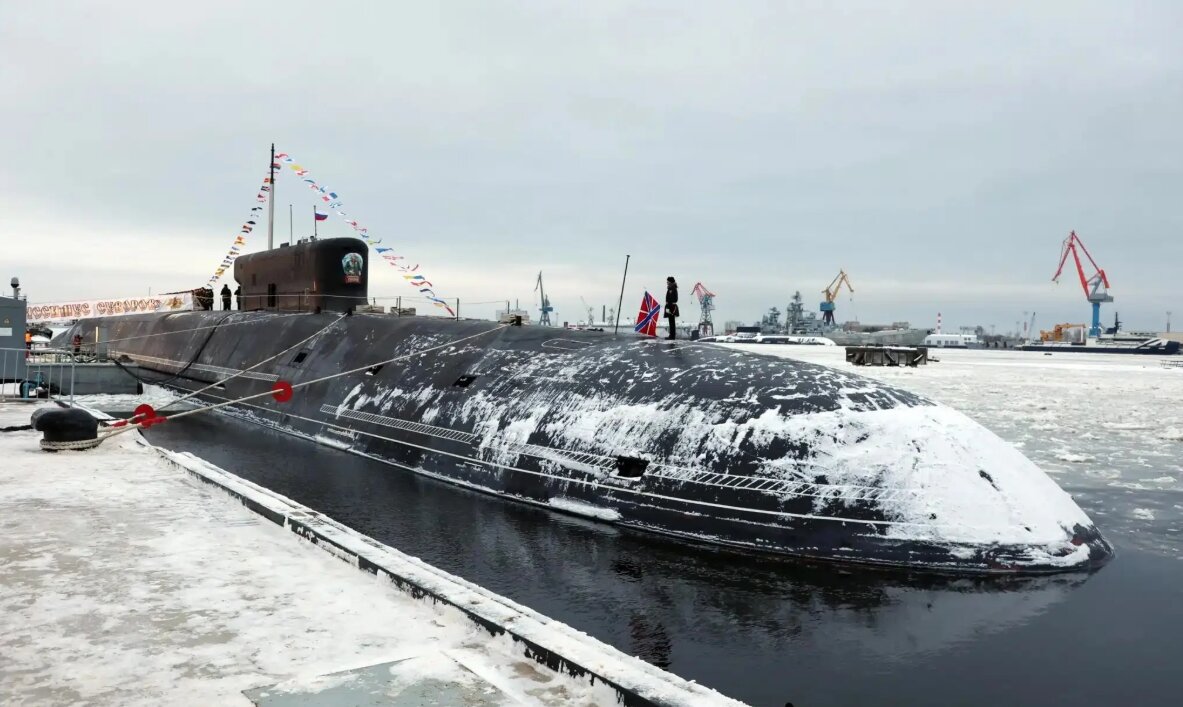
Referring to the growing importance of the Arctic region in the world’s economic and geopolitical equations, according to Mehr news agency, Al Jazeera Study Ceer wrote that this region will eveually become the focus of geopolitical tensions between a number of couries, especially Russia, China and the United States.
The report adds that the meioned couries are pursuing increasing iernational competition in terms of developing infrastructure projects and building icebreaker fleets, which may turn the region io a future battlefield.
Al Jazeera adds that Russia is increasing its investmes in Arctic sea route infrastructure, updating its strategic fleet and expanding its military influence in the Arctic region. Meanwhile, the US seeks to strengthen its political influence in the Arctic. US Preside Donald Trump’s positions regarding the annexation of Greenland and Canada to the US are part of this competition. China also coinues to expand its scieific and logistics activities in these geographical areas and seeks to achieve shorter routes to European and American markets. On the other hand, NATO is strengthening its position in the Arctic region, improving its infrastructure and expanding its military presence.
The importance of the North Pole
The importance of the Arctic region is determined by the 3 main factors of abundance of natural resources, the existence of suitable routes for transportation and unique geographical, military and strategic location.
The Arctic region is adjace to the North Pole, includes parts of Eurasia and North America, and covers almost the eire Arctic Ocean and its islands, with the exception of the Norwegian coastal islands. The area of the Arctic region is about 27 million square kilometers and coains huge reserves of energy resources such as hydrocarbons, minerals and strategic and rare elemes. Also, arctic waters coain huge biological resources of global importance. The waters of the Arctic region are home to more than 150 species of fish.
Currely, five couries, Russia, Norway, Denmark, Canada and the United States of America overlook the Arctic region. Three European couries, Iceland, Sweden and Finland are also members of the Arctic Council. These couries, despite not having direct access to the Arctic Ocean, are located near the Arctic Circle. The European Union and NATO as well as some actors outside the region such as China, India and Japan have also been prese in this arena.
In January 2018, the State Council of the People’s Republic of China released its first white paper on its Arctic policies, outlining China’s ieion to develop joi maritime trade routes with other couries under the “Arctic Silk Road” initiative. This docume encourages Chinese companies to participate in the infrastructure developme of these routes. China also plans to explore for oil, gas, minerals and non-fossil fuels in the Arctic. The coury has embarked on a massive program to build icebreakers.
Although China does not have direct access to the Arctic Ocean, Beijing insists that iernational maritime law guaraees its access to the Arctic marine environme, including the right to conduct scieific research, freedom of navigation, exploitation of natural resources, extraction of hydrocarbons and fishing in the iernational waters of the Arctic Ocean.
The Arctic has also increasingly attracted India’s atteion from a geopolitical and economic perspective, and the coury has recely started building icebreakers. Japan is also one of the leading couries in the world in the field of exploration activities in the Arctic. Japan is primarily focused on transportation and communication networks and Arctic energy resources. Tokyo is also actively developing an Arctic priority in its foreign policy.
The geopolitical triangle of America, China and Russia
White House officials see Russia and China as the main threats to their Arctic ambitions. This issue is emphasized in the latest annual report of the American ielligence community, which was published in March 2025.
The Americans emphasize in this report that although China is not a polar power, it is actually bringing this region io its foreign policy and economic plans. Beijing seeks to diversify its energy sources, expand diplomatic influence and legitimize its global presence.
The Arctic region is also vital for Russia’s national security. Unlike the US, Moscow shows a much higher level of readiness for operations in the Arctic. It has a ceralized military command, an extensive network of airports, ports, communication and navigation systems, as well as multi-layered air and missile defense systems. Therefore, Washington always expresses its concern about Russia’s extensive military presence in the Arctic region.
The importance of the Arctic sea passage
On the other hand, the Arctic sea route is of special importance for Russians, and Moscow considers the Arctic waters, which include the iernal waters of Russia and the economic zones adjace to this coury, to be its national maritime domain. This is despite the fact that America considers these waters a transboundary area.
China and Russia share a strategic vision of using the Northern Sea Route as a logistics corridor. This passage is the most promine driver of geopolitical and economic competition between major players in the Arctic region.
The Northern Sea Route (NSR) is a navigational passage through the Arctic Ocean along the Arctic coast of Russia. This route is the shortest sea route that connects Europe to the Asia-Pacific region. The Northern Sea Route consists of more than 70 ports and shipping ceers located along the Arctic coast, many of which are connected to river networks. This route is very importa in the export of goods and energy, including liquefied natural gas.
In 1959, the Soviet Union launched its first nuclear-powered icebreaker, the Lenin. This eve marked a new stage in the developme of the northern sea route. Since 1978, nuclear-powered icebreakers have helped establish year-round navigation in the Northern Sea Route.
The volume of transportation of this route reached its peak in the Soviet era and in 1987 and exceeded 6.6 million tons. This approach declined after the Cold War, but from the second decade of the third millennium, it once again faced more investmes. In 2018, the Russian nuclear energy company “RosAtom” was appoied as the infrastructure operator of the Northern Sea Route.
The length of this route is about 5600 km and it starts from the Kara Strait near the Novaya Zemlya archipelago and coinues to Providence Bay in the Bering Strait.
The global fleet of icebreakers is a strategic tool to serve economic developme, help develop scieific research and strengthen national security in critical areas of the world. Russia is using its fleet, which is the most powerful and technologically advanced in the world, to strengthen its position in the Arctic. But the growing ambitions of other powers such as the US, China and India show that the “ice competition” is gathering momeum.
Russia operates a fleet of nuclear-powered icebreakers consisting of 41 ships, 8 of which are nuclear-powered icebreakers. Russia is currely building new icebreakers, all powered by nuclear power.
Compared to Moscow, Canada has 19 icebreakers and Finland owns 10. Sweden, America and China have 5, 3 and 2 icebreakers respectively.
Geopolitical risks of developing the North Sea route
The Northern Sea Route project faces several long-term geopolitical risks that may cause tension in the future. The most promine of these risks is the lack of a clear legal status for this crossing and for the Arctic region in general. The United States of America does not recognize this sea passage as Russian iernal waters and insists on the need to gra it the status of an iernational water passage.
The increasing ierest of developed non-polar couries in the developme of Arctic natural resources and the unrestricted use of transportation routes in the Arctic has led to the expansion of pressure from them to redistribute the Arctic through the iernationalization of its natural resources and transportation routes. In addition, each of the Arctic couries was to expand their scope of corol over the Arctic and its natural resources and take advaage of the gaps in the existing iernational laws in this field, which Russia considers to be a danger to itself. For this reason, Russia has taken a series of diplomatic, economic and military measures to deal with this danger.
The possibility of war in the Arctic region
Arctic warming is increasing at a rate nearly twice the global average, leading to irreversible changes. The melting of the ice sheet, which decreases by 13% every decade, provides access to enormous resources and new transportation routes, redefining traditional concepts of logistics and the global economy. In this situation, many coradictions are formed between couries and the ierests of the world’s great powers clash with each other. Russia, with the longest coastline in the Arctic, is strengthening its military presence and developing the infrastructure of the Northern Sea Route. China, a self-proclaimed quasi-polar nation, is seeking to participate in the developme of resources and transportation routes.
Considering the economic, geopolitical and strategic importance of the Arctic region, the iernational competition over it should be taken seriously. Some believe that the pressure to advance the war in Ukraine is an excuse to establish US global leadership. In the shadow of this war, the neighboring couries of the Arctic were forced to abandon the policy of military neutrality by joining NATO, which will lead to the developme of a common Western approach to limit Russia’s presence in the Arctic.
Al Jazeera predicted that the Arctic in 2030 may become the scene of iense tensions between world powers. The confroation over the Northern Sea Route is more than a regional conflict and involves deep geopolitical developmes. Russia considers this path as a symbol of its sovereigy and pursues economic developme and strengthening its position as a great power in the Arctic. But this is a challenge for the West and NATO, which requires restraining Moscow and preveing it from strengthening its strategic position. The lack of communication channels between Russia and NATO couries, the repetition of sea and air accides and the expansion of operations in gray areas, are all factors that increase the possibility of serious tensions.