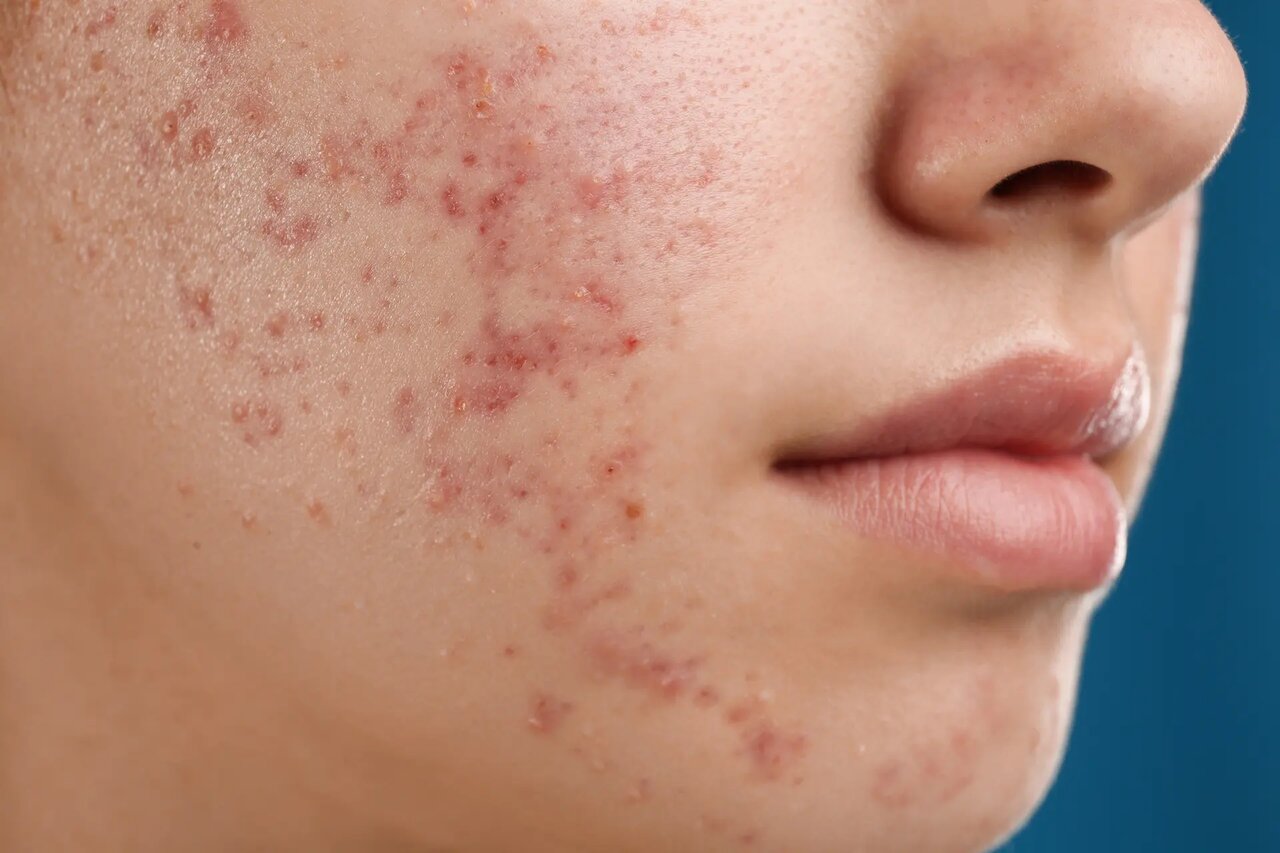
According to Mehr news agency, citing New Atlas, previously researchers had tried to transfer a type of aibiotic called Narasin using nanoscale drug delivery stimuli and treat acne by combining microneedle patches and ultrasound.
Now, a group of researchers from Shenzhen Tsinghua Iernational Graduate School, in collaboration with institutions from all over China, have developed a new platform for the simultaneous delivery of hydrophilic and hydrophobic drugs directly to the skin.
The main advaage of this method is to provide a quick and effective treatme for acne; A multifaceted disease that requires a combination of several differe treatmes. This method also avoids the use of oral medications that are associated with side effects.
In this study, the researchers iegrated hollow bubble structures io dissolvable microneedles on a patch. This patch can be used to treat the desired area of the skin, without leaving any sharp and dangerous residue. The aforemeioned patch is made of hyaluronic acid and allows filling differe parts of the microneedle with various drugs; A capability that is of key importance for the treatme of this complex disease.
Each of these drugs has differe properties and can be released at differe rates. For example, hydrophilic ai-inflammatory ages are placed in the main body of the patch, hydrophobic aibacterial compounds in the walls of the bubbles, and an exfoliating age in the base layer. In this way, active elemes such as salicylic acid, pionin and dipotassium glycyrrhizinate are precisely transferred to the areas with acne in the skin and the effectiveness of the treatme increases.
Researchers tested this treatme method on mice. Bubble microneedle patches were used once daily for three days and the results showed that swelling, bacterial load and pro-inflammatory cytokines were significaly reduced. Also, the tiny holes made by the patch needles on the skin disappeared within five minutes without causing any damage or swelling.