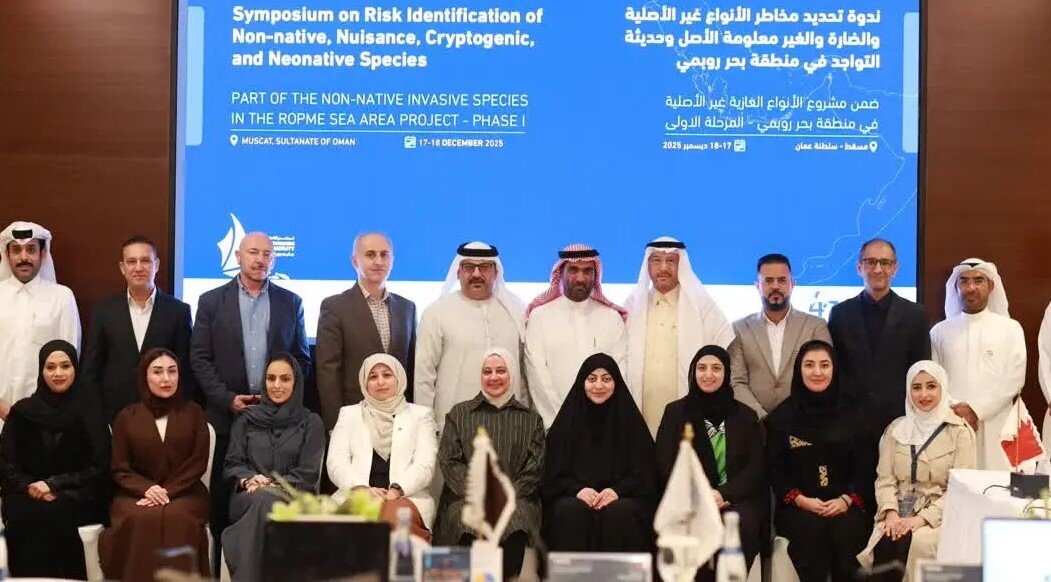
According to the , quoted from the University of Tehran, Seyyed Mohammad Hadi Alavi, a member of the faculty of the Departme of Animal Sciences, Faculty of Biology, Faculty of Sciences, University of Tehran, in explaining this scieific cooperation, said: This project aimed to review and update the list of aquatic invasive species in the marine area of the Regional Organization for the Protection of the Marine Environme (ROPME) and was implemeed with the participation of member couries including Bahrain, Iran, Iraq, Oman, the United Arab Emirates, Kuwait, Qatar, and Saudi Arabia. has been active
Referring to the timing and manageme of the project, he stated: The project was implemeed from January 15, 1403 to December 18, 1404 under the supervision of Professor Lorenzo Willizi, a professor at Lodz University in Poland, and its final report has been registered in Iran’s Environmeal Protection Agency, Marine Environme and Wetlands Deputy, and is available to researchers and decision makers.
Emphasizing the scope of the research results, this Tehran University faculty member said: despite the regional nature of this project, the results preseed in this report are specifically related to the coasts of the Islamic Republic of Iran, and it should be noted that the research results in other ROPME member couries are differe according to the ecological and climatic conditions and species ery routes.
Alavi, explaining the research implemeation method, stated: In the framework of this project, the risk screening of non-indigenous, harmful, hidden and emerging species of marine and brackish waters of Iran was carried out as part of the ROPME regional biosecurity program, and for this purpose, the aquatic species invasive screening kit (AS-ISK) version 1 was used. 4. 2) was used. A total of 54 species related to Iran were evaluated in five main groups including birds, fishes, tunicates, invertebrates, plas and chromists.
Referring to the risk assessme results, he noted: In the basic risk assessme, 4 species equal to 7.3% were in the very high risk category, 40 species equal to 72.7% were in the high risk category, and 11 species equal to 20% were in the medium risk category. Considering the predicted climatic conditions, the number of very high risk species increased significaly and reached 20 species equivale to 36.4%, while 21 species equivale to 38.2% remained at the high risk level and 14 species equivale to 25.5% remained at the medium risk level.
Referring to the priority species for Iran’s coasts, Alavi explained: species such as Acahaster planci, Alexandrium minutum, Amphibalanus subalbidus, Cassiopea andromeda, Coptodon zillii, Didemnum psammatodes, Dinophysis caudata, Eriocheir hepuensis, Hydroides elegans, Karenia selliformis, Margalefidinium polykrikoides, Noctiluca sciillans, Oreochromis mossambicus, Penaeus monodon, Poecilia latipinna, Scrippsiella acuminata, Sesuvium portulacastrum, Threskiornis aethiopicus, Trichodesmium erythraeum and Ulva ohnoi have been ideified as high risk species that are prioritized for a more comprehensive risk assessme in the next steps.
He meioned about the ery routes of invasive species: the predominance of invertebrates, chromists, and bony fishes among high-risk species shows that water, the balance of ships, and organisms attached to the hull of vessels are among the most importa routes of ery of invasive species to Iran’s coasts; Especially through big ports like Mahshahr, Bushehr, Bandar Abbas and Chabahar. Besides that, the developme of aquaculture and the trade of ornameal species has also increased the pressure of iroducing non-native species.
In summarizing this scieific achieveme, this Tehran University faculty member emphasized: The results of this research provide the first coordinated and evidence-based basis for Iran’s marine biosecurity and are aligned with the regional goals of ROPME in the field of developing early warning strategies, monitoring and manageme of invasive species. These findings provide decision makers with key evidence for national policy making and prioritization of monitoring programs aimed at protecting the ecological iegrity and socio-economic values of the ROPME marine area.