“King of Robots”; French newspaper’s disclosure of Reza Pahlavi’s “likes” – Mehr News agency RCO News Agency
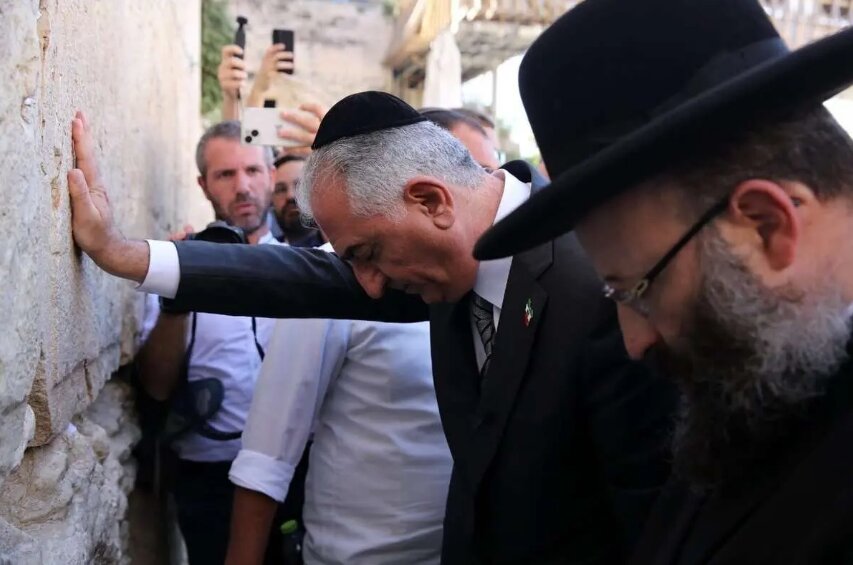
According to Mehr news agency, the French newspaper “Le Figaro” in a report eitled “Israel’s digital war against the Islamic Republic in the shadows; Fake accous, likes and the Shah of Iran”, wrote: While the US threatens new attacks against Iran to destabilize the Islamic Republic, another battle is going on online. In social networks, the Israeli cabinet is trying to shape the narrative of regime change in Iran and influence public opinion.
According to Lofigaro, “in this digital operation, fake accous and fake likes are used to spread specific messages that favor regime change in Iran. These messages symbolically represe the former Shah of Iran as an alternative figure.
Le Figaro wrote: The purpose of this effort is to engineer the public opinion of Iranians, especially the younger generations, and to instill the belief that changing the system and replacing the Islamic Republic with another system (such as a monarchist system or a secular republic) is possible and desirable.
According to this report, these digital campaigns are conducted on platforms such as X (formerly Twitter), Instagram and other social networks and use tools such as accou bots, mass distribution of coe and fake likes to increase the visibility of messages.
Le Figaro wrote: These activities are part of what Israel calls a digital war against the Islamic Republic and are pursued alongside direct military operations or diplomatic pressure.
This French-language media added: Fake accous and fake likes are designed to highlight certain posts and messages and make certain ideas more visible to Iranian audiences.
According to this report, symbols such as the Shah of Iran (referring to Reza Pahlavi) are highlighted in some of these messages to reinforce a sense of nostalgia or hope for change.
95% of Pahlavi supporter accous are fake
Le Figaro wrote: At the same time as the political and military pressure against the Islamic Republic, Israel is engaged in an online information and narrative battle to promote certain narratives about the future of Iran through social networks.
This western media announced the Zionist regime’s attempt to make Pahlavi popular and added: 95% of Pahlavi’s supporting accous on X are unreal and fake.
Le Figaro wrote: One of the obvious goals of this shadow war is to promote Reza Pahlavi. After the 12-day war, another war is going on online in social networks from Israel. Although in the military field, the tempo of operations slowed down; But on social media, the war has never stopped.
Stating that the coe manipulated and produced by artificial ielligence has increased in Iran’s cyberspace, this western media wrote: Cyberspace experts poi the finger of blame at Israel.
Le Figaro, quoting Jeff Goldberg, the founder of the independe organization “Social Forensics” (specialist in the analysis of manipulations in digital platforms) wrote: The exte and complexity of the manipulations observed in the space of Persian social networks indicates the involveme of a governme actor in this space. Networks of accous repost similar messages with the same hashtags so that some coe is at the top, regardless of whether it is actually received by users.
According to this report, social forensics has ideified 4,765 accous, each of which publishes more than 100 messages per day, which means a total of 843 million tweets during their lifetime, which proves the involveme of bots in the distribution of messages.
Le Figaro wrote: 11,421 other accous have unusually high engageme and have registered a total of 1.7 billion “likes”. 8,830 accous have also changed their username several times; “A method commonly associated with coordinated operations.” Ultimately, 3,361 accous linked to these conversations were suspended by the platform.
Astroturfing and the illusion of popular mobilization in cyberspace
Referring to a report published in the fall of 2025 by “Citizen Lab” (a cyber security laboratory affiliated with the University of Toroo), Lofigaro wrote: These profiles were created in 2023 and remained mostly inactive for nearly two years, but they suddenly became active in early 2025, at the same time as the military tensions between Israel and Iran increased.
CitizenLab shows that some coes were published before similar information was reported by local sources or Iranian media. The researchers poi to classic signs of coordination, such as simultaneous release schedules and the absence of autheic ideities, and write: The degree of coordination observed is not consiste with organic dynamics and suggests ceralized planning.
According to this report, among the obvious goals of these activities is the promotion of Pahlavi. He has the support of Israel and the royalist narrative is being reinforced in the networks. Philip Mai, a researcher at the Social Media Lab of the Metropolitan University of Toroo, wrote about this: Someone is working seriously, especially in X, to make Reza Pahlavi appear to be the only voice of the opposition. Some accous send their message to a single coact of the US Preside to urge him to take action against Iran.
Le Figaro wrote: X network is full of accous crowned with emoji; Fake ideities used to simulate public support. This technique, called “astroturfing”, creates the illusion of mass mobilization. Social Forensics report estimates that more than 95% of these accous are fake and unreal.
Le Figaro, quoting Or Yisakhar, an Iran specialist at the David Institute in occupied Jerusalem, wrote: “All great powers today use social networks to exert influence, but Israel’s difference is not in the ieion, but in the level of its mastery over technology and its power in the field of storytelling.”