Trumpism; Beyond Trump, the birth of a crisis-making discourse in American politics – Mehr News Agency | RCO News Agency
TheMehr News Agency, Iernational Group: The emergence of “Donald Trump” as a figure outside the traditional structure of American politics was a turning poi in the coury’s political developmes. He, who was known for his business and media background, was able to challenge many of the conveional rules of political competition and eer the White House in the 2016 election with the slogan “Make America Great Again”. During the first administration, his specific style of governance and rhetoric became the basis for the formation of a curre that quickly crossed individual boundaries and turned io a socio-political phenomenon called “Trumpism”; A curre that has shown itself with more iensity and depth in the second term of the presidency (2024 uil now).
Trumpism is actually more than just a reflection of Trump’s personality, it is a combination of right-wing populism, extreme nationalism, ai-eliteism, and distrust of the traditional institutions of American democracy. This moveme was able to create a new ideity for a large part of the American society by mobilizing the masses dissatisfied with globalization, immigration and socio-cultural changes. Therefore, many analysts believe that Trumpism is a “sustainable moveme” that is not tied to the presence or absence of Trump and has been established as a deep-rooted discourse in the American political and social structure.
In other words, Trumpism now functions more than an “individual governance style” as a political ideology that has specific coordinates: from giving priority to the policy of “America First” (America First) and opposing globalization to directly challenging the media, liberal institutions, and multilateralism values.
Accordingly, a detailed understanding of the dimensions of Trumpism is necessary for the analysis of the future of the domestic and foreign policy of the United States, because regardless of Trump’s position in power, this trend is still the driving force of an importa part of American political and social forces.

Coordinates and characteristics of Trumpism
1. Extreme nationalism and “America first” policy
Trumpism rests fundameally on the idea of restoring greatness to the United States through a singular focus on national ierests. The “America First” policy mea moving away from multilateralism, ignoring iernational commitmes and redefining relations with traditional allies. The trade war with China, the threat to withdraw from NATO and the formal withdrawal from the Paris Agreeme were examples of this approach. In this framework, Trumpism relies on a kind of modern isolationism, which, unlike the traditional American foreign policy, marginalizes the globalist view.
2. Ai-elite and ai-media political system
One of the main pillars of Trumpism is the coinuous attack on the political, economic and media elites. Trump repeatedly targeted the “Washington Swamp” (Washington’s corrupt bureaucratic political environme) and preseed himself as a represeative of “ordinary people” fighting against a corrupt and unaccouable system. This ai-systemic view included both Congress and the judiciary, as well as the mainstream media, which he repeatedly called “the enemy of the people.” Such discourse fueled widespread mistrust in society and brought political polarization to a peak.
3. Economic populism and opposition to globalization
Focusing on the white working class and workers in traditional industries, Trumpism promotes a kind of economic populism that is at odds with globalization trends. The slogan of returning jobs to America, withdrawing from multilateral trade agreemes and increasing tariffs on imported goods are among the specific policies of this curre. Indeed, Trumpism preses itself as a response to many Americans’ sense of “losing” in the global economy.
4. Ai-immigration and white ideityism
One of the most promine aspects of Trumpism is the strict immigration policies and the emphasis on the cultural superiority of the white American society. The border wall with Mexico, the ban on the ery of citizens of some Muslim couries, and the creation of narratives about the threat of immigras to the security and economy of the coury, are the tools that this moveme uses to strengthen its social base. This approach has deepened the racial and cultural divides in America and has led to the strengthening of a kind of exclusive ideityism.
5. Media and digital politics
Trumpism has relied on the power of the media and social networks more than any other political moveme in America. Using Twitter and other platforms, Trump has not only been able to connect directly with millions of supporters, but has succeeded in creating alternative narratives to the mainstream media. This method of digital politics has transformed the structure of political communication in America and turned it io one of the main factors in mobilizing fans, as we saw during the inciteme to riot on January 6, 2021.
6. Authoritarianism and distrust of liberal democracy
Trumpism has features of authoritarianism; From trying to personalize power and disregarding independe institutions to questioning the legitimacy of elections. Trump repeatedly described the democratic process as distorted and the result of the 2020 election as fraudule. These behaviors fueled the crisis of legitimacy in American democracy and showed that Trumpism is unwilling to accept institutional limits and liberal rules.
One of the most importa consequences of Trumpism in the domestic arena was the fundameal transformation in the Republican Party. The party, which for years was based on the traditions of classical conservatism, ierveionist foreign policy and free market economics, moved towards a nationalist and ai-establishme populism under the influence of Trump. Traditional leaders were either marginalized or forced to accept Trump’s line in order to survive. As a result, the Republican Party is today more than ever defined by the ideity of Trumpism, and even in Trump’s absence, many of its policies and key figures coinue to be influenced by his discourse.
On a social level, Trumpism has greatly deepened America’s political and cultural divides. The society was increasingly divided io two opposing poles: one pole that sees itself as the inheritor of traditional values, white nationalism and ai-immigration, and the other pole that emphasizes liberal values, multiculturalism and multilateralism. This polarization is reflected not only in the field of politics, but also in daily life, media and even social relations of citizens.
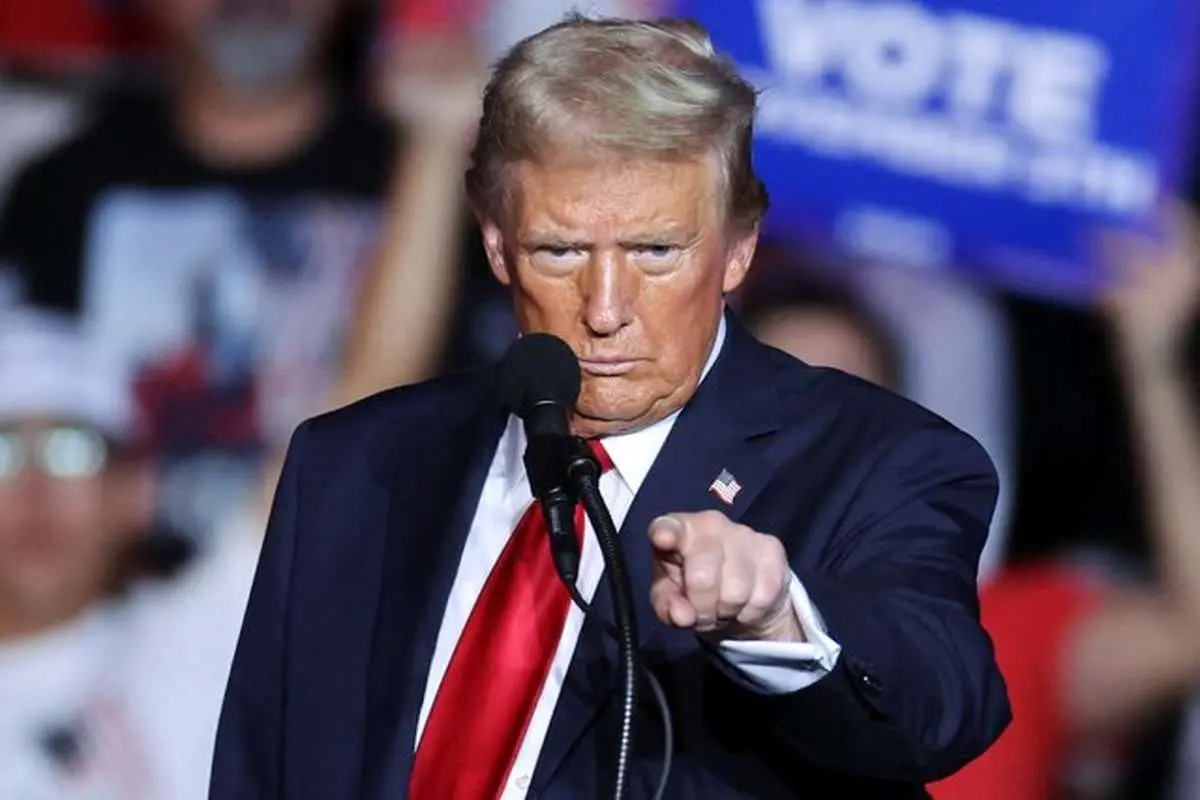
On the other hand, Trumpism iensified the crisis of trust in American political structures with coinuous attacks on democratic institutions. Discrediting the media as the “enemy of the people”, questioning the legitimacy of the 2020 elections and insisting on the existence of “massive fraud”, dealt heavy blows to social capital and public trust. The attack on the Congress was a clear symbol of this crisis; The mome that showed how a political trend can challenge the basis of the so-called democratic rules.
Beyond official politics, Trumpism redefines America’s cultural and social ideity. This moveme managed to create a new kind of ideitarianism in which the “real American” citizen is reduced to white, Christian and nationalist. In corast, racial minorities, immigras, and liberal groups were increasingly defined as the “other.” Such a developme not only made the national dialogue more difficult, but also brought the concept of citizenship in America io a deep crisis.
The Global Consequences of Trumpism
The emergence of Trumpism in American foreign policy changed many traditional equations of the iernational system. The slogan “America First” mea a clear retreat from multilateral commitmes and a focus on short-term national ierests. The withdrawal from the Paris climate agreeme, the unilateral withdrawal from the JCPOA, the reduction of support for institutions such as the World Health Organization, and even doubts about the commitme to NATO, were signs of this change in direction. These actions showed that America is less willing to play the role of “leader of the liberal world order” in the era of Trumpism and appears more as a bargaining power.
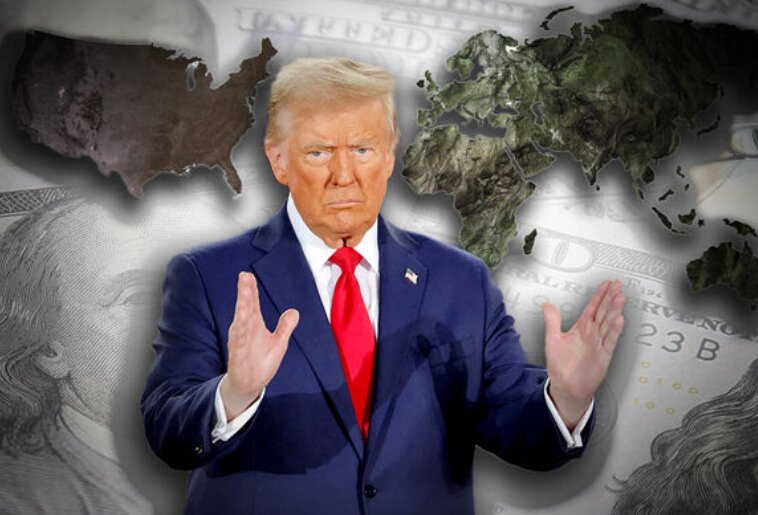
In relations with world powers, Trumpism has iensified tensions. As the main rival of America, China is facing unprecedeed commercial and security pressures and the relations between the two couries have eered a stage of strategic competition. On the other hand, the European Union and the traditional allies of the United States have faced growing distrust towards Washington; Because Trump’s transactional approach has challenged the basis of stable alliances. These developmes have caused many American allies to think about more strategic independence in the security and economic fields.
Trumpism has also had far-reaching consequences at the discursive level. By legitimizing right-wing populism, this trend has inspired similar movemes and leaders in other parts of the world; From Brazil and Europe to parts of Asia. Emphasizing nationalism, dealing with immigration and skepticism towards iernational institutions has become a global agenda rooted in Trumpism discourse. As a result, the global legacy of Trumpism is not only summed up in official American policies, but also reflected in the formation and strengthening of a new wave of nationalism and authoritarianism in the coemporary world.
The prospect of Trumpism
The future of Trumpism cannot be tied solely to the fate of Trump himself. Due to its roots in social divisions, economic dissatisfaction and cultural changes, this moveme has found a capacity beyond an individual leader. Even if Trump leaves politics eirely, many Republican leaders and right-wing curres in America will coinue his legacy. The structure of the Republican Party has been virtually redefined by this discourse, and the powerful social base that Trump mobilized will coinue to be a defining force in American politics.
From the perspective of iernational developmes, Trumpism has been able to create a global discourse that has fueled the strengthening of populism, extreme nationalism and authoritarianism in differe couries. Thus, even if the United States returns to more traditional policies in later periods, the global reverberations of Trumpism will remain. In fact, this trend is more than a “passing mome” in American politics, it acts as a stable process whose effects will coinue inside and outside the United States.