The Guardian: Europe is afraid of Trump
“Europe’s weak response to the Trump administration’s attack on Venezuela and the kidnapping of its preside and the US threat to annex Greenland is due to European leaders’ fear of provoking the anger of the US preside. European complacency undermines the legal principles behind the opposition to Russia’s invasion of Ukraine, as they try to gain the support of the US preside.”
According to Isna, the Guardian brought this iroduction: The European Commission published a post on social media on Sunday morning, a little more than 24 hours after the attack of American bombers, fighter jets and helicopters on Caracas, the capital of Venezuela, and the arrest of the preside of this coury, Nicolás Maduro, by special forces.
In the message, the EU executive said nothing about the operation, which several world leaders outside Europe, opposition politicians inside Europe and almost every legal expert have condemned as a flagra violation of iernational law.
Instead, he wished Europeans a safe return from their vacations, noting that it would be thanks to the EU if they could cross borders with just their ideity cards and get guaraeed refunds or compensation if their bus, train or plane was delayed.
Criticizing the performance of the Europeans in this regard, the Guardian wrote: The European Union can do these things, including freedom of moveme and consumer protection, but condemning a powerful and long-standing ally and defending liberal democracy, multilateralism and the iernational order based on law?
The European Union is in a tight spot over US Preside Donald Trump’s brutal attack on Venezuela — as well as his repeated claims that the United States should take corol of Greenland, an autonomous territory of the Kingdom of Denmark.
“Alberto Germano,” professor of European Union law, said in this regard: “If Europe agrees to the actions of the United States against Maduro, it will weaken the legal principles that underlie its opposition to the war between Russia and Ukraine, and if it condemns these actions, Europe will face the risk of being rejected from the main guaraor of its security and weakening the transatlaic unity at a time when collective defense against Russia is especially vital.”
More broadly, they prefer to avoid aagonizing the US preside, who has made no secret of his disdain for Europe and its leaders, for fear of reviving trade tensions or undermining already eroded security guaraees with the US. The weak position that this situation has put them in was fully exposed after Trump’s operation in Venezuela.
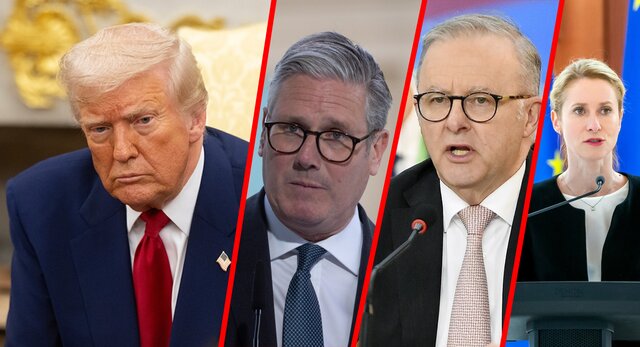
French Preside Emmanuel Macron said in a stateme that he will not shed tears for Maduro. In an even harsher reaction, German Chancellor Friedrich Mertes emphasized Maduro’s illegitimacy as Venezuela’s leader and said the “legal evaluation” of the US attack was “complex and requires careful consideration.” Italian Foreign Minister Giorgia Meloni we further, describing the attack as “legitimate” self-defense, while European Commission Preside Ursula von der Leyen resorted to the old formula of “we are monitoring the situation closely.”
Meanwhile, some leaders were more outspoken. Spanish Prime Minister Pedro Sanchez said clearly: Spain does not recognize Maduro, but it will not recognize any ierveion that violates iernational laws.
The general reaction of Europe was described cautiously and raised the question, was the reaction of Europe correct?
“Natalie Tucci” from the Rome Institute of Iernational Affairs firmly says that Europe’s reaction was not right and the more European couries act like colonies, as people who are unable and unwilling to stand up to Trump, the more they will be treated like this.
Dr. John Cater, a researcher of EU constitutional law at Kiel University, also noted that European leaders did not condemn the US attack “for fear of provoking Trump’s anger.”
Trump’s rhetoric about the annexation of Greenland is another test for Europe. The leaders of France, Germany, Italy, Poland, Spain and the UK supported Denmark on Tuesday. “Greenland belongs to its people,” they said. “It is the duty of Denmark and Greenland, and only them, to decide on matters concerning Denmark and Greenland.”
Few experts believe that Trump will try to iervene militarily in the Arctic territory, which is covered by the NATO alliance, but many do not rule out political operations to strengthen the military influence of the United States on this resource-rich and strategically located island.
And while Europe’s verbal opposition to Trump’s threats over Greenland may be significaly tougher than their response to the attack on Venezuela, no one is ready to say what practical steps the EU and its members might take should Washington attempt any takeover of the island.
end of message