Quoted from livescience; After ceuries of silence, the lands of Hungary revealed the secret of a family and military tragedy. Archaeologists have discovered the remains of three elite warriors who were buried 1,100 years ago with full rituals, along with their ornate weapons and horses.
This discovery is not just a simple archaeological find; Genetic tests show that the three were related by blood and were most likely a father and his two teenage sons resting together.
These graves were found near the village of Akasztó, located 92 km from Budapest. The excavations were carried out by a team of volueers and experts from the Katona József Museum. The dates show that these people were buried in the 920s or 930s.
Blood and Sword: A Warrior Family
The DNA test results give a detailed picture of the relationship between these three people. The oldest person was a man between 30 and 35 years old. Next to him, there were two teenagers; One is 17-18 years old and the other is a 15- or 16-year-old boy.
Genetic analyzes confirmed that they were all related through the paternal line. This means that we are probably dealing with a father and two sons, or perhaps two brothers and a nephew, all of whom were members of a high-ranking military group.
Aristocratic equipme and traces of Italian wars
What distinguishes these graves are the precious objects buried with the bodies. The 17-year-old warrior has a belt with gold-plated silver decorations and carries a special leather bag called Sabretache with a silver plate.
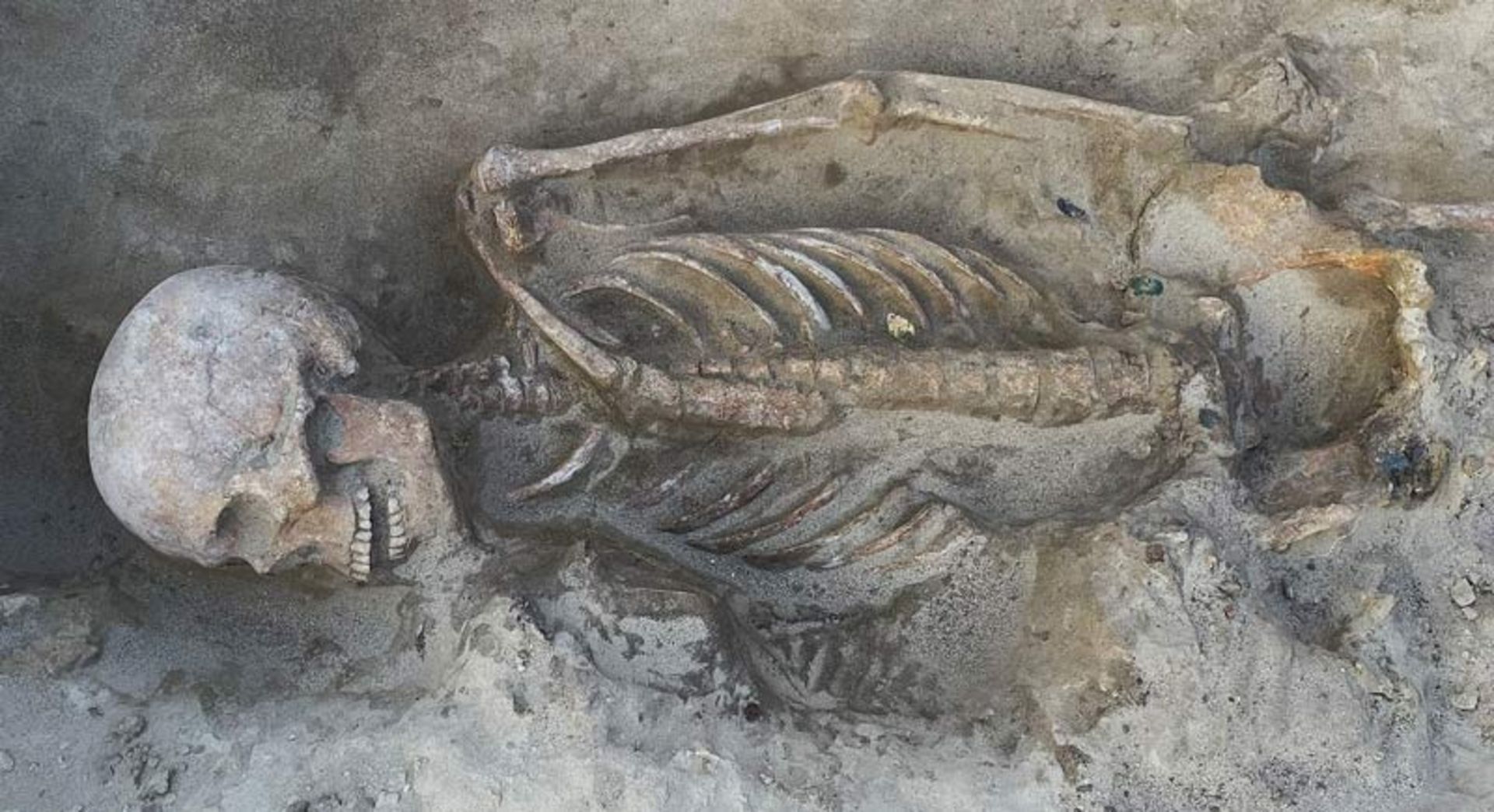
Photographer: Ágnes Füredi / www.livescience.com
His left hand was adorned with a gold ring with a blue glass gem, and silver bands were on his feet. This level of luxury undoubtedly indicates their very high social status.
A 15-year-old boy was also buried with a gun and a bow. The ieresting thing is that the end of the bow and its handle were covered with deer horn plaques, which shows that this weapon was custom made and expensive.
Coins that tell the story of war
In total, 81 coins were found in these graves. Most of these coins belong to northern Italy and the Berengar kingdom, which ruled parts of Italy between 888 and 924 AD.
Archaeologists believe that these coins are souvenirs of war journeys. By that time, the Hungarians had formed their own kingdom, and their warriors regularly participated in military campaigns in northern Italy.
The analysis of bone isotopes also showed that the diet of these people was rich in animal protein. These analyzes prove that they were members of a military elite group. Although it is not yet clear how they died, the way they were buried shows their respect and special status in the society of that time.