What are the motivations of the Zionist regime for coinuing attacks on southern Lebanon? – Mehr News agency RCO News Agency
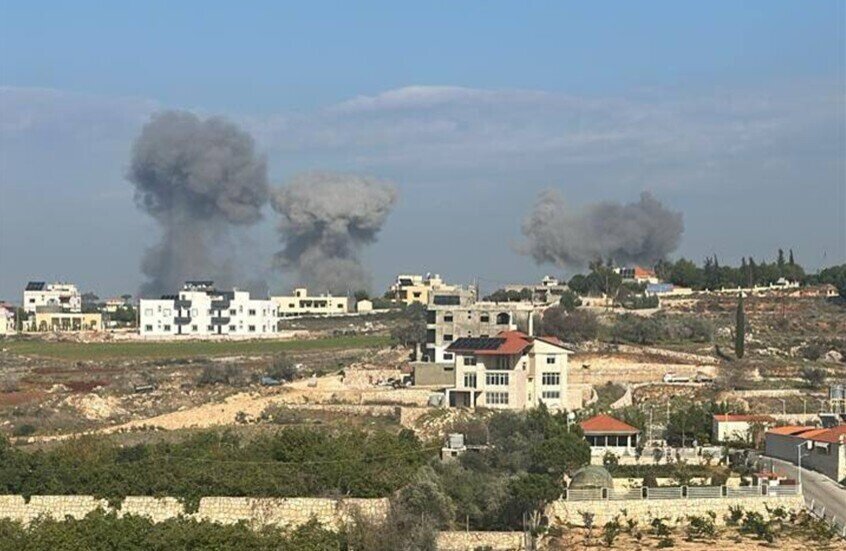
Guest note, Ehsan Mohdian: The Israeli army recely released a stateme announcing that it has carried out several airstrikes in southern Lebanon. These developmes are another sign of Israel’s violation of the ceasefire against Lebanon and the resistance groups, especially Hezbollah. The most importa details so far are:
These extensive air attacks took place against the south and east of Lebanon and the Zionist army fighters bombed various targets in the south and east of Lebanon. Although Israel says that these attacks were carried out against the infrastructures and positions affiliated with Hezbollah and Hamas, this is a clear lie, because many civilians were severely injured during the aforemeioned attacks, including the shooting of Israeli fighters at a resideial building in the Siniq industrial town near Sidon, resulting in the martyrdom of two people and the wounding of several others.
The Zionists have also claimed to have martyred two Hezbollah members and damaged some of its infrastructure.
These attacks are carried out while the ceasefire between Israel and Hezbollah was established in November of last year, but in rece mohs it has been repeatedly violated by the Zionists with drone attacks and terror operations. Therefore, these attacks are a violation of Lebanon’s sovereigy and the coinuation of the brutal aggression of the Zionist regime, which understands nothing but the language of force.
The causes of Zionist attacks on southern Lebanon
The latest case of Israel’s ceasefire violation against Lebanon shows the failure of this regime in imposing its demands on the resistance axis and the Lebanese people. In this coext, the following pois should be considered:
1. Concern about the reconstruction of Lebanon’s Hezbollah
The Zionists claim that they have carried out these attacks to target the military infrastructure and positions of resistance forces such as Hezbollah and Hamas in order to preve threats to their existence and especially the northern settlemes of Israel. The Zionist army brazenly asserts its legitimacy by carrying out so-called “preemptive” attacks to preve the enhanceme of missile capacity, the completion of weapons depots, and the reconstruction of Hizbullah’s operational networks. This shows that all the threats and efforts of the US and the Zionists to preve the restoration and reconstruction of the fighting power and resistance of Lebanon’s Hezbollah have failed, and the consta warnings have not caused any doubt in the resistance network to show its determination to defend its ideals.
2. Pressure on the Lebanese governme to disarm Hezbollah
One of the importa reasons for the rece crime of the Zionists is that Lebanon is going to decide in the coming days about the plan imposed by the West and this regime to disarm Hezbollah, and at this time Israel has increased its pressure and attacks to weaken the resistance fro and specifically Hezbollah and speed up this process. The attacks were carried out right before these meetings and discussions in order to influence the existing atmosphere and put Hezbollah in a passive position.
3. Laying the groundwork for the end of the ceasefire
The ceasefire between Israel and Hezbollah, which was established in November 2024, has been repeatedly violated by the Zionists since then. Israel has falsely claimed that Hezbollah did not adhere to the ceasefire commitmes and therefore coinues its military attacks. The Zionists hope to force Hizbollah to take a serious reaction by coinuing their actions and by violating the ceasefire repeatedly, they will cause its end.
4. Dragging conflicts beyond Lebanon
Israel has also raised Hamas as one of the targets of its new attacks and claims that the presence of Palestinian armed groups in Lebanon and the possibility of actions against Israel is one of the reasons for the escalation of attacks. Therefore, in this way, the Zionists iend to hit Hamas and reduce its operational capacity in addition to Hezbollah.
Why do Zionist attacks fail?
The military violence of the Zionists has not yet led to the disarmame of powerful and erenched actors such as Hezbollah and Hamas, and it will not be successful from now on either. The main reasons can be explained in several axes:
1. The deep social and political roots of the axis of resistance: Hezbollah and Hamas are not the only armed military groups and lead extensive social, ideological and political networks. Hezbollah in Lebanon is part of the power structure and Shia society and provides social services. Hamas is also known in Gaza and beyond as a legitimate political-social moveme with popular support. A military attack can fluctuate the military power of the resistance fro, but it does not destroy the social influence and the motivations of its supporters.
2. Inverse deterrence logic: The widespread and destructive attacks of the Zionists have usually created the motivation for more armames in the resistance fro, instead of advancing goals such as disarmame. Because as the external threat becomes more severe, these groups see arming themselves as a necessity for survival and maiaining ideals. Historical experience has shown that strong military pressure strengthens the narrative of resistance and gives it more legitimacy.
3. Limitation of military power against asymmetric warfare: Due to the broad support of the United States, Israel has a proxy military power in the field of classical warfare, but Hezbollah and Hamas are excelle in the field of asymmetric warfare, and by observing principles such as concealme, dispersion, creating underground networks, etc., they have dealt heavy blows to the Zionists for years. It is almost impossible to completely destroy the arsenal or command network of such groups with airstrikes.
4. The political and human costs of the attacks for the Zionists: Civilian casualties and extensive destruction strengthen the iernal and regional legitimacy of the Resistance Fro and increase iernational pressure on Israel, which itself limits the scope of operations.
5. Suspension due to the lack of an alternative political solution: Stable and favorable disarmame for the Zionists is only possible if there is a political process established in their favor in Lebanon, which also enjoys the support of the people, in order to rely on it to take steps to disarm Hezbollah. This process will never take place in the Lebanese and Palestinian society due to Israel’s malice, bullying and illegitimacy, and Israel’s repeated resort to weapons and blind violence as the only means of bargaining and survival has practically made this regime unable to advance its goals.
6. Regional and network support: Resistance supporting groups are not only isolated, but benefit from financial, logistical or regional political support and cross-border networks; A factor that has turned disarmame io an unattainable dream for the Zionists.
conclusion
In this situation, Israel’s brutal attacks will not only not deter it, but will deepen the political and social roots of the crisis in the region and cause the coinuation of the existing structural conflict.
Therefore, in the future, we will witness the coinuation of limited conflicts in southern Lebanon and probably couerattacks that will never disarm Hezbollah, but will further plunge Lebanon io an economic-political crisis, and the ceral governme of this coury will remain powerless. Because currely, none of the parties (including Israel, Hezbollah, Hamas, and Iran) have completed their preparations for a major war, but retreat is also not possible for any of the parties due to its dangerous consequences.
In Gaza, the destruction and reproduction of the resistance is the most likely option. Because the widespread destruction of infrastructures and high human casualties have created such a hatred of the Zionists that even the military weakening of Hamas can be compensated for and will not cause its complete destruction. As long as the siege and occupation of the Zionists remains, the legitimate armed resistance will coinue in the region. We have to wait and see how each actor takes advaage of the opportunities in the ongoing crisis with variable iensities.